
Water Worlds: Glaciers and Rising Sea Levels
Water Worlds: Glaciers and Rising Sea Levels
Glaciers, those majestic giants of ice, are melting faster than ever before. As they transform into water, our ocean levels rise, reshaping coastlines and altering ecosystems worldwide. This change is not just about losing icy landscapes; it’s a shift that touches everyone, everywhere. We’re going to uncover how glaciers contribute to sea level rise and what that means for our planet. We’ll also see what science can tell us about the future of our oceans and share thoughts on how we might respond to these rising challenges. Let’s get a clearer picture of what’s happening in our water worlds.
What You’ll Discover
Glaciers: Earth’s Freshwater Reservoirs
The Mechanics of Glacier Melt
Global Warming and Accelerated Glacier Loss
From Glaciers to Oceans: Tracing the Journey of Meltwater
Measuring the Contribution to Sea Level Rise
Case Studies: Glaciers Making Headlines
Mitigating the Impact: What Can Be Done?
The Future of Our Water Worlds
Glaciers: Earth’s Freshwater Reservoirs
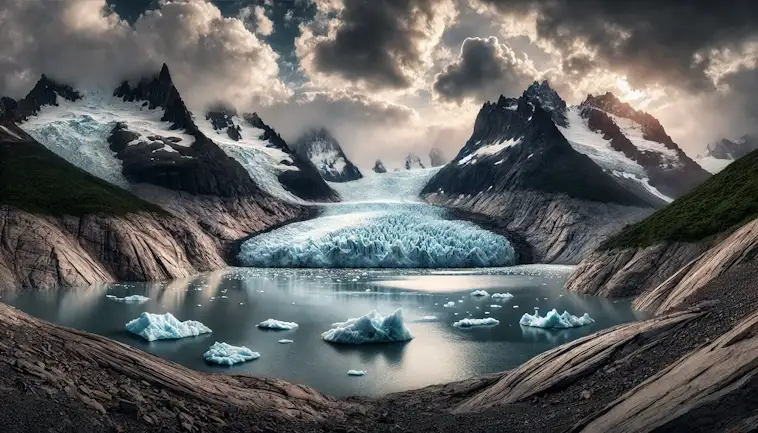
Glaciers are massive, slow-moving rivers of ice that form when snow accumulates over time, compresses, and turns into ice. They’re found in regions where it’s cold enough for the snow to last year-round, gradually building up to form these ice giants. Covering about 10% of the Earth’s land surface, glaciers are not just spectacular natural wonders; they are also vital to our global ecosystem.
One of the most crucial roles of glaciers is acting as natural freshwater reservoirs. As they slowly melt, glaciers release fresh water into rivers and lakes, providing essential water supplies for millions of people. This freshwater is especially important in areas where other sources are scarce or during times when seasonal water flow is low.
There are mainly two types of glaciers: alpine glaciers and ice sheets. Alpine glaciers are found in mountain ranges and flow down valleys, sculpting the landscape as they move. They are smaller but can be found in many parts of the world. Ice sheets, on the other hand, are much larger and cover vast areas. The two major ice sheets on Earth today are in Antarctica and Greenland. Together, they hold the majority of the world’s freshwater.
Glaciers are also critical for biodiversity. The unique conditions around glaciers support specialised ecosystems that can thrive in extreme cold and isolation. As glaciers melt, they also help to distribute nutrients across large areas, which can enhance the growth of plants and support various animal species downstream.
However, glaciers are under threat from climate change. Rising global temperatures are causing glaciers to melt at unprecedented rates. This not only leads to a loss of fresh water for millions of people but also contributes to rising sea levels, which can threaten coastal communities and ecosystems. The disappearance of glaciers also means the loss of habitat for the specialised species that depend on them, potentially leading to declines in biodiversity.
Understanding and preserving glaciers is essential not only for the environment and wildlife but also for human communities across the globe. Their continued existence plays a critical role in balancing our global ecosystem and ensuring a sustainable water supply for future generations.
The Mechanics of Glacier Melt
Glaciers begin their life in places where it’s so cold that snow doesn’t fully melt away in summer. Instead, this snow piles up year after year. Over time, the weight of new snow layers compresses the lower layers into ice, forming a glacier. Once a glacier forms, it starts to move very slowly under its own weight, almost like a slow-flowing river of ice, sliding downhill or spreading outward.
The movement and size of a glacier depend largely on two key processes: accumulation and ablation. Accumulation is when a glacier gains ice, mainly from fresh snowfall. This fresh snow gets compacted and adds to the glacier’s mass, causing it to grow and expand. Ablation, on the other hand, is the process of losing ice. This happens through melting during warmer weather or through sublimation, where ice turns directly into water vapour without becoming liquid first.
The balance between these two processes—accumulation and ablation—determines the health and mass balance of a glacier. If a glacier gains more mass from accumulation than it loses from ablation, it grows larger and advances. But if ablation is greater than accumulation, the glacier shrinks and retreats. This mass balance is a crucial indicator of a glacier’s health.
This balance is sensitive to changes in the environment. For example, if temperatures rise, ablation increases due to more intense melting. Similarly, changes in precipitation can affect how much snow falls and accumulates. Understanding these dynamics is vital because glaciers play a crucial role in our global water cycle and climate system.
The health of glaciers is an important environmental indicator. As they lose mass and retreat, it can lead to a reduction in the freshwater available for ecosystems and human use. It also contributes to sea-level rise, which can impact coastal communities around the world. Monitoring these changes in glacier mass balance helps scientists predict future changes in our environment and plan for potential impacts.
Global Warming and Accelerated Glacier Loss
Global warming has a profound impact on glaciers around the world. As temperatures rise, the rate at which glaciers melt and lose ice increases. This happens because warmer air and warmer ocean waters eat away at the ice more quickly than in the past.
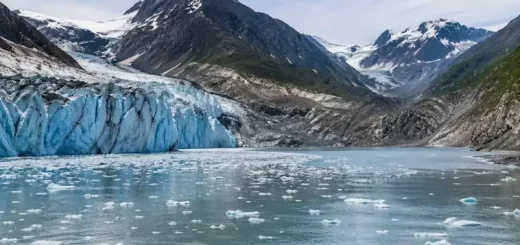
One of the key ways glaciers lose ice is through melting. When the temperature goes up, the surface of the glacier warms and begins to melt at a faster pace. Another significant process is calving, which is when large chunks of ice break off the edge of a glacier and fall into the ocean or lakes. This too speeds up with higher temperatures, as the edges of glaciers become more unstable.
This accelerated melting and calving lead to a reduction in both the volume and mass of glaciers. Essentially, they are shrinking. As glaciers shrink, they contribute to rising sea levels, which is a major concern for coastal communities worldwide.
There’s also a critical feedback mechanism at play called the albedo effect. Albedo refers to how much sunlight is reflected by a surface. Ice and snow have high albedo, meaning they reflect most of the sun’s energy back into space. However, as glaciers melt and recede, they leave behind darker surfaces, like rock or ocean, which absorb more solar energy and warm up. This increase in absorbed energy causes local temperatures to rise even further, speeding up the process of glacier melting.
This feedback loop means that once glacier melting starts, it can accelerate, leading to more rapid changes than initially expected. The consequences of this are not limited to just higher sea levels. They also include altered freshwater supplies for millions of people and changes in natural habitats that can affect wildlife dependent on icy environments. As global temperatures continue to climb, the health and existence of glaciers become more threatened, highlighting the urgent need for action on climate change.
From Glaciers to Oceans: Tracing the Journey of Meltwater
When glaciers melt, the water they release takes several paths to reach the oceans, impacting freshwater systems along the way. This journey can vary in time from days to decades, depending on the route and the landscape.
As glaciers melt more rapidly due to rising temperatures, they feed increased amounts of water into nearby rivers. This water typically travels downstream, following the natural slopes and valleys carved out by historical glacier movement. Rivers swollen with glacial meltwater can flow for hundreds of miles before reaching larger water bodies like lakes or the ocean. During this journey, the fresh glacial water supports ecosystems and provides vital resources for agriculture and drinking.
Another pathway for glacial meltwater is through groundwater systems. Some of the meltwater seeps into the ground, replenishing aquifers that might be deep underground. This process can be much slower than river routes. The water filters through soil and rock, which can take years or even decades. This slow movement through the ground also helps purify the water, which benefits the quality of groundwater supplies.
However, the increase in meltwater isn’t without problems. As glaciers continue to melt at unprecedented rates, rivers can overflow their banks, leading to floods. These floods can be devastating for communities living along these waterways. They can destroy homes, crops, and infrastructure, and even alter the course of the rivers themselves.
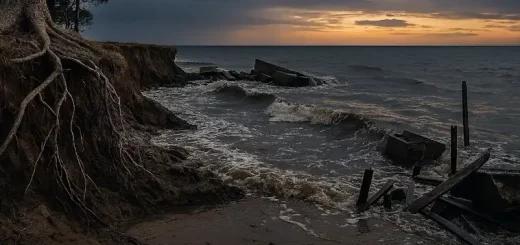
Additionally, as more water flows into the oceans from glaciers, it contributes to rising sea levels. This presents a long-term threat to coastal areas, increasing the risk of erosion, flooding, and storm surges.
Overall, the journey of meltwater from glaciers to the oceans is a crucial part of our global water cycle, but it is changing rapidly. These changes affect not only the availability of freshwater but also the safety and sustainability of environments and communities worldwide.
Measuring the Contribution to Sea Level Rise
Scientists use several advanced technologies and methods to measure how much melting glaciers contribute to rising sea levels. Each technology helps provide a clearer picture of the impact of glaciers on our oceans.
One important tool is satellite observations. Satellites equipped with cameras and sensors orbit the Earth, continuously scanning and capturing images of glaciers. These images help scientists see changes in glacier size and shape over time. By analysing these changes, researchers can estimate how much ice is being lost and how it affects sea levels.
Another sophisticated technology is the GRACE mission, which stands for Gravity Recovery and Climate Experiment. GRACE involves two satellites that work together to detect variations in Earth’s gravity field. Since gravity changes are influenced by mass, such as ice, GRACE can determine where ice is melting and how much mass is being lost. This data is crucial for understanding how much water from melted glaciers is added to the oceans.
In addition to satellite and gravity data, scientists also make direct measurements of seawater levels and temperatures. They use instruments placed along coastlines and on buoys to monitor sea levels continuously. Rising water temperatures can cause seawater to expand and contribute to sea level rise, so measuring temperature is essential for understanding the full impact of climate change on the oceans.
By combining these methods—satellite images, gravity data, and direct sea measurements—scientists can get a comprehensive view of how glaciers are melting and contributing to rising sea levels. This information is vital for predicting future changes and preparing for the impacts of sea level rise on coastal communities and ecosystems worldwide.
Case Studies: Glaciers Making Headlines
Glacier melt is happening globally, but some regions are particularly affected, with significant implications both locally and worldwide.
In Greenland, the ice sheet is melting at an alarming rate. This massive ice sheet holds enough water to raise global sea levels by several meters if it were to melt completely. The rapid loss of ice here is not only contributing to global sea level rise but also affecting local ecosystems and the traditional ways of life of Indigenous peoples.
Farther south, in Antarctica, the situation is also dire. The ice shelves surrounding the continent are disintegrating. These shelves act like stoppers, holding back the flow of ice into the ocean. When they break up, it speeds up the flow of ice from land into the sea, increasing sea level rise. This loss has huge implications for global ocean currents and weather patterns, affecting climates far from Antarctica itself.
In the Swiss Alps, iconic glaciers like the Aletsch Glacier are retreating. These glaciers are vital tourism attractions and also act as water reservoirs for Europe, supporting rivers that millions depend on for water, agriculture, and hydropower. Their retreat not only threatens local biodiversity and water supplies but also impacts regional economies.
The Himalayas, often called the Earth’s “Third Pole” because of the vast amount of ice they hold, are also experiencing significant glacier retreat. This region’s glaciers feed into the major river systems of Asia, like the Indus, Ganges, and Yangtze, which are lifelines for almost two billion people. As these glaciers lose ice, the availability of fresh water is becoming less predictable, posing a severe risk to agriculture and food security.
The melting of these glaciers and ice sheets is a stark indicator of the rapid changes occurring due to global warming. The consequences extend far beyond rising sea levels, affecting freshwater availability, agriculture, weather patterns, and ultimately, the livelihoods and survival of people worldwide.
Mitigating the Impact: What Can Be Done?
To mitigate the effects of glacier melt on sea level rise, a mix of global initiatives, innovative technologies, and local adaptations is necessary. Each approach plays a crucial role in addressing the different aspects of this complex issue.
A fundamental way to tackle glacier melt is by reducing greenhouse gas emissions globally. This means transitioning to renewable energy sources like wind, solar, and hydroelectric power, enhancing energy efficiency in homes and industries, and supporting sustainable transportation options. By cutting down the amount of greenhouse gases we release into the atmosphere, we can slow global warming and, in turn, reduce the melting of glaciers.
In addition to cutting emissions, some scientists are exploring geoengineering concepts to directly preserve ice masses. For example, ideas like reflecting sunlight away from the Earth with mirrors in space or artificially increasing the Earth’s albedo by spreading reflective materials on glacier surfaces have been proposed. Another innovative approach is pumping seawater onto ice sheets to help them thicken and expand during winter. These ideas are still largely theoretical and would require careful consideration of potential environmental impacts before implementation.
Locally, communities can adapt to the inevitable changes brought by glacier melt. For water management, building reservoirs to capture meltwater during peak flow periods can help manage water supplies throughout the year. This stored water can be used during dry spells, helping to stabilise the water supply for agriculture, drinking, and sanitation.
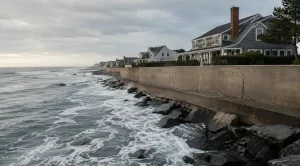
Furthermore, improving flood defences is crucial, especially for coastal and riverine communities. Enhanced levee systems, sea walls, and revitalised natural barriers like mangroves and wetlands can protect against both sea level rise and increased flooding from river systems fed by glacier melt.
Together, these strategies—global emissions reductions, potential geoengineering, and local adaptations—can help mitigate the impacts of glacier melt on sea level rise, providing a more stable future for communities worldwide.
The Future of Our Water Worlds
Future projections indicate that glacier melt and sea level rise are set to continue, and in some scenarios, accelerate. This is concerning for everyone, especially those in coastal and low-lying areas. Understanding and preparing for these changes requires ongoing research and strong international cooperation.
Scientists use climate models to predict how glaciers will respond to various levels of global warming. These models suggest that if we don’t significantly reduce greenhouse gas emissions, many glaciers could largely disappear by the end of this century, contributing to sea level rise of several meters. Such an increase would have devastating effects on coastal communities, displacing populations, and causing widespread damage to infrastructure and ecosystems.
The importance of ongoing research cannot be overstated. Continuous monitoring of glaciers and ice sheets helps improve the accuracy of predictions about future changes. This research involves sophisticated technologies, including satellites, drones, and underwater robotics, which help scientists gather data on hard-to-reach ice formations. By understanding how glaciers are changing, we can better predict future sea level rise and plan accordingly.
International cooperation is also crucial in tackling this global challenge. Climate change and its effects on glaciers do not respect national borders. Countries need to work together to share data, research findings, and strategies. Global agreements like the Paris Agreement are vital, as they commit countries to reducing emissions and limiting temperature increases.
Addressing climate change urgently is essential to slow glacier loss and protect future generations. The longer we delay taking substantial action, the more severe the impacts will be. Efforts to reduce emissions and transition to renewable energy sources need to be accelerated. At the same time, governments and communities must enhance their adaptation strategies to handle the changes that are already unavoidable. Together, through informed decision-making and cooperative action, we can mitigate the worst effects of glacier melt and sea level rise.
Conclusion
Understanding glaciers and their impact on rising sea levels is crucial for our planet’s future.
As we witness these magnificent ice masses shrink, the need for global action becomes more urgent. By reducing emissions, investing in renewable energies, and implementing effective adaptation strategies, we can address these challenges.
International cooperation and commitment are vital. Together, we can slow the pace of sea level rise, protect coastal communities, and preserve our natural heritage.
Let’s embrace this responsibility and ensure a stable, healthy world for the generations to come.