

Glaciers Are Disappearing Faster Than Ever—Here’s Why
A Closer Look at the Human and Natural Forces Reshaping Earth’s Frozen Landscapes
Across the world, glaciers are losing ice faster than scientists once predicted. From the Alps to the Himalayas, these frozen giants are thinning, retreating, and in some cases disappearing entirely. This rapid loss is not just a distant environmental issue. It is already affecting water supplies, sea levels, and weather patterns that millions of people depend on every day.
So, what is driving this change? Rising global temperatures are the main force. Warmer air melts surface ice, and at the same time, shifts in snowfall mean less fresh ice is forming to replace what is lost. Human activity, especially the burning of fossil fuels, is accelerating these trends and pushing glaciers past critical tipping points.
The consequences reach far beyond icy landscapes. As glaciers melt, sea levels rise, increasing the risk of flooding in coastal cities. Freshwater systems also change, putting pressure on farming, energy, and drinking water. These changes are happening now, and they are expected to speed up in the years ahead.
Understanding why glaciers are disappearing matters more than ever. It helps explain the wider climate story and shows what could happen next if current trends continue.
What You’ll Discover
Glaciers Are Melting at Record Speeds
Rising Global Temperatures and Their Impact
Why Glaciers Are Disappearing Faster Today
The Role of Human Activity in Ice Loss
What the Future Holds for Earth’s Ice Systems
Conclusion: The Future of Glaciers—and Why It Matters

Glaciers Are Melting at Record Speeds
Glaciers are melting faster than ever before, and it is happening right now, across the world. From the Arctic to the Alps, ice that once took thousands of years to form is disappearing in just decades.
So, why does this matter? At first glance, glaciers may seem far away and unrelated to daily life. However, they play a key role in keeping our planet stable. They store fresh water, regulate sea levels, and even help control global temperatures. As they melt, the effects ripple outward and touch millions of lives.
In recent years, scientists have recorded sharp increases in melting rates. Warmer air and ocean temperatures are the main drivers. In addition, darker surfaces exposed by melting ice absorb more heat. This creates a cycle that speeds up the process even more.
Why Faster Glacier Melt Is a Global Concern
To begin with, rising sea levels are one of the biggest threats. As glaciers shrink, more water flows into the oceans. This leads to flooding in coastal cities and low-lying areas. Over time, entire communities could be forced to relocate.
Moreover, many regions depend on glaciers for fresh water. During warmer months, melting ice feeds rivers and reservoirs. Without this steady supply, water shortages could become more common. This is especially true in parts of Asia and South America.
What This Means for the Future
Looking ahead, the pace of change is worrying. If current trends continue, many smaller glaciers could vanish within this century. As a result, ecosystems will shift, and weather patterns may become less predictable.
That said, there is still time to act. Reducing emissions and slowing global warming can make a real difference. While the challenge is serious, awareness is growing. And with that awareness comes the chance to protect what remains.
In short, glacier melt is not just an environmental issue. It is a global one. The choices made today will shape what the world looks like tomorrow.
Rising Global Temperatures and Their Impact
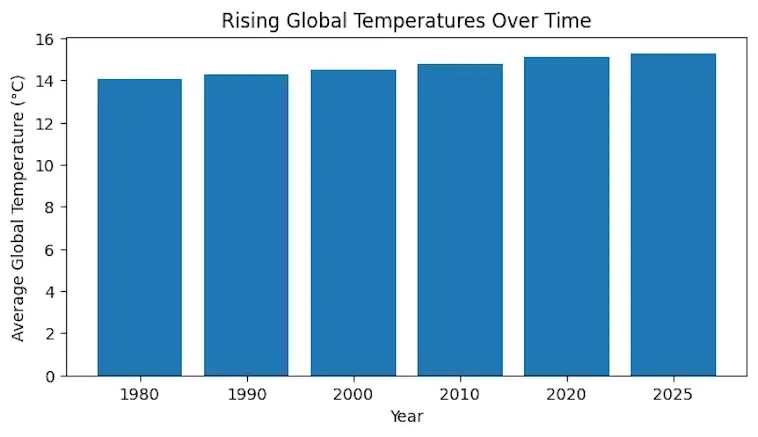
Global temperatures are rising at a steady pace. This shift is not subtle anymore. In fact, each decade is warmer than the last. As a result, the effects are becoming easier to see and harder to ignore.
So, what is driving this change? The main cause is the increase in greenhouse gases. These gases trap heat in the atmosphere. Over time, this leads to a gradual warming of the planet. While this may sound small, even a slight rise in temperature can have wide-reaching effects.
At the same time, the impact goes beyond just warmer days. It affects weather patterns, ocean levels, and natural ecosystems. Because of this, the issue is not just about climate. It is about how we live, grow food, and protect our future.
How Rising Temperatures Affect Everyday Life
To start with, heatwaves are becoming more frequent. Summers are longer and more intense. This can strain health systems and increase energy demand. In addition, extreme weather events like storms and droughts are becoming more common.
Moreover, agriculture is under pressure. Crops depend on stable weather. When temperatures rise, growing seasons can shift. This can lead to lower yields and higher food prices.
Long-Term Effects We Cannot Ignore
Looking ahead, the long-term risks are serious. Ice caps will continue to melt. Sea levels will rise. Coastal areas may face regular flooding. At the same time, wildlife will struggle to adapt to rapid changes.
However, there is still a path forward. Cleaner energy, smarter cities, and better policies can slow the trend. While change will not happen overnight, small steps can add up over time.
In the end, rising temperatures affect us all. The sooner we act, the better chance we have to manage the impact and build a more stable future.
Why Glaciers Are Disappearing Faster Today
Glaciers are shrinking and if you look back just a few decades, many of these massive ice bodies were stable. Today, however, they are retreating year after year. This change is not random. Instead, it is driven by clear and measurable shifts in our climate.
So, what is really happening?
In simple terms, glaciers form when snowfall builds up over time and compresses into ice. But now, warmer temperatures are melting that ice faster than it can be replaced. As a result, glaciers are losing mass. And importantly, this trend is speeding up.
The Main Drivers Behind Rapid Glacier Loss
To understand this better, it helps to break down the key causes. While natural cycles do play a role, human activity is now the dominant force.
Rising Temperatures Are the Biggest Factor
Global temperatures have increased steadily over the past century. Even a small rise makes a big difference for ice. Glaciers are very sensitive to heat, so they respond quickly when temperatures climb.
Here are the main reasons glaciers are disappearing faster today:
- Higher global temperatures are melting ice more quickly during summer months
- Warmer winters mean less snowfall, so glaciers cannot rebuild
- Dark particles like soot reduce ice reflectivity, causing faster absorption of heat
- Ocean warming is melting glaciers from below, especially those near coastlines
- Changing weather patterns are altering snowfall and accelerating ice loss
As you can see, these factors work together. This creates a cycle where melting speeds up over time.
Looking ahead, the situation could become even more serious. If current trends continue, many smaller glaciers may disappear within decades. Larger ones will take longer, but they are not immune.
That is why understanding these changes matters. It helps us see the bigger picture—and more importantly, what actions might slow this loss in the future.
The Role of Human Activity in Ice Loss
Glaciers are not just melting because of natural changes. In fact, human activity is now the main driver behind the rapid loss of ice around the world. Over the past century, our actions have changed the balance of the planet’s climate. As a result, glaciers are shrinking faster than ever before.
So, how exactly are we contributing to this problem?
In simple terms, many everyday activities release gases that trap heat in the atmosphere. This process is known as global warming. As temperatures rise, glaciers begin to melt at a much quicker rate. At the same time, less snow falls to replace the lost ice. Together, this creates a clear and growing imbalance.
How Human Actions Accelerate Ice Melt
To better understand the impact, it helps to look at the key sources of human-driven warming. Each one plays a role, and together they speed up glacier loss.
The Biggest Contributors to Ice Loss Today
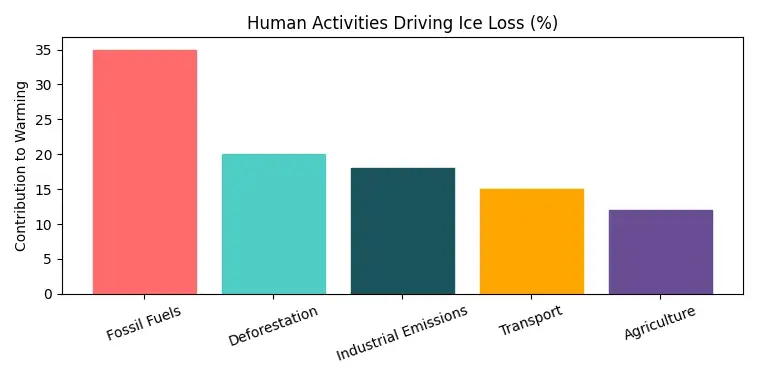
Here are the main ways human activity is driving glacier melt:
- Burning fossil fuels like coal, oil, and gas releases large amounts of heat-trapping gases
- Deforestation reduces the planet’s ability to absorb carbon dioxide
- Industrial processes add pollution that warms the atmosphere
- Transport emissions from cars, planes, and ships increase overall heat levels
- Farming practices release methane, a powerful greenhouse gas
As you can see, these actions are deeply connected to modern life. However, they also come with long-term consequences.
Here is a simple visual showing how different human activities contribute to warming:
Looking ahead, this trend could continue unless changes are made. The good news, though, is that solutions already exist. Cleaner energy, better land use, and smarter transport can all help slow down ice loss.
In other words, while human activity is part of the problem, it can also be part of the solution.
What the Future Holds for Earth’s Ice Systems
Earth’s ice is changing fast. From the Arctic to Antarctica, glaciers and ice sheets are shrinking at a pace we have not seen before. So, what does this mean for the future? And more importantly, how might these changes shape our daily lives?
To begin with, ice plays a bigger role than many people realize. It helps regulate global temperatures. It reflects sunlight back into space. It also stores vast amounts of fresh water. However, as the planet warms, this balance is shifting. And the effects are already unfolding.
In the coming decades, we are likely to see less stable ice systems. For example, summer sea ice in the Arctic could become rare. At the same time, major ice sheets in Greenland and Antarctica may continue to lose mass. As a result, sea levels will keep rising. This could affect coastal cities, infrastructure, and even food systems.
The Ripple Effect on Climate and Communities
As ice melts, it does more than raise sea levels. It also changes ocean currents and weather patterns. This means some regions may face stronger storms, while others could see longer droughts. In other words, the impact goes far beyond the poles.
Moreover, communities that rely on ice are already feeling the strain. Indigenous groups in the Arctic, for instance, depend on stable ice for travel and hunting. As conditions become less predictable, their way of life is at risk. Meanwhile, cities near coastlines must adapt to frequent flooding and erosion.
Innovation and Hope for the Future
Even so, there is room for cautious optimism. Scientists are improving climate models. This helps us better predict what lies ahead. At the same time, new technologies are emerging. Cleaner energy, smarter infrastructure, and better conservation efforts can all make a difference.
Looking forward, the choices we make today will shape the future of Earth’s ice. Small actions add up. Policy changes matter. And global cooperation will be key.
The story of Earth’s ice is still being written. While the challenges are real, so are the opportunities to respond.
Conclusion: The Future of Glaciers—and Why It Matters
Glaciers are disappearing at a pace we have never seen before. This change is not distant or abstract. It is happening now, and its impact reaches far beyond icy landscapes. As glaciers melt, they raise sea levels, disrupt water supplies, and reshape ecosystems that millions of people depend on.
The main driver behind this loss is rising global temperatures. However, other factors like air pollution and changing weather patterns are making the problem worse. Together, these forces are accelerating the decline of glaciers across the world.
Looking ahead, the future of glaciers depends on the choices we make today. Reducing emissions, supporting clean energy, and protecting natural systems can slow the damage. While the challenge is serious, there is still time to act.
In the end, glaciers are more than frozen rivers of ice. They are vital to life on Earth. Understanding why glaciers are disappearing is the first step toward protecting them—and securing a more stable future for generations to come.