Sea Walls Now Decide Which Coastal Homes Will Survive
How Sea Walls Could Determine the Future of Coastal Real Estate
Rising tides and stronger storms are changing the future of coastal living. Across vulnerable shorelines, sea walls are becoming a critical line of defence against flooding, erosion, and property damage. For many homeowners, the strength and condition of these barriers could determine whether their homes remain safe, valuable, and insurable in the years ahead.
As climate risks grow, governments, engineers, and coastal communities are facing difficult choices about where to build new protections and which areas may no longer be sustainable. Property buyers are also paying closer attention to flood maps, insurance costs, and local defence plans before making long-term investments near the sea.
The future of many coastal towns may no longer depend on location alone. Instead, it could come down to which communities can adapt quickly enough to survive rising water levels and increasingly severe weather.
What You’ll Discover
Sea Walls Are Redrawing the Future of Coastal Homes
Why Some Coastal Properties Will Outlast the Next Storm
The Rising Cost of Protecting Waterfront Communities
How Climate Defenses Are Changing Coastal Real Estate
Which Shoreline Homes Face the Greatest Risk Ahead
Conclusion: The Future of Coastal Living Depends on Sea Walls
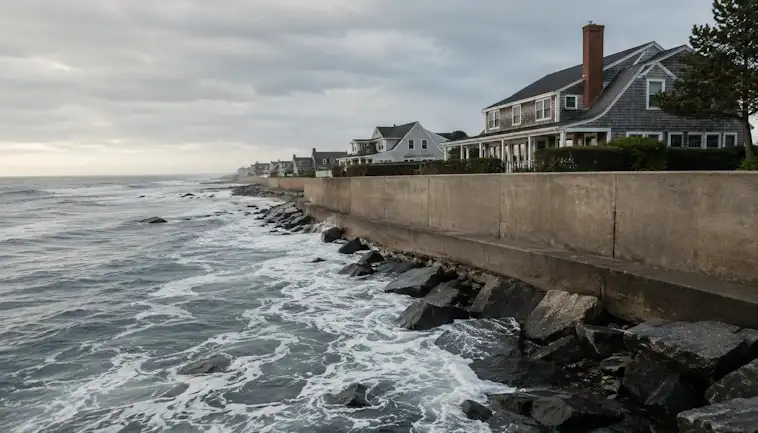
Sea Walls Are Redrawing the Future of Coastal Homes
Coastal living has always carried a strong sense of freedom. People are drawn to ocean views, fresh air, and the calming rhythm of the sea. However, rising sea levels and stronger storms are changing how coastal communities think about safety and long-term property protection.
As a result, sea walls are becoming one of the most important features in modern waterfront development. These structures were once seen as simple barriers. Today, they are shaping the future of coastal homes in far more advanced ways.
Homeowners, architects, and developers are now designing properties with climate resilience in mind from the very beginning. In many coastal regions, sea walls are no longer optional upgrades. Instead, they are becoming part of the foundation of future-ready living.
Why Sea Walls Are Becoming Essential for Coastal Properties
Sea walls help reduce the impact of erosion, flooding, and storm surges. At the same time, they can protect valuable land and infrastructure from long-term coastal damage. This matters more than ever as extreme weather events become increasingly common.
Modern sea walls are also changing in design. Many newer systems blend engineering with sustainability and aesthetics. Rather than looking harsh or industrial, they are now being built to complement residential developments and natural landscapes.
Some of the biggest benefits include:
- Better protection against coastal erosion
- Reduced flood risk during storms
- Increased long-term property resilience
- Improved confidence for buyers and investors
- Greater protection for roads, utilities, and nearby infrastructure
Because of these advantages, coastal housing markets are beginning to shift. Buyers are paying closer attention to flood defenses before making property decisions.
How Coastal Home Design Is Evolving Alongside Sea Defenses
Sea walls are also influencing how homes themselves are built. Architects are combining elevated foundations, water-resistant materials, and smarter drainage systems with large-scale coastal protection.
In addition, many communities are exploring hybrid solutions that combine sea walls with natural barriers such as dunes, wetlands, and mangroves. This balanced approach can help preserve coastal ecosystems while still protecting homes and businesses.
Looking ahead, coastal developments will likely become more adaptive and technology-driven. Smart monitoring systems, stronger materials, and eco-friendly engineering could all play a bigger role in the next generation of sea defenses.
For homeowners, this means the future of coastal living may look very different from the past. Safety, sustainability, and resilience are quickly becoming just as important as location and sea views.
Why Some Coastal Properties Will Outlast the Next Storm
Coastal living has always come with risks. However, stronger storms and rising sea levels are making those risks harder to ignore. Even so, not every waterfront home faces the same future. In fact, some coastal properties are proving far more resilient than others.
So, what makes the difference?
It often comes down to planning, engineering, and location. While older homes may struggle against repeated flooding and erosion, newer developments are being built with climate resilience in mind. Developers, architects, and local governments are now focusing on smarter coastal protection strategies that can help properties survive extreme weather for decades to come.
At the same time, buyers are becoming more aware of long-term risks. They are looking beyond ocean views and asking important questions about flood zones, building materials, and storm protection systems. As a result, resilient coastal homes are becoming more valuable in many markets.
Sea Walls Are Becoming a Critical Line of Defense
Sea walls are one of the most visible forms of coastal protection. These structures are designed to reduce erosion and absorb the force of incoming waves during storms. In many vulnerable areas, they already play a major role in protecting homes, roads, and public infrastructure.
However, modern sea walls are very different from the simple concrete barriers used decades ago. Today’s designs often include curved surfaces, reinforced foundations, and environmentally friendly materials that work with natural coastal systems instead of against them.
Even so, sea walls are not a perfect solution. They require ongoing maintenance and significant investment. Yet, in regions facing repeated storm surges, they can dramatically reduce property damage and help communities recover faster after severe weather events.
Smarter Building Design Is Also Changing Coastal Real Estate
Protection does not stop at the shoreline. Many newer coastal homes are now being built several feet above projected flood levels. Others use water-resistant materials, elevated utilities, and reinforced foundations to limit storm damage.
In addition, some communities are restoring dunes, wetlands, and mangroves to create natural barriers against rising water. These nature-based solutions are gaining attention because they can reduce erosion while also supporting local ecosystems.
Looking ahead, the coastal properties most likely to hold their value will be the ones designed for long-term resilience. Buyers, investors, and developers are starting to understand that surviving the next storm is no longer enough. The real goal is being prepared for the next several decades.
The Rising Cost of Protecting Waterfront Communities
Across the world, waterfront communities are facing growing pressure from stronger storms, rising sea levels, and more frequent flooding. As a result, the cost of protecting homes, businesses, and public infrastructure is climbing fast. What was once considered a long-term concern has now become an immediate financial challenge for local governments and residents alike.
In many coastal towns and cities, seawalls, flood barriers, drainage systems, and emergency response plans are no longer optional. Instead, they are becoming essential investments. However, these projects often come with huge price tags. In some areas, insurance costs are also rising sharply, which adds even more strain to families and businesses already dealing with climate-related risks.
At the same time, communities are being forced to make difficult decisions. Some are investing billions into flood defenses, while others are considering managed retreat strategies that move homes and infrastructure away from vulnerable coastlines. Although these choices are complex, many experts agree that delaying action will only increase costs in the future.
Why Climate Adaptation Costs Are Increasing
Several factors are driving the rising cost of waterfront protection. First, extreme weather events are becoming more damaging and unpredictable. Consequently, existing infrastructure often needs major upgrades to handle modern climate threats.
In addition, construction and maintenance costs continue to rise. Materials such as concrete, steel, and specialised flood-control equipment have become more expensive in recent years. Labour shortages in construction and engineering are also pushing prices higher.
Key Financial Pressures Facing Coastal Communities
- Rising insurance premiums for homes and businesses
- Expensive repairs after flooding and storm damage
- Increasing costs for seawalls and flood barriers
- Higher taxes and public spending on climate adaptation projects
- Loss of tourism revenue after extreme weather events
- Declining property values in high-risk flood zones
Despite these challenges, many communities are also finding new opportunities. Governments and private companies are investing in smarter infrastructure, green flood defenses, and more sustainable urban planning. As innovation grows, future solutions may become more affordable and effective.
Ultimately, protecting waterfront communities is no longer only about defending coastlines. It is also about protecting local economies, preserving livelihoods, and building long-term resilience for future generations.
How Climate Defenses Are Changing Coastal Real Estate
Coastal real estate has always attracted buyers looking for ocean views, fresh air, and a relaxed lifestyle. However, climate change is now reshaping the way people think about waterfront living. Rising sea levels, stronger storms, and more frequent flooding are pushing governments and developers to invest in new climate defenses. As a result, the coastal property market is entering a new era.
Today, buyers are paying closer attention to how well a property is protected. In many areas, homes with strong flood protection measures are holding their value better than those without them. At the same time, insurance costs are climbing in high-risk zones, which is changing buyer behavior even further.
Because of this shift, climate resilience is becoming just as important as location and design. Buyers no longer want a beautiful property alone. They also want peace of mind.
Sea Walls Are Reshaping Waterfront Communities
Sea walls are becoming one of the most visible climate defense projects in coastal cities around the world. These large barriers are designed to reduce erosion and protect homes, roads, and businesses from storm surges and rising tides.
In some markets, new sea wall projects are increasing property demand nearby. Buyers often see these defenses as a sign that local authorities are investing in the future of the area. Consequently, protected neighborhoods may become more attractive over time.
Still, sea walls also create debate. While they can reduce flood risks, they may affect beaches, marine ecosystems, and public access to the shoreline. Therefore, city planners are trying to balance protection with environmental concerns.
Why Buyers Are Looking Beyond Traditional Flood Zones
Many buyers are no longer relying only on old flood maps when making decisions. Instead, they are researching long-term climate forecasts, elevation levels, and future infrastructure plans before purchasing a home.
This change is influencing real estate developers as well. New coastal projects increasingly include raised foundations, water-resistant materials, and improved drainage systems. In addition, smart technology is being used to monitor flooding risks in real time.
Looking ahead, climate adaptation could become a major selling point in coastal real estate. Communities that invest early in resilience may attract more buyers and investors in the years to come. Meanwhile, areas that fail to adapt could face declining demand and falling property values.
Coastal real estate is no longer just about living near the water. It is also about how well communities can live with the changing climate.
Which Shoreline Homes Face the Greatest Risk Ahead
Living near the coast has always been appealing. Ocean views, fresh air, and easy beach access continue to attract buyers around the world. However, the risks facing shoreline homes are growing faster than many people expected. Rising sea levels, stronger storms, and coastal erosion are already changing real estate markets in many regions.
As a result, homeowners, investors, and future buyers are asking an important question: which shoreline homes are most at risk in the years ahead?
The answer depends on several factors. Location matters most, but so do elevation, building age, local infrastructure, and insurance availability. In some areas, homes that once seemed safe are now facing repeated flooding and higher repair costs. Meanwhile, other coastal communities are adapting with stronger protections and smarter planning.
Low-Lying Coastal Properties Are Under the Most Pressure
Homes built close to sea level face the highest long-term danger. Even small increases in sea levels can lead to more frequent flooding during high tides and storms. In many cases, flooding no longer happens once every few decades. Instead, it may occur several times each year.
Properties located in these vulnerable zones often experience:
- More expensive insurance premiums
- Falling property values in high-risk regions
- Increased maintenance and repair costs
- Greater difficulty securing mortgages
- Faster erosion around foundations and roads
In addition, older shoreline homes may struggle the most. Many were built before modern flood standards existed. Because of this, they are often less prepared for severe weather and changing coastal conditions.
Areas With Weak Coastal Defenses Could See Faster Declines
Not every shoreline community faces the same future. Some cities are investing heavily in flood barriers, drainage systems, and coastal restoration projects. Others lack the funding or infrastructure needed to protect vulnerable neighborhoods.
This creates a growing divide between resilient coastal areas and locations that may become harder to insure, finance, or maintain over time.
Several warning signs can indicate higher future risk:
- Frequent flooding during storms or high tides
- Rapid beach or cliff erosion nearby
- Limited seawall or flood defense protection
- Repeated insurance claims within the area
- Declining local investment in infrastructure
At the same time, climate experts expect these risks to increase over the next few decades. Therefore, buyers are becoming more cautious before purchasing shoreline property.
Still, not all coastal homes are equally threatened. Properties built on higher ground, with updated flood protection and strong local planning, may remain attractive for years to come. That is why understanding local conditions is becoming essential for anyone considering coastal real estate.
Conclusion: The Future of Coastal Living Depends on Sea Walls
Sea walls are no longer just large concrete barriers along the shoreline. Today, they are becoming a key line of defense for millions of coastal homes facing rising seas, stronger storms, and faster erosion. In many places, the question is no longer whether communities need protection, but which protections will actually work long term.
At the same time, sea walls are not a perfect solution. They are expensive to build, costly to maintain, and can sometimes shift problems further down the coast. However, for many vulnerable areas, they may still decide which homes survive the coming decades and which do not.
Looking ahead, coastal cities will likely combine sea walls with smarter planning, restored wetlands, flood-resistant construction, and updated insurance policies. The communities that adapt early may have the best chance to protect both property values and public safety.
As climate risks continue to grow, sea walls will remain at the center of one of the biggest debates in modern coastal living: how to defend the places people call home while preparing for a very different future.