How Indigenous Knowledge Helps Fight Climate Change
Why Traditional Practices and Local Wisdom Are Key to Building a More Resilient Future
Indigenous knowledge offers a powerful, time-tested way to address climate change. Rooted in close relationships with land, water, and ecosystems, it provides practical methods for managing natural resources in a balanced and sustainable way. For centuries, Indigenous communities have observed patterns in weather, wildlife, and soil health, building systems that work with nature rather than against it. Today, as climate risks grow, these insights are gaining fresh attention for their proven value.
Across the world, Indigenous practices support biodiversity, protect forests, and restore degraded land. Controlled burning, seasonal farming cycles, and water conservation techniques all show how local wisdom can reduce environmental harm. These approaches are not only effective but also adaptable, making them relevant in both rural and urban settings. As a result, they offer real solutions that can scale when supported by modern tools and policy.
Looking ahead, the role of Indigenous communities is set to become even more important. Collaboration between scientists, governments, and Indigenous leaders can lead to stronger climate strategies. By respecting traditional knowledge and combining it with new technology, there is a clear path toward more resilient ecosystems and communities. This balanced approach could shape how the world responds to climate challenges in the years to come.
What You’ll Discover
How Indigenous Knowledge Shapes Climate Solutions
Traditional Practices That Protect Ecosystems
Why Indigenous Knowledge Matters in Modern Climate Action
Lessons from Indigenous Communities for Sustainability
Blending Ancient Wisdom with Future Climate Strategies
Conclusion: Why Indigenous Knowledge Matters More Than Ever
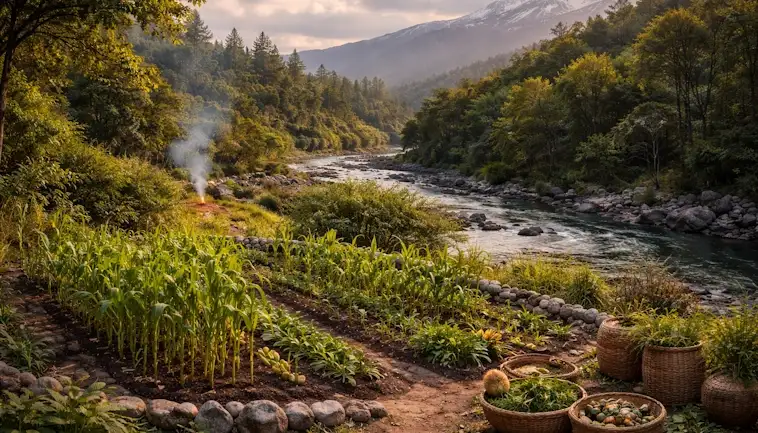
How Indigenous Knowledge Shapes Climate Solutions
Climate change is one of the biggest challenges we face today. However, not all solutions need to be new. In fact, some of the most effective ideas have been around for generations. This is where Indigenous knowledge comes in. It offers practical, time-tested ways to live in balance with nature.
For thousands of years, Indigenous communities have observed the land, water, and seasons closely. As a result, they have built deep knowledge systems that guide how to farm, fish, and manage natural resources. Today, these insights are becoming more important than ever. They are helping shape smarter, more sustainable climate solutions.
Why Indigenous Knowledge Matters Today
First of all, Indigenous knowledge is based on long-term thinking. Unlike many modern approaches, it focuses on caring for the environment over generations, not just short-term gains. This mindset is key in the fight against climate change.
For example, many Indigenous groups use controlled burning to manage forests. This reduces the risk of large wildfires. At the same time, it supports biodiversity. Similarly, traditional farming methods often improve soil health and conserve water. These practices are simple, yet highly effective.
In addition, Indigenous knowledge is deeply connected to local ecosystems. This means solutions are tailored to specific environments. As a result, they often work better than one-size-fits-all approaches.
Blending Tradition With Modern Science
That said, the real opportunity lies in combining Indigenous knowledge with modern science. When these two worlds come together, the results can be powerful.
For instance, scientists are now working with Indigenous communities to track climate changes. Local observations, such as shifts in animal behavior or plant growth, provide early warning signs. These insights can then be backed up with data and technology.
Moreover, this collaboration builds trust and respect. It ensures that Indigenous voices are heard and valued. This is essential for creating fair and effective climate policies.
Looking ahead, Indigenous knowledge will likely play an even bigger role. As climate challenges grow, we need solutions that are both innovative and rooted in experience. By learning from Indigenous communities, we can create a more sustainable future for everyone.
In short, the path forward is not just about new ideas. It is also about rediscovering and respecting the wisdom that has always been there.
Traditional Practices That Protect Ecosystems
For centuries, communities around the world have worked with nature, not against it. As a result, many traditional practices still offer powerful ways to protect ecosystems today. These methods are often simple, yet highly effective. Even better, they are rooted in local knowledge passed down through generations.
Why Traditional Knowledge Still Matters
First of all, traditional practices are designed to suit local environments. This means they often use fewer resources and cause less damage. For example, crop rotation helps keep soil healthy. Instead of exhausting the land, farmers switch crops each season. Consequently, this reduces pests and improves yields over time.
In addition, agroforestry blends trees with crops or livestock. This approach supports biodiversity while also improving soil quality. Meanwhile, terracing prevents soil erosion in hilly areas. It slows water runoff and helps retain nutrients. These methods may seem old-fashioned, but they are highly relevant today.
Blending Old Wisdom With Modern Solutions
However, the real opportunity lies in combining traditional knowledge with modern innovation. For instance, conservation projects now work closely with Indigenous communities. Together, they protect forests, rivers, and wildlife more effectively.
At the same time, traditional fishing practices often limit overfishing. They follow natural cycles, allowing fish populations to recover. Similarly, sacred forests—protected for cultural reasons—act as natural reserves for biodiversity.
Looking ahead, these practices could play a key role in sustainable development. They offer low-cost, proven solutions in a world facing climate challenges. Therefore, learning from the past may be one of the smartest ways to protect our future.
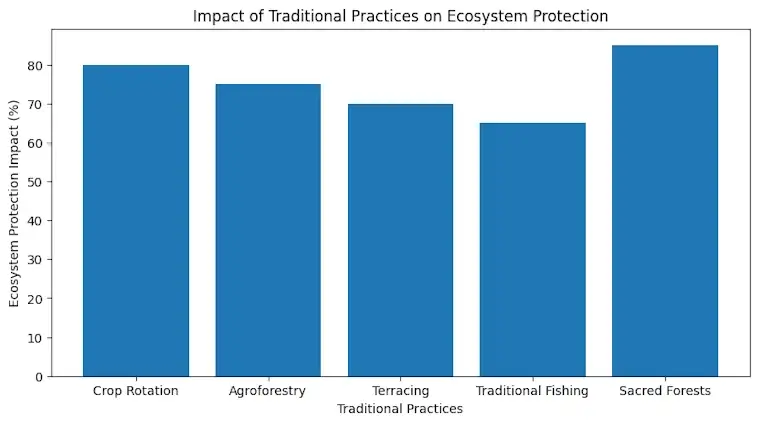
This chart highlights how different traditional practices contribute to ecosystem protection, giving a clear visual comparison to support the ideas above.
Why Indigenous Knowledge Matters in Modern Climate Action
Today, climate change is one of the biggest challenges we face. Yet, while new technology often leads the conversation, there is another powerful resource we should not overlook. That resource is Indigenous knowledge.
For generations, Indigenous communities have lived closely with nature. As a result, they have built deep, practical knowledge about the land, water, and ecosystems around them. This knowledge is not just historical. In fact, it offers real solutions for today’s climate crisis.
A Living System of Knowledge
Indigenous knowledge is not static. Instead, it evolves over time through observation and experience. Because of this, it reflects long-term environmental changes that modern science is only beginning to understand.
Key Benefits of Indigenous Knowledge in Climate Action
- Deep environmental insight Indigenous communities understand local ecosystems in detail. This helps identify early signs of climate change.
- Sustainable land management Traditional practices often protect biodiversity and prevent overuse of resources.
- Climate resilience Indigenous methods can strengthen communities against extreme weather and natural disasters.
- Low-impact living Many Indigenous lifestyles focus on balance with nature rather than exploitation.
- Community-based solutions Decisions are often made collectively, which supports long-term sustainability.
Bridging Traditional Wisdom and Modern Science
At first, it may seem like Indigenous knowledge and modern science are separate. However, they can work together. In fact, combining both can lead to stronger and more effective climate strategies.
For example, controlled burning practices used by Indigenous groups have helped reduce wildfire risks. Today, scientists are starting to adopt these methods in different parts of the world. This shows how traditional knowledge can guide modern solutions.
Moreover, Indigenous voices bring a different perspective. They often focus on relationships with nature rather than control over it. This shift in thinking is important. It encourages more sustainable and respectful approaches to the environment.
Looking Ahead: A More Inclusive Climate Strategy
As climate challenges grow, it is clear that we need diverse solutions. Therefore, including Indigenous knowledge is not just helpful. It is essential.
Governments, businesses, and communities must work together with Indigenous leaders. By doing so, we can build climate strategies that are both effective and fair.
In the future, success will depend on collaboration. When we value Indigenous knowledge alongside innovation, we create a more balanced path forward. And ultimately, that balance may be exactly what our planet needs.
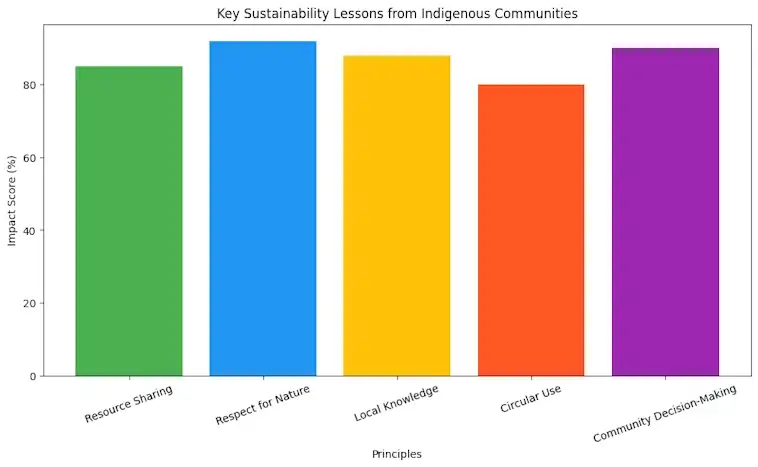
Lessons from Indigenous Communities for Sustainability
Sustainability is often framed as a modern idea. However, many Indigenous communities have lived in balance with nature for generations. Their practices are not new. Yet, they offer powerful lessons for today’s world. As climate challenges grow, these time-tested approaches feel more relevant than ever.
At the heart of Indigenous sustainability is a deep respect for the natural world. Nature is not seen as a resource to exploit. Instead, it is viewed as a living system to protect. This shift in mindset is simple, yet it can change everything.
Why Traditional Knowledge Still Matters
Indigenous communities rely on local knowledge passed down through stories and daily life. This knowledge is practical. It is based on observation, not theory. For example, many communities know exactly when to harvest plants without harming future growth. As a result, ecosystems stay healthy over time.
In addition, there is a strong focus on using only what is needed. Waste is kept to a minimum. Materials are reused, repaired, or returned to the الأرض. This approach closely aligns with today’s circular economy trends. Yet, Indigenous communities have practiced it for centuries.
Community First, Always
Another key lesson is the importance of community decision-making. Choices are often made with long-term impact in mind. Not just for individuals, but for future generations. This creates a sense of shared responsibility.
Moreover, resource sharing is common. Instead of excess consumption, there is balance. This helps reduce inequality and environmental pressure at the same time.
These lessons are not just ideas. They are practical tools. By learning from Indigenous communities, we can build a more sustainable and fair future.
Blending Ancient Wisdom with Future Climate Strategies
As climate challenges grow, many people are looking for smarter and more balanced solutions. Interestingly, some of the most powerful ideas are not new at all. Instead, they come from traditions that have existed for thousands of years. This is where Indigenous knowledge becomes essential. It offers insights shaped by deep respect for nature and long-term thinking.
At the same time, modern science and technology continue to evolve. So, when we bring these two worlds together, something exciting happens. We start to see more sustainable and practical ways to care for the planet. This blend of old and new could shape the future of climate action.
Why Indigenous Knowledge Matters Today
Indigenous communities have always lived close to the land. Because of this, they understand natural patterns in a way that data alone cannot capture. For example, they know when to plant, harvest, and rest the land. They also use methods that protect ecosystems rather than exploit them.
Moreover, Indigenous knowledge focuses on balance. It values taking only what is needed and giving back to the environment. This mindset is especially important today. As climate change accelerates, we need approaches that restore harmony with nature, not just control it.
In addition, these practices are often low-cost and easy to apply. This makes them useful for communities around the world, especially in areas facing extreme climate risks.
Combining Tradition with Innovation
Looking ahead, the real opportunity lies in collaboration. Scientists, policymakers, and Indigenous leaders can work together to create stronger climate strategies. For instance, satellite data can track environmental changes, while Indigenous knowledge can explain why those changes matter locally.
Furthermore, new technologies can help scale traditional practices. Techniques like controlled burning, water conservation, and biodiversity protection can be enhanced with modern tools. As a result, solutions become both efficient and culturally respectful.
However, it is important to approach this carefully. Indigenous voices must lead the conversation. Their knowledge is not just a resource; it is a living system tied to identity and heritage.
Blending Indigenous knowledge with future climate strategies is not just a trend. It is a necessary step toward a more sustainable world. By learning from the past and embracing innovation, we can build solutions that truly last.
Conclusion: Why Indigenous Knowledge Matters More Than Ever
Indigenous knowledge is not just a part of the past. It is a powerful guide for the future. As climate change continues to challenge our world, we need solutions that are both practical and sustainable. This is where Indigenous knowledge stands out.
For generations, Indigenous communities have lived in balance with nature. They understand ecosystems in a deep and meaningful way. Their methods are based on respect, observation, and long-term thinking. As a result, Indigenous knowledge offers real answers to today’s environmental problems.
Moreover, combining modern science with Indigenous knowledge can lead to stronger climate solutions. When these two approaches work together, they create smarter and more inclusive strategies. This not only helps protect the planet but also supports the rights and voices of Indigenous people.
Looking ahead, the role of Indigenous knowledge will only grow. Governments, businesses, and communities must listen, learn, and act. By valuing this wisdom, we can build a more resilient and sustainable future.
In the end, Indigenous knowledge is not optional. It is essential. And if we truly want to fight climate change, it must be part of the solution.