
The Water Scarcity Crisis Is Closer Than You Think
Water Scarcity Is Rising—Are We Ready?
Water scarcity is no longer a distant problem. Rivers are drying, reservoirs are shrinking, and demand for clean water keeps climbing. Rising populations, hotter temperatures, and unsustainable water use are putting enormous pressure on supplies. What once felt like a challenge for future generations is becoming a reality today.
Communities around the world are already facing shortages, from farmland turning to dust to cities rationing water during droughts. The ripple effects touch food prices, public health, and even global stability. Yet there’s still time to slow the crisis. By understanding why it’s happening and what can be done, individuals and local governments can make a difference before the problem grows even worse.
Why Water Scarcity Is Rising Faster Than Expected
Water scarcity is no longer a distant concern. It’s accelerating faster than experts once predicted, affecting billions of people worldwide. Rising populations, climate change, and unsustainable water use are straining supplies at unprecedented rates. What was once seen as a challenge for future generations is now a pressing crisis.
Climate Shifts Are Changing Water Patterns
One major factor is shifting weather patterns. Longer droughts, unpredictable rainfall, and shrinking glaciers are disrupting natural water cycles. In many regions, rivers and reservoirs are drying up more quickly than they can be replenished. Extreme heat also drives evaporation, making water shortages more severe. These changes aren’t temporary. Scientists warn that even areas once rich in water are becoming vulnerable, putting added stress on agriculture and drinking water supplies.
Urban Growth Is Driving Demand
At the same time, rapid urbanization is pushing water systems beyond their limits. Cities are growing faster than infrastructure can handle, leading to over-extraction from rivers and aquifers. Industries and households are consuming more water than ever, leaving less available for farming, ecosystems, and rural communities. In some places, water tables are dropping so fast that wells are running dry, creating competition and conflict.
Without urgent action, the gap between water demand and supply will keep widening. Investing in water-efficient technologies, restoring ecosystems, and rethinking how we use water in cities and farms can help slow the crisis. But the clock is ticking. To secure a future where clean water is available for everyone, nations must act now, not later.
The Hidden Causes Behind the Global Water Shortage
The world’s water crisis is often blamed on drought and population growth, but there are deeper reasons driving the shortage. Understanding these hidden causes can help us find real solutions before it’s too late.
Pollution Is Shrinking Freshwater Supplies
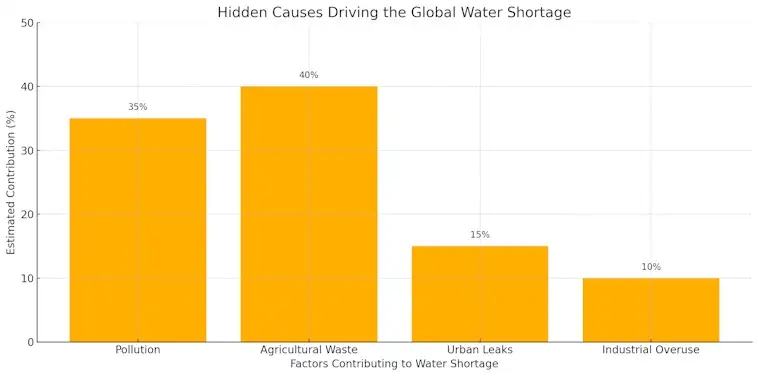
One major but overlooked factor is pollution. Rivers, lakes, and groundwater are being contaminated by agricultural runoff, industrial waste, and untreated sewage. Even when water sources look abundant, they may be unsafe to drink or use. Cleaning this water requires costly treatment, and in some areas, polluted supplies are abandoned altogether. This loss of usable water accelerates the shortage and puts added pressure on remaining clean sources.
Inefficient Water Use Worsens the Crisis
Another silent driver is waste. Agriculture accounts for about 70% of global freshwater use, yet much of it is lost to leaky irrigation systems or evaporates before reaching crops. In cities, outdated infrastructure leads to massive leaks, and industries often use far more water than they actually need. These inefficiencies add up, making the gap between water supply and demand even larger.
Solving the global water shortage requires more than finding new sources. It means stopping pollution at its source, modernizing irrigation and city infrastructure, and encouraging smarter water use across industries and households. These steps not only conserve water but also protect ecosystems and ensure cleaner supplies for future generations.
The water crisis is complex, but it isn’t unsolvable. By addressing these less visible causes now, we can slow the growing shortage and secure a safer, more sustainable future for everyone.
How Water Scarcity Impacts Your Daily Life
Water scarcity might sound like a distant problem, but it affects you more than you realize. From rising costs to changes in the food you eat, the ripple effects are already reaching households worldwide.
Higher Costs for Food and Utilities
When water is scarce, farming becomes more expensive. Crops need more irrigation, livestock need more care, and those costs trickle down to the supermarket. Prices for everyday items like fruits, vegetables, and grains can climb quickly. Utility bills also rise as cities invest in deeper wells, desalination plants, or costly water treatment systems to keep up with demand. Even your morning coffee may become more expensive as coffee-growing regions struggle with drought.
Changes in Lifestyle and Health
Water shortages also change how we live. Some cities are already imposing restrictions on outdoor watering, car washing, and even shower times. In extreme cases, communities rely on water trucks for their daily needs. Scarcity can also lead to health concerns, as low water availability impacts sanitation and increases the spread of waterborne illnesses. Even stress levels rise as people worry about rationing or shortages.
The impact doesn’t stop there. Industries that rely heavily on water, like textiles, energy, and technology, face production slowdowns, which can lead to job losses and product shortages. These disruptions can touch nearly every aspect of your day-to-day life.
While the effects are concerning, they’re not inevitable. By conserving water, supporting sustainable farming, and urging leaders to invest in resilient water systems, individuals can help soften the impact. The choices we make today can keep tomorrow’s water crisis from hitting home even harder.
What Communities Are Doing to Protect Freshwater
Communities around the world are taking innovative and impactful steps to safeguard freshwater resources. These local efforts highlight how collective action can make a real difference in water resilience.
Local Watershed Restoration Projects
Many towns are investing in watershed restoration programs. This includes replanting native trees on riverbanks, restoring wetlands, and cleaning up polluted waterways. These initiatives help filter runoff, stabilize soil, and protect local aquifers from contamination. When local biodiversity thrives, water naturally remains cleaner and more reliable throughout the seasons. Communities often work with farmers and landowners to reduce fertilizer and pesticide use, which further enhances water quality.
Community-Led Water Recycling and Reuse
Elsewhere, residents are embracing water recycling systems. In some neighbourhoods, treated greywater from showers and sinks is safely reused for irrigation or toilet flushing. Businesses and schools are installing rainwater harvesting systems to collect and store seasonal rainfall. These low-cost strategies reduce demand on municipal freshwater supplies and keep stormwater from overwhelming local systems during heavy rain.
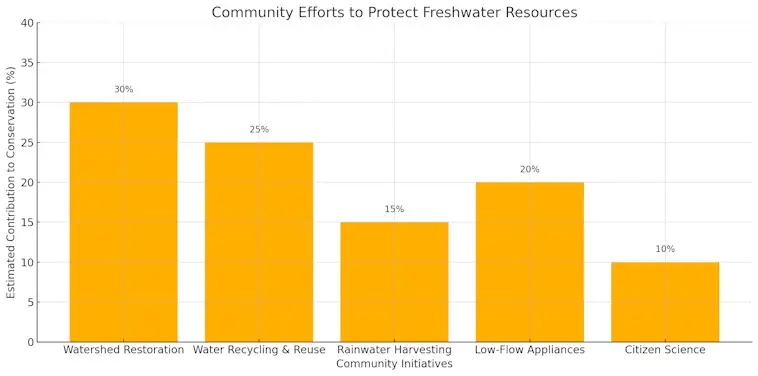
Neighborhood committees are also promoting low-flow appliances and faucet aerators to cut household water usage. These small changes add up when adopted community-wide. Workshops and local campaigns raise awareness and provide practical guidance for installing water-saving devices.
Many municipalities now engage the public through citizen science projects—residents help monitor water quality and report pollution sources. This empowers locals, builds trust in water data, and encourages accountability from industries and local governments.
Taken together, these grassroots programs show how diverse solutions can protect freshwater. Whether through restoring ecosystems, recycling household water, or educating residents, communities lead the way thoughtfully and sustainably.
While large-scale policy and infrastructure are vital, local efforts are often faster to implement and more adaptable to regional needs. As more regions share their innovations, communities can learn from each other—multiplying success and protecting freshwater for future generations.
Simple Steps You Can Take to Conserve Water Today
Water conservation doesn’t need to be complicated. Small changes at home can make a big difference, especially when millions of people adopt them together. Conserving water not only protects the environment but can also lower your monthly bills.
Make Your Home More Water-Efficient
One of the easiest ways to save water is by upgrading to low-flow appliances. Installing low-flow showerheads, faucets, and toilets can cut household water use by thousands of gallons each year. Fixing leaks is equally important. A dripping faucet or running toilet can waste hundreds of gallons of water over time. Setting up rain barrels to capture runoff from your roof is another simple step, especially for watering gardens.
Change Your Daily Habits
Adjusting how you use water day to day can make a big impact. Take shorter showers, turn off the tap while brushing your teeth, and only run full loads in the dishwasher or washing machine. When cooking, use just enough water and reuse cooled water from boiled vegetables for plants. Outside, water your garden early in the morning or late in the evening to reduce evaporation.
These small actions might feel insignificant on their own, but they add up quickly. If every household reduced water use by even 10 percent, billions of gallons could be saved each year. This conservation not only reduces strain on local water systems but also helps communities avoid costly restrictions during drought.
By starting with a few simple changes, you can make a real difference. Water is a resource we all share, and every effort counts in protecting it for the future.
Facing the Reality of Water Scarcity
Water scarcity is no longer a problem for distant regions or future generations. It’s a growing reality that affects our food, our health, and our economies right now. Rising demand, pollution, and shifting weather patterns are accelerating the strain on this vital resource faster than many expected.
The good news is that solutions are within reach. Communities are restoring ecosystems, investing in smarter infrastructure, and rethinking how water is used every day. Individuals can also make a difference by conserving water at home, supporting sustainable practices, and staying informed about local water challenges.
The path forward requires urgency and cooperation. Every gallon saved, every polluted river restored, and every innovative water system adopted moves us closer to a future where clean water remains available for everyone. Acting now ensures that families, farms, and businesses will have the water they need to thrive, even as the climate and populations change.
Water is life. Protecting it today means protecting the health and stability of our world tomorrow. The time to act isn’t years from now—it’s today.