Why Coral Recovery Matters for Our Ocean Future
The Critical Role of Coral Recovery in Safeguarding Our Ocean’s Future
The push for coral recovery is gaining momentum, and for good reason. Around the world, reefs are under pressure from warming oceans, stronger storms, and rising pollution. Yet, even as these challenges grow, scientists and coastal communities are uncovering new ways to help damaged reefs bounce back. This hopeful shift is opening the door to real change.
As we look ahead, it’s becoming clear that restoring coral isn’t just about saving a single species or a pretty dive spot. Instead, it’s about rebuilding entire ecosystems that support fish populations, protect coastlines, and fuel local economies. And with new restoration techniques emerging every year, coral recovery is no longer a distant dream—it’s a practical path toward a healthier ocean.
By understanding how reefs can heal and what it takes to support their comeback, we can make smarter choices that benefit both marine life and our own future.

How Coral Recovery Strengthens Ocean Ecosystems
When we talk about the health of our oceans, it’s hard to ignore how much coral reefs matter. They shape entire marine ecosystems. They shelter fish, protect coastlines, and support millions of people. Yet many reefs have been damaged by warming seas, storms, and pollution. That’s why coral recovery has become such an important topic. It signals hope. And it shows us what’s possible when nature gets the space it needs to heal.
As reefs begin to rebuild, we see quick changes. Fish return. Colors brighten. The water around them becomes clearer. These early signs tell us that recovery is not only happening but gaining momentum. They also reveal how connected everything in the ocean really is.
Signs the Ocean Is Rebuilding Itself
One of the most inspiring things about coral recovery is how fast life responds. When damaged reefs start to regrow, small fish are often the first to move back in. They bring energy and movement. Soon after, larger species follow, and the food web begins to rebuild. This chain reaction strengthens the surrounding ecosystem. It also boosts biodiversity, which helps the ocean handle future stress.
And there’s more. When corals recover, nearby seagrass beds and mangrove forests thrive, too. These natural partners work together to store carbon, reduce erosion, and support coastal life. They form a network of resilience. So when one part heals, others benefit.
As we look ahead, the potential is exciting. New restoration methods, community-led projects, and global awareness are making a difference. With consistent effort, coral recovery can help rebuild stronger, more adaptable oceans for the future.
The Hidden Benefits of Restoring Damaged Reefs
When we talk about coral reefs, we often picture bright colors, clear water, and thriving marine life. Yet many of these ecosystems are struggling. The good news is that restoring damaged reefs does far more than revive underwater beauty. It also strengthens coastal communities, protects homes, and supports economies. And as we look ahead, these benefits will only grow more important.
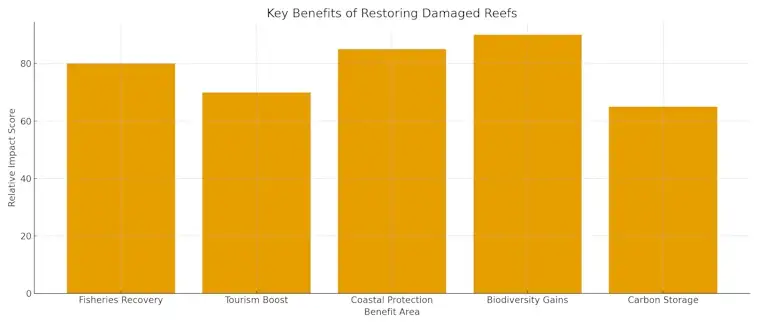
Reef restoration is not just an environmental project. It’s a practical investment in the future. Healthy reefs bring fish back, which helps local fisheries recover. They draw tourists, which boosts local income. They act as natural sea walls, softening the force of storms and rising seas. They also store carbon and support rich biodiversity that keeps the ocean in balance.
As we face more climate-related pressures, restoring reefs becomes a game-changer. And the best part? Every restored reef creates a ripple effect of positive change. Below is a simple chart showing how different benefits stack up.
Why Coral Recovery Is Essential for Coastal Protection
Coastlines are changing faster than many of us expected. Storms are hitting harder. Tides are pushing higher. And communities that once felt safe now face growing risks. That’s why coral recovery isn’t just an environmental goal—it’s a practical shield for people who live and work near the water.
As you may know, healthy coral reefs act like natural barriers. They break incoming waves, soften storm surges, and help keep erosion in check. When reefs decline, that protection fades. Yet when they bounce back, the benefits return surprisingly quickly. And this is where the story becomes hopeful. We now have better tools, better science, and more global attention than ever before.
Let’s look at why coral recovery matters so much for coastal safety:
- Healthy reefs can reduce wave energy by up to 97%, easing the impact of storms on shorelines.
- Recovered coral structures help trap sand and slow erosion.
- Strong reef systems support fisheries and local tourism, strengthening coastal economies.
- Coral recovery boosts biodiversity, creating more resilient marine ecosystems.
- Natural reef barriers lower the need for costly engineered sea walls.
Because these protective effects are natural, long-lasting, and self-renewing, investing in coral recovery today shapes a safer coastline for the next generation. And as restoration methods improve, we have a real chance to rebuild these underwater defenses at a meaningful scale.
The path forward is clear. When we restore coral reefs, we don’t just help ocean life—we help ourselves.
How Reef Restoration Supports Marine Biodiversity
Healthy reefs are more than beautiful places—they’re living systems that support an incredible range of marine life. When reefs decline, the entire underwater community feels the impact. Yet restoration gives us a way to turn things around. And as we’re now seeing in many coastal regions, even small projects can spark big ecological change.
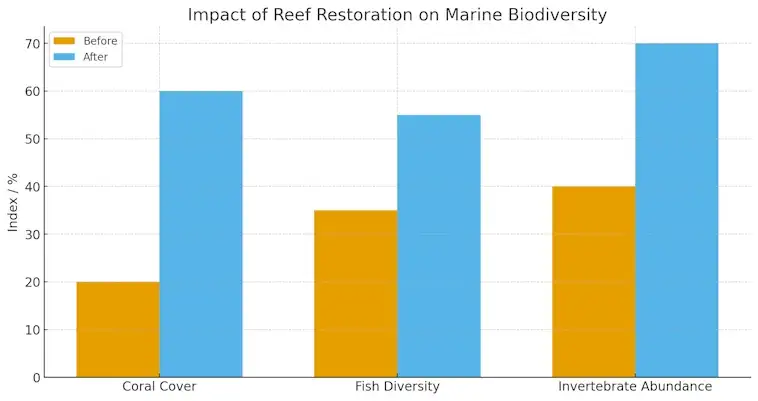
Reef restoration works by helping damaged areas bounce back faster than they would on their own. It often starts with planting coral fragments, rebuilding structure, or removing stressors like invasive species. As these efforts take hold, the reef begins to recover. And with recovery comes return. Fish come back. Crustaceans come back. Even the tiny organisms that form the base of the food chain begin to thrive again.
As the reef regains complexity, it creates more hiding places, feeding grounds, and breeding spaces. This shift supports a rise in biodiversity, which is essential for long-term resilience. In other words, a healthier reef can absorb shocks—like heatwaves—far better than a weakened one.
To help illustrate the impact, the chart below shows how common biodiversity indicators improve after restoration projects. While every reef responds in its own way, the overall trend is clear: restoration boosts life.
The Future of Coral Conservation: Innovations Driving Change
Coral reefs are often described as the rainforests of the sea. Yet many of us forget how much they shape our daily lives. They protect our coastlines. They support fisheries. They even fuel tourism. But they are also under pressure from warming oceans and rising pollution. The good news is that new ideas are emerging. And they’re giving scientists and communities fresh hope.
Today, coral conservation is entering a new era. Researchers are testing bold solutions that could speed up recovery. Local groups are also getting more involved. As a result, the momentum is shifting. And that shift matters, because small advances now can mean stronger reefs in the years ahead.
Coral Recovery Breakthroughs to Watch
One promising area is assisted evolution. This approach helps corals adapt to stress by identifying the hardier strains and encouraging their growth. It sounds futuristic, but it’s already producing early results.
Another exciting trend is micro-fragmentation. This method involves breaking corals into tiny pieces so they grow faster. It allows restoration teams to scale up their work. And it gives damaged reefs a better chance to bounce back.
There are also robots entering the field. They plant coral fragments with impressive speed and accuracy. As technology improves, these robots could help restore large areas in less time. Pair that with better water-quality monitoring, and you get a clearer picture of which sites need help the most.
If you want a deep dive into the science behind coral decline and recovery, check out the National Oceanic and Atmospheric Administration (NOAA).
All these innovations point to a future where coral reefs stand a better chance. The solutions are not perfect. But they’re moving fast. And when combined, they can reshape how we protect one of the ocean’s most valuable ecosystems.
Why Coral Recovery Shapes a Healthier Ocean Future
Coral recovery is more than an environmental goal. It’s a foundation for a thriving ocean. As we look ahead, it’s clear that healthier reefs support stronger fisheries, protect coastlines, and help preserve the remarkable diversity of life beneath the waves. And as restoration science grows, we’re gaining new tools that make real progress possible.
Moving forward, every choice—big or small—can support this rebound. From cutting carbon to backing reef-friendly products and community projects, each action adds up. When we champion coral recovery today, we open the door to a more resilient and vibrant ocean tomorrow.