The Surprising Benefits of Wildlife Corridors You Never Knew
The Surprising Benefits of Wildlife Corridors You Never Knew
Wildlife corridors are often seen as simple strips of land connecting habitats, but their impact reaches far beyond what most people realize. These green pathways help animals move safely across fragmented landscapes, reduce the risk of extinction, and even support healthier ecosystems for humans. From stabilizing food chains to boosting resilience against climate change, they offer surprising advantages that are shaping the future of conservation. As more communities recognize their value, wildlife corridors are becoming one of the most effective tools for protecting both nature and people.

How Wildlife Corridors Protect Species on the Move
When you think about animals on the move, you might picture herds of elephants, wolves roaming in search of food, or even butterflies on their long migrations. But here’s the challenge: as cities expand and roads cut across landscapes, these natural paths are getting blocked. That’s where wildlife corridors come in. They are carefully planned strips of land that reconnect broken habitats, giving animals safe passage to travel, find mates, and survive.
These corridors aren’t just for the big and majestic creatures we all know. Small species, like frogs, turtles, and even insects, also rely on them. A single road or fence can become a deadly obstacle, stopping these animals from reaching food, water, or breeding grounds. By building bridges, tunnels, and protected pathways, wildlife corridors reduce collisions, help populations grow, and keep ecosystems in balance.
Why Connectivity Matters
Imagine being cut off from your favorite grocery store or unable to visit family. That’s what happens when habitats are fragmented. Animals become isolated, gene pools shrink, and survival chances drop. Corridors act like lifelines, stitching landscapes back together and allowing wildlife to move freely.
The exciting part? These projects don’t just help animals. They also protect biodiversity, support healthier forests and rivers, and even benefit people by creating greener, more resilient landscapes. As climate change shifts habitats, corridors are becoming essential routes for survival, letting species adapt and keep moving forward.
Boosting Local Ecosystems Through Natural Pathways
Have you ever noticed how a simple walking trail or bike path can bring an area to life? These natural pathways are more than just places for people to move through. They can become vital lifelines for local plants, animals, and entire ecosystems.
When we design pathways with nature in mind, they do more than connect point A to point B. They connect habitats. Birds, pollinators, and small mammals can use these green corridors as safe routes to find food, shelter, and mates. At the same time, native plants thrive along these paths, creating mini-ecosystems that support biodiversity right in our neighborhoods.
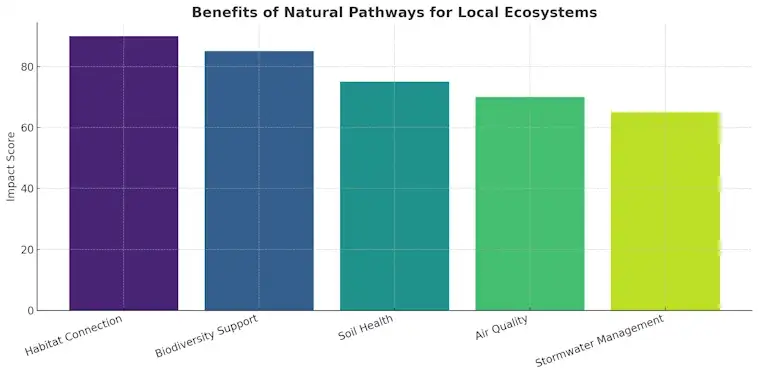
What’s exciting is that pathways can help heal fragmented landscapes. Many towns and cities are surrounded by roads, parking lots, and buildings. By weaving in natural trails, we give wildlife a chance to move safely again. And as these spaces grow, they improve soil health, clean the air, and even help manage stormwater.
In short, natural pathways are not just good for us. They’re good for the planet too.
Why Wildlife Corridors Support Biodiversity and Balance
Have you ever wondered how animals survive as cities grow and natural spaces shrink? One powerful solution is the creation of wildlife corridors. These are stretches of land that connect habitats, giving animals safe passage to move, feed, and reproduce. They act like nature’s highways, helping species stay healthy and ecosystems remain in balance.
When habitats are isolated, plants and animals can struggle to adapt. Populations become weaker, and biodiversity starts to decline. But with wildlife corridors, species can thrive and continue playing their role in the environment. In fact, these connections help ensure that no single area becomes too depleted or overcrowded.
Here’s why wildlife corridors are so important:
- Protect genetic diversity – Corridors let animals from different areas mix, reducing the risks of inbreeding.
- Support healthy ecosystems – Plants and animals can move freely, helping pollination and seed spreading.
- Reduce human-wildlife conflict – Safe crossings lower the chances of animals wandering into roads or neighborhoods.
- Help species adapt to climate change – As temperatures shift, animals can migrate to new suitable habitats.
- Maintain natural balance – Predators, prey, and plants all interact in ways that keep ecosystems stable.
Wildlife corridors are more than just land. They’re lifelines that keep nature connected and balanced. By protecting and restoring these pathways, we give countless species a better chance to survive and thrive.
The Hidden Economic Value of Connecting Habitats
When we think about wildlife corridors or connected habitats, we often imagine them only in terms of saving species. That’s true, but the benefits go far beyond biodiversity. In fact, linking natural areas can generate surprising economic value.
Healthy, connected landscapes reduce flood risks, improve water quality, and store carbon. They also create opportunities for recreation and tourism. For example, hiking trails, birdwatching areas, and eco-lodges thrive when ecosystems remain intact. Even agriculture benefits—pollinators like bees move more freely across connected landscapes, helping crops and boosting yields.
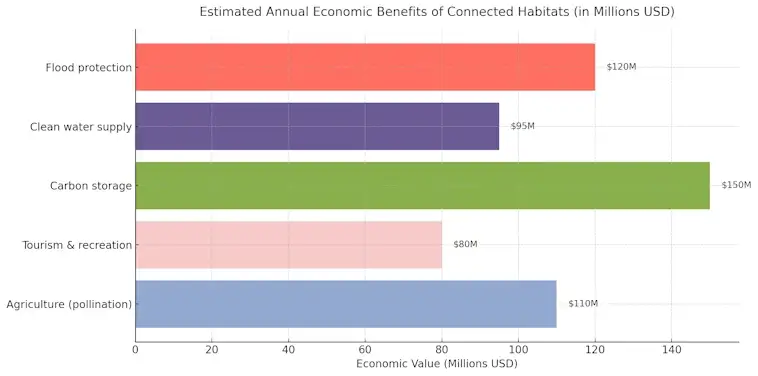
The numbers tell a powerful story: investing in nature isn’t just good for the planet, it’s good for people and local economies. Below, you’ll see how these benefits stack up when habitats are linked.
Creating Climate-Resilient Landscapes for the Future
The way we design and care for our landscapes today will shape how well we adapt to tomorrow’s climate. Rising temperatures, heavier storms, and longer droughts are already putting stress on natural and built environments. But here’s the good news: we have the tools to create spaces that don’t just survive these challenges, but actually thrive in them.
It starts with rethinking how we use land. Instead of seeing landscapes as just decorative, we can treat them as living systems that support both people and nature. That means planting more native species, conserving water, and creating green areas that absorb heat and filter air. By doing so, we help reduce climate risks while improving everyday life.
Wildlife Corridors: Pathways to Resilience
One of the most powerful ways to build climate-ready landscapes is by protecting wildlife corridors. These are stretches of connected habitat that allow animals to move freely and safely. As climate change shifts where species can live, these pathways become even more important. They give wildlife the chance to migrate, find food, and adapt to changing conditions.
For us, that means healthier ecosystems. When birds, pollinators, and other species can move without barriers, landscapes stay more balanced and resilient. Home gardens, city parks, and rural fields can all play a role in linking these green pathways. Even small actions, like planting hedgerows or leaving natural spaces along rivers, help create stronger, climate-smart connections.
In the end, building climate-resilient landscapes isn’t only about preparing for what’s ahead. It’s about designing places that are more vibrant, more sustainable, and better for all living things—now and for generations to come.
Why Wildlife Corridors Are Essential for Our Future
Wildlife corridors are more than just pathways—they’re lifelines. They give animals the space to roam, find food, and adapt to a rapidly changing world. When we protect these natural connections, we also protect healthy ecosystems, clean water, and even the balance of our climate.
The good news is that every action counts. From supporting conservation groups to backing local green projects, we all have a role to play in keeping these vital corridors open. The future of countless species depends on it—and so does ours.
Let’s make room for nature. Share this article, talk about wildlife corridors in your community, and support efforts that reconnect the wild. Together, we can build a future where people and wildlife thrive side by side.