
Antarctica’s Ice Melt: Impacts on Marine Life
Antarctica’s Ice Melt: Impacts on Marine Life
Antarctica’s ice is melting faster than ever, and this has big effects on marine life. As the ice disappears, animals like penguins, seals, and whales are finding it harder to survive. This isn’t just about losing ice; it’s about the whole ocean system changing. From shifting currents to new predator arrivals, the underwater world is transforming. We’re taking a look at how these changes impact the creatures living there and what it means for the future. Join me and let’s see what’s happening in the chilly waters around Antarctica and why it matters to us all.
What You’ll Discover
Antarctica’s Changing Ice Landscape
Disappearing Ice, Disappearing Homes
Shifts in Ocean Circulation and Nutrient Distribution
A New Wave of Predators: Ecological Imbalances
The Base of the Food Web in Peril
Antarctic Breeding Grounds in Jeopardy
The Impact of Increased CO₂ on Antarctic Waters
Future Forecasts: Research and Conservation Efforts
Antarctica’s Changing Ice Landscape
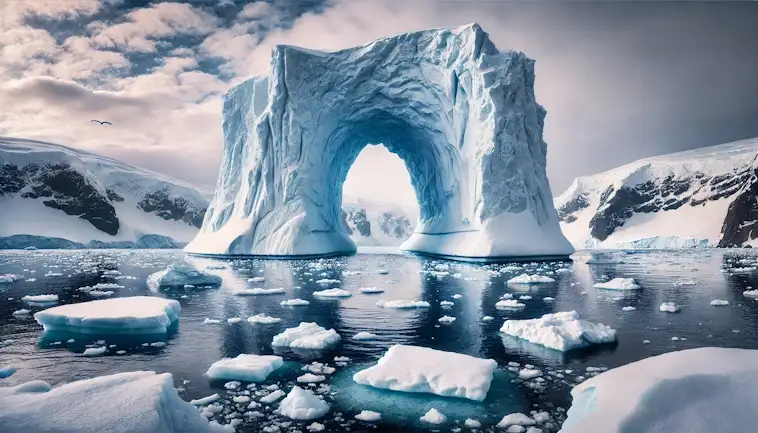
Ice melt in Antarctica is a critical issue that’s attracting global attention. To understand why it’s happening at increasing rates, we first need to look at the role global warming plays.
Antarctica is home to vast amounts of ice, both on land and at sea. The land ice, which makes up the majority of the continent’s ice, is formed from snow that compacts over time. When this ice melts, it directly contributes to rising sea levels because the water from the land is added to the ocean. On the other hand, sea ice is formed from ocean water freezing. When sea ice melts, it doesn’t contribute to sea level rise directly because it’s already part of the ocean’s volume, but its loss has other significant effects on the planet.
Global warming is the main driver behind the increasing rates of ice melt here. The Earth’s temperature has been rising due to an increase in greenhouse gases like carbon dioxide in the atmosphere. These gases trap more of the sun’s heat, leading to warmer air and ocean temperatures. In Antarctica, this means that the air and the water are both warming up, which accelerates the melting of ice.
The impact of this melting is profound. For land ice, the meltwater flowing into the oceans is raising sea levels, which can increase flooding risks in coastal areas around the world. Sea ice loss affects the Earth’s ability to reflect sunlight. Normally, the white ice reflects the sun’s rays back into space, helping to keep the overall temperature of the Earth lower. Without this ice, the dark ocean absorbs more heat, which in turn leads to more warming.
Moreover, the ecological ramifications are broad. Animals like penguins and seals, who rely on sea ice for breeding and as a platform for resting and accessing food, face habitat loss. Changes in sea ice also affect algae that grow under the ice, which are a key food source at the base of the ocean’s food web.
Understanding these changes helps us see the bigger picture of how interconnected our environment is and underscores the urgency of addressing global warming.
Disappearing Ice, Disappearing Homes
The loss of sea ice in Antarctica is a big deal for many creatures that call the ice-covered regions home, like Adélie penguins, seals, and some whales. These animals rely heavily on the ice for important parts of their lives, including feeding, breeding, and resting.
Let’s start with the Adélie penguins. These penguins need ice because they breed and raise their chicks on it. The ice also helps them reach the ocean to find food. As the ice disappears, they have to travel further to find food, which is a big problem, especially for the young ones. This extra effort can affect their health and ability to reproduce, which in turn can lead to fewer Adélie penguins over time.
Seals face similar challenges. They use the sea ice as a platform to rest and to give birth to their pups. The ice also offers protection from predators lurking in the water. Without enough ice, seals find it harder to rest and raise their pups safely. This can lead to lower survival rates for seal pups, and gradually, the population of seals might begin to decrease.
Whales, like the minke whale, also depend on the sea ice. They feed on krill, which are tiny shrimp-like creatures that live under the ice. The ice provides a safe space for krill, and as it melts, the krill population can drop, leaving whales with less food. This can lead to a decline in whale numbers, as they might not have enough energy to reproduce or might have to migrate further to find food.
As you can see, the relationship between habitat space and population numbers is very direct. Less ice means less space for these animals to do what they need to do to survive and thrive. This can lead to smaller populations over time. Understanding this connection helps us realise how crucial it is to protect these icy habitats for the health of the whole ecosystem.
Shifts in Ocean Circulation and Nutrient Distribution
As Antarctic ice melts, it has a surprising effect on the ocean, especially on water salinity and ocean currents. This might sound a bit technical, but it’s all about how salty the ocean is and how its waters move around.
When the ice melts, it adds fresh water to the ocean. This freshwater is less salty than seawater. When lots of freshwater mixes into the ocean, it can make the upper layers of the ocean less salty. This is important because the salinity and the temperature of the water help control ocean currents, which are like underwater rivers that flow around the world.
These currents do a lot more than just move water; they also move heat and nutrients, which are like vitamins for marine life. Nutrients are essential for the growth of tiny plants called phytoplankton, which are a vital part of the ocean’s food chain. Phytoplankton feed everything from tiny krill to big whales.
Now, when freshwater mixes into the ocean and changes how salty it is, it can slow down or alter these currents. This means nutrients might not get carried to places where they usually go. Areas that once had lots of nutrients might find themselves running low, affecting the growth of phytoplankton.
With fewer phytoplankton, the entire food chain feels the impact. Less food means marine animals, like fish, whales, and even seabirds, might struggle to find enough to eat. This can affect their breeding and feeding patterns. For example, if fish can’t find enough food, they might not grow as large or reproduce as successfully, leading to fewer fish in the sea.
The melting of Antarctic ice can lead to big changes in ocean salinity and currents, which then disrupts the distribution of nutrients. This has a knock-on effect on food availability for marine life, influencing their entire ecosystem. It’s a complex chain reaction that starts with the melting ice!
A New Wave of Predators: Ecological Imbalances
As the ice landscapes in Antarctica change, so does the behaviour of animals living there, especially how predators and their prey interact. This can really shake up the local ecosystems.
Let’s imagine the ice is like a big stage where a lot of the action happens for creatures like seals, penguins, and their predators. As this ice shrinks or disappears, these animals have to find new places to hunt, mate, and raise their young. This can push them into new areas they wouldn’t normally go to.
For example, as ice diminishes, seals might find fewer safe places to rest or escape from predators like orcas and leopard seals. This could make it easier for these predators to catch them, which might lead to a drop in seal populations if they can’t find enough safe ice.
Similarly, penguins that rely on ice to access the sea for food might have to travel longer distances to find suitable hunting grounds. This extra effort uses up energy and can leave them with less energy for breeding or feeding their chicks. If the penguins can’t find enough food, their population could decline.
On the flip side, some predators might benefit, at least temporarily. For instance, killer whales might find it easier to hunt in waters that were previously covered by thick ice. This can increase their range and influence in these new areas.
However, these new arrivals can disrupt the existing balance of local ecosystems. They might compete with native species for food or even prey on them, leading to declines in some native populations.
As the Antarctic ice changes, it forces animals to adapt to new areas and conditions. This can shake up the old predator-prey dynamics and impact the whole ecosystem, sometimes in ways that are hard to predict. It’s like a domino effect, where changing one thing can lead to a lot of unexpected changes elsewhere.
The Base of the Food Web in Peril
The Antarctic food web is an intricate system where many marine species are interconnected, and krill are at the heart of it. Krill are small, shrimp-like creatures that are crucial for the survival of many Antarctic animals like whales, seals, and penguins.
Krill depend heavily on sea ice. They feed on the algae that grow on the underside of the ice, which is their main food source. This algae needs the ice to survive because it provides a place to attach and grow in the cold, nutrient-rich waters.
Now, let’s talk about what happens when there is less ice. As temperatures rise and ice cover reduces, there’s less habitat for algae. With less algae, krill populations can decline because they don’t have enough food. This reduction in krill is a big problem for the creatures that depend on them.
For example, penguins eat krill to get the energy they need to breed, feed their chicks, and survive the harsh Antarctic conditions. Whales travel thousands of miles to feed on large swarms of krill during the Antarctic summer. If krill numbers are down, these whales might not find enough food, which can affect their ability to reproduce and maintain their health.
Seals also rely on krill, either directly by eating them or indirectly by eating fish that feed on krill. If seals can’t find enough food, their population might decline, affecting the whole food web.
This reduction in krill due to less ice cover can have cascading effects on marine biodiversity. Fewer krill means less food for a range of species, leading to declines in those populations. This can shift the balance of the entire ecosystem, changing which species are most common and affecting the overall health of the marine environment.
The Antarctic food web is highly dependent on krill, and as ice diminishes, so does the availability of krill. This has far-reaching effects on the biodiversity and stability of marine life in the region.
Antarctic Breeding Grounds in Jeopardy
Changes in Antarctica’s environment, especially the loss of ice, are having a big impact on the breeding success of marine species like seals and penguins.
Firstly, many of these species use the ice as a crucial platform for their breeding activities. Seals, for example, give birth on ice. They choose these spots because they are safe from predators and close to food sources. Ice platforms also help seal pups avoid drowning and harsh winds during their early days. When there’s less ice, seals have fewer safe places to give birth and raise their pups. This can lead to lower survival rates for the newborns.
Penguins also rely on stable ice conditions for breeding. They need solid ice to build nests and to access feeding areas easily. When ice melts rapidly, their nests can be destroyed by flooding, and parents may have to travel much farther to find food. This extra effort takes a toll. It leaves less energy for feeding their chicks and can lead to weaker, less likely to survive young penguins.
Moreover, the timing of ice formation and melt can disrupt the natural breeding cycles of these animals. Many Antarctic species have breeding seasons that are synced with the environment. For example, penguins time their chick-rearing to match the peak availability of food like krill. If the ice melts too early or forms too late, it can throw off this delicate timing. This mismatch can mean less food available when it’s most needed, hurting the chances of raising healthy chicks.
While the Antarctic ice continues to diminish, vital breeding areas for seals, penguins, and other marine species are reduced. This loss leads to potentially lower birth rates and can significantly affect the population health of these species. Understanding these changes is crucial as it helps us grasp the broader impacts of environmental shifts in such a sensitive region.
The Impact of Increased CO₂ on Antarctic Waters
The ocean plays a big role in absorbing carbon dioxide (CO₂) from the atmosphere. While this helps reduce the effects of climate change, it also leads to ocean acidification, a serious problem for marine life in Antarctica, especially for creatures that form shells, like molluscs and certain types of plankton.
When CO₂ mixes with seawater, it creates a weak acid. This change might sound small, but it can have a big impact on the water’s acidity. For shell-forming organisms, the more acidic the water, the tougher their lives become. Here’s why: these creatures need minerals from the ocean to build their shells. Acidic waters make it hard for them to get these minerals, weakening their shells and making it difficult for them to grow properly.
For example, molluscs like clams and snails, which rely on strong shells for protection against predators and harsh environments, can find themselves vulnerable if their shells are compromised. Weaker shells mean they are more likely to be eaten or damaged by the elements.
Plankton, tiny creatures at the very base of the food web, also struggle in more acidic waters. Some plankton species need calcium carbonate to form their shells, just like molluscs. If these plankton can’t build their shells, their populations could decline. Since so many larger animals depend on plankton for food, this could disrupt entire marine food chains.
Moreover, more acidic waters can affect the life cycles and survival rates of marine species. Young, growing marine animals are particularly sensitive to changes in acidity, which can impact their development and survival chances. This means not just fewer individuals surviving to adulthood but also potential long-term declines in populations.
Clearly, as the oceans absorb more CO₂ and become more acidic, it becomes tougher for shell-forming organisms in Antarctica to survive and thrive. This not only affects these creatures but also the larger marine ecosystem, disrupting food webs and impacting the overall health of the marine environment.
Future Forecasts: Research and Conservation Efforts
Scientists and conservationists are working hard to understand and combat the impacts of ice melt in Antarctica. This effort involves ongoing research projects and various conservation strategies, supported by international treaties aimed at preserving this crucial ecosystem.
One key area of research focuses on monitoring the changes in ice cover and understanding how these changes affect local wildlife and global sea levels. Researchers use satellites, drones, and on-the-ground measurements to track how fast ice is melting and where it’s happening most. This data is crucial for predicting future changes and planning how to address them.
In terms of conservation, one major international effort is the Antarctic Treaty System, which regulates international relations concerning Antarctica. This treaty, signed by 54 countries, designates Antarctica as a natural reserve devoted to peace and science. It strictly controls activities that could harm the continent’s environment, including limits on tourism and bans on mineral mining.
Another significant agreement is the Convention for the Conservation of Antarctic Marine Living Resources (CCAMLR). This treaty focuses on protecting Antarctic marine life by regulating fishing activities to ensure they are sustainable and do not disrupt the ecosystem. The CCAMLR uses scientific data to set fishing quotas and protect important feeding and breeding areas for marine wildlife.
Locally, various conservation strategies are in place, including the establishment of Marine Protected Areas (MPAs) around Antarctica. These MPAs are designed to safeguard the biodiversity of specific regions by prohibiting or strictly regulating fishing and other activities that could harm the marine environment. For instance, the Ross Sea region MPA covers an area of 1.55 million square kilometres and is one of the largest marine protected areas in the world.
These efforts show a significant international commitment to preserving Antarctica. By continuing research and strengthening conservation measures, scientists and policymakers aim to mitigate the impacts of ice melt and protect this unique and vital environment for future generations.
Conclusion
As we’ve seen, the melting ice in Antarctica has profound effects on the marine ecosystem and the diverse species that call it home. From the tiniest plankton to the largest whales, every creature feels the impact of the changing environment. The loss of ice not only disrupts the food web but also affects breeding grounds and the survival rates of marine life.
Thankfully, ongoing research and international conservation efforts are helping to address these challenges. By monitoring ice changes and protecting marine habitats through treaties and marine protected areas, we can help preserve this incredible ecosystem. It’s a reminder of how interconnected our planet is and the importance of taking action to protect these vital areas. Together, we can make a difference in safeguarding the future of Antarctica and its unique wildlife.