Wonderful Marine Habitats Overcome Threats To Sea Life Now
Marine Habitats: How These Wonderful Ecosystems Are Overcoming Today’s Biggest Threats
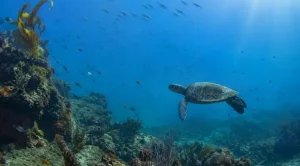
Marine habitats hold far more resilience than most people realize. These underwater worlds face rising temperatures, shifting currents, and growing pollution, yet many areas are showing signs of strength. Fresh research points to surprising rebounds in coral communities, renewed growth in seagrass meadows, and smarter adaptations among countless species. These changes signal that recovery is possible when conditions improve, even slightly.
As pressure on the oceans continues, these stories offer a hopeful path forward. Step by step, scientists, coastal communities, and conservation projects are helping restore balance. Progress may feel uneven at times, yet the momentum is real. With smarter policies, cleaner waterways, and stronger protections, the next decade could reshape how sea life survives—and thrives—across the planet’s most remarkable ecosystems.
Marine Habitats and the Hidden Forces Shaping Ocean Survival
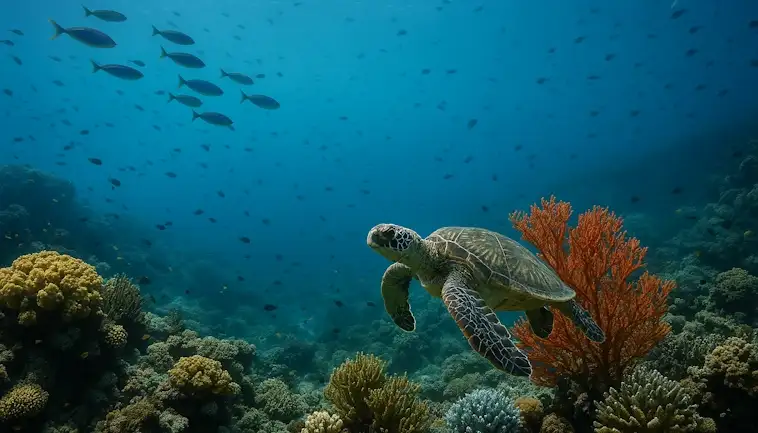
Marine habitats are some of the most fascinating — and fragile — places on Earth. Yet most of what shapes them happens out of sight. When you look out at the ocean, it seems calm. But beneath the surface, powerful forces are always at work. These forces determine which species thrive, which struggle, and how entire ecosystems adapt to rapid change. Today, we’re learning more about these invisible drivers, and the discoveries are reshaping how we think about ocean survival.
As research grows, one thing becomes clear. Marine habitats respond to even the smallest shifts in temperature, currents, and chemistry. That means the ocean is constantly adjusting. Sometimes it adjusts in ways that help life flourish. Other times, the changes put enormous pressure on species that rely on stable conditions. Understanding these forces gives us a better chance to protect the places that sustain so much of our planet’s life.
When Water Moves, Everything Changes
Ocean currents act like an underwater highway system. They carry nutrients, heat, and even entire populations of tiny organisms across vast distances. When those currents change direction or slow down, marine habitats feel the impact almost immediately. Fish may migrate earlier. Coral may struggle to feed. And predators may suddenly find themselves in new territory. These shifts remind us that stability in the ocean is more dynamic than we once believed.
At the same time, rising temperatures add another layer of stress. Warm water changes everything. It affects breeding patterns, food availability, and the strength of marine plants that anchor ecosystems. Even a slight increase can push some species past their limits. That’s why scientists now pay close attention to heat waves in the ocean — they can reshape entire regions in a single season.
As we move forward, we’ll need to watch these hidden forces more closely. They don’t just influence marine habitats. But they influence our food systems, our climate, and the health of future generations. By understanding what’s really happening beneath the waves, we give ourselves a better chance to protect the oceans we depend on.
How Climate Shifts Are Challenging Sea Life Today
Climate change is moving faster than many of us expected. And as the oceans warm, the effects ripple across countless species. Today, sea life is being pushed to adapt in ways we’ve never seen before. This shift isn’t happening in some distant future. It’s unfolding right now, often just below the surface where most of us never look.
Let’s start with something simple: temperature. Even small increases in ocean heat can disrupt feeding patterns, breeding cycles, and migration routes. As waters warm, many species swim toward cooler regions. Yet this move often puts them in unfamiliar territory. New predators, new prey, and new risks follow.
At the same time, rising carbon levels are changing the very chemistry of seawater. That means shells dissolve more easily. Coral reefs struggle to grow. And the food chain weakens from the bottom up. You can think of it as a slow unraveling. It begins quietly, but it touches everything.
However, there is also a forward-looking side to this story. Scientists are tracking these shifts more closely than ever. New conservation strategies are emerging. And communities around the world are learning how to protect the ecosystems that protect us in return. If we act now, we can still shape the future of our oceans.
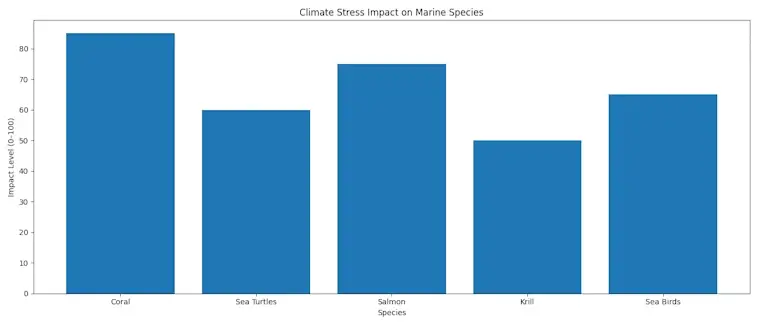
To help show how climate stress varies across different species, the chart below highlights the relative impact on a few well-known groups. It offers a quick, clear snapshot of how uneven these pressures can be.
Marine Habitats Rising Strong: The New Strategies Protecting Wildlife
When we talk about marine habitats, it’s easy to picture wide blue waters and colorful reefs. Yet the real story today is how these habitats are adapting, shifting, and—against the odds—rising strong. Around the world, scientists, local communities, and conservation groups are trying new ideas to protect ocean life. And as research grows, so does our sense of what’s possible.
This matters because the ocean is changing fast. Warmer waters, pollution, and overfishing keep putting pressure on wildlife. However, we’re also seeing a wave of innovation. These new strategies don’t just defend marine habitats—they help them grow healthier and more resilient over time.
The New Strategies Leading the Way
We’re entering a moment where ocean conservation feels hopeful again. That’s because people are thinking differently—using technology, community knowledge, and long-term planning to rebuild ecosystems. As these ideas gain momentum, we’re discovering that recovery doesn’t have to be slow or uncertain.
Here are some standout strategies shaping the future:
- Restoring coral reefs with heat-resistant coral strains
- Building underwater nurseries that help endangered species repopulate
- Creating large marine protected areas with strong enforcement
- Using drones and satellites to track illegal fishing
- Supporting coastal communities that rely on sustainable harvesting
Each of these approaches gives marine habitats a better chance to thrive, even under stress. And together, they create a blueprint for smarter, more adaptive conservation.
Why This Shift Matters
As these strategies spread, we’re starting to see a clearer path forward. Instead of reacting to damage, we’re preparing ecosystems to weather the next storm—literally and figuratively. This shift toward resilience is what will define the next era of ocean protection.
And it’s encouraging. Because when marine habitats recover, everything around them benefits—coastal economies, food sources, biodiversity, and even climate stability.
If we keep innovating and supporting these efforts, we’ll not only protect wildlife today. We’ll help rebuild oceans that future generations can trust and enjoy.
Why Restoring Coastal Ecosystems Matters More Than Ever
Coastal ecosystems are some of the hardest-working landscapes on Earth. They protect our homes from storms. Store huge amounts of carbon. And they feed communities and support local economies. Yet they’re disappearing faster than most people realize.
Today, we depend on these ecosystems more than ever. Sea levels are rising. Storms are getting stronger. And many coastal cities are growing at a pace that puts even more pressure on already stressed shorelines. This creates a quiet but urgent challenge. If we lose these natural buffers, we lose one of our best defenses in a warming world.
The good news is that restoring coastal ecosystems works. It works quickly. And it pays off in ways that ripple through entire communities. When we bring back wetlands, mangroves, reefs, and dunes, we aren’t just repairing nature. We’re rebuilding protection, resilience, and opportunity.
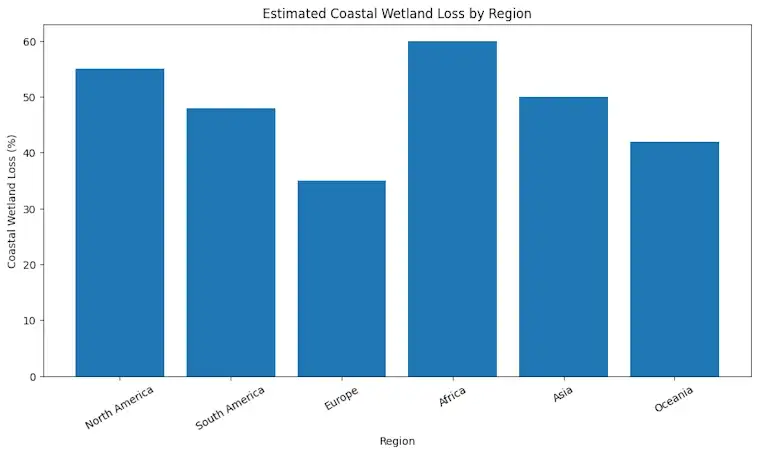
To help show the scale of what’s at stake, here’s a simple chart that highlights estimated coastal wetland loss around the world. It’s a striking reminder of why action today matters for tomorrow.
What Future Ocean Stewardship Could Look Like
Our oceans are changing fast. So the big question is this: How do we protect them in a way that actually works long-term? As we look ahead, the idea of ocean stewardship becomes less about reacting to crises and more about building systems that keep our seas healthy for generations. And yes, that future is within reach. It just calls for smarter choices, stronger community involvement, and new ways of thinking about the water that connects us all.
How We Can Strengthen Marine Habitats in the Years Ahead
The first major shift is moving from protection after damage happens to prevention from the start. Future stewardship means restoring coral reefs before bleaching reaches a tipping point. It means keeping coastal ecosystems intact so storms do less harm. An it also means tracking species migrations in real time, so we can respond early when something goes off-course.
Another big step forward is community-powered conservation. People want to help—they just need clear, simple ways to get involved. Expect to see more coastline “citizen science” programs, where everyday observers feed data into global monitoring networks. These shared tools make it easier to spot risks sooner and plan smarter responses.
Technology will move this even faster. AI-based ocean sensors, satellite mapping, and predictive climate models will help us understand trouble zones before they escalate. This blend of human action and digital insight is already beginning, and it shows how future ocean stewardship can be both practical and hopeful.
If you want to dig deeper into long-term restoration strategies, the National Oceanic and Atmospheric Administration offers helpful guidance.
As we keep imagining what’s possible, one thing becomes clear. A healthier ocean doesn’t depend on one big breakthrough. It depends on thousands of steady steps taken together. And that future begins with attention, curiosity, and a willingness to protect what we still have.
Conclusion: A Stronger Future for Marine Habitats
Marine habitats face real and growing pressure, yet their ability to recover reminds us why they matter so much. When we protect these ecosystems, we protect the life that depends on them—including our own. As we’ve seen, small actions can spark large, lasting change. Better policies, smarter technology, and active community involvement all push us toward a future where the ocean is healthier and more resilient.
As you think about what comes next, remember this: marine habitats respond quickly when given space and support. So every choice we make—whether it’s reducing pollution, backing conservation efforts, or simply staying informed—helps tip the balance toward regeneration instead of decline.
By acting now, we not only safeguard today’s sea life but also open the door to a more vibrant, thriving ocean for generations to come.