Unleashing the Power of Water: How Hydroelectricity is Paving the Way for a Sustainable Future
As the world grapples with the escalating consequences of climate change and the urgent need for sustainable energy solutions, hydroelectricity emerges as a pivotal player in the global energy landscape. This renewable energy source, derived from the power of moving water, stands out not only for its low greenhouse gas emissions but also for its efficiency and reliability. Here, we delve into the reasons why hydroelectricity is more crucial now than ever:
- Renewable and Clean: Hydroelectric power is generated by harnessing the energy from flowing water. This process does not produce direct emissions, making it a clean alternative to fossil fuels which are major contributors to air pollution and global warming.
- Highly Efficient: Among renewable energy sources, hydroelectricity is notable for its high energy conversion rates. Water power can convert up to 90% of its available energy into electricity, which is significantly more efficient than other renewable sources like solar and wind.
- Stability and Reliability: Hydroelectric plants provide base-load power—they can consistently generate electricity to meet minimum demand. Unlike solar and wind energy, which can be intermittent, hydroelectricity can supply steady power, contributing significantly to grid stability.
- Flexibility: Hydroelectric plants can adjust to fluctuations in electricity demand more quickly than fossil-fuel-powered plants. This flexibility is crucial for balancing the grid, especially in systems with high shares of intermittent renewable energies.
- Economic Advantages: Hydroelectricity offers economic benefits such as low operating and maintenance costs once the plant is built. Furthermore, these plants typically have long lifespans, which amortize their upfront costs over many years, contributing to economic stability in the regions they serve.
- Support for Local Communities: Hydroelectric projects often contribute to local development by providing water for agriculture, drinking, and sanitation, besides generating employment during the construction and operation phases.
Unleashing the Power of Water: How Hydroelectricity is Paving the Way for a Sustainable Future
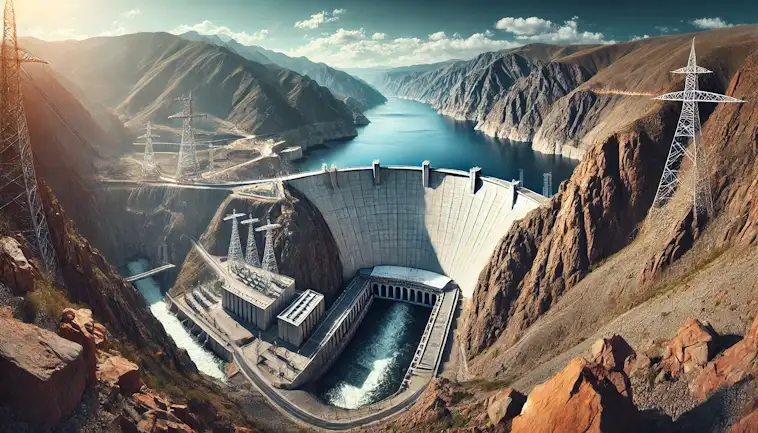
How Hydroelectricity Works
Hydroelectricity is a form of energy that is made by converting the kinetic energy from flowing water into electricity. This process involves several key components and steps. Let’s explore how each part works and how they contribute to generating electricity:
Dams and Reservoirs
- Dams: A dam is a large barrier built across a river or a large stream. Its main function is to hold back water, creating a reservoir (a large body of water) behind it. The dam has gates that can control the flow of water.
- Reservoirs: This is the area where water is stored behind the dam. The water in the reservoir is often used for multiple purposes like irrigation, water supply, and generating electricity.
Turbines and Generators
- Turbines: When water is released from the reservoir, it flows down through the dam into a part of the plant where there are big wheels called turbines. As the water flows, it pushes against the blades of the turbine, causing it to spin.
- Generators: Attached to the turbines are generators, which are machines that convert the mechanical energy from the spinning turbine into electrical energy. Inside a generator, there’s a rotor (a rotating part) and a stator (a stationary part). As the rotor spins, it creates a moving magnetic field which generates electricity.
Flow of Water
Here’s how water flows through a hydroelectric plant and generates electricity:
- Storage: Water is stored in the reservoir.
- Release: When electricity is needed, water is released from the reservoir through the dam gates.
- Flow: The water flows through a channel or pipe, gaining speed and pressure as it moves towards the turbine.
- Turbine Operation: The high-pressure water hits the blades of the turbine, spinning it at high speed.
- Electricity Generation: The spinning turbine turns the rotor in the generator. The motion of the rotor generates electricity by moving through a magnetic field created by the stator.
- Transmission: The electricity generated is then transmitted from the power station to homes and businesses through power lines.
Additional Components
- Control Gates: These regulate the flow of water to the turbines.
- Penstock: A large pipe that delivers water to the turbines.
- Outflow: After the water passes through the turbines, it flows out into a river or stream on the other side of the dam.
The entire process is renewable and environmentally friendly because it uses water, a natural and renewable resource, to generate electricity without emitting pollutants. Hydroelectric plants can also adjust the amount of electricity they generate by controlling how much water they release through the turbines, making them flexible in meeting electricity demand.
Types of Hydroelectric Power Systems
Hydroelectric power systems can be categorised into several types based on their design and operation. Each type utilises water in different ways to generate electricity. Let’s explore the three main types of hydroelectric systems:
Impoundment Systems
This is the most common type of hydroelectric power system. It involves a large dam that stores water in a reservoir. Here’s how it works:
- Storage: Water is stored in a reservoir behind a dam.
- Electricity Generation: When electricity is needed, water is released from the reservoir, flows through turbines, spins them, and generates electricity.
- Control: The flow of water is controlled by opening and closing gates on the dam, allowing the facility to produce power as needed.
Run-of-River Systems
Run-of-river systems are simpler and do not require large dams. These systems use a fraction of a river’s flow to generate electricity without significantly altering the environment. Here’s the basic setup:
- Diversion: A small part of a river’s flow is diverted into a canal or through a large pipe called a penstock.
- Turbine Operation: The diverted water flows through a turbine, generating electricity. Since the water is not stored in large quantities, run-of-river systems typically have less capacity to store energy and depend more on the river’s natural flow.
- Environmental Impact: These systems are often preferred for their lower environmental impact compared to large dams, as they don’t create large reservoirs that can flood extensive areas.
Pumped Storage Systems
Pumped storage systems are a type of hydroelectric power plant that can store energy. They are used to balance the load by generating electricity when demand is high and storing energy when demand is low. Here’s how these systems work:
- Pumping Water Upward: During periods when electricity demand is low (like at night), excess electricity from the grid is used to pump water from a lower reservoir to a higher reservoir.
- Generating Power: During periods of high electricity demand, water is released back down to the lower reservoir through turbines, generating electricity.
- Energy Storage: This process effectively stores energy in the form of gravitational potential energy when water is held at a higher elevation. Pumped storage helps manage the electricity grid efficiently by providing a quick response to fluctuations in demand.
Each of these hydroelectric systems has its benefits and challenges, ranging from environmental impacts to how effectively they can meet electricity demands. Impoundment systems provide reliable, large-scale power generation, run-of-river systems offer a more environmentally friendly alternative with less capacity, and pumped storage systems provide crucial energy storage and grid stability services.
Advantages of Hydroelectric Energy
Hydroelectric energy offers several significant advantages that make it a sustainable and efficient source of power. Here are the main benefits:
Powered by Water Cycles
- Sustainability: Hydroelectric power is fueled by water, which is constantly recycled naturally through the Earth’s water cycle (evaporation, condensation, and precipitation). This makes hydroelectricity a renewable resource, as it depends on water that is replenished regularly by natural processes.
- Clean Energy: Unlike fossil fuels, generating electricity from hydroelectric power does not produce air pollution or greenhouse gases. It leverages the natural flow or fall of water, making it an environmentally friendly option.
Low Maintenance and Operational Costs
- Initial Costs: While the initial cost to build a hydroelectric dam can be high, the ongoing maintenance and operational costs are relatively low. This is because the technology involved is straightforward and durable, leading to fewer breakdowns and less frequent need for repairs.
- Longevity: Hydroelectric facilities can operate for many decades and often continue to provide value for much longer than initially expected, contributing to their cost-effectiveness over time.
Quick Adjustment to Power Output
- Flexibility: One of the standout features of hydroelectric power is the ability to quickly increase or decrease the amount of electricity produced in response to changes in demand. This flexibility is particularly valuable for balancing the electricity grid.
- Peaking Power: Hydroelectric plants are excellent for meeting peak electricity demands because they can start and stop quickly. When more power is needed during high-demand periods, operators can release more water through the turbines to increase production. Likewise, they can reduce water flow when demand decreases.
Additional Benefits
- Water Management: Hydroelectric dams often provide additional benefits, such as water storage for irrigation and drinking water and flood control, which can be crucial in areas susceptible to flooding.
- Recreation: Reservoirs created by hydroelectric dams can also be used for recreational purposes, such as boating and fishing, which can enhance local economies.
Overall, hydroelectric energy’s reliance on the water cycle for power generation, combined with its low operational costs and ability to rapidly adjust output, makes it a sustainable and economically appealing energy choice. These factors contribute to its role as a key component in the transition to renewable energy sources and in ensuring a stable and reliable energy supply.
Future Trends and Innovations
Hydroelectricity is evolving with new technologies and strategies that enhance its efficiency and reduce its environmental footprint. Here’s a look at future trends and innovations in the field:
Emerging Technologies
- Advanced Turbines: Innovations in turbine technology continue to improve the efficiency of hydroelectric plants. New turbine designs are being developed to minimise ecological impacts, especially on aquatic life. For instance, some modern turbines are designed to allow fish to pass through safely, addressing one of the significant environmental concerns associated with traditional hydroelectric power.
- Enhanced Efficiency: Technologies such as variable-speed turbines can adjust their operation to the availability of water flow and electricity demand, enhancing overall efficiency and effectiveness.
Integration with Other Renewables
- Complementary Use: Hydroelectric power is increasingly being integrated with other renewable energy sources like solar and wind. Since these sources can be variable—sunlight and wind aren’t always available—hydroelectricity can help balance the grid. For example, when solar panels or wind turbines are producing less electricity due to a lack of wind or sunlight, hydroelectric facilities can increase output to compensate, and vice versa.
- Pumped Storage: This is particularly useful as a form of energy storage. During times when solar or wind generation exceeds demand, the excess energy can be used to pump water to a higher elevation in pumped storage systems. When the demand is high and solar or wind output is low, the stored water can be released to generate electricity.
Government Policies and Economic Incentives
- Policy Support: Governments play a crucial role in promoting hydroelectric power through policies and regulations. Policies that support the integration of renewable energy sources, like setting renewable energy targets and providing subsidies for renewable energy projects, can encourage the development and expansion of hydroelectric facilities.
- Economic Incentives: Financial incentives such as grants, tax breaks, and feed-in tariffs are crucial for supporting hydroelectric projects. These incentives can help offset the high initial costs associated with building hydroelectric plants and make them more financially viable.
- Environmental Regulations: Stricter environmental regulations can also drive innovation in the hydroelectric sector by requiring facilities to adopt technologies that minimise their environmental impact, thereby improving public and ecological health.
Global Trends
- Global Expansion: Developing countries are increasingly turning to hydroelectric power to expand their energy capacity while minimising carbon emissions. In regions with abundant water resources, hydroelectric power offers a reliable and sustainable energy solution.
- Modernisation of Existing Plants: In more developed countries, the focus is often on upgrading existing hydroelectric facilities to make them more efficient and environmentally friendly rather than building new ones.
The future of hydroelectricity looks promising with the ongoing advancements in technology and strong support from government policies and economic incentives. These developments not only enhance the efficiency and sustainability of hydroelectric power but also strengthen its role in the global transition towards renewable energy.
Conclusion
Hydroelectricity isn’t just about massive dams or remote power stations. It’s about tapping into the natural cycle of water to light up our homes, power our industries, and even charge our future—all while keeping the air clean and our landscapes undisturbed. By innovating with smarter turbines and integrating seamlessly with other renewables like solar and wind, hydroelectric power is truly shaping up to be a hero in our green energy narrative. With a little help from supportive policies and clever engineering, the flow of water might just pave the way to a more sustainable and bright future. So, next time you sip a glass of water, remember—it’s not just a refreshing drink; it’s a part of a powerful environmental solution!