Bold Strategies for Achieving Carbon Reduction Goals
Bold Strategies for Achieving Carbon Reduction Goals
Tackling climate change requires more than small steps—it demands bold, forward-thinking strategies. With carbon emissions reaching critical levels, there’s growing urgency to rethink how industries, governments, and communities operate. The shift isn’t just necessary—it’s already underway.
Forward-focused leaders are rewriting the rules. They’re cutting emissions while boosting innovation and building long-term resilience. These strategies aren’t just about compliance; they’re about shaping a cleaner, smarter, and more competitive future.
Momentum is building, but hitting net-zero targets means scaling these ideas fast. What once seemed futuristic is now essential. Let’s look at the strategies setting a new pace—and how they’re shaping the road ahead.
Why Carbon Reduction Can’t Wait: The Urgency of Now
We’re no longer talking about the distant future. Climate change isn’t something our grandchildren will face—it’s already here. From record-breaking heatwaves to stronger storms and rising sea levels, the signs are all around us. The window for meaningful change is rapidly closing. That’s why carbon reduction isn’t just important—it’s urgent.
The Climate Clock Is Ticking
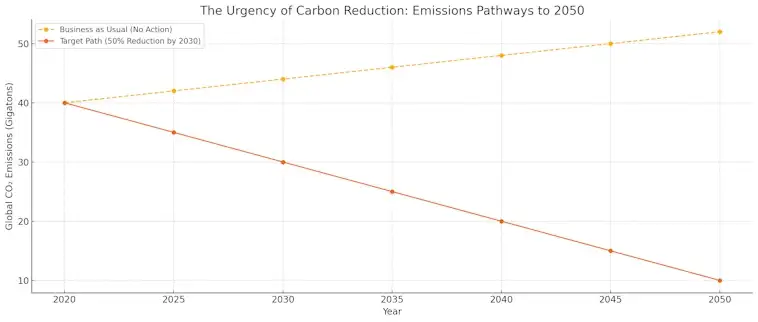
Every ton of carbon dioxide we release today lingers in the atmosphere for centuries. This means today’s emissions lock in tomorrow’s problems. Scientists agree: we must cut global carbon emissions by nearly half by 2030 to avoid the most devastating impacts of climate change.
Waiting is not an option. The longer we delay, the harder and more expensive the solutions become. The good news? We already have the tools and technology to make a difference—we just need the will to use them.
Why Acting Now Matters
Here’s why immediate action is critical:
- Climate impacts are accelerating – Weather extremes are becoming the new normal, affecting food supplies, water sources, and communities.
- Tipping points are approaching – Ecosystems like the Amazon and Arctic are nearing irreversible damage.
- Costs increase with delay – Postponing action means higher adaptation costs, economic losses, and health risks down the road.
- Every bit counts – Even small reductions today make a big difference over time.
The Power of Collective Action
This isn’t just about governments or big corporations. Everyday choices—how we travel, what we buy, and how we power our lives—can shift the momentum. By acting now, we can build a cleaner, more resilient future that benefits everyone.
Game-Changing Technologies Leading the Green Revolution
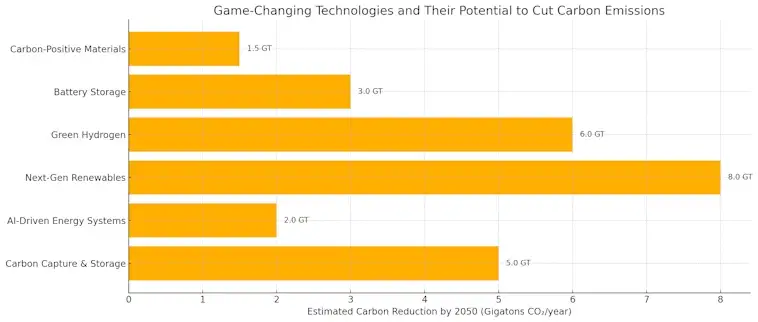
The future of our planet depends on what we build today. Thankfully, innovation is on our side. Across the globe, breakthrough technologies are reshaping how we generate, store, and use energy. These game-changing solutions aren’t just reducing carbon—they’re redefining what’s possible in the fight against climate change.
From smart energy systems to cutting-edge carbon capture, the green revolution is no longer a concept—it’s a reality in motion.
Leading Innovations Powering a Low-Carbon Future
Here’s a closer look at the technologies transforming our world:
1. Carbon Capture and Storage (CCS)
This tech traps CO₂ emissions from power plants and factories before they reach the atmosphere. The captured carbon is then stored underground or reused in other industries. It’s a critical tool for hard-to-decarbonize sectors like steel and cement.
2. AI-Driven Energy Systems
Artificial intelligence is helping to balance energy supply and demand in real-time. Smart grids, predictive maintenance, and energy efficiency algorithms are making renewable power more reliable and reducing waste across entire systems.
3. Next-Gen Renewable Energy
Solar and wind power are becoming cheaper and more efficient. Innovations like floating solar farms and vertical wind turbines are expanding where clean energy can be deployed—even in cities and on water.
4. Green Hydrogen
Made using renewable electricity, green hydrogen can power industries, vehicles, and even entire cities without carbon emissions. It’s especially promising for sectors where electrification is difficult.
5. Battery Storage Breakthroughs
New battery technologies, such as solid-state and long-duration storage, are solving one of the biggest challenges of renewable energy—how to store power when the sun isn’t shining or the wind isn’t blowing.
6. Carbon-Positive Materials
Innovations in materials—like carbon-absorbing concrete and algae-based building products—are turning construction into a climate solution rather than a problem.
The Future Is Built on Innovation
These technologies aren’t just ideas—they’re already shaping policies, businesses, and everyday life. But to truly scale them, we need investment, collaboration, and public support.
We’re at a turning point. By backing these innovations now, we can accelerate the shift to a low-carbon economy and create a future where clean energy is the norm, not the exception.
Rethinking Business: How Companies Are Cutting Emissions and Growing
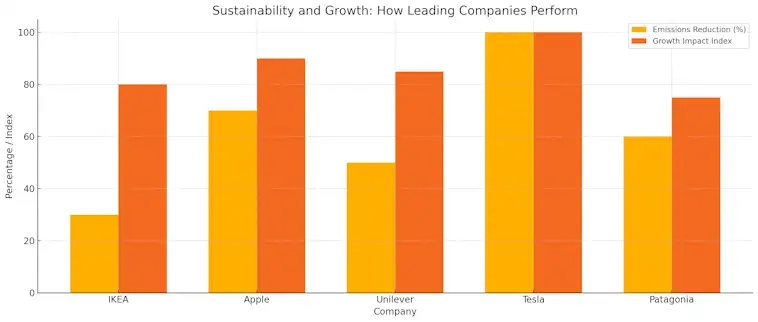
Sustainability isn’t just good for the planet—it’s smart business. In today’s world, companies that embrace low-carbon strategies are reaping the rewards: lower costs, stronger brand loyalty, and access to new markets. The old myth that going green means losing profit is being replaced by a new reality—sustainability and growth go hand in hand.
Forward-thinking businesses are proving that cutting emissions can drive innovation, boost efficiency, and create long-term value. Let’s take a look at how some are doing it.
Real-World Examples of Profitable Sustainability
1. IKEA: A Circular Economy in Action
IKEA has committed to becoming climate-positive by 2030. They’re designing products to be reused, repaired, and recycled—reducing waste and cutting emissions. In the process, they’re strengthening customer loyalty and reducing production costs.
2. Apple: Clean Energy, Big Results
Apple now powers all of its offices, stores, and data centers with 100% renewable energy. By pushing suppliers to do the same, they’ve reduced their carbon footprint while improving energy resilience and reducing long-term costs.
3. Unilever: Sustainable Brands Grow Faster
Unilever reports that its brands with strong sustainability missions—like Dove and Seventh Generation—are growing faster than the rest of the portfolio. They’ve cut emissions by investing in clean manufacturing and smarter logistics.
4. Tesla: Profit Through Disruption
Tesla built its entire business on the promise of a cleaner, electrified future. The result? Market leadership, brand loyalty, and record-breaking profits—all while accelerating the shift away from fossil fuels.
5. Patagonia: Profit with Purpose
By embedding environmental activism into its core, Patagonia has turned values into a competitive edge. Their commitment to reducing emissions and protecting nature has earned them a fiercely loyal customer base.
Why It Works
- Efficiency Saves Money: Lower energy use = lower bills.
- Consumers Prefer Sustainable Brands: People are voting with their wallets.
- Investors Are Watching: ESG (Environmental, Social, Governance) metrics are now tied to shareholder value.
- Regulations Are Tightening: Getting ahead of climate rules is just smart planning.
Businesses don’t have to choose between profit and the planet. In fact, embracing sustainability may be the smartest strategy for long-term success. As more companies take the leap, the message is clear: going green is no longer a risk—it’s a competitive advantage.
Policy Power: Government Actions Driving Bold Climate Progress
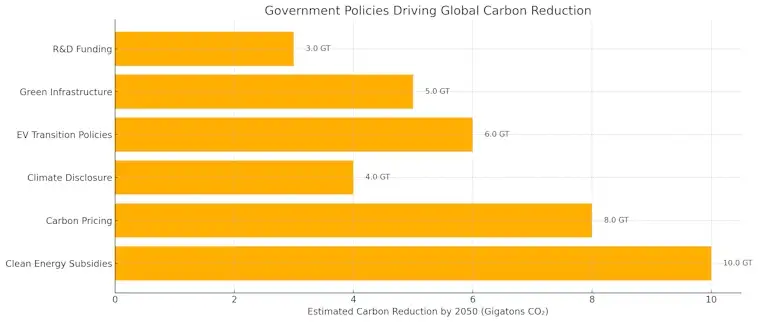
Climate change is a global challenge—but bold government action is proving to be one of the most powerful tools we have to fight it. Around the world, smart policies and financial incentives are speeding up the transition to a low-carbon economy. These efforts aren’t just about regulations—they’re about unlocking innovation, investment, and cleaner ways of living.
Whether it’s funding clean energy or setting carbon limits, the message is clear: when policy leads, progress follows.
How Policy Is Fueling Climate Solutions
Governments at every level—local, national, and international—are shaping a greener future. Here’s how:
1. Clean Energy Subsidies and Tax Credits
Countries like the U.S. have introduced sweeping legislation like the Inflation Reduction Act, which provides billions in tax credits for solar, wind, battery storage, and electric vehicles. These incentives make clean energy more affordable and widely accessible.
2. Carbon Pricing and Emissions Trading
Putting a price on carbon—through taxes or cap-and-trade systems—encourages companies to lower their emissions. The EU’s Emissions Trading System is one of the most established and has helped drive down carbon pollution across Europe.
3. Climate Disclosure and ESG Regulations
New rules are requiring companies to report their environmental impacts. This pushes businesses to take emissions seriously and gives investors the data they need to back greener companies.
4. Ban on Fossil Fuel Vehicles
Many countries are setting deadlines to phase out gas and diesel cars. The UK, for example, plans to ban new petrol and diesel vehicles by 2035—paving the way for EV adoption.
5. Funding Green Infrastructure
From high-speed rail to electric bus fleets and bike-friendly cities, governments are rethinking transportation and city planning to reduce emissions and improve quality of life.
6. Support for Innovation and R&D
Public funding for climate tech research—like carbon capture, hydrogen, and advanced materials—is accelerating the development of next-generation solutions.
Why Policy Matters
- It sets clear goals: Businesses and investors follow where policy leads.
- It levels the playing field: Clean alternatives become competitive when fossil fuels are no longer subsidized.
- It drives large-scale impact: One law can shift entire industries.
From the Paris Agreement to national climate acts, the world is uniting to cut emissions. But the most effective policies often start close to home—through local leadership, city initiatives, and regional planning. Together, they create the momentum we need.
What You Can Do: Everyday Actions That Create Real Climate Impact
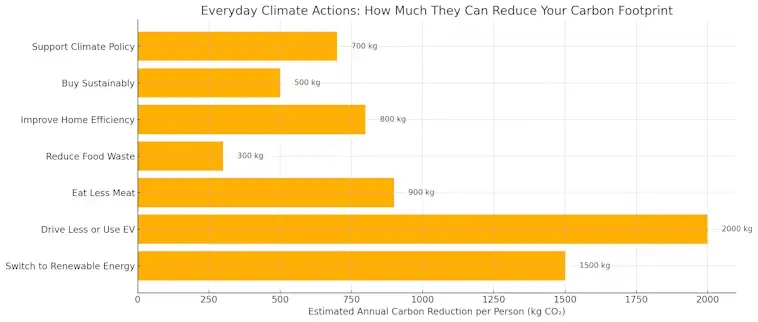
When it comes to climate change, every action counts. It’s easy to feel powerless in the face of such a massive challenge—but the truth is, the choices we make every day can shape the future. From how we travel to what we eat, individuals have incredible power to reduce emissions and inspire change.
The climate crisis is urgent, but it’s also an opportunity—for all of us to be part of something bigger. The key? Start where you are. Use what you have. Do what you can.
Small Steps, Big Difference
Here are practical, impactful actions anyone can take to lower their carbon footprint:
1. Rethink Transportation
- Walk, cycle, or use public transit when possible.
- If you drive, consider switching to an electric or hybrid vehicle.
- Carpooling and trip planning can significantly reduce emissions.
2. Eat for the Planet
- Cut back on red meat and dairy—try plant-based meals a few times a week.
- Support local, seasonal food to reduce the carbon cost of transportation.
- Reduce food waste by planning meals and storing food properly.
3. Conserve Energy at Home
- Switch to LED lights and energy-efficient appliances.
- Unplug electronics when not in use.
- Use smart thermostats to reduce heating and cooling waste.
4. Choose Renewable Power
- If available, switch your home to a green energy provider.
- Install solar panels or support community solar projects.
5. Support Sustainable Brands
- Shop with companies that prioritize sustainability and ethical practices.
- Buy less and buy better—quality over quantity matters.
6. Raise Your Voice
- Talk about climate change with friends, family, and your community.
- Support climate-friendly policies and vote for leaders who prioritize the environment.
7. Invest Responsibly
- Move your money to banks or funds that don’t support fossil fuel projects.
- Look for ESG-focused (Environmental, Social, Governance) investments.
Climate action isn’t only about massive policy shifts or high-tech solutions. It’s about everyday people making intentional choices. When millions of individuals take small steps, the impact is massive. Plus, your actions can influence those around you—creating a ripple effect of positive change.
So, what can you do? A lot more than you think. Start today. Because the future depends on all of us—and it starts with you.
The Road Ahead: Turning Ambition Into Action
The path to a low-carbon future is clear—and it’s paved with bold strategies, breakthrough technologies, smart policies, and everyday actions. As climate challenges grow more urgent, the need for immediate and meaningful change has never been greater.
Governments, businesses, and individuals all have a role to play. Whether it’s investing in clean energy, rethinking how we live and work, or supporting climate-forward innovation, every choice matters. The solutions already exist—we just need the courage and commitment to scale them.
This is more than a moment. It’s a movement. By working together and staying focused on progress, we can reshape the future, protect our planet, and build a world where people and nature thrive side by side.
The revolution has already begun. Now it’s time to lead it forward.