The Impact of Land Clearance on Our Environment and Economy
The Impact of Land Clearance on Our Environment and Economy
Land clearance has long been seen as a necessary step in development. But what’s often overlooked is the lasting footprint it leaves behind. Stripping land of its natural vegetation might open space for farming, housing, or industry—but it also sets off a chain reaction that affects ecosystems, communities, and economies in ways that are becoming harder to ignore.
With land clearance rates climbing in many regions, the consequences are no longer distant possibilities—they’re showing up in real time. From struggling farmers to rising food prices, the ripple effects are becoming part of daily life. Understanding how these environmental and economic pressures connect is essential for making better decisions about land use in the future.
What Is Land Clearance and Why Does It Happen?
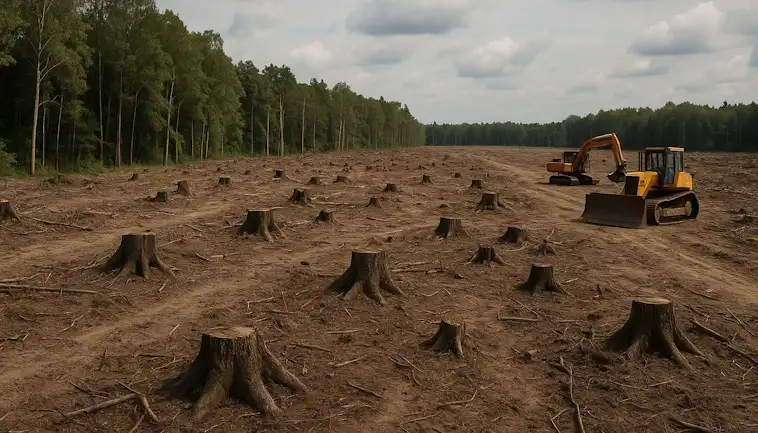
If you’ve ever driven past a stretch of freshly cleared land and wondered what’s going on, you’re not alone. Land clearance might look like a blank slate, but there’s a lot more happening beneath the surface—both literally and figuratively.
What Is Land Clearance?
Land clearance, sometimes called land clearing, is the process of removing trees, shrubs, rocks, and other natural elements from a piece of land. It’s usually one of the first steps in developing an area for human use. This can mean anything from building homes and roads to expanding farms or creating space for shopping centers.
The goal is simple: to prepare the land for a new purpose.
Why Does Land Clearance Happen?
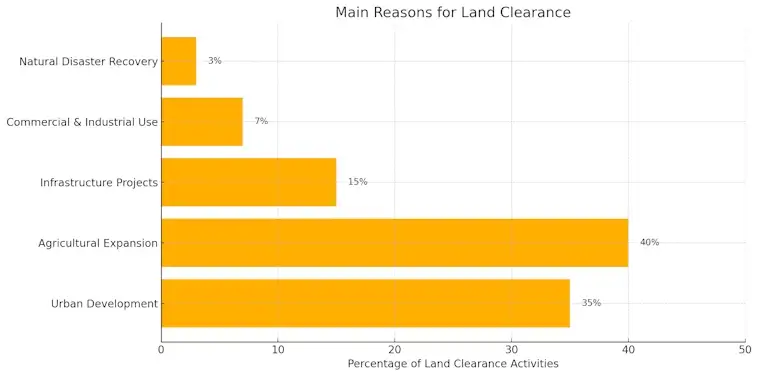
There are several reasons land clearance takes place, and they often reflect a mix of economic, social, and practical needs:
- Urban Development: Cities are growing fast. As populations rise, so does the need for housing, offices, schools, and infrastructure. Land clearance opens up space to build what’s needed.
- Agricultural Expansion: Farmers clear land to grow crops or raise livestock. As food demand grows globally, especially in developing countries, more natural land is converted into farmland.
- Infrastructure Projects: Roads, railways, pipelines, and utilities all require cleared land. These projects often cut through forests or open land to connect regions or improve services.
- Commercial and Industrial Use: Businesses need space to operate. Whether it’s a factory, a warehouse, or a solar farm, land clearance is usually the first step before construction can begin.
- Natural Disaster Recovery: After a fire, flood, or storm, land may be cleared as part of recovery and rebuilding efforts. In some cases, clearing damaged vegetation helps reduce future risk.
Land clearance is a tool—and like any tool, it depends on how it’s used. While it can drive economic growth and improve lives, it can also come at an environmental cost if not managed carefully. That’s why it’s important to understand not just what it is, but how and why it’s done.
Environmental Consequences: From Deforestation to Biodiversity Loss
Land clearance might pave the way for development, but it often comes at a high environmental cost. When forests are felled and ecosystems disrupted, the ripple effects can be serious—and long-lasting. From deforestation to the decline of native species, the ecological damage is real.
Deforestation: More Than Just Trees
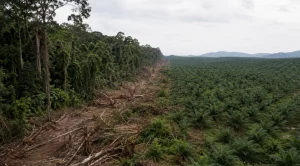
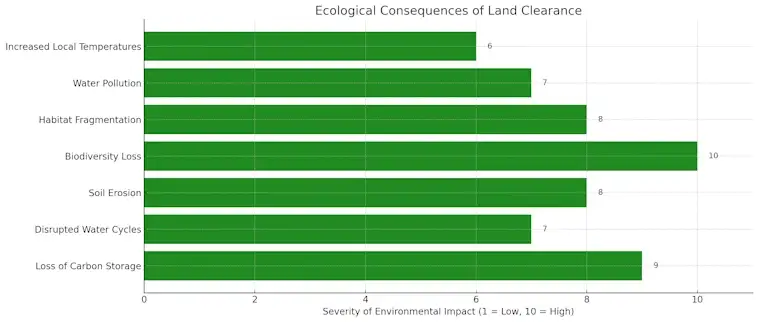
When trees are cut down to make way for buildings, roads, or farms, it’s not just the forest that disappears. Deforestation leads to:
- Loss of Carbon Storage: Trees naturally absorb carbon dioxide. Fewer trees mean more carbon stays in the atmosphere, contributing to global warming.
- Disrupted Water Cycles: Forests help regulate rainfall and maintain healthy soil moisture. Clearing them can lead to drier climates and increased risk of drought.
- Soil Erosion: Without tree roots to hold the soil in place, erosion becomes a big problem—washing away nutrients and damaging nearby rivers and lakes.
Habitat Destruction and Species Decline
Land clearance often destroys habitats that took thousands of years to form. As ecosystems vanish, so do the species that rely on them:
- Biodiversity Loss: Many animals and plants can’t survive once their environment is gone. This is especially true for endangered species already at risk.
- Fragmented Habitats: Even if some forest remains, it may be broken into isolated patches. Wildlife that needs large territories or migratory paths may struggle to survive.
- Increased Human-Wildlife Conflict: As animals lose their homes, they may move closer to farms and towns—leading to conflicts that rarely end well for the wildlife.
Water Pollution and Climate Impact
Clearing land can also harm the quality of air and water:
- Runoff and Pollution: Without vegetation to filter rainwater, more pollutants and sediments end up in rivers and streams.
- Hotter Local Temperatures: Forests help keep areas cool. Once removed, the land absorbs more heat, contributing to the urban heat island effect and changing local weather.
The environmental costs of land clearance are significant—but not irreversible. Sustainable practices, better planning, and strong conservation efforts can help reduce damage. As awareness grows, so does the opportunity to find smarter ways to balance development with protecting the planet.
The Economic Ripple Effect: Who Wins and Who Loses?
Land clearance is often seen as a shortcut to economic growth. It creates space for construction, farming, and industry. Jobs are generated, markets expand, and profits grow. But the benefits aren’t always shared equally—and the long-term costs can sneak up on the very sectors that rely on a healthy environment.
Who Benefits from Land Clearance?
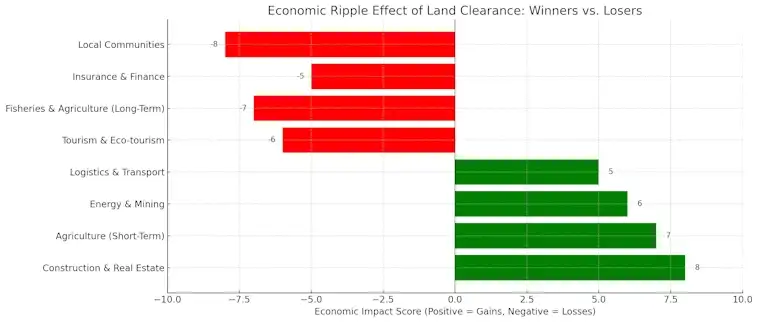
Some industries and sectors gain immediate advantages from clearing land:
- Construction and Real Estate: Developers benefit from access to new plots for housing, commercial buildings, and infrastructure. Land clearance paves the way—literally—for profitable projects.
- Agriculture and Agribusiness: New farmland boosts crop production and livestock capacity. This supports food supply chains and exports, especially in developing economies.
- Energy and Mining Companies: Land is often cleared to access fossil fuels, minerals, or build renewable energy sites like solar farms and wind turbines.
- Logistics and Transport: Roads, railways, and ports are often built after clearing land, enabling trade and regional connectivity.
These sectors often see short-term financial gains, increased job creation, and improved economic activity at the local level.
Who Pays the Price?
While some sectors benefit, others can suffer from the long-term economic fallout:
- Tourism and Eco-tourism: Natural landscapes, forests, and wildlife are major draws for tourists. Destroying these attractions can hurt local economies that depend on visitors.
- Fisheries and Agriculture (Long-Term): Soil erosion and water pollution from land clearance can degrade farmland and fish habitats over time, reducing yields and increasing costs.
- Insurance and Finance: As land degradation leads to climate risk—like floods, fires, and droughts—insurance claims rise, and the cost of coverage increases.
- Local Communities and Indigenous Groups: Displacement, loss of livelihoods, and reduced access to natural resources can leave these communities economically worse off.
In the short term, land clearance may look like a win for growth. But without careful planning, it can sow the seeds of future economic problems. Smart development finds a balance—protecting the environment while building a sustainable economy.
Land Clearance and Climate Change: A Dangerous Connection
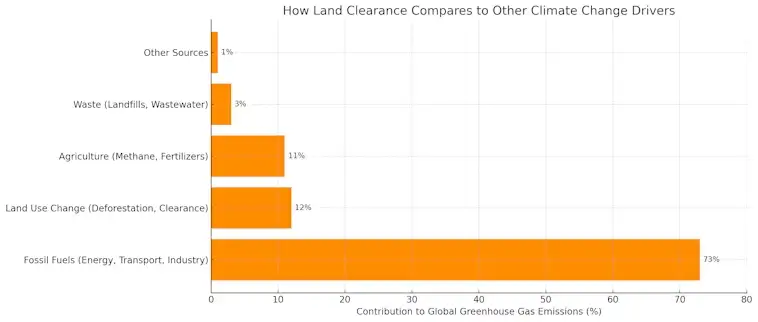
When we talk about climate change, we often think of smokestacks, car exhaust, or melting ice caps. But one of the most underestimated contributors to global warming is right under our feet—land. Clearing forests, wetlands, and grasslands dramatically changes how the Earth stores carbon, regulates temperature, and manages natural cycles.
Trees Are Nature’s Carbon Vaults
Forests play a vital role in the fight against climate change. They act as carbon sinks, absorbing large amounts of carbon dioxide (CO₂) from the atmosphere. But when land is cleared:
- Carbon Is Released: Trees store carbon in their trunks, leaves, and roots. When they’re cut down or burned, that stored carbon is released into the air—adding to the greenhouse gas load.
- Fewer Trees = Less Carbon Capture: With fewer forests, there’s less natural capacity to absorb CO₂. This accelerates the buildup of greenhouse gases in the atmosphere.
The Soil Factor: Hidden Emissions
It’s not just the trees. Soil itself stores massive amounts of carbon. Land clearance—especially when done by heavy machinery—disrupts soil and speeds up carbon loss.
- Tilled or Exposed Soil Releases CO₂: Once soil is disturbed, it starts releasing carbon that’s been locked away for centuries.
- Wetlands Are Even More Sensitive: Clearing wetlands releases methane, a greenhouse gas even more potent than carbon dioxide.
More Heat, Less Rain
Clearing land doesn’t just affect carbon. It also alters local and global climates:
- Hotter Temperatures: Forests provide shade and moisture. Without them, land heats up faster, contributing to regional warming.
- Changing Rainfall Patterns: Forests help create and regulate rain. Large-scale clearance can lead to unpredictable weather, droughts, or floods.
Land clearance not only contributes to climate change, but the changing climate can also lead to more land being cleared. As droughts, fires, and storms damage forests, more land is lost—pushing the cycle forward.
Understanding the link between land clearance and climate change is key to slowing global warming. By protecting natural landscapes, restoring forests, and using land more sustainably, we can reduce emissions and help cool the planet.
Can We Clear Land Sustainably? Solutions and Alternatives
Land clearance has long been seen as a trade-off: development at the cost of nature. But what if it didn’t have to be that way? With smarter practices and greener technologies, it’s possible to balance progress with protection. The key lies in how, where, and why we clear land—and whether we’re thinking about long-term sustainability.
This section explores real-world solutions and alternatives that offer hope for a future where growth doesn’t mean environmental loss.
Smarter Land Use Planning
One of the most powerful tools we have is thoughtful planning. Before a single tree is cut, better decisions can be made:
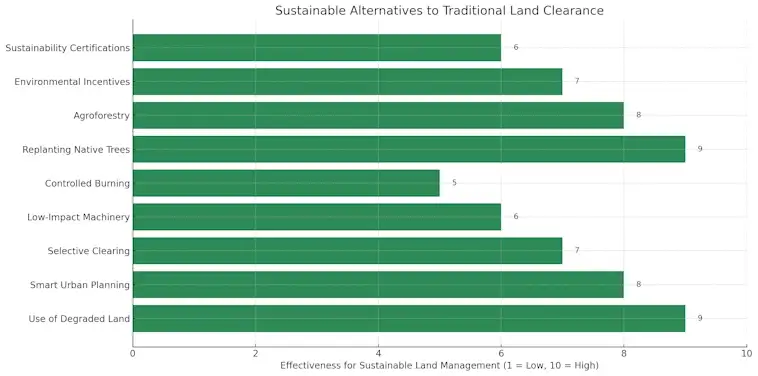
- Prioritize Already-Degraded Land: Instead of clearing healthy forests, developers can target land that’s already been damaged or abandoned, reducing the impact on biodiversity.
- Zoning and Smart Growth Strategies: Planning cities more efficiently—through vertical development, infill housing, and mixed-use zones—helps reduce the need for sprawling land clearance.
Greener Clearing Techniques
If land must be cleared, there are better ways to do it:
- Selective Clearing: Instead of clearing everything, selective clearing removes only what’s absolutely necessary—preserving soil structure and key species.
- Low-Impact Machinery and Methods: New technology can minimize soil damage and carbon release during the clearing process, making it less destructive overall.
- Controlled Burns with Ecosystem Support: When used carefully, controlled burning can mimic natural processes and support ecological regeneration.
Reforestation and Regeneration
Sustainable land use isn’t just about what you remove—it’s also about what you restore:
- Replanting Native Trees: After development, efforts to replant native vegetation can bring back biodiversity and improve carbon capture.
- Agroforestry and Mixed Farming: Blending trees with agriculture supports both productivity and environmental health—keeping soils fertile and reducing erosion.
Policies and Incentives That Work
Governments and businesses are starting to recognize the value of natural capital:
- Incentives for Conservation: Financial rewards for landowners who preserve or restore forests can make sustainability economically attractive.
- Stronger Environmental Regulations: Clear guidelines and enforcement ensure that land clearance is done responsibly and with oversight.
- Certification Programs: Labels like FSC (Forest Stewardship Council) promote sustainable land management in everything from construction to consumer goods.
Clearing land sustainably isn’t just a dream—it’s already happening in many parts of the world. With better tools, greater awareness, and stronger commitment, we can build cities, grow food, and fuel progress without destroying the ecosystems we depend on.
Final Thoughts: Rethinking How We Use the Land Beneath Our Feet
Land clearance is more than just removing trees or flattening fields. It reshapes entire ecosystems, influences global climate patterns, and shifts the balance of economic power. While it can fuel growth and open doors for development, the environmental and social costs are too significant to ignore.
From biodiversity loss and carbon emissions to strained local communities and long-term economic risks, the consequences reach far and wide. Yet, there is reason for hope. With smarter planning, greener technology, and a growing commitment to sustainability, it’s possible to clear land responsibly—and even restore what’s already been lost.
The choices made today will define the health of the planet tomorrow. Whether you’re a policymaker, a landowner, or simply someone who cares about the future, rethinking how land is used is one of the most powerful ways to create real, lasting impact.
By prioritizing sustainability, we can build a future where nature and progress work together—not against each other.