
The Revolutionary Impact of Urban Farming
The Revolutionary Impact of Urban Farming
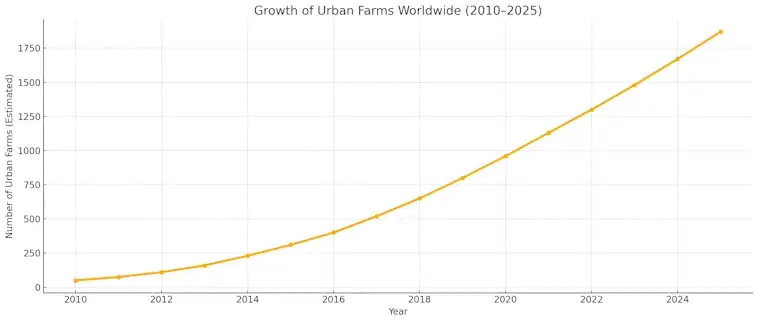
Skyscrapers and sidewalks aren’t the first places you’d expect to find rows of leafy greens and fresh herbs—but that’s changing fast. Across cities around the world, rooftops, balconies, and even abandoned lots are being transformed into vibrant hubs of food production. Urban farming is reshaping how we grow, access, and think about food in the 21st century.
From reducing food miles to strengthening community resilience, the rise of city-grown produce is more than a trend—it’s a response to some of today’s most pressing challenges. As land becomes scarcer and climate concerns grow, cities are stepping up with smart, sustainable solutions that bring agriculture closer to where people live.
What’s unfolding isn’t just practical—it’s revolutionary. And the seeds being planted today could shape the future of food for generations.
What Is Urban Farming and Why Is It Booming in Cities?
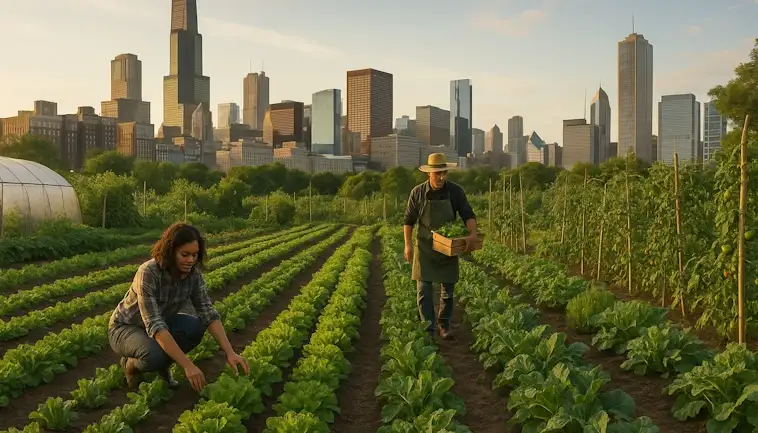
Urban farming, also known as urban agriculture, is the practice of growing food in cities. Instead of sprawling fields and distant farmlands, urban farms pop up on rooftops, in backyards, vacant lots, and even inside buildings using vertical or hydroponic systems. It’s farming reimagined for modern, crowded environments.
So why is urban farming booming in cities right now?
For starters, more people are paying attention to where their food comes from. Urban dwellers want fresh, local produce without the long-distance supply chains. Urban farms make that possible by bringing food production closer to home—sometimes just a few steps away.
There’s also growing interest in sustainability. Traditional farming can be resource-heavy and environmentally damaging. Urban farming, on the other hand, uses less land, often recycles water, and cuts down on transportation emissions. It’s a greener, cleaner way to feed a growing population.
But it’s not just about food. Urban farming also builds stronger communities. It turns underused spaces into vibrant green hubs. People connect over shared gardens. Schools use urban farms to teach kids about science and nutrition. In some cities, it even creates jobs and boosts local economies.
As climate change and food security become bigger concerns, cities around the world are embracing urban farming not just as a trend, but as part of the future. It’s a smart, sustainable way to grow—literally.
Top Benefits of Urban Farming for Communities and the Planet
Urban farming isn’t just a trend—it’s transforming the way cities live and grow. As more people turn to local food sources, the benefits of urban farming are becoming impossible to ignore. Here’s why this movement matters—for both communities and the planet.
1. Fresh, Local Food Right Where It’s Needed
Urban farms bring food production closer to where people actually live. That means fewer trucks, less fuel, and fresher fruits and vegetables on your plate. It also helps tackle food deserts—areas where fresh produce is hard to find—by growing food right in the neighborhood.
2. Cleaner Air and Greener Spaces
Plants clean the air, and urban farms add much-needed greenery to dense, concrete-heavy environments. Rooftop gardens, vertical farms, and community plots all help reduce the urban heat island effect, improve air quality, and make cities more livable.
3. Stronger, Healthier Communities
Urban farms encourage connection. Neighbors share gardening tips, swap produce, and work together to maintain shared spaces. These farms often serve as educational hubs too, teaching kids about nutrition, nature, and sustainability in real time.
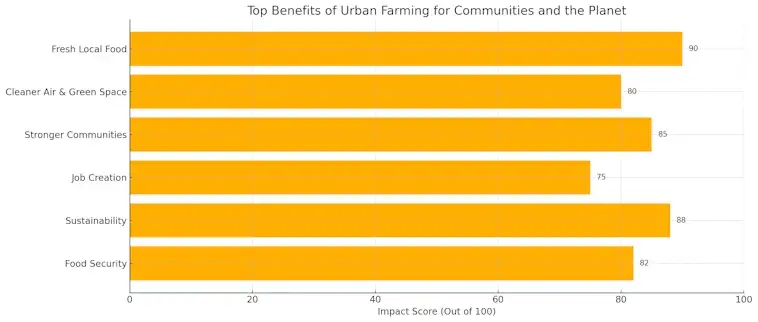
4. Jobs and Economic Opportunities
From farming to food delivery and eco-entrepreneurship, urban agriculture creates jobs. It supports local food businesses, stimulates green innovation, and can boost neighborhood economies—especially in underserved areas.
5. Sustainability That Scales
Urban farming uses less land and can recycle water, compost waste, and reduce reliance on long-distance food supply chains. It’s a step toward a more resilient, sustainable food system that cities urgently need in the face of climate change.
6. Food Security in a Changing World
With growing concerns about global food supply and extreme weather, local farming is a smart solution. Urban farms help cities feed themselves. They add flexibility and security to our food systems when we need it most.
Urban farming is more than growing vegetables—it’s about growing healthier cities, stronger communities, and a more sustainable future. It’s a movement with real momentum, and the benefits are just beginning to bloom.
Innovative Urban Farming Methods Changing the Game
Urban farming isn’t just happening in gardens and greenhouses anymore. Thanks to new technologies and creative thinking, growing food in cities has become smarter, faster, and more efficient. These cutting-edge methods are reshaping how we think about agriculture in the heart of our cities.
1. Vertical Farming
Imagine stacks of leafy greens growing up, not out. Vertical farming uses shelves or towers to grow crops in controlled environments. These systems use LED lights and hydroponics (growing without soil) to maximize space and minimize waste. Perfect for high-density urban areas with limited land.
2. Hydroponics and Aquaponics
Hydroponics allows plants to grow in nutrient-rich water instead of soil. It’s fast, clean, and can be done almost anywhere—even indoors. Aquaponics takes it a step further by combining fish farming with hydroponics. The fish waste provides nutrients for the plants, and the plants help filter the water. It’s a closed-loop system that’s as sustainable as it is smart.
3. Rooftop Gardens
Rooftop farming transforms unused space into lush, productive gardens. These farms help lower building temperatures, reduce stormwater runoff, and offer hyper-local produce just an elevator ride away. They’re especially popular in major cities like New York, Tokyo, and Paris.
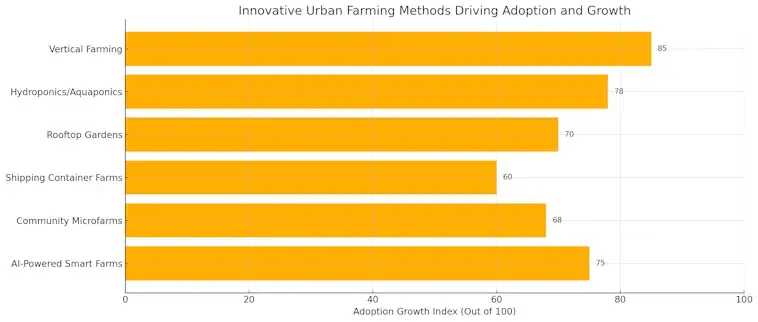
4. Shipping Container Farms
Old shipping containers are getting a second life as mobile, climate-controlled farms. Equipped with grow lights, irrigation systems, and climate controls, these compact farms can produce food year-round—rain or shine. They’re portable, scalable, and ideal for urban food deserts.
5. Community Microfarms
Small-scale farms built into neighborhoods, schools, and vacant lots are empowering communities to grow their own food. These microfarms bring agriculture closer to home and often serve as education centers, social hubs, and sources of fresh produce for local families.
6. AI-Powered Smart Farms
Tech is revolutionizing urban farming. Artificial intelligence, sensors, and data analytics are helping farmers monitor plant health, optimize water use, and boost yields. Smart farms use less and grow more—making them a powerful tool for sustainable food production in cities.
These innovative urban farming methods aren’t just changing the way we grow food—they’re changing the future of cities. As technology and creativity continue to evolve, the possibilities for urban agriculture are nearly limitless.
Real-Life Examples: How Cities Are Growing Their Own Food
Urban farming isn’t just a concept—it’s happening right now in cities around the world. From rooftops to old warehouses, innovative urban agriculture projects are proving that local food production is not only possible but thriving. Here are some inspiring real-life examples of how cities are growing their own food and leading the way toward a more sustainable future.
New York City, USA – Rooftop Farming at Scale
Brooklyn Grange operates the world’s largest rooftop soil farm, spread across several buildings in New York City. It grows over 100,000 pounds of organic produce each year—right above the bustling streets. Beyond food, the project promotes green jobs, education, and community events. It’s a prime example of how cities can use underutilized space for good.
Singapore – Vertical Farming in High-Tech Spaces
Singapore faces major land constraints, so it’s gone vertical. Companies like Sky Greens and Sustenir Agriculture grow leafy greens inside tall towers using hydroponics and energy-efficient systems. These farms help feed the nation with minimal land and are part of Singapore’s plan to produce 30% of its food locally by 2030.
Paris, France – Urban Farms on Historic Buildings
In Paris, urban agriculture is being woven into the fabric of the city. The Parisculteurs initiative aims to cover city rooftops and walls with greenery, aiming to cultivate over 100 hectares by 2030. One standout is “Nature Urbaine,” Europe’s largest urban rooftop farm, perched atop a convention center and producing fruits, vegetables, and herbs for local markets.
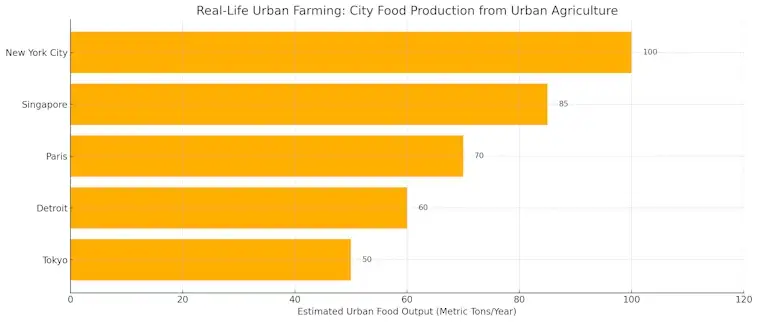
Detroit, USA – Turning Vacant Lots into Green Hubs
Detroit is turning economic hardship into opportunity. With thousands of vacant lots, the city has embraced community gardens and microfarms. Projects like Keep Growing Detroit are helping residents reclaim land and grow their own food, while also improving food security and strengthening community ties.
Tokyo, Japan – Farming Inside Office Buildings
In Tokyo, urban farming is going high-tech. The Pasona Urban Farm, built inside a corporate office, uses hydroponics and LED lighting to grow rice, lettuce, and herbs. Employees walk past tomato vines on their way to meetings—a striking blend of work and agriculture.
These cities show that urban farming isn’t one-size-fits-all. It can be adapted to any environment—from dense cityscapes to underused land—and scaled to meet local needs. As more urban areas look for ways to become self-sufficient and resilient, these real-world examples light the path forward.
The Future of Urban Farming: What’s Next for Our Cities?
Urban farming is already changing how we grow food—but the real transformation is just beginning. As cities face rising populations, climate challenges, and food insecurity, urban agriculture is stepping up with bold new solutions. So, what’s next for the future of urban farming?
Smarter Technology, Bigger Impact
Artificial intelligence, automation, and data analytics will drive the next wave of innovation. Smart farms will monitor soil health, plant growth, and energy use in real time. AI will help farmers optimize everything from water usage to crop rotation—making urban farming more productive and sustainable than ever before.
Underground and Underwater Farms
Forget just rooftops. Future farms may pop up underground in old subway tunnels or even underwater in floating pods. These out-of-the-box ideas are already being tested in cities like London and in the waters off the Italian coast. They offer creative ways to grow food where space is tight.
Zero-Waste, Circular Systems
The future is circular. Urban farms will become part of closed-loop systems that reuse resources. Think: composting food scraps to fertilize crops, capturing rainwater for irrigation, and using solar power to run farm tech. These sustainable systems will reduce waste and lower a city’s carbon footprint.
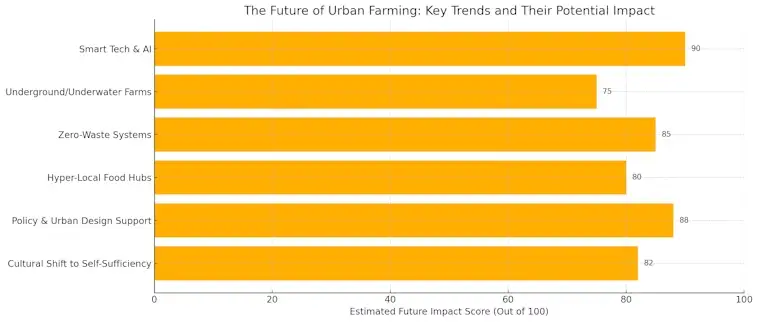
Hyper-Local Food Hubs
More cities are likely to invest in food hubs—small-scale centers that grow, store, and distribute local produce. These hubs could power everything from school lunch programs to local restaurants, while cutting down on food miles and boosting local economies.
Policy Support and Urban Design
As urban farming proves its value, expect to see more support from governments and city planners. Zoning laws, tax incentives, and grants could make it easier for farms to thrive in unconventional spaces—on parking garages, apartment balconies, or within city parks.
A Culture Shift Toward Self-Sufficiency
Perhaps the biggest shift will be cultural. People are starting to see food not just as something we consume, but something we can help produce. Urban farming empowers individuals and communities to grow their own food, take climate action, and build a more resilient future from the ground up.
The future of urban farming is green, innovative, and deeply rooted in community. As technology advances and cities evolve, the seeds being planted today could feed generations to come. The question isn’t if urban farming will shape our cities—it’s how far it will go.
Growing a Greener Future, One City at a Time
Urban farming is more than a creative way to grow food—it’s a powerful movement that’s reshaping how we live, eat, and build our cities. From rooftop gardens to AI-powered smart farms, this revolution is bringing fresh, local food closer to home, creating green jobs, and helping communities reconnect with the land.
As cities grow, so does the need for sustainable solutions. Urban farming offers a clear path forward. It’s practical, scalable, and packed with benefits for people and the planet. Whether it’s feeding families, cooling down concrete jungles, or building stronger neighborhoods, growing food in the city is proving to be a game-changer.
The future of urban life will be greener, healthier, and more self-sufficient. And urban farming is planting the seeds of that future today.