Community Forests: Love for Nature in Your Neighborhood
Community Forests in Your Neighborhood: Simple Ways to Connect with Nature
Community forests are changing what it means to live near nature. Instead of trees being something far away in the countryside, they are becoming part of everyday life on the school run, the commute, and the weekend walk. When local people help shape and care for these green spaces, trees stop being background scenery and start to feel like neighbours you actually know.
Across towns and cities, more streets are leading to small woodlands, pocket parks, and tree-lined paths that anyone can enjoy. These places do a lot quietly in the background: they cool streets in summer, soak up heavy rain, shelter birds and insects, and give people a calm place to breathe. A short walk under a canopy of leaves can ease stress, spark conversation, and make a neighborhood feel friendlier and safer.
As more communities face heatwaves, flooding, and traffic-choked roads, local woodlands are becoming a practical answer, not just a nice extra. Trees planted today can protect children growing up tomorrow. Community-led projects also help people feel more in control of their surroundings, rather than waiting for someone else to act.
By caring for nearby forests, residents are not only adding beauty. They are investing in cleaner air, healthier lives, and a stronger sense of belonging. That love for nature close to home is where real, lasting change starts.

What Are Community Forests and Why Do They Matter?
Community forests are shared spaces that local people help manage and protect. They are usually owned by a town, a nonprofit, or a cooperative group. Yet their value reaches far beyond the borders of any one neighborhood. These forests offer public access, restore ecosystems, and strengthen local economies. They also give communities a voice in how their land is cared for. That sense of ownership creates real, lasting change.
Community forests matter because they touch daily life in simple but powerful ways. They offer cleaner air, cooler streets, and safe places to walk or rest. Help protect wildlife and store carbon, which is becoming even more important as the climate warms. And as you’ll see, they often spark a sense of pride. When people can shape the future of the land around them, they tend to protect it for generations.
A Hidden Network of Local Stewards
Many people don’t realize how fast community forests are growing. More towns are buying land to manage together. And more residents are joining volunteer groups. With even more families using these forests for hiking, education, and small businesses built around outdoor tourism. This shift is changing how we think about conservation. It’s not just something governments or large organizations do. But it’s something neighbors do—side by side.
Looking ahead, community forests may become even more important. Cities are expanding. Green space is shrinking. And the pressure on ecosystems is rising. But when communities take the lead, they create practical solutions. They plant trees where shade is needed most. Build trails that connect people. And they restore streams and wetlands. This makes nature accessible, not distant.
In short, community forests are local at heart but global in impact. They remind us that caring for land can start with a small group of people—and still shape a healthier future for everyone.
How Local Green Spaces Boost Your Health and Happiness
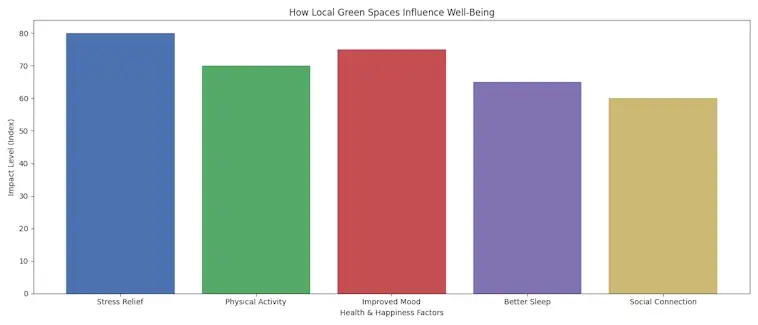
Local green spaces do more than brighten a neighborhood. They play a real role in how you feel each day. And because so many of us spend long hours indoors, these pockets of nature matter even more. When you step into a park, a community garden, or a tree-lined trail, your body and mind respond almost instantly. You breathe easier, slow down, and reset.
Green spaces help reduce stress, lift your mood, and support better sleep. They also encourage gentle movement, which is often the first step toward a more active lifestyle. Even a short walk can make a big difference. And when these spaces are nearby, you’re more likely to use them. Over time, those small moments outdoors add up. They support better health without feeling like hard work.
There’s also a social benefit. People naturally gather in parks. They stop for quick chats. Meet friends for walks. And they take kids out to play. These small interactions build connection and help reduce loneliness. In a world that often feels rushed, local green spaces offer something rare: easy, everyday joy.
As more cities grow denser, these places will only become more important. They give us a gentle reminder that well-being doesn’t always require big changes. Sometimes it just takes a few trees, a path, and a moment to breathe.
Community Forests as Social Hubs: Bringing Neighbors Together
Community forests are doing more than protecting green space. They are also helping people feel connected again. Today, many neighborhoods struggle with loneliness and limited places to meet. Yet community forests offer a simple fix. They create shared spaces where people can slow down, talk, and build trust.
These forests make it easier for neighbors to cross paths. They turn casual moments—like walking a dog or joining a weekend clean-up—into real social bonds. And because they belong to everyone, they invite people of all ages and backgrounds to take part. Over time, this shared stewardship strengthens local identity and pride. It encourages people to feel rooted in where they live.
When designed thoughtfully, community forests also spark collaboration. Residents can help make decisions about trails, events, and conservation projects. This shared responsibility brings out a deeper sense of ownership. It also opens the door for new friendships and unexpected ideas.
Here are a few ways community forests help people come together:
- They offer free, welcoming spaces for gatherings and outdoor activities.
- Provide natural settings that make conversations easy and relaxed.
- Encourage volunteer programs that bring neighbors into shared action.
- Support local traditions, events, and cultural celebrations.
As more cities think about the future of public space, community forests are becoming a model worth watching. They show how nature can rebuild social ties and spark everyday connection. And as these forests grow, they remind us that community grows right alongside them.
Simple Ways You Can Support Trees in Your Neighborhood
If you’ve ever wondered how to make your street greener, you’re not alone. Many people want healthier trees nearby but aren’t sure where to begin. The good news is that even small actions can make a real difference. And when neighbors pitch in together, those small actions add up fast.
Trees help cool your block. They clean your air. And they even lift your mood. So supporting them isn’t just good for nature—it’s good for your daily life too. And because these steps are simple, you can start today without spending much money or time.
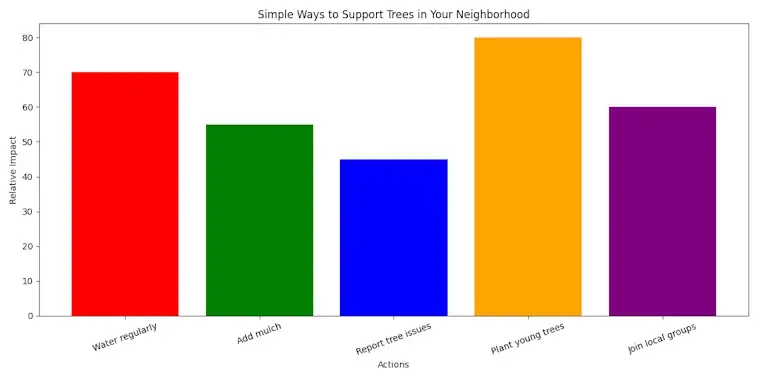
Begin with what feels easy. Maybe that’s watering a young tree during a dry spell. Or maybe it’s adding mulch to keep roots cool. As you grow more confident, you might take on bigger projects, like planting new trees or joining a local volunteer group. Each step strengthens your neighborhood’s canopy and keeps your community healthier.
To help you think about where to start, here’s a visual snapshot of a few common actions and their relative impact.
The Future of Urban Nature: Inspiring the Next Generation of Tree Lovers
Urban nature is changing fast. Cities are getting hotter, noisier, and more crowded. Yet, at the same time, more people are craving green spaces. They want places where they can breathe, slow down, and feel connected to something real. This creates a huge opportunity. We can shape city life in a way that doesn’t just protect nature but celebrates it. And that starts with inspiring young people to care about trees.
When kids and teens learn to love the outdoors, they carry that passion into adulthood. They notice the shade a tree gives on a hot day. Even understand why clean air matters. And they see nature not as decoration, but as part of a healthy city. This shift in mindset is powerful. It’s how we build communities that value green spaces as much as roads or buildings.
Why Community Forests Matter for the Future
One way to spark this passion is by involving young people in community forests. These shared green spaces help them see how planting and caring for trees can shape their own neighborhoods. It gives them ownership, and shows them their actions matter. And it turns ordinary streets into living classrooms.
When young people plant a tree, they usually want to check on it, and watch it grow. They talk about it. And they share it with friends. Slowly, this simple act becomes a story they carry forward. With enough of these stories, we begin to shift the culture of our cities toward one that values nature as a core part of urban life.
If you want to explore how cities around the world are doing this, the nonprofit Trees for Cities offers helpful examples and tools for getting involved.
The future of urban nature won’t be built overnight. But it will be built by people. And the next generation is ready—as long as we invite them in, hand them a shovel, and let them help shape the cities they will someday lead.
Conclusion: Why Community Forests Matter More Than Ever
Community forests are more than patches of green. They are living spaces that bring people together and help cities breathe a little easier. As our urban areas grow, these shared forests can anchor neighborhoods with calm, beauty, and a sense of belonging. They offer a simple but powerful idea: when people care for the land around them, the land gives back.
By supporting community forests, you’re investing in cleaner air, cooler streets, and stronger social bonds. You’re also helping young people experience nature in a hands-on way, which can spark a lifelong love for the outdoors. And as more cities embrace this approach, the impact will compound. Bit by bit, our neighborhoods will feel healthier, more welcoming, and more connected.
Looking ahead, the promise is clear. Community forests can shape a future where nature is not an afterthought but a core part of urban life. And that future starts right outside your door.