
Can Land Restoration Avoid Simplistic Mistakes That Cost Us?
Why Land Restoration Fails — And How We Can Stop Making the Same Mistakes
Land restoration is often presented as a straightforward fix, yet the reality is far more complex. Many projects start with good intentions but end up repeating the same avoidable errors. Costs rise, progress slows, and communities lose patience. As more regions face degraded soils, shrinking habitats, and climate pressures, the need for thoughtful action becomes urgent.
Too many efforts lean on quick solutions that look appealing on paper but fall apart on the ground. Oversights creep in. Local knowledge gets ignored. Short-term gains overshadow long-term health. These patterns are common, but they are not inevitable.
There is growing momentum for approaches that balance science with practical sense. Strategies that respect the land’s natural rhythms tend to hold up over time. When decision-makers stay curious and adaptive, they create space for outcomes that are stronger, fairer, and more resilient.
This moment offers a chance to rethink our assumptions. A chance to choose methods that build real value rather than sinking resources into fixes that unravel later. With care and clarity, restoration can move from a hopeful concept to a lasting success.
Why Land Restoration Needs Smarter Thinking From the Start
Land restoration is often seen as a simple fix. Plant more trees. Add more grass. Bring back what was lost. It sounds comforting, and in many ways it is. But the truth is more complex. When we rush in without a plan, many well-meaning projects fail to take root. That is why smarter thinking from the start matters more than ever.
When we talk about land restoration today, we are talking about more than repairing soil. We are also talking about rebuilding ecosystems that support weather patterns, food systems, and community health. That is a lot of responsibility to place on any project. So it helps to slow down, look ahead, and ask the right questions before we act.
A Question Many Projects Forget to Ask
What does the land actually need right now?
It seems basic, but many teams skip this step. They jump straight to planting because planting feels productive. Yet the land might need something very different. It might need erosion control, it might need invasive species removed. And it might even need time to recover before any new planting takes place.
This is where smarter planning comes in. When we study the land first, we make better choices. We pick species that belong there, we design layouts that match rainfall, soil, and local wildlife. And, in the long run, we avoid wasting effort, money, and hope on strategies that were never going to work.
Thinking ahead also helps communities stay involved. People are more likely to care about land restoration when they understand the story behind it. Clear goals and simple steps make it easier for volunteers, schools, and local groups to stay engaged. That kind of shared energy can turn a small project into a long-term success.
As climate pressures grow, we need projects that are built to last. And that starts with deeper understanding, not quick fixes. When we make thoughtful choices from day one, land restoration becomes more than a repair job. It becomes a path forward—one that protects both nature and the communities that depend on it.
The Hidden Costs of Rushing Restoration Projects
When a restoration project kicks off, it is tempting to push for quick results. After all, visible progress feels good. It reassures communities, funders, and even the teams doing the work. But moving too fast can come with hidden costs that are far more expensive than taking the time to plan well from the start.
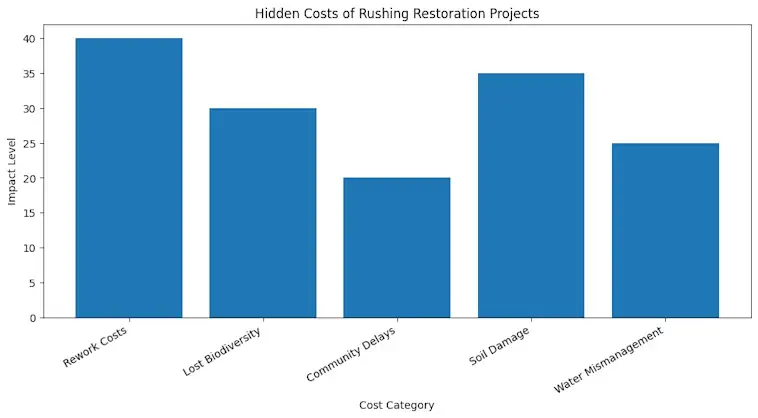
Rushed projects often overlook early warning signs. Soil might not be stable enough. Water flow might be unpredictable. Local species might not be ready to return. When these signals are ignored, the entire project can slip off track. And unfortunately, fixing mistakes later costs more than preparing properly up front.
When we talk about land restoration, thoughtful planning is not a luxury—it is a safeguard. It helps protect ecosystems from unintended harm. And it also prevents communities from feeling discouraged when early progress does not last. With just a bit more patience at the start, we can build projects that endure and deliver real value.
As you look at the chart below, you will see how different types of overlooked issues add up. These costs are avoidable. And with smarter planning, land restoration becomes more effective, more resilient, and more meaningful for everyone involved.
How Land Restoration Can Break Free From Old Mistakes
Land restoration has never mattered more than it does today. Yet many projects still repeat patterns that slow progress and waste resources. When you look closely, you see the same issues coming back again and again. That is why breaking free from old mistakes is not just helpful. It is essential. And the good news is that fresh thinking is already reshaping what land restoration can achieve.
As we look ahead, it is clear that the future of healthy landscapes will rely on smarter planning and community-led action. It starts with asking better questions. Who lives on the land? What does the soil need? How will the restored area thrive ten or twenty years from now? When these questions guide decisions, restoration becomes stronger and more resilient.
At the same time, projects designed with long-term value tend to avoid the traps that held earlier efforts back. This means shifting away from quick fixes and moving toward solutions that support nature’s own systems. Little changes can make a big difference. And, with the right mindset, we can build landscapes that stay healthy for generations.
Here are a few practical ways to support better land restoration:
- Include local communities early so solutions fit the real needs of the area.
- Use native plants to rebuild ecosystems that can survive future stress.
- Test soil health before starting work to avoid costly surprises later.
- Track progress over time instead of assuming early success will last.
When we weave these steps into our approach, we create space for innovation. We also open the door to more flexible partnerships, better tools, and stronger science. Most of all, we show that land restoration can evolve. It does not have to stay stuck in the past.
If we continue to learn from earlier attempts and stay open to new ideas, we can restore land in ways that are richer, more sustainable, and far more impactful than ever before.
What Science Tells Us About Repairing Damaged Landscapes
Repairing damaged landscapes can feel overwhelming, but science gives us a clear path forward. Researchers have spent decades studying how ecosystems break down and, more importantly, how they recover. When you look at the evidence, you start to see that healing land is not guesswork. It is a measurable, predictable process. And with the right steps, progress can happen faster than many people expect.
Scientists agree on one thing: damaged landscapes respond best to careful, steady interventions. Small improvements can create powerful ripple effects. For example, healthier soil boosts plant growth, which attracts wildlife, which in turn helps the land stabilize and grow even stronger over time. This chain reaction shows why early decisions matter so much.
Another insight is that nature does not heal in straight lines. Instead, it moves in stages. First the soil rebuilds. Then water cycles balance. After that, vegetation spreads. Understanding these stages helps us make better choices and avoid wasting effort on tactics that do not fit the land’s current needs.
To make this more practical, researchers often track a few key indicators that reveal how well a landscape is recovering. These indicators offer a quick reality check and help people adjust their plans as conditions change. The chart below highlights several of these important signals.
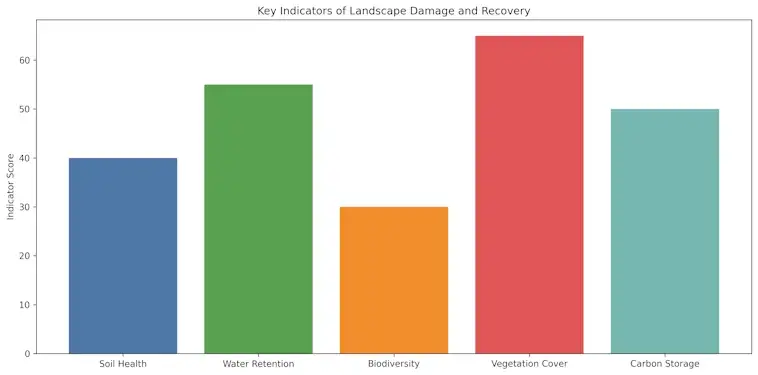
Using insights like these keeps restoration grounded in real evidence. It also gives communities and land managers confidence that their work is moving in the right direction. When science guides the process, repairing damaged landscapes becomes less about trial and error and more about building a future where nature can thrive again.
A Better Path Forward: Practical Steps to Restore Land Without Waste
When we talk about healing damaged land, it can feel overwhelming. But there is a better path forward. And it starts with simple, practical actions we can take right now. These steps help cut waste, protect soil, and bring struggling landscapes back to life. They also empower communities to work together toward a cleaner, more resilient future.
It helps to think of land not as something separate from us, but as a partner. When we care for it, it gives back. So the question becomes: what can everyday people, local leaders, and even small groups do to restore land without creating more waste along the way?
As it turns out, more than you might expect.
Why Local Land Restoration Efforts Matter
Small, local actions add up. When communities compost food scraps, reduce litter, or protect native plants, they slow down land degradation. Over time, these efforts rebuild healthy soil, which supports stronger crops, cleaner water, and greener neighborhoods.
A great example is how regenerative agriculture is spreading worldwide. Farmers are planting cover crops, rotating fields, and cutting chemical use. These choices rebuild soil structure and reduce the waste produced by traditional farming. You can learn more about real-world examples from the UN’s overview of sustainable land management.
So even small adjustments spark big change.
And as more people get involved, momentum grows. Waste drops. Biodiversity improves. Communities feel more connected. This is the better path forward—one where we restore the land while reducing the waste that harmed it in the first place.
Conclusion: Why Smarter Land Restoration Matters Now
As we look ahead, it is clear that land restoration cannot rely on shortcuts or one-size-fits-all ideas. The stakes are too high. Our soils, water, and ecosystems need solutions that respect the complexity of nature. When we slow down, listen to local conditions, and learn from past missteps, we make far better choices.
The good news is that progress is already happening. Communities are experimenting with new methods. Farmers are testing regenerative practices. And scientists are sharing knowledge faster than ever. Together, these efforts show that land restoration works best when it is thoughtful, adaptable, and grounded in real-world experience.
So the path forward is simple, but not simplistic. We avoid costly mistakes when we stay curious, try new approaches, and adjust when needed. With steady commitment, land restoration becomes more than a goal. It becomes a promise to future generations that we are repairing what was damaged and protecting what is left.
And that is a future worth working toward.