
The Rise of Carbon Emissions Since the Industrial Revolution
Carbon emissions have soared since the Industrial Revolution kicked off in the mid 1700s. Back then, factories started burning coal to power everything from trains to textile mills, sending loads of carbon dioxide into the air. This marked the start of a major shift not just in technology, but also in how human activities impact our planet’s climate. Fast forward to today, and fossil fuels—like oil and natural gas—continue to be big culprits. Understanding this rise in emissions helps us grasp why it’s crucial to switch to cleaner energy sources to protect our environment for future generations.
The Rise of Carbon Emissions Since the Industrial Revolution
What You’ll Discover
The Dawn of Industrialisation: Sparking the Carbon Era
Coal: The Black Gold of the 19th Century
The Oil Boom and the Expansion of Carbon Footprints
Post-War Prosperity and Its Environmental Cost
Regulation and Awareness: The Slow Awakening
Technological Advances and Their Double-Edged Sword
The Role of Deforestation in Carbon Emissions
Towards a Sustainable Future: Renewable Energy and Carbon Reduction
The Dawn of Industrialisation: Sparking the Carbon Era
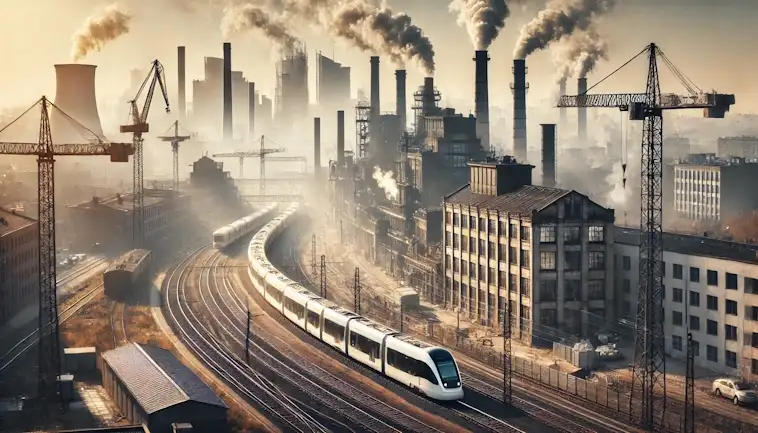
The Industrial Revolution was a major turning point in history, starting around the mid-18th century. It marked a shift from economies based on agriculture and handicrafts to ones dominated by industry and machine manufacturing. This shift largely began in Britain and is closely linked to the invention and use of the steam engine.
The steam engine, developed by James Watt and others, became a fundamental driver of this revolution. It worked by burning coal to produce steam, which then powered the engines. These engines were initially used to pump water out of coal mines. As more efficient versions were developed, they started powering machinery in textile mills, ironworks, and other manufacturing industries. This was significant because it let factories move away from waterways and expand into new areas.
Coal became the energy backbone of the industrial age. Before the steam engine, wood and other biomass fuels were the primary sources of energy. However, coal was more abundant and packed a higher energy punch. It was essential for not only running steam engines but also in the production of iron and steel, important materials for building the infrastructure of the industrial world.
The reliance on coal had a dramatic impact on the environment. As industries grew, they burned more coal, and the level of carbon emissions began to climb. This marked the start of a major increase in human-induced carbon emissions, which have since become a critical factor in global climate change.
Using steam power and coal set the stage for further innovations and technologies, but it also started a trend of increasing reliance on fossil fuels, which continues to affect our planet today.
Coal: The Black Gold of the 19th Century
During the 19th century, coal was king. It was the dominant energy source that powered the growing Industrial Revolution, in Britain and across Europe and America too.
As factories sprouted up, they relied heavily on coal. It fuelled the steam engines that ran machines in textile mills, iron foundries, and many other industries. The hunger for coal grew as these industries expanded.
Coal didn’t just power factories. It also transformed transportation. Railways, which became the arteries of industrial nations, were driven by steam locomotives that burned coal. These trains connected cities and industrial centres like never before, moving goods and people across vast distances much faster than horse-drawn carriages.
The expansion of coal use wasn’t limited to land. Ships powered by steam engines also took to the seas, furthering the reach of industrialised nations and increasing global trade. This use of steam power in ships made international trade and colonial expansion much more feasible.
In America, the story was similar. The vast coal deposits of the Appalachian region and later the Midwest fuelled America’s industrial ascent. Cities like Pittsburgh became steel-making capitals, largely thanks to the abundance of coal.
As coal mining and consumption spread across Europe and America, it left a significant mark on the planet. The increase in coal use meant a huge increase in carbon emissions. At the time, the connection between burning fossil fuels and global warming wasn’t understood. Today, we can see the long-term effects.
Coal shaped the 19th century. It powered the engines of industry, connected continents via rail and sea, and contributed significantly to our global carbon footprint. The era of coal marked a pivotal chapter in our industrial and environmental history.
The Oil Boom and the Expansion of Carbon Footprints
The 20th century saw a major shift in the world’s energy scene with the rise of oil, changing economies and affecting the environment significantly. This shift began as people discovered more about oil’s potential. The drilling of the Spindletop geyser in Texas in 1901 marked a turning point, showing just how much oil could be tapped.
As cars became popular, the demand for oil soared. The Model T, introduced by Ford in 1908, was a big part of this. It was affordable, and it made people eager to drive. Cars quickly became symbols of freedom and progress, but they also needed gasoline to run, which comes from oil.
Soon, oil wasn’t just about gasoline. It was essential for manufacturing too. Factories used it to power machines, and it was a key ingredient in making plastics and chemicals. As industries grew, they relied more and more on oil.
This reliance had big effects on global economies. Countries with oil reserves, like those in the Middle East, suddenly found themselves with immense wealth and influence. Global politics began to revolve around oil, leading to alliances and conflicts centred on controlling its supply.
But there was a downside. As cars spread and factories boomed, so did emissions from burning oil. This added a new layer to the global emissions profile, already thickened by centuries of burning coal. The surge in oil use contributed significantly to the greenhouse gases that drive climate change.
The shift to oil reshaped the world in profound ways, powering economies and changing landscapes. It brought wealth and innovation but also environmental challenges we are still trying to manage today.
Post-War Prosperity and Its Environmental Cost
After World War II, there was a huge economic boom that transformed life, especially in the United States. This was a time of great optimism and growth. People were eager to build new lives, which fuelled a surge in spending and production.
Mass production took off. Factories that had made tanks and planes during the war switched to making cars, appliances, and all sorts of household goods. These products were made quickly and in huge quantities, making them affordable for more people than ever before.
At the same time, suburbs began to sprawl outwards. The dream of owning a home with a yard became achievable for many families, thanks in part to cheaper cars and lower-cost gasoline. More people driving meant more roads and eventually, more traffic. This expansion was great for individual families but started to add up in terms of carbon emissions. Every new home, car, and appliance increased the energy demand, most of which was still coming from fossil fuels like oil and coal.
Consumer culture exploded. Advertising boomed, and shopping became a pastime. This culture encouraged buying more and more, leading to an increase in the production of goods and an increase in emissions. Every new product meant more energy used in production and transportation, adding to the carbon footprint.
Plastics also entered the scene in a big way during this boom. Introduced on a massive scale, plastics were seen as miraculous for their durability, versatility, and low cost. They became a staple in everything from packaging to furniture to cars. Economically, plastics supported growth because they were cheaper and easier to manufacture than many natural materials. However, the environmental impact was significant. Plastics are made from fossil fuels, and they contribute to carbon emissions both when produced and when disposed of. Plus, they take centuries to degrade, leading to pollution and harm to wildlife.
The post-war boom brought many benefits, such as higher standards of living and technological advances. However, it also led to unprecedented levels of carbon emissions and environmental challenges, including the widespread use of plastics, which we are still grappling with today.
Regulation and Awareness: The Slow Awakening
In the 1960s and 1970s, people started to notice the environmental costs of industrial growth. This sparked the environmental movements, a series of efforts aimed at protecting our planet.
During these decades, images of smog-filled cities and polluted rivers made people realise that something needed to change. Activists became more vocal, and the public learned of environmental issues.
A pivotal moment was the establishment of Earth Day on April 22, 1970. This day was a call to action for people around the world to focus on the environment. Millions of people gathered at rallies and events to show their support for a cleaner, healthier planet. Earth Day was a huge success, and it became an annual event, drawing attention to environmental issues every year.
The movements of the 1960s and 1970s also pushed governments to act. Many countries, including the United States, passed Clean Air Acts and other laws aimed at reducing pollution. These laws set limits on emissions from factories and vehicles, which were major sources of pollution. The legislation marked significant progress because it meant that the environment was now a priority for policy-makers.
These movements and their achievements showed that when people come together, they can make a difference. They laid the groundwork for ongoing environmental advocacy and set the stage for future actions to protect our planet.
Technological Advances and Their Double-Edged Sword
Technology and its impact on carbon emissions is a double-edged sword. On one side, technological advancements have made energy use far more efficient. On the other, they’ve led to increases in overall consumption.
Let’s talk about the positives first. Advances in technology have brought us energy-efficient appliances, electric vehicles, and smart systems that help reduce the amount of energy we use every day. For example, LED lights use much less electricity than traditional bulbs. Solar panels and wind turbines have also become more effective, providing cleaner energy alternatives that reduce our reliance on fossil fuels.
However, there’s a flip side. As technology has advanced, it has also led to higher consumption. People buy more electronic devices, like smartphones and laptops, and replace them more frequently. Each device requires energy to produce, use, and dispose of. Technology has also made it possible to extract fossil fuels more efficiently, which can lead to more oil and gas being used, not less.
Global connectivity and online shopping have resulted in more goods being transported across greater distances. This means more vehicles, more fuel, and more emissions. Even though each vehicle might be more efficient, the overall number of vehicles and trips has increased, bumping up total emissions.
While technology has helped us use energy more wisely in some areas, it has also helped with an increase in overall consumption. This complex relationship shows that while technological solutions are part of the fight against climate change, they need to be paired with conscious efforts to reduce our global consumption habits.
The Role of Deforestation in Carbon Emissions
Deforestation is a major player in the story of carbon emissions, but it affects the planet in a couple of big ways.
First, when large areas of forest are cleared, all the carbon stored in those trees is released into the atmosphere. This happens because the trees, once cut down or burned, release the carbon they had been storing during their growth. This adds to the carbon dioxide already present in the atmosphere, contributing to global warming.
Forests are also important because they absorb carbon dioxide from the air. They act like giant filters, helping to clean the air and balance the climate. When we remove forests for agriculture or to make room for cities, we lose these natural filters. Less forest means less carbon dioxide is absorbed from the atmosphere, which lets more of it build up and speed up climate change.
But it’s not just about carbon. Deforestation also harms biodiversity. Forests are home to an incredible variety of plants and animals. When their habitats are destroyed, many species struggle to survive. Some are even pushed to extinction. Losing these species can disrupt ecosystems, which affects the natural processes that keep our environment healthy, including those that regulate the climate.
Deforestation for agriculture and urban development increases carbon emissions by releasing stored carbon and reducing the Earth’s ability to absorb carbon dioxide. It also harms biodiversity, further disturbing the balance of our planet’s ecosystems and climate.
Towards a Sustainable Future: Renewable Energy and Carbon Reduction
Lately, there’s been a strong push towards sustainability and it’s bringing some hope in the fight against climate change. More and more, renewable energy sources like wind, solar, and hydro are stepping up to meet our energy needs.
Wind turbines and solar panels are becoming a common sight across many landscapes. These technologies have grown so much in efficiency and dropped in cost, making them more accessible than ever before. Hydroelectric power, which uses water to generate electricity, continues to provide a large portion of renewable energy, especially in countries with abundant water resources.
Global efforts are also making a difference. The Paris Agreement, for example, is a commitment by countries all over the world to reduce their carbon emissions and keep global warming below 2°C. This agreement shows that countries are ready to work together and take serious action.
Governments are also implementing policies that encourage more green practices, like subsidies for renewable energy projects, taxes on carbon emissions, and investments in public transportation. These policies help encourage businesses and individuals to make choices that are better for the environment.
All these efforts are signs we are moving in the right direction. While there’s still a lot to be done to tackle climate change, the increasing shift towards renewable energy and global collaboration offers a hopeful outlook. By continuing these efforts and working together, we can make a big impact on reducing our environmental footprint and protecting our planet for future generations.
Conclusion
We face a critical challenge with carbon emissions, but there are reasons to stay hopeful. Technological advances are making energy use more efficient, and renewable energy is becoming an important part of our power supply. Global agreements and local policies are pushing for cleaner practices and lower emissions.
Together, these efforts are helping us move toward a more sustainable future. Every step we take, from supporting renewable energy to making conscious choices in our daily lives, adds up. By staying informed and active, we can all contribute to the fight against climate change and make a positive impact on our planet.