Wondrous Tundra Plains and the Fight for Survival
Tundra Plains: A Wondrous Frozen World and the Urgent Fight for Survival
The tundra plains stretch across some of the coldest and most remote parts of Earth. At first glance, they look empty and still. Yet this vast, treeless land is alive with hardy plants, migrating animals, and deep layers of frozen soil known as permafrost. These frozen ecosystems may seem distant, but they play a vital role in the planet’s climate system and global biodiversity.
For most of the year, the tundra is locked in ice and snow. Then summer arrives, brief but powerful. Wildflowers bloom. Caribou move in large herds. Birds travel thousands of miles to nest. Life moves fast because it must. Every species is finely tuned to survive extreme cold, strong winds, and limited sunlight. Even small changes can upset this delicate balance.
Today, the tundra faces growing pressure. Rising temperatures are thawing permafrost. As a result, stored carbon is released into the atmosphere, which accelerates global warming. At the same time, shifting seasons disrupt migration routes and food supplies. What happens in these northern regions does not stay there. It affects weather patterns, sea levels, and ecosystems around the world.
Understanding this frozen frontier is more important than ever. The fight for survival in the tundra is not only about protecting distant landscapes. It is about safeguarding a critical part of Earth’s future.
Tundra Plains: A Frozen Landscape Full of Life
When most people hear the words tundra plains, they picture an empty, icy place. Flat land. Strong winds. A world that looks quiet and still.
But here’s the surprise. The tundra is not “dead” land. It’s a living landscape that knows how to survive.
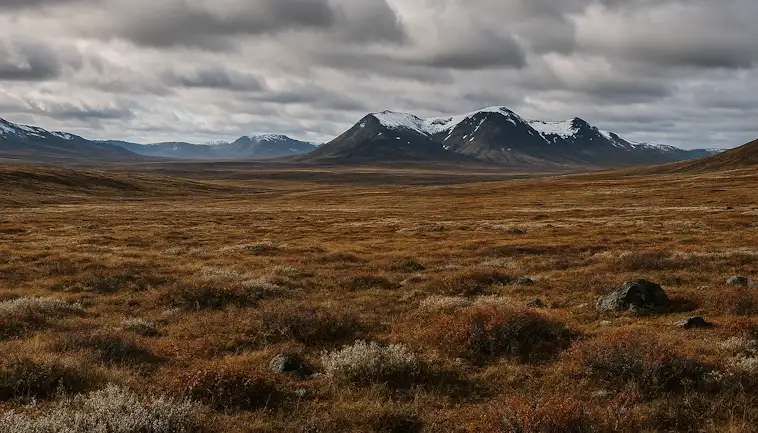
In fact, tundra plains are one of Earth’s toughest habitats. They sit in the far north, where winters are long and dark. Summers are short but bright. The ground often stays frozen under the surface for most of the year.
That frozen layer matters. It’s called permafrost. Because water can’t drain easily, the surface can turn into wetlands during the warmer months. That creates pockets of life in places that seem impossible.
Plants here grow low to the ground. They hug the earth to avoid the wind. You’ll see mosses, lichens, grasses, and small flowering plants. Many of them bloom fast. They have to. Summer doesn’t last long.
And animals? They’ve got clever strategies too. Some migrate in when food is available. Others stay all year and rely on thick fur, fat stores, and camouflage. Caribou, Arctic foxes, snowy owls, and lemmings are just a few examples of wildlife linked to tundra ecosystems.
A Small Summer Rush You Might Not Expect
The best time to understand tundra plains is during the brief summer. This is when the surface softens, the sunlight lingers, and life speeds up.
Insects appear in huge numbers. Birds arrive to nest and feed. Plants flower quickly. It can feel like nature is trying to fit a whole year into a few weeks.
This burst of activity also matters beyond the tundra. Migrating birds connect these plains to distant coasts, forests, and even cities. So, in a quiet way, tundra life travels.
Today, tundra plains are also becoming a place to watch closely. As the climate warms, changes can ripple out fast. That includes shifts in wildlife patterns, new plant growth, and changes in the stability of the ground itself.
So yes, tundra plains are frozen. But they’re also full of life. And they’re part of a bigger story that’s still unfolding.
How Wildlife Adapts to Extreme Cold and Short Summers
If you’ve ever wondered how animals survive in places that feel almost unlivable, you’re not alone. Extreme cold can freeze exposed skin fast. Plus, food can be scarce for months. And then, just as you get used to the idea of endless winter, summer arrives—brief, bright, and busy.
So how does wildlife cope? In simple terms, animals use a mix of smart body features and smart behaviors. Some stay and tough it out. Others leave and come back. Either way, timing is everything.
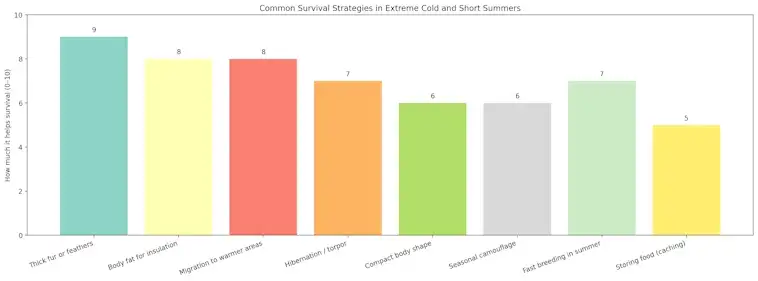
For example, thick fur and feathers help trap heat close to the body. Meanwhile, extra body fat adds insulation and stores energy. Because of that, many animals can handle long cold spells with fewer meals.
However, not every animal can stay. Migration is a powerful strategy too. Birds, in particular, follow food and better weather. Then, when summer returns, they rush to nest and raise young before the season ends.
At the same time, some animals slow their bodies down. Hibernation or torpor helps them save energy when food is limited. And for those that remain active, small details matter. A compact body shape can reduce heat loss. Seasonal camouflage can also help them hunt or hide on snow and ice.
Finally, short summers force quick action. Many species breed fast and grow quickly. That way, they can take advantage of the short window when plants, insects, and fresh water are available.
Tundra Plains Under Threat from Climate Change
The tundra plains can look tough and timeless. They seem like they will stay the same forever. However, climate change is starting to rewrite the rules in this cold, flat world.
For starters, the Arctic is warming faster than many other regions. As a result, the tundra’s seasons are shifting. Winters can arrive later. Springs can start earlier. That may sound small, but it changes everything for plants and animals that rely on tight seasonal timing.
Next, there’s the ground itself. Much of the tundra plains sits on permafrost. That’s soil that stays frozen for long stretches of time. When it warms, it can soften and sink. This can reshape the land and disturb habitats. It can also damage roads, homes, and pipelines in northern communities.
At the same time, warmer conditions can bring new plant growth. Shrubs can spread into areas that used to be open tundra. This can change how snow piles up in winter. It can also change where animals travel and feed. So, even if the landscape still looks “wild,” it may function very differently.
Here are a few key ways climate change is putting pressure on tundra plains:
- Permafrost thaw can cause ground collapse and create new wet areas
- Earlier snowmelt can disrupt nesting and feeding seasons for birds
- Shrub growth can crowd out low tundra plants and change food sources
- More wildfires can release stored carbon and damage slow-growing vegetation
- Coastal tundra can face faster erosion as sea ice forms later and breaks up earlier
If you want a clear, science-based overview of what’s changing in the Arctic and why it matters, NASA’s Sea Ice pages are a solid place to explore.
Even with all this, there’s still room for hope. Monitoring is improving. Local knowledge is being taken more seriously. And new tools are helping researchers track changes faster than ever. Still, the big takeaway is simple: tundra plains are not just cold scenery. They’re a living system. And right now, that system is under real stress.
Indigenous Communities and the Arctic Way of Life
When people talk about the Arctic, they often focus on ice, animals, and weather. However, the Arctic is also home. For many Indigenous communities, it’s a place shaped by deep knowledge, strong relationships, and daily choices that are closely tied to the land and sea.
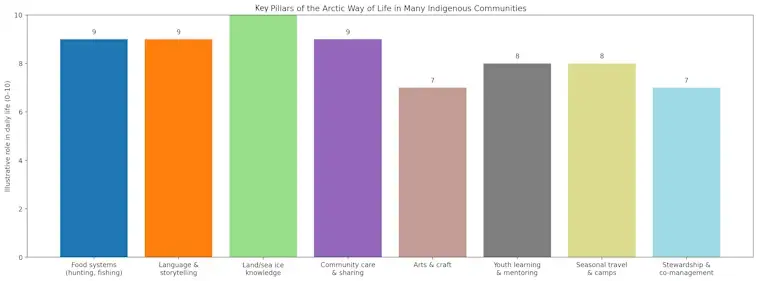
To start, the Arctic way of life is often seasonal. Travel routes can change with the snow, wind, and sea ice. Because of that, local knowledge is not just “nice to have.” It can be essential for safety, planning, and providing food.
At the same time, community matters. Sharing food, checking on elders, and supporting families can be part of everyday life. So, survival is not only about equipment or shelters. It’s also about cooperation and care.
Language and storytelling play a big role too. They pass on lessons about places, animals, and weather. And they also carry identity and belonging. While life continues to evolve, these connections help people adapt without losing what matters.
Meanwhile, arts and craft traditions often reflect the environment. Materials, patterns, and techniques can hold practical value and cultural meaning. Then, youth learning and mentoring keeps skills alive across generations. This is how knowledge stays strong, even as conditions change.
Protecting Fragile Ecosystems for Future Generations
Some places look tough, but they’re actually delicate. The Arctic is one of them. It can handle cold and wind. However, it doesn’t always handle sudden change well.
That’s why protecting fragile ecosystems matters so much. When a habitat is slow to recover, even small damage can last for decades. And because everything is connected, one change can ripple outward. Plants shift. Animals adjust. People who depend on the land feel it too.
So what does protection look like in real life? It often starts with careful choices. And it means limiting harm before it happens. But it also means listening to the people who know the land best. Then, it means using science to track what’s changing and why.
Small Steps That Protect Tundra Plains
When we talk about tundra plains, it helps to think practical. These landscapes can be protected in ways that are simple, steady, and realistic.
For example, responsible travel matters. Staying on marked routes reduces damage to thin soils and fragile plants. Likewise, better planning around roads, pipelines, and building sites can lower long-term impacts. And when protected areas are well-managed, wildlife has space to feed, nest, and migrate.
At the same time, climate action is part of conservation now. Cutting emissions helps slow warming. Supporting clean energy helps too. These changes may feel big, but they protect small habitats in a very direct way.
Finally, education keeps the momentum going. When more people understand what’s at stake, it becomes easier to support smart policies and local projects.
If you want a clear, practical guide to how conservation works and why it matters, the International Union for Conservation of Nature (IUCN) has strong resources worth exploring.
Conclusion: Why Tundra Plains Matter More Than Ever
The tundra plains may look quiet from a distance. However, they are anything but empty. They are packed with life that has learned to survive in extreme cold and short summers. And they support people, wildlife, and natural cycles that reach far beyond the Arctic.
At the same time, the pressures are growing. Warming temperatures, shifting seasons, and changing ground conditions are already reshaping the land. Because of that, the fight for survival is not only about one species or one place. It’s about protecting a fragile system before the changes become too big to manage.
Still, there is a hopeful path forward. We can support science that tracks changes early. And we can learn from Indigenous knowledge that has guided Arctic life for generations. Also we can push for smarter choices that reduce harm, from cleaner energy to careful land use.
So remember this: tundra plains are a living story. They are resilient, but they are not invincible. And what we do next will help decide what future generations get to see, study, and call home.