Navigating the Dire Impacts of Crop Failure on Global Food Security
Navigating the Dire Impacts of Crop Failure on Global Food Security
Crop failure is no longer a distant threat—it’s a growing global reality. From droughts and floods to heatwaves and pests, extreme conditions are putting the world’s food supply under immense pressure. As key crops wither, prices rise, supply chains strain, and entire communities face hunger. The impact ripples far beyond farms, reaching cities, markets, and dinner tables everywhere.
Understanding the causes and consequences of crop failure is essential to building a more resilient and secure food future. The solutions may be complex, but they are urgently needed—and within reach.

What Causes Crop Failure and Why It’s Getting Worse
Crop failure isn’t just a problem for farmers—it’s a growing threat to global food security. When harvests fail, food prices rise, communities suffer, and entire supply chains feel the ripple effect. But what’s behind this increasingly common crisis?
The Main Causes of Crop Failure
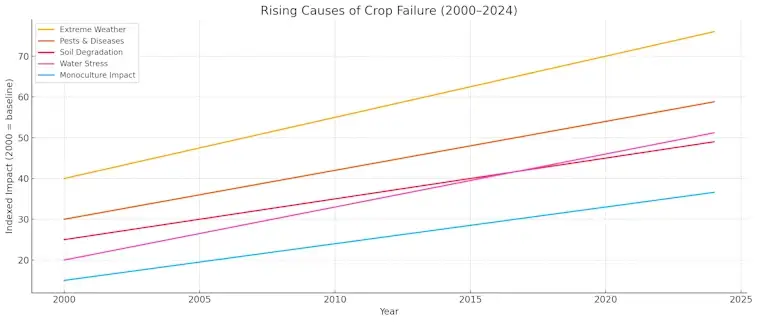
There are a few key culprits when it comes to crops failing:
- Extreme weather Droughts, floods, heatwaves, and unexpected frosts can wipe out entire fields. Climate change is making these events more frequent and intense.
- Pests and diseases Warmer temperatures and shifting seasons are helping invasive pests and crop diseases spread to new regions.
- Soil degradation Years of over-farming, erosion, and lack of proper soil care leave land less fertile and crops more vulnerable.
- Water stress Many crops depend on steady irrigation. But with shrinking water supplies and mismanaged water systems, that’s no longer guaranteed.
- Market pressures and monoculture Growing the same crop year after year might seem efficient, but it drains soil nutrients and increases the risk of large-scale failure.
Why It’s Getting Worse
The truth is, our food systems were built for a more stable climate. Today’s reality is different. Climate change is throwing off planting calendars, disrupting rainfall patterns, and amplifying natural disasters.
At the same time, global demand for food keeps rising. More people, more consumption, and less reliable land—that’s a dangerous mix. And while technology and innovation offer hope, the gap between risk and resilience is growing fast.
Unless we invest in smarter farming practices, climate adaptation, and global cooperation, crop failures will become more common—and more costly.
How Crop Losses Disrupt Global Food Supply Chains
When crops fail, the impact doesn’t stop at the farm gate. It quickly spreads across countries, industries, and even continents. In today’s tightly connected world, crop losses can trigger a chain reaction that affects everything from grocery store shelves to international trade.
From Field to Fork: A Delicate Chain
Our global food supply chain is a complex web. Farmers grow crops, which are then transported, processed, packaged, and shipped to markets around the world. But when harvests shrink, that entire system is thrown off balance.
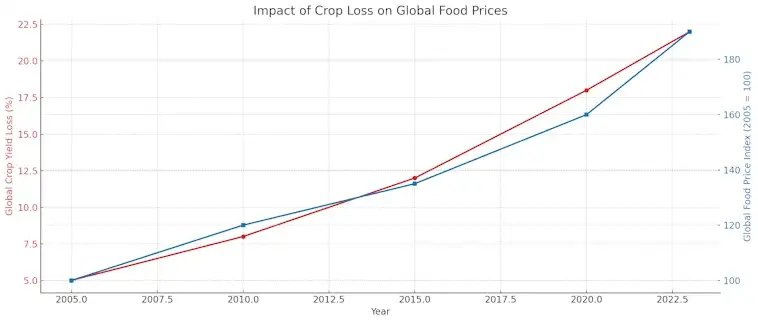
Here’s how crop losses disrupt the chain:
- Higher prices for staples When supply drops and demand stays the same—or even increases—prices rise. This especially hurts lower-income communities and countries that rely on imports.
- Supply shortages Supermarkets may run out of basics like rice, wheat, or corn. Food manufacturers may struggle to source ingredients for packaged goods.
- Export restrictions Countries facing food shortages often limit exports to protect their own supply, which can lead to global tension and further shortages elsewhere.
- Pressure on alternatives When one crop fails, pressure builds on substitutes. For example, if wheat production falls, demand for rice or corn may spike, driving up those prices too.
- Economic ripple effects Transporters, processors, and retailers all feel the pinch. For countries that depend on agriculture, crop losses can shrink GDP and increase poverty.
Climate change, geopolitical instability, and population growth are stretching the food supply chain like never before. A single failed harvest in one part of the world can now spark disruptions thousands of miles away. Just look at how droughts in one region can lead to global grain shortages.
In short, food isn’t just grown locally anymore—it’s traded globally. So when crop losses hit, we all feel it.
The Human Cost: Hunger, Poverty, and Migration
Behind every crop failure and supply chain disruption is a human story. It’s not just about lost revenue or empty shelves—it’s about lives uprooted, families going hungry, and communities pushed to the edge. As climate and economic pressures grow, so does the toll on people around the world.
When Crops Fail, People Suffer
Food is more than a commodity—it’s survival. And when crops don’t grow, the impact reaches far beyond the field.
- Hunger and malnutrition Crop losses mean less food is available, and what is available becomes more expensive. Millions of people, especially in low-income countries, face daily food insecurity. Children are the most vulnerable, often suffering from stunted growth and poor health.
- Rising poverty Small-scale farmers lose their income, while food costs eat into household budgets. In many regions, families are forced to choose between eating and essentials like healthcare or education.
- Forced migration When land becomes unlivable—due to drought, floods, or repeated harvest failures—people move. Rural families often migrate to cities or across borders in search of stability. This puts new pressure on urban infrastructure and creates tensions over jobs, housing, and resources.

A Global Issue with Local Consequences
The human cost of crop failure isn’t isolated. A failed harvest in one country can lead to hunger spikes in another. Disruptions in global trade affect food aid programs. Rising prices can trigger protests, conflict, and political instability.
This is why protecting crops means protecting people. Investing in climate-resilient agriculture, early warning systems, and local food systems isn’t just smart—it’s urgent.
Because at the heart of every food crisis is a simple truth: when the harvest fails, it’s the people who pay the price.
Climate Change and the Rising Risk of Agricultural Collapse
Climate change is no longer a distant threat—it’s a daily reality. And one of its most dangerous impacts is on our ability to grow food. As global temperatures rise and weather becomes more extreme, the risk of widespread agricultural collapse is growing.
How Climate Change Threatens Farming
Farming depends on predictable seasons, stable rainfall, and healthy soil. Climate change is disrupting all of that. Here’s how:
- Unpredictable weather Heatwaves, floods, and droughts are hitting harder and more often, damaging crops at every stage of growth.
- Shifting growing seasons Warmer temperatures are changing when—and where—farmers can plant. Crops that once thrived in a region may no longer grow there.
- Water shortages Glaciers are melting, rivers are drying up, and rainfall is more erratic. Without reliable water, crop yields fall fast.
- Soil exhaustion Rising temperatures speed up soil degradation, reducing fertility and increasing the need for chemical inputs.
- Rising pests and diseases Warmer climates help pests and plant diseases spread to new areas, threatening crops that were once safe.
A Warning Sign, Not Just a Weather Report
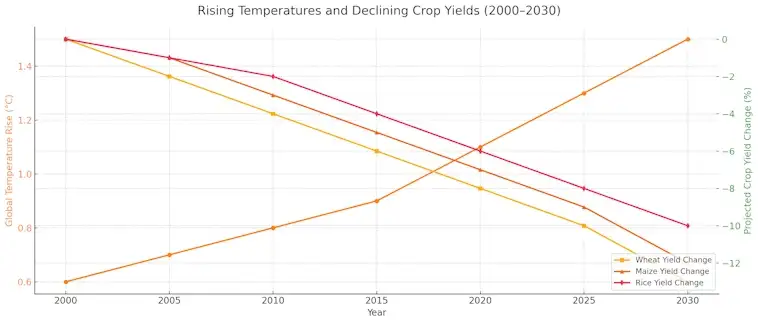
Scientists warn that if global temperatures rise beyond 1.5°C, the chances of massive crop failures skyrocket. Key staples like wheat, rice, and maize could see major declines—especially in vulnerable regions like sub-Saharan Africa, South Asia, and Latin America.
This isn’t just a climate issue. It’s an everything issue. Food prices rise. Hunger spreads. Economies shrink. And millions of people could be forced to migrate.
What We Can Still Do
The good news? It’s not too late to act. We can build more resilient food systems by investing in:
- Climate-smart agriculture
- Improved irrigation and drought-resistant crops
- Sustainable land management
- Global cooperation and early warning systems
Tackling climate change and protecting agriculture go hand in hand. Because when farms fail, the fallout affects everyone—from local farmers to global food markets.
Solutions for a More Resilient Global Food System
The challenges facing global agriculture are serious—but they’re not unsolvable. Around the world, farmers, scientists, innovators, and policymakers are working to protect the future of food. Building a more resilient food system means preparing for climate shocks, improving sustainability, and ensuring that food remains accessible to all.
What Does a Resilient Food System Look Like?
A resilient food system can bounce back from disruptions. It adapts to change. It supports farmers and protects natural resources. And most importantly, it feeds people—consistently and fairly.
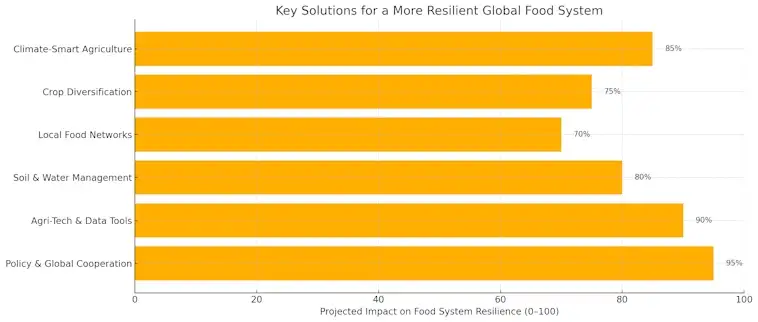
Here are some of the most promising solutions:
- Climate-smart agriculture These are farming methods that reduce emissions while improving productivity. Think drought-resistant seeds, efficient irrigation, and better crop rotation.
- Diversified farming systems Relying on just one or two crops makes the system fragile. Growing a variety of crops can boost soil health and reduce risk.
- Local and regional food networks Shortening supply chains increases food security. It also supports local economies and reduces reliance on global shipping.
- Soil regeneration and water management Healthy soil holds more carbon and grows stronger crops. Smarter water use—like rainwater harvesting and drip irrigation—helps farmers survive dry spells.
- Technology and data From satellite monitoring to AI-powered crop forecasts, new tools help farmers make better decisions and respond faster to threats.
- Policy and global cooperation Governments play a key role in creating safety nets, funding innovation, and supporting farmers through climate adaptation.
The Future of Food Starts Now
Resilience isn’t built overnight—but every step counts. By investing in sustainable farming and supporting smart food policies, we can protect our food systems against future shocks.
The stakes are high, but the opportunities are real. If we act now, we can feed a growing planet while also protecting it.
Final Thoughts: Safeguarding the Future of Food
Crop failure is no longer a local issue—it’s a global crisis with far-reaching consequences. From rising food prices and economic instability to hunger, forced migration, and environmental stress, the risks are growing fast. And as climate change accelerates, these challenges are expected to intensify.
But this future is not inevitable.
With smart investments, bold policies, and a collective commitment to sustainable agriculture, it’s possible to build a food system that is stronger, fairer, and more resilient. This means supporting farmers, protecting ecosystems, embracing innovation, and planning for long-term climate adaptation.
The path ahead won’t be easy. But by acting now, the global community can reduce the threat of crop failure and help ensure that everyone—no matter where they live—has access to safe, affordable food.