Unveiling the Crisis of Habitat Fragmentation
Unveiling the Crisis of Habitat Fragmentation
Forests once stretched endlessly. Wetlands teemed with life. Grasslands rolled on for miles. Today, those same spaces are splintered—broken into smaller and smaller patches by roads, cities, farms, and industry. The natural world is being carved apart, and it’s putting countless species at risk.
Habitat fragmentation is no longer a distant environmental issue. It’s happening now, in places both remote and right next door. As ecosystems are divided, their ability to support life weakens—often beyond repair.
This crisis is unfolding quietly. But its consequences are loud—and long-lasting. Understanding how landscapes are breaking apart is key to protecting what’s left and restoring what’s been lost. The choices made now will shape the living world for generations.
What Is Habitat Fragmentation and Why Should You Care?
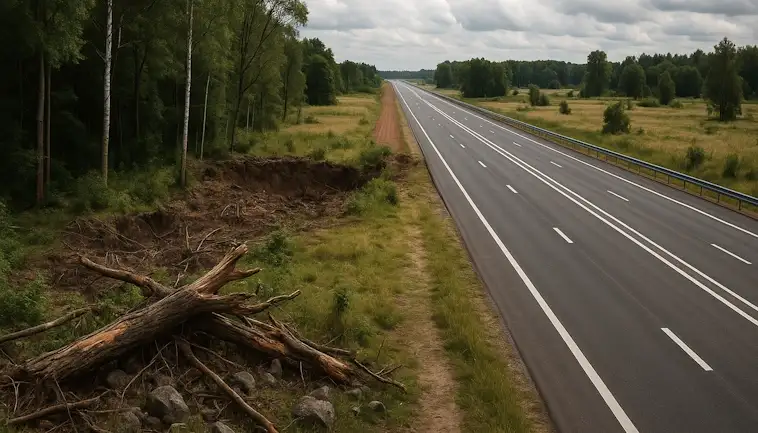
Have you ever driven past a forest that suddenly gives way to a highway, a housing development, or a strip mall? What you’re seeing is a classic example of habitat fragmentation—a process that’s quietly reshaping our natural world.
At first glance, it might not seem like a big deal. Trees still stand. Animals still roam. But look a little closer, and you’ll see that the land they once called home is now split into smaller, disconnected pieces. That disruption comes with serious consequences—for wildlife, for ecosystems, and even for us.
Let’s break it down.
So, What Is Habitat Fragmentation?
Habitat fragmentation happens when large, continuous habitats—like forests, wetlands, or grasslands—are broken up into smaller, isolated patches. This can happen due to:
- Urban development (roads, cities, housing)
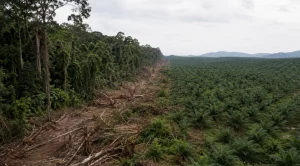
- Agriculture (clearing land for farming or grazing)
- Resource extraction (like mining or logging)
- Infrastructure projects (like highways or pipelines)
When these developments cut through natural landscapes, they break the “homes” of plants and animals into pieces. What once was a thriving ecosystem becomes a patchwork of disconnected areas, surrounded by human-made barriers.
Why Should You Care?
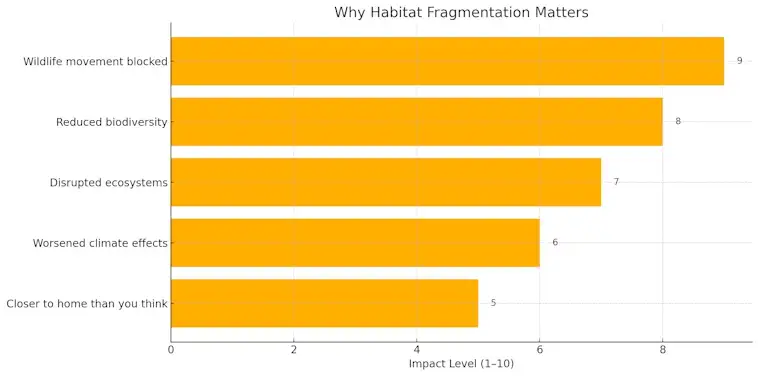
This isn’t just about animals losing their homes (though that’s a big part of it). Habitat fragmentation has wide-reaching effects:
1. It Threatens Wildlife Survival
- Species need space to find food, mates, and shelter.
- Smaller, isolated populations are more likely to go extinct.
- Animals like bears, wolves, and birds that migrate long distances are especially vulnerable.
2. It Disrupts Ecosystems
- Fragmentation changes how ecosystems function.
- It can increase invasive species, reduce pollination, and mess with water and nutrient cycles.
3. It Hurts Biodiversity
- More fragmentation often means fewer species.
- Biodiversity isn’t just a “nice-to-have”—it supports everything from clean air to climate resilience.
4. It Affects Humans Too
- Forests and wetlands help prevent floods, filter water, and capture carbon.
- When these ecosystems are broken up, we lose the natural services they provide.
The good news? Habitat fragmentation isn’t irreversible. With smart urban planning, wildlife corridors, and conservation efforts, we can reconnect these broken landscapes. And by understanding what’s at stake, we’re better equipped to support policies and actions that protect the wild spaces we all depend on.
So the next time you see a forest or a field being developed, ask: what’s being lost—and what can be done to preserve it?
The Hidden Costs: How Fragmented Habitats Threaten Wildlife
On the surface, a patch of forest beside a highway or a meadow between housing developments might still look green and natural. But for the animals that live there, these fragmented spaces can feel more like traps than homes.
Habitat fragmentation isn’t just about land being broken up—it’s about lives being cut off. For wildlife, especially species that need space to roam, breed, and survive, the cost of fragmentation runs deep. And while these costs often go unnoticed by us, they’re shaping the future of wildlife in ways we can’t afford to ignore.
Let’s explore the hidden dangers lurking in these fragmented environments.
1. Isolation and Inbreeding
When animal populations are cut off from one another by roads, fences, or buildings, they become genetically isolated. Over time:
- Populations shrink and become less diverse.
- Inbreeding increases the risk of genetic disorders.
- Species lose the ability to adapt to changes like disease or climate shifts.
For example, Florida panthers once ranged widely across the Southeast. Today, roadways and development have hemmed them into a fraction of that space—causing severe inbreeding and health issues.
2. Reduced Access to Food and Mates
Wild animals don’t recognize fences or property lines—but these barriers still keep them from what they need:
- Predators may struggle to hunt effectively in smaller areas.
- Herbivores might find fewer plant species to graze on.
- Animals looking to breed may never reach potential mates on the other side of a road or city.
This leads to population declines and sometimes, local extinctions.
3. Increased Risk of Road Mortality
Fragmentation often forces animals to cross roads and highways to reach food, water, or mates.
- Thousands of animals die every year trying to cross busy roads.
- Species like turtles, deer, and amphibians are especially vulnerable.
- These deaths can devastate local populations over time.
Wildlife crossings and underpasses are being built in some areas to combat this, but the problem is far from solved.
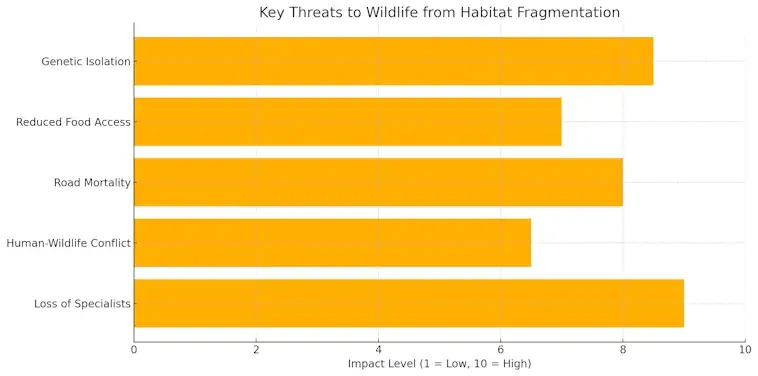
4. Greater Exposure to Humans and Domestic Animals
When habitats are broken up, wildlife often comes into closer contact with people, pets, and livestock. This can lead to:
- Conflict (like bears raiding garbage or coyotes in neighborhoods)
- Disease transmission between species
- Increased stress that impacts health and reproduction
The line between “wild” and “urban” is blurring—and not always in ways that benefit either side.
5. Loss of Specialized Species
Some animals thrive in edge environments—areas where different habitats meet. But many do not. Species that need specific conditions—like deep forests, undisturbed wetlands, or large territories—struggle to survive in fragmented spaces.
These include:
- Ground-nesting birds
- Large carnivores like wolves or cougars
- Certain amphibians and reptiles sensitive to moisture and temperature changes
As these specialists disappear, ecosystems become dominated by generalist species, leading to a less balanced and resilient natural world.
Moving Forward: What Can Be Done?
While the costs are real, the solutions are within reach. Conservationists, urban planners, and communities are working to:
- Build wildlife corridors that reconnect habitats
- Preserve large, continuous tracts of land
- Educate the public about the impact of development on nature
Every backyard, park, and policy choice matters.
Fragmented habitats might not always make headlines, but they’re shaping the fate of wildlife everywhere. By understanding the hidden costs, we take the first step toward healing the spaces we all share.
Because when we protect nature’s connections, we protect our own.
Human Footprints: Roads, Cities, and the Divide in Nature
Think about the last time you looked out the window of a car or plane. From above, human development is hard to miss—highways carving through forests, cities sprawling across once-wild land, and farms stretching as far as the eye can see. These aren’t just signs of progress—they’re also dividing lines that are fragmenting the natural world.
While we build to connect ourselves, we often disconnect nature in the process. Roads, cities, and infrastructure create invisible—but very real—barriers for wildlife and ecosystems. And the impacts go far beyond what most of us see in our daily lives.
Let’s take a closer look at how our growing footprint is creating a deeper divide in nature.
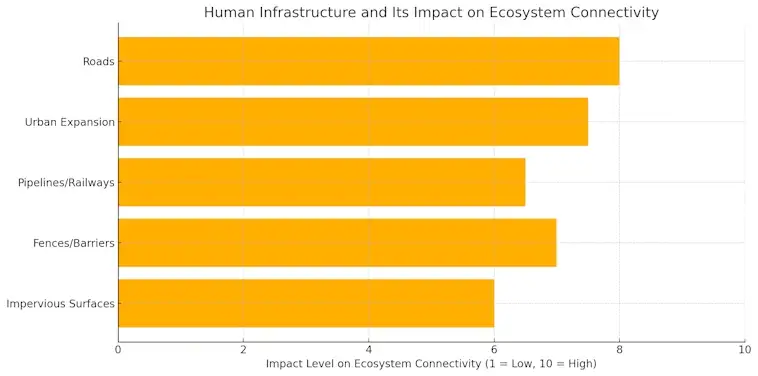
1. Roads: The Silent Barriers
Roads might seem like minor disruptions, but they have outsized effects on wildlife and ecosystems.
- They divide habitats, making it harder for animals to move freely.
- Roadkill is a leading cause of death for many species, from amphibians to large mammals.
- Noise and light pollution from traffic can disturb feeding and breeding patterns.
Highways especially act like walls to many creatures—splitting up populations and limiting access to essential resources.
2. Cities: Expanding Islands in Nature
Urban areas are growing faster than ever. And while cities are hubs for innovation and culture, they can also become ecological deserts:
- Green spaces are fragmented and often lack the biodiversity of natural habitats.
- Impervious surfaces (like concrete and asphalt) reduce water absorption and disrupt local hydrology.
- Urban heat islands make cities significantly warmer, affecting nearby ecosystems and wildlife.
Animals that once thrived in these areas are either pushed out or forced to adapt to a completely different environment.
3. Infrastructure: Pipelines, Railways, and Fences
Beyond roads and cities, human infrastructure slices through wild landscapes in less obvious ways:
- Railways and pipelines can cut off animal migration routes.
- Fences and barriers prevent large mammals from roaming freely, especially in areas with agriculture or livestock.
- Even power lines pose risks for birds and flying mammals.
These structures can splinter once-continuous landscapes into small, isolated patches—making it harder for nature to function as it should.
4. The Domino Effect on Ecosystems
The more we divide nature, the more we disrupt its balance:
- Pollinators can’t travel between fragmented plant populations.
- Predator-prey relationships get thrown off when movement is restricted.
- Plant regeneration slows down in areas where animals can’t reach.
It’s not just about single species. It’s about the delicate web that connects them all—and how our footprint can unravel it.
A Path Toward Connection
The good news? We can still build smarter.
- Cities are starting to create green corridors and wildlife-friendly infrastructure.
- Some roads now include animal overpasses and underpasses to reduce roadkill and reconnect habitats.
- Urban planning is increasingly looking at how to balance development with ecological health.
Every decision we make—from where we build to how we travel—can help close the divide we’ve created.
Human development isn’t inherently bad. But how we do it matters. If we can recognize the invisible lines we’re drawing across nature—and take steps to reconnect what’s been split—we’ll not only help wildlife thrive, but also create a more livable, resilient planet for ourselves.
Because nature doesn’t stop at the city limits—and neither should our care for it.
Climate Change and Habitat Fragmentation: A Dangerous Duo
It’s easy to think of climate change and habitat fragmentation as separate environmental issues. One’s about rising temperatures and extreme weather. The other’s about roads, cities, and shrinking forests. But in reality, these two forces are not only connected—they’re feeding off each other in ways that are accelerating damage to ecosystems across the globe.
This isn’t just a double whammy. It’s a dangerous feedback loop. And the species that are already struggling to survive are the ones caught in the middle.
Let’s explore how climate change and habitat fragmentation interact—and why that combination is such a serious threat to wildlife and biodiversity.
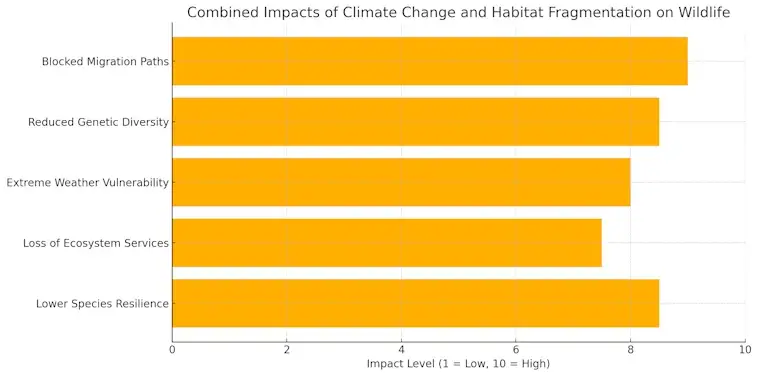
1. Less Room to Move, When Movement Matters Most
As the climate changes, animals and plants need to migrate to survive. They might move to cooler areas, higher elevations, or regions with more stable rainfall. But when habitats are fragmented, their options vanish.
- Roads, cities, and farmland block migration paths.
- Animals may not be able to find food, mates, or safe shelter along the way.
- Populations trapped in small patches may perish if they can’t escape changing conditions.
In a warming world, mobility is survival. Fragmentation takes that away.
2. Isolated Populations Face a Genetic Dead End
Climate change puts stress on species. Rising temperatures, new diseases, and unpredictable weather require genetic adaptability. But fragmentation leads to:
- Smaller, inbred populations.
- Reduced genetic diversity.
- Lower resilience to stress and disease.
Without fresh genes from other groups, isolated wildlife may not evolve quickly enough to survive a changing climate.
3. Extreme Weather Hits Harder in Fragmented Habitats
From floods and wildfires to droughts and storms, extreme weather events are becoming more common. For species in fragmented habitats:
- There’s no place to run.
- Recovery is harder when neighboring populations can’t provide support.
- Critical resources like water or food may be cut off.
In continuous habitats, animals have more options. In fragmented ones, a single event can wipe out an entire population.
4. Loss of Ecosystem Services
Nature doesn’t just support wildlife—it supports us. Forests store carbon, wetlands filter water, and healthy ecosystems buffer climate impacts. But when habitats are chopped up:
- Ecosystem services weaken or disappear.
- Carbon sinks shrink, making climate change worse.
- Natural defenses against disasters are lost.
It’s a vicious cycle: fragmentation worsens climate change, and climate change worsens the effects of fragmentation.
Building Resilience: What Can Be Done?
Combating this dangerous duo requires a two-pronged approach:
- Reconnect habitats with wildlife corridors, green bridges, and reforestation projects.
- Design conservation plans with climate change in mind—focusing on helping species adapt and move.
- Protect large, intact ecosystems that provide both biodiversity and climate stability.
Conservation and climate action need to work together—not in silos.
Climate change and habitat fragmentation are not just parallel threats—they’re partners in pushing nature to the brink. But by understanding how they interact, we can also find smarter, more holistic solutions.
Because the future of wildlife—and the planet—depends on more than fighting one battle at a time.
Reconnecting Nature: Solutions to Heal a Fractured World
The modern world is crisscrossed with roads, dotted with cities, and carved into plots of farmland. While these signs of human progress are everywhere, they’ve also taken a quiet toll—splitting natural landscapes into isolated fragments and leaving wildlife struggling to survive in shrinking pockets of habitat.
But it doesn’t have to stay this way.
All around the world, scientists, conservationists, and communities are coming together to reconnect the wild. The solutions aren’t just about saving animals. They’re about healing ecosystems, restoring balance, and ensuring the natural world can thrive alongside human development.
Let’s explore the most promising ways we can stitch nature back together—and why every connection counts.
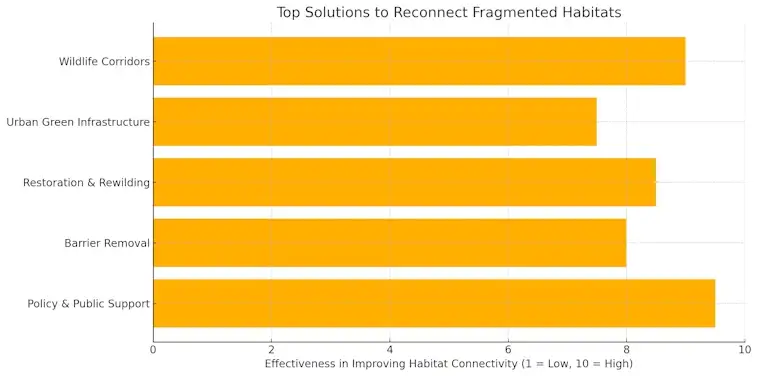
1. Wildlife Corridors: Nature’s Highways
One of the most effective tools in fighting fragmentation is the wildlife corridor—a stretch of land that connects two or more isolated habitats. These corridors allow animals to:
- Safely travel between feeding, breeding, and nesting areas
- Maintain genetic diversity by connecting populations
- Adapt to climate change by moving to new, suitable environments
From grassy overpasses in Canada to tree-lined pathways in India, wildlife corridors are helping species stay connected—even in busy, built-up landscapes.
2. Green Infrastructure in Cities
Urban areas don’t have to be dead zones for wildlife. With thoughtful design, cities can support biodiversity and connect nearby natural spaces.
Solutions include:
- Green roofs and walls that offer shelter for insects and birds
- Urban greenways—networks of parks, trails, and gardens
- Native plant landscaping to support local pollinators and species
These changes not only help wildlife—they also improve air quality, reduce urban heat, and create more livable cities for people.
3. Restoration and Rewilding Projects
Sometimes, the best way to reconnect nature is to let it reclaim what’s been lost. Restoration and rewilding involve bringing back native plants and animals and giving damaged landscapes a second chance.
Key efforts include:
- Reforesting cleared land to link up fragmented woodlands
- Restoring wetlands that support birds, amphibians, and flood protection
- Reintroducing keystone species that shape ecosystems and promote natural balance
Rewilding doesn’t just bring back beauty—it builds long-term resilience.
4. Removing Barriers
In many places, fragmentation is caused by physical structures like fences, dams, or old roads. Simply removing or redesigning these barriers can open up vital habitat connections.
- Fish ladders and dam removals reconnect rivers and spawning grounds
- Fence modifications allow large mammals to roam more freely
- Underpasses and overpasses reduce roadkill and reconnect migration paths
These practical, often low-cost changes can have a huge impact on wildlife movement and survival.
5. Policy, Planning, and Public Support
Lasting change needs more than good ideas—it needs political will and community backing.
- Governments can create protected area networks that link up large landscapes.
- Developers and planners can integrate connectivity into land-use decisions.
- Individuals can support local conservation groups, plant native species, or advocate for smarter growth.
The more people understand the value of a connected natural world, the stronger the movement to protect it becomes.
Fragmented habitats don’t have to stay fragmented. With creativity, cooperation, and commitment, we can rebuild nature’s broken bridges—one corridor, one wetland, one wild stretch at a time.
Because when we reconnect nature, we don’t just heal ecosystems. We heal the planet we all call home.
Conclusion
The silent spread of habitat fragmentation is more than just an environmental issue—it’s a growing crisis that touches every corner of the natural world. From isolated animal populations to disrupted ecosystems, the consequences are as deep as they are far-reaching.
But fragmentation doesn’t have to be a permanent scar. Every green corridor, every protected space, and every conscious decision to build with nature in mind helps stitch together what’s been torn apart.
Nature thrives on connection. When landscapes are whole, wildlife moves freely, ecosystems stay strong, and biodiversity flourishes. And in return, we gain cleaner air, healthier water, and a planet better equipped to face the challenges ahead.
Now is the time to act—not just to conserve what’s left, but to reconnect the wild spaces we’ve lost. Because a world where nature can’t move is a world that can’t thrive. And the future depends on our willingness to make space, once again, for the wild to breathe.