Unparalleled Wind Chill Drives Horrific Impacts on Life
Wind Chill Explained: How Extreme Cold Creates Dangerous and Life-Threatening Conditions
Wind chill is more than a number on a weather chart. It is a force that cuts through layers, pushes the body past its limits, and reshapes how people move through the world during extreme cold. As temperatures drop and winds strengthen, conditions can shift from uncomfortable to dangerous much faster than many expect. That sudden shift is becoming harder to ignore.
More communities are now facing cold events that feel harsher, last longer, and strain daily routines. Power systems struggle, transportation slows, and health risks climb. At the same time, families and workers find themselves making difficult choices about safety, mobility, and preparation.
As these patterns grow more intense, it becomes vital to understand why the impacts are escalating and what practical steps help reduce harm. By looking ahead and staying informed, people can face severe cold with more confidence and far better protection.
How Wind Chill Turns Ordinary Cold Into a Life-Threatening Force
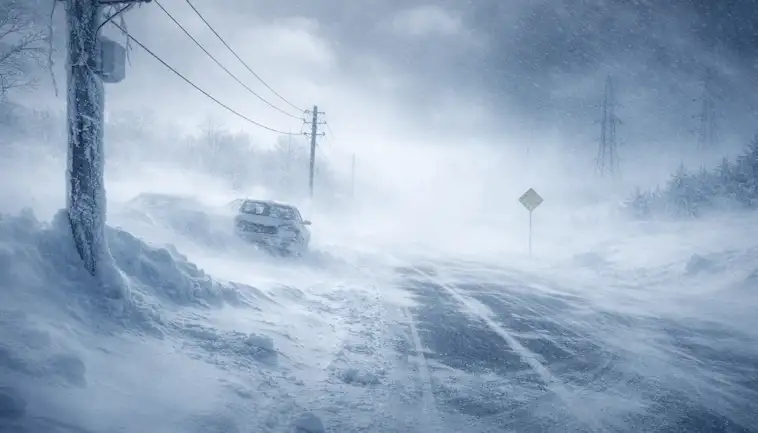
Cold weather is tough enough on its own. But when you add wind chill, the danger jumps fast. The air might read as cold. Yet the wind strips heat from your skin at a much faster rate. So it feels colder than what the thermometer shows. And that difference can turn a normal winter day into a real threat.
We often underestimate this. After all, numbers on a weather app can seem harmless. But step outside on a windy day, and your body knows the truth right away. Your skin cools quickly, your muscles tighten. And your energy drops. If you stay out too long, the risks stack up. Frostbite can start in minutes. Hypothermia can follow soon after.
Even a short walk can surprise you. That is why paying attention to wind chill is not just smart. It is essential.
Why Your Body Loses Heat So Fast
Think of your body as a small heater. In calm air, a thin layer of warmth forms around your skin. Wind wipes that layer away. Then your body has to work harder to replace it. As the wind gets stronger, that invisible shield disappears again and again. Your heat loss speeds up. That is when the danger turns real.
This is also why the same temperature can feel mild one day and brutal the next. The wind changes everything.
Knowing how wind chill works helps you plan better. It guides how you dress, how long you stay outside, and how you protect yourself and others. And as winters grow more unpredictable, this awareness matters even more.
Staying safe starts with staying informed. Wind chill is not just a number. It is a warning—and one worth listening to.
The Hidden Ways Extreme Cold Disrupts Daily Routines
Extreme cold can feel like a slow, creeping force. It slips into your day before you even notice what is happening. One moment you are following your normal routine. Then the temperature drops, and suddenly everything takes longer, feels harder, and demands more from you.
What makes this shift so frustrating is how quietly it happens. You wake up to a frosted window, you see your breath indoors. And you already know your day is going to be different. Extreme cold changes how your home works, how you travel, and even how your body moves. Small tasks stretch out. Simple plans get delayed. And with each hour, the disruption grows.
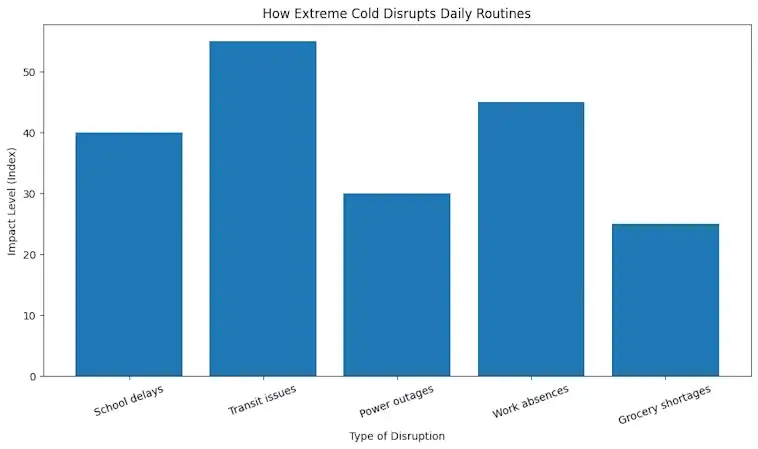
Although we talk a lot about storms, we often overlook how bitter cold alone can cause similar chaos. Yet the pattern repeats every winter. Transit slows. Schools cancel classes. Power grids strain. And everyday life bends under the weight of temperatures far below normal.
As temperatures keep shifting from year to year, it helps to understand these hidden impacts. That way you can prepare, adjust, and stay one step ahead.
Here is a quick look at how extreme cold affects common routines.
Why Wind Chill Is Becoming More Severe in a Changing Climate
Wind chill is something most of us notice on the coldest days. It’s that sharp bite on your face. And the reason a short walk can feel like a trek across the Arctic. Yet many people don’t realise that wind chill is shifting as our climate changes. And, as temperatures swing more wildly, this hidden factor is starting to play a bigger role in how cold weather affects our daily lives.
Winter storms are becoming more unpredictable. They move faster. Carry stronger winds. And they draw in pockets of air that can plunge local temperatures in a matter of hours. When you mix those stronger winds with already cold air, the result is a much deeper chill on your skin. That is why wind chill is becoming a more important part of the climate story.
To understand what is driving this trend, it helps to look at the forces shaping it. These shifts are happening because our atmosphere is becoming more chaotic. Warmer oceans release more energy into the air. That energy then feeds storms, making them stronger and more erratic.
Here are some of the leading factors pushing wind chill to new extremes:
- Stronger winter storms that produce more intense wind speeds
- Sudden drops in temperature driven by Arctic air intrusions
- Larger swings between warm and cold periods that destabilise local weather
- Increased moisture that fuels storm systems and accelerates wind formation
Because of these changes, the risk of cold-related stress is rising, even in regions not known for harsh winters. People may feel that temperatures are “normal” for the season, yet the wind can make conditions far more dangerous than expected. That gap between the air temperature and how it actually feels is growing wider.
Looking ahead, the pattern is likely to intensify. Scientists expect more frequent clashes between warm and cold air masses. This means stronger winds, lower perceived temperatures, and greater exposure to extreme chill. So it’s not just about dressing warmer. It’s about understanding how a shifting climate affects what you feel the moment you step outside.
Wind chill may seem like a small detail in the climate conversation. But as these trends continue, it is becoming a key indicator of how rapidly our winter weather is changing.
The Human Toll of Prolonged Exposure to Brutal Winter Conditions
Winter is no longer just cold. In many places, it has become punishing. Long stretches of freezing weather now affect daily life in ways that are hard to ignore.
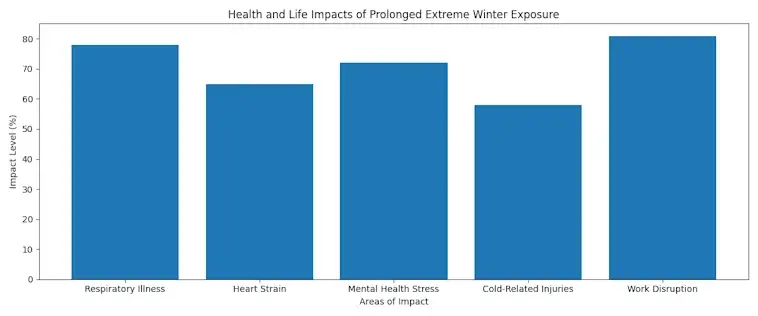
First, the body feels it. Cold air strains the lungs and heart. Breathing becomes harder. Blood pressure rises. Over time, this increases the risk of serious illness, especially for older adults and people with chronic conditions.
Next, there is the mental weight. Short days and isolation take a toll. Stress, anxiety, and seasonal depression often grow during prolonged cold spells. This can affect sleep, focus, and emotional health.
Then come the injuries. Slips, falls, and frostbite rise when extreme cold lingers. Even simple tasks like commuting or shopping become risky.
Finally, work and income suffer. Missed days add up. Outdoor jobs slow down. Household costs increase as heating bills climb.
Together, these impacts show that brutal winters are not just uncomfortable. They are a public health issue. The chart below highlights where people feel the strain the most.
What Communities Can Do Now to Prepare for Future Cold Extremes
Cold waves are becoming harder to predict. Yet communities can still take smart steps to stay safe. Climate models show that sudden drops in temperature may become more common. So it helps to plan ahead. And it helps to start early.
The good news is that preparation does not have to be complicated. Small actions build resilience over time. When neighbors, local leaders, and businesses work together, the whole community becomes stronger. And when the next cold snap hits, that groundwork pays off.
Understanding Wind Chill and Community Risk
Wind chill makes cold air feel even colder. It speeds up heat loss from the body. And it raises the risks of frostbite and hypothermia. That is why communities need clear public messaging that explains what wind chill values mean and when to take shelter. Simple graphics, plain-language alerts, and local radio updates can make a real difference.
One of the most effective steps any community can take is to map vulnerable areas. These include neighborhoods with older housing, limited heating, or unreliable power. Once identified, local leaders can target support. This may include temporary warming centers, transportation for older adults, and volunteer check-ins for people living alone.
Communities can also invest in stronger infrastructure. Better insulation for public buildings helps. So do backup generators for clinics and shelters. Weatherizing schools and libraries turns them into safe gathering points during emergencies.
It also helps to run seasonal drills. Practice builds confidence. When people know what to expect, they act faster. And fast action saves lives during extreme cold.
Every community has cold-weather weak points. Some neighborhoods lose power more often. And some lack shelters. Others have older homes with poor insulation. A simple risk map makes these gaps visible. It also encourages better coordination among local councils, utilities, hospitals, and volunteer groups. For inspiration on resilience planning Ready.Gov offers clear guidance.
Preparing for future cold extremes is not about fear. It is about foresight. With steady planning and shared responsibility, communities can face colder winters with confidence.
Conclusion: Why Understanding Wind Chill Is Now Essential
As our climate becomes more unpredictable, wind chill is shaping how we experience winter in ways we can no longer ignore. Its effects are fast, intense, and often dangerous. Yet when we understand how wind chill works, we can make smarter choices. We can dress better. Plan travel more safely. And we can protect the people who face the greatest risks.
Looking ahead, communities and individuals will need to stay alert and stay prepared. The good news is that knowledge leads to action. When we recognize the power of wind chill, we build resilience. We also give ourselves a chance to reduce the horrific impacts that so many are now facing.
In the end, awareness is our strongest tool. By taking what we know today and applying it to our daily lives, we can move into future winters with more confidence and far fewer surprises.