The Startling Reality of Iceberg Calving and Its Global Impact
The Startling Reality of Iceberg Calving and Its Global Impact
Towering walls of ice are breaking away from glaciers at an alarming rate. This dramatic process, known as iceberg calving, is becoming more frequent—and more extreme. What was once a rare natural event is now a powerful signal of rapid climate change.
These massive chunks of ice aren’t just disappearing into the ocean without consequence. Their impact reaches far beyond the polar regions, disrupting ocean currents, threatening coastal communities, and contributing to rising sea levels.
Understanding what’s happening—and why—is key to grasping the bigger picture of our planet’s shifting climate. The changes unfolding at the poles are reshaping the world in real time.

What Is Iceberg Calving? A Look at the Frozen Frontier
Iceberg calving might sound like something out of a nature documentary, but it’s a real and powerful process happening at the edge of our world’s frozen frontiers. Simply put, iceberg calving is when chunks of ice break off from the edge of a glacier or an ice shelf and fall into the ocean. These chunks become icebergs, sometimes as small as a car, other times as large as cities.
This process is natural—and it’s always been part of how glaciers grow and shrink. But here’s the twist: climate change is speeding things up. Warmer air and ocean temperatures are making glaciers melt faster and break apart more often. Some of the largest calving events ever recorded have happened in just the last couple of decades.
Watching an iceberg calve is both breathtaking and sobering. Towering slabs of ancient ice crash into the sea, sending up plumes of spray and causing mini-tsunamis. But beyond the spectacle lies a deeper concern. Calving isn’t just a dramatic display—it’s a signal. A signal that Earth’s frozen places are changing.
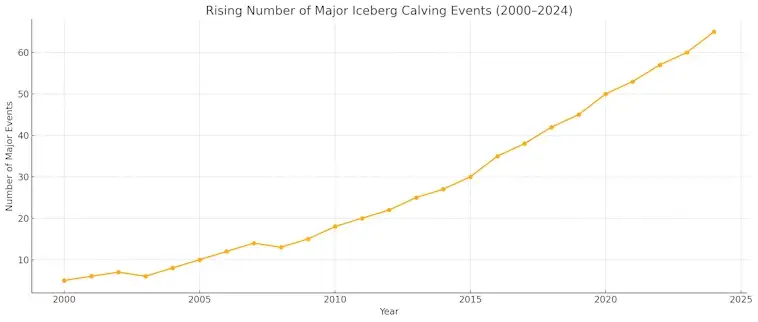
Why should we care? Because when glaciers and ice shelves lose ice faster than they gain it, sea levels rise. That puts coastal communities, ecosystems, and economies at risk. Calving events, especially from ice shelves in Antarctica and Greenland, are now being closely watched by scientists as key indicators of global change.
As technology improves, satellites and remote sensors are helping us track iceberg calving in near real-time. It’s part of a growing effort to understand not just what’s happening in the moment, but what it means for the years ahead.
In short: iceberg calving is more than just ice breaking off—it’s nature speaking up. And it’s time we listen.
Why Icebergs Are Breaking Away Faster Than Ever
Something strange is happening at the edges of the polar world—icebergs are breaking away faster than ever before. What used to be a slow, steady process has become alarmingly frequent. But why?
At the heart of it is one key factor: a warming planet.
Over the past few decades, global temperatures have climbed steadily. That heat doesn’t just stay in the air—it’s absorbed by the oceans too. Warmer waters creep beneath floating ice shelves and melt them from below, weakening their structure. At the same time, warmer air above softens the surface. This double impact—top and bottom—makes the ice more fragile and more likely to break apart.
Another reason? Glaciers are speeding up. As ice melts, it creates meltwater that seeps into cracks and crevices. That water acts like a wedge, forcing cracks open and pushing huge chunks of ice toward the ocean. Once those cracks get deep enough, massive slabs of ice calve off and float away.
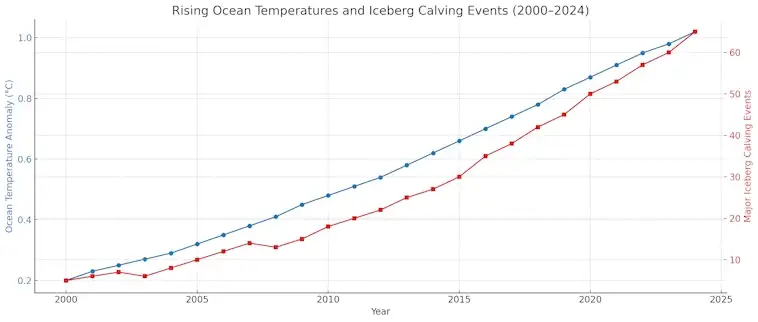
But it’s not just about natural forces anymore. Human activity is playing a role too. The burning of fossil fuels releases greenhouse gases like carbon dioxide and methane, which trap heat in the atmosphere. That extra heat is tipping the balance, pushing Earth’s polar regions into a new era of instability.
The result? We’re seeing more frequent and more dramatic calving events. Some of the biggest icebergs in recorded history have broken away just in the last two decades. And while icebergs drifting in the ocean might seem far removed from daily life, their origins point to much larger issues—like rising sea levels, disrupted ocean currents, and long-term climate shifts.
In short, icebergs are breaking away faster because the world is warming faster. And what happens in the frozen frontiers is no longer just a distant concern—it’s a preview of what’s coming for the rest of the planet.
The Ripple Effect: How Iceberg Calving Impacts Sea Levels
At first glance, an iceberg breaking away from a glacier might seem like a local event—something dramatic but far away. But in reality, iceberg calving sets off a ripple effect that stretches across the globe, and one of its biggest consequences is sea level rise.
Here’s the key thing to know: not all ice is created equal when it comes to sea levels. When sea ice or floating ice shelves break off, they don’t directly raise sea levels—they’re already displacing water, like ice cubes in a glass. But when glaciers lose ice from land, that’s a different story. That ice eventually flows into the ocean, adding new water and pushing sea levels higher.
Iceberg calving is often the final step in that process. As glaciers thin and crack due to warming temperatures, large sections break off and fall into the sea. Once in the ocean, they slowly melt, contributing to the overall rise in global sea levels.
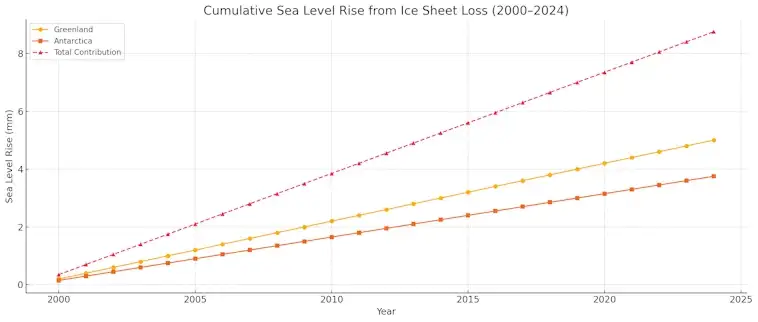
And it’s not just happening in one place. Greenland and Antarctica—home to the largest ice sheets on Earth—are both seeing accelerated calving. Together, they hold enough frozen water to raise sea levels by dozens of meters. We’re not there yet, but even small changes matter. A few inches of sea level rise can mean the difference between dry streets and regular flooding for millions of people living near coastlines.
Rising seas don’t just affect far-off island nations—they impact coastal cities everywhere, from New York to Mumbai. Storm surges become more dangerous, erosion speeds up, and infrastructure is put at risk. What starts with a distant iceberg can eventually reshape communities thousands of miles away.
So yes, watching a glacier calve is awe-inspiring. But it’s also a reminder of a much bigger picture—one where every melt, every break, and every drop counts.
From the Poles to Your Backyard: The Global Reach of Melting Ice
It’s easy to think of melting icebergs and calving glaciers as distant problems—things that happen at the ends of the Earth. But the truth is, what melts at the poles doesn’t stay at the poles. It affects all of us, no matter where we live.
Let’s start with something most of us notice: weather. As Arctic and Antarctic ice disappears, it disrupts the planet’s natural systems. Melting ice changes ocean currents and wind patterns, which in turn influence storms, droughts, and even heatwaves. You might not connect a soggy spring or a scorching summer to the polar regions, but they’re more linked than you think.
Then there’s sea level rise, which is already reshaping coastlines around the world. Communities from Miami to Manila are dealing with more frequent flooding. Roads, homes, and freshwater supplies are at risk. Even small businesses near the water are starting to feel the squeeze—literally.
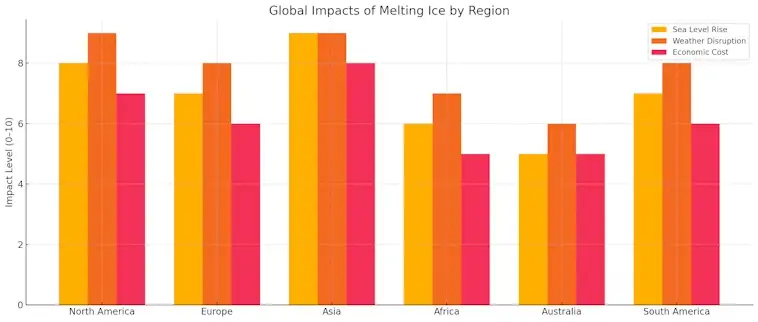
But the reach goes beyond the obvious. Melting ice also affects fisheries, as changing ocean temperatures shift where fish live and breed. It even has an impact on global food prices, as climate disruptions affect crops, supply chains, and harvest cycles around the world.
And let’s not forget the economic costs. Insurance companies are adjusting rates for coastal properties. Governments are spending billions on sea walls, flood defenses, and disaster response. The price of ignoring the melting is going up—fast.
The poles may feel far away, but they act like Earth’s thermostat. When that system breaks down, the whole house feels it.
So the next time you see news about a glacier calving or an ice shelf collapsing, remember—it’s not just a story about Antarctica or Greenland. It’s a story about our shared future, one where what happens on the ice ends up right at our doorstep.
What We Can Do About Iceberg Calving and Climate Change
The headlines can feel overwhelming. Icebergs are breaking away faster. Glaciers are shrinking. Sea levels are rising. But here’s the good news: we’re not powerless. There’s still time to make a meaningful difference—and every action counts.
Let’s start with the root cause: greenhouse gas emissions. The more carbon dioxide and methane we pump into the atmosphere, the warmer our planet gets—and the faster the ice melts. The solution? Cut emissions wherever we can. That means using cleaner energy, driving less or switching to electric vehicles, and improving energy efficiency at home and at work.
Governments and industries play a huge role, but individuals can drive change too. Supporting policies that protect the climate, voting for leaders who take the science seriously, and choosing companies that value sustainability all send a message.
We can also make a difference by protecting nature. Forests, wetlands, and oceans are natural carbon sinks—they absorb carbon dioxide from the atmosphere. Restoring and preserving these ecosystems helps fight climate change while also protecting wildlife and water resources.
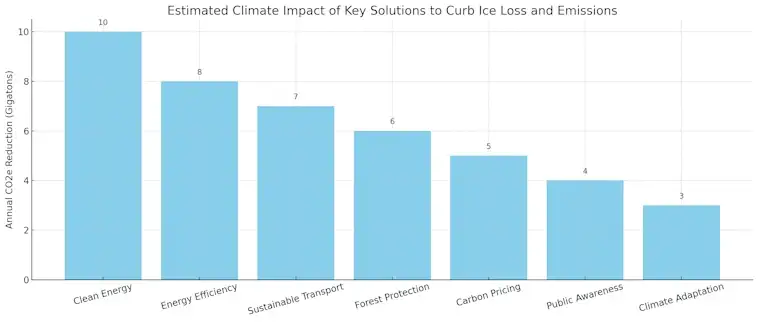
Education and awareness matter, too. The more people understand the links between climate change and iceberg calving, the more pressure there is to act. Talk about it. Share stories. Use your voice online and offline.
And finally, we need to adapt and prepare. That means building smarter infrastructure in coastal areas, designing cities to handle rising water, and investing in climate science and monitoring. The sooner we prepare, the less damage we’ll face down the line.
No, we can’t stop every iceberg from breaking away. But we can slow the pace, protect what we have, and build a future where our grandchildren can still witness Earth’s icy wonders—intact.
Because this isn’t just about melting ice. It’s about protecting the only home we’ve got.
Final Thoughts
Iceberg calving isn’t just a dramatic scene from the edge of the world—it’s a signal. A signal that Earth’s climate is changing, fast. What happens in the frozen corners of the planet doesn’t stay there. It ripples outward, shaping coastlines, weather patterns, food systems, and economies everywhere.
But this isn’t just a story of loss. It’s a wake-up call—and a chance to act. We still have the tools, the knowledge, and the time to change course. Every choice matters. Every step toward cleaner energy, smarter policy, and a more climate-aware society helps slow the melt.
The ice is speaking. Loudly. And if we listen carefully, we’ll realize it’s not too late to protect what remains—and to build a future that stays above water.