Why Wetlands Hold the Key to a Healthier Planet
Why Wetlands Hold the Key to a Healthier Planet
Wetlands are some of the most valuable ecosystems on Earth. They protect coastlines, filter water, and support a rich variety of life. Yet despite their importance, many wetlands are being drained, paved over, or polluted out of existence.
What’s at stake isn’t just scenery. These areas play a vital role in climate stability, biodiversity, and even the economy. When wetlands vanish, the consequences ripple outward—affecting communities, wildlife, and future generations.
Safeguarding these ecosystems isn’t just about nature—it’s about resilience, sustainability, and responsibility. Protecting what remains, and restoring what’s been lost, is essential work for anyone thinking about the planet’s future.
Why Wetlands Matter More Than We Think
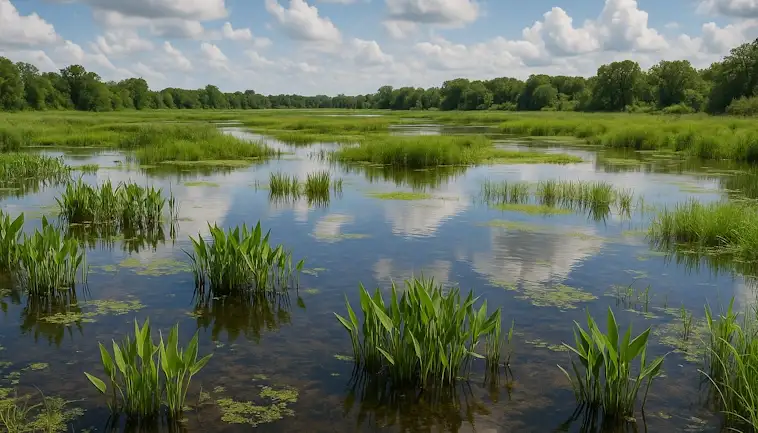
When most people hear the word wetland, they think of a soggy swamp or mosquito-infested marsh. It doesn’t sound all that appealing. But that view misses the bigger picture. Wetlands are among the most productive, valuable ecosystems on Earth. They don’t just support frogs and reeds—they support life itself, including ours.
In fact, wetlands are quietly working behind the scenes to provide clean water, buffer communities from floods, store carbon, and nurture biodiversity. And they’re doing it for free. The more we understand these rich landscapes, the more we realize they’re not wastelands—they’re lifesavers.
Why Wetlands Matter More Than You Think
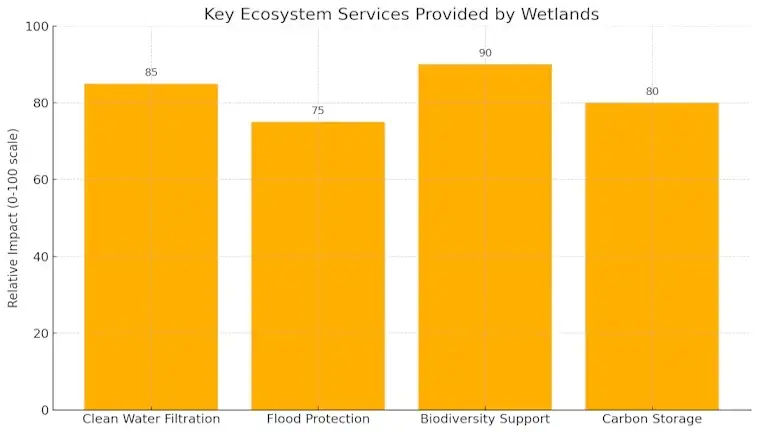
Nature’s Water Filters
Wetlands act like kidneys for the planet.
- They absorb pollutants like excess nitrogen and phosphorus from farming and runoff.
- Sediments settle out in wetland waters, helping to clean rivers and lakes downstream.
- Some wetlands even neutralize heavy metals and pathogens.
This natural filtration means cleaner drinking water for millions of people—and fewer dollars spent on water treatment.
Flood Defense Systems
Wetlands soak up excess rainfall and stormwater like giant sponges.
- They slow down water flow, reducing the risk of flash floods.
- In coastal areas, salt marshes and mangroves buffer storm surges and rising tides.
- Inland wetlands reduce flood peaks in river systems, protecting towns and farmland.
As extreme weather becomes more common, this flood control is more vital than ever.
Biodiversity Hotspots
Wetlands are biological treasure chests.
- Though they cover only about 6% of Earth’s land surface, wetlands support around 40% of all plant and animal species.
- They serve as nurseries for fish, amphibians, and birds—many of which rely on wetlands for part or all of their life cycle.
- Rare species like the whooping crane, river otter, and bog turtle depend on healthy wetlands to survive.
When wetlands vanish, so does the intricate web of life that depends on them.
Natural Carbon Sinks
Here’s a lesser-known but crucial role: wetlands are powerful carbon stores.
- Peatlands, a type of wetland, store more carbon than all the world’s forests combined.
- Wetland plants absorb carbon dioxide during photosynthesis and bury it in waterlogged soils where it can stay for centuries.
- Draining or destroying wetlands releases that stored carbon back into the atmosphere.
So preserving wetlands is a frontline defense against climate change—not just a conservation issue.
Looking Ahead: Wetlands as Climate Allies
As the planet warms and weather becomes less predictable, wetlands will only grow in importance.
- They cool surrounding areas through evapotranspiration.
- They can help recharge groundwater supplies during droughts.
- Restoring wetlands creates jobs in conservation and green infrastructure.
We’re only beginning to grasp their full potential. Protecting and restoring wetlands isn’t just about saving nature—it’s about securing a livable future for ourselves.
Wetlands aren’t just muddy patches of land—they’re living systems that clean our water, shield us from disasters, cradle life, and lock away climate-warming gases. The next time you pass a marsh or estuary, don’t think of it as empty space. Think of it as a solution.
The Threats Putting Wetlands at Risk
Wetlands feel like places that have always been there. Quiet, still, and permanent. But that’s far from the truth. Every year, we lose more of these vital ecosystems—and the biggest threat isn’t nature. It’s us.
From new roads and suburbs to pollution and rising seas, the pressures on wetlands are mounting. Often, it’s not out of malice but misunderstanding. We’ve long seen wetlands as “empty” land—land to drain, pave, or farm. But in doing so, we’re undercutting our own safety, clean water, and climate resilience.
Let’s take a closer look at what wetlands are up against today.
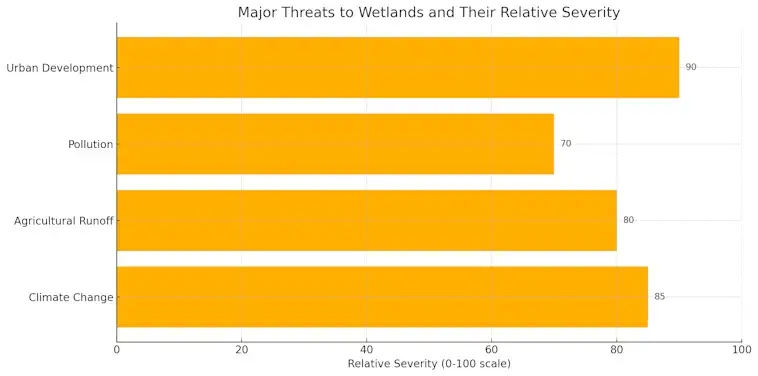
Urban Development: Paving Over the Problem
Cities are expanding fast. Wetlands are often the first to go.
- Developers fill in marshes and swamps to make room for roads, housing, and shopping centers.
- Because wetlands tend to sit in low-lying areas, they’re easy targets for drainage projects.
- Once paved over, these ecosystems are gone for good. And so are the benefits they provided—like flood protection and water purification.
Example: In parts of southern California, sprawling suburbs have replaced historic wetlands once used by migratory birds along the Pacific Flyway. Now, stormwater has fewer places to go, leading to increased flooding and pollution downstream.
Pollution: A Slow Poison
Even when wetlands aren’t directly built over, they’re still under threat.
- Chemicals from roads, lawns, and industry wash into wetland areas.
- Heavy metals, oils, and microplastics can build up in sediment and harm wildlife.
- Wastewater discharge can overload wetlands with nutrients, causing toxic algae blooms.
Closer to home: Urban wetlands near industrial zones or highways often show signs of contamination—dying plants, fewer birds, and murky water. It’s not always visible, but the damage runs deep.
Agricultural Runoff: Feeding the Problem
Modern agriculture relies heavily on fertilizers and pesticides. When it rains, much of that ends up in nearby wetlands.
- Nitrogen and phosphorus spark massive algal blooms that deplete oxygen and kill fish.
- Pesticides harm frogs, insects, and birds that depend on these habitats.
- Sediment runoff can choke out aquatic plants and change the ecosystem entirely.
Example: In the Midwest U.S., vast tracts of wetlands were drained for farmland. What’s left is often overloaded with runoff from corn and soybean fields—making it harder for those wetland remnants to survive, let alone thrive.
Climate Change: A Rising Threat
The climate crisis is hitting wetlands from all sides.
- Rising seas drown coastal marshes and mangroves faster than they can move inland.
- Longer droughts dry out freshwater wetlands, altering their structure and killing off native species.
- Warmer temperatures change breeding seasons and disrupt the delicate timing many wetland species depend on.
Real-world impact: In Southeast Asia, mangrove forests are being cleared to make way for shrimp farms and coastal development—just as rising sea levels are washing away shorelines that mangroves once held in place.
The Human Fingerprint
Most wetland loss is tied to human activity—sometimes intentionally, often not. But the result is the same: weaker ecosystems, fewer species, and communities left more vulnerable to floods, dirty water, and climate shocks.
Yet there’s a silver lining. If we caused the problem, we can help fix it. Protecting and restoring wetlands isn’t about stopping progress—it’s about making progress smarter.
Nature’s Shield: How Wetlands Protect Us
When we think about infrastructure, we usually picture roads, bridges, and levees. But what if one of our most effective defenses against extreme weather isn’t made of concrete or steel—but of water, mud, and reeds?
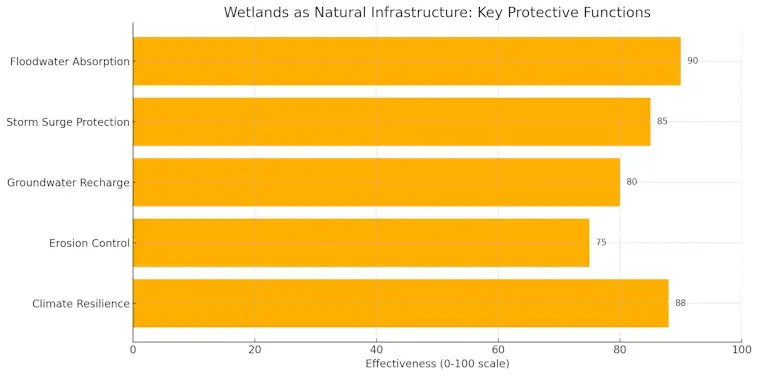
Wetlands are natural infrastructure. They don’t just sit quietly on the edge of our communities—they actively protect them. Whether it’s a hurricane, flood, or drought, wetlands step in to absorb the shock. And they do it without needing a power supply or a maintenance crew.
Here’s how these ecosystems quietly stand guard, especially when the weather turns wild.
Soaking Up the Storm: Flood Protection
Wetlands are like giant, natural sponges.
- During heavy rainfall, they slow down water runoff and store floodwater.
- They help reduce peak flood levels in nearby rivers and streams.
- Unlike paved surfaces, wetlands absorb and hold water instead of sending it racing downstream.
Real-world story: In the Midwest U.S., communities along the Mississippi River with nearby wetlands often experience less flood damage than those that rely only on levees. After historic floods in the 1990s, many towns began restoring wetlands instead of just rebuilding walls.
Coastal Armor: Storm Surge Defense
Mangroves, salt marshes, and coastal wetlands act like green seawalls.
- They reduce the energy of incoming storm surges and waves.
- Their dense root systems hold soil together and prevent erosion.
- Healthy coastal wetlands can reduce storm surge heights by several feet.
Case study: During Hurricane Sandy in 2012, parts of New Jersey with intact wetlands fared far better than those with filled-in or degraded marshes. One study found wetlands prevented over $625 million in property damage across the East Coast.
Groundwater Recharge: Insurance for Dry Times
Wetlands don’t just help during floods—they also help during droughts.
- Wetlands allow water to slowly seep into the ground, replenishing underground aquifers.
- This is vital for drinking water supplies and for farmers who rely on wells.
- During dry seasons, groundwater from wetlands can keep nearby rivers and streams flowing.
Example: In California’s Central Valley, where water shortages are common, efforts are underway to restore seasonal wetlands as a way to recharge overdrawn aquifers. It’s a low-tech, high-impact solution to a growing water crisis.
Why This Matters More Than Ever
As climate change fuels stronger storms and longer dry spells, wetlands are becoming even more essential.
- Urban areas with little green space face greater flood risks.
- Coastal communities confront rising seas and stronger hurricanes.
- Agriculture and growing populations put more pressure on groundwater.
Wetlands provide a buffer. A cushion. A safety valve. Not just for wildlife, but for people, homes, and livelihoods.
A Smarter Way Forward
Investing in wetlands isn’t charity—it’s smart risk management.
- Cities are now including wetland restoration in climate resilience plans.
- Engineers are working with ecologists to blend natural and built infrastructure.
- And communities are learning that working with nature often works better—and costs less—than fighting against it.
Wetlands are not wastelands. They are living infrastructure—flood barriers, storm buffers, water banks. In a world of increasing extremes, they might be some of the most important allies we have.
What’s Being Done—and What Still Needs Doing
For decades, wetlands were drained, filled in, or simply ignored. But that tide is turning. Around the world, governments, scientists, Indigenous communities, and everyday people are stepping up to protect and restore these vital ecosystems.
From international treaties to backyard restoration projects, wetland conservation is gaining ground. But it’s a race against time—and we’re still not moving fast enough.
Global Efforts: Ramsar Sites and International Recognition
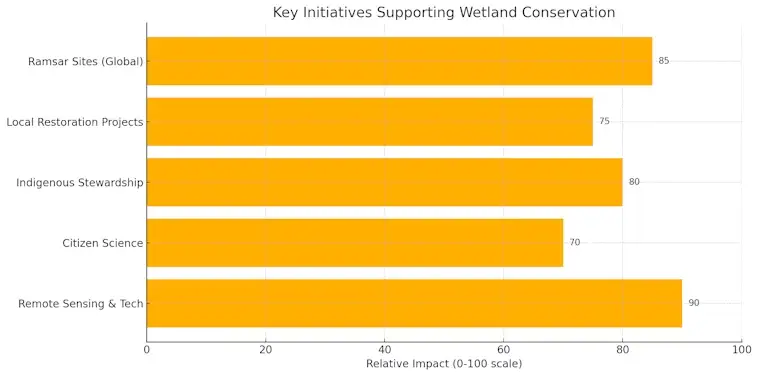
The Ramsar Convention, signed in 1971, is the world’s first modern treaty on environmental conservation.
- Over 2,400 wetlands across 170 countries have been designated as Ramsar sites—recognized for their global importance.
- These areas are protected under national laws and international agreements to ensure wise use and long-term conservation.
- Sites include everything from vast estuaries in Europe to tiny marshes in Africa that sustain unique species and local communities.
Yet, while Ramsar brings attention, it doesn’t guarantee action. Enforcement varies, and many designated wetlands still face local threats.
Local Wins: Grassroots Restoration and Innovation
All across the globe, communities are reviving wetlands with hands-on action.
- In the U.S., programs like Wetlands Reserve Easements pay landowners to restore marshes once converted to farmland.
- In India’s Kerala region, local groups revived paddy wetlands to fight drought and food insecurity.
- In the UK, citizen groups are bringing back “ghost streams” in cities—restoring them to life with native plants and better water flow.
These projects don’t just rebuild nature—they build stronger, more resilient communities too.
Indigenous Leadership: Centuries of Stewardship
Many Indigenous peoples have lived in harmony with wetlands for generations.
- In Canada, First Nations communities co-manage wetlands and bring traditional ecological knowledge to conservation plans.
- In Australia, Aboriginal rangers monitor wetlands for biodiversity and cultural health, often in remote, fragile areas.
- Indigenous practices like controlled burning, seasonal harvesting, and sacred site protection support both ecological balance and cultural heritage.
Recognizing Indigenous rights and knowledge isn’t just ethical—it’s effective. Conservation works better when it respects those who’ve cared for these lands the longest.
Technology: Seeing Wetlands from Space
New tools are making wetland protection smarter and faster.
- Remote sensing and satellite imagery now track changes in wetland coverage, even in hard-to-reach areas.
- AI and drone mapping help detect illegal draining or pollution before it causes irreversible damage.
- Apps and open data platforms allow citizens to report wetland conditions, bird sightings, or invasive species in real time.
This tech is bridging the gap between scientists, policymakers, and the public.
What’s Still Missing?
Even with all this momentum, wetlands remain at risk. Here’s what still needs to happen:
- Stronger policies: Many wetlands still lack legal protection. Others are undermined by loopholes or poor enforcement.
- Sustainable funding: Restoration is not a one-time fix—it needs long-term investment and local jobs.
- Wider community involvement: Public awareness is growing, but wetlands are still misunderstood and undervalued by many.
Without more support, many restored wetlands could fall back into decline. And those not yet protected may vanish before we even notice.
The good news? Action is already happening. Across continents and cultures, people are coming together to restore what was lost and protect what remains.
But we need more hands on deck—more educators, more young leaders, more farmers, scientists, builders, artists, and neighbors. Because protecting wetlands isn’t just about saving frogs or birds. It’s about saving ourselves.
The next time you pass by a marsh or creek, don’t just walk by. Think of it as part of the solution—and ask how you can be part of it, too.
How You Can Help, No Matter Where You Live
You don’t need to live next to a marsh, a bayou, or a mangrove forest to care about wetlands. Their impact reaches far beyond their boundaries. They help clean our water, stabilize the climate, and protect communities from disaster—near and far.
That means you can make a difference, no matter where you live. Whether you’re in the heart of a city or out in the countryside, small choices can ripple outward and help protect these powerful ecosystems.
Here are some practical, meaningful ways to get involved.
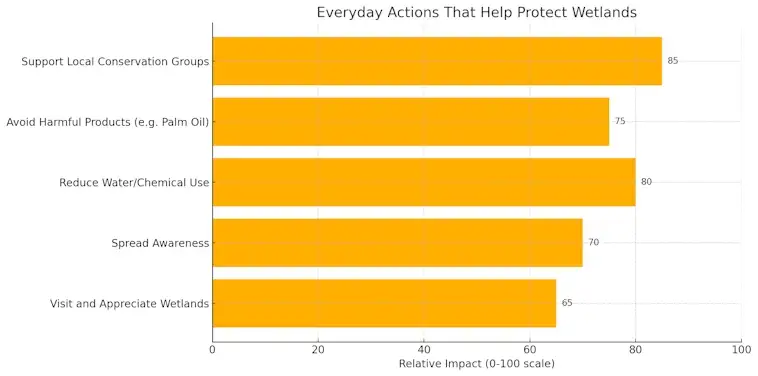
Support Local Wetland and Conservation Groups
Look for organizations working to restore or protect natural areas in your region.
- Donate, volunteer, or attend local clean-up days.
- Join planting efforts, invasive species removals, or habitat monitoring.
- Many groups host community science projects or educational events—even online.
Urban example: In cities like Chicago or Sydney, local conservation groups have turned former industrial zones into thriving wetland parks with public trails and educational programs.
Make Wetland-Friendly Choices in What You Buy
Some consumer products are linked to wetland destruction. A few mindful swaps go a long way.
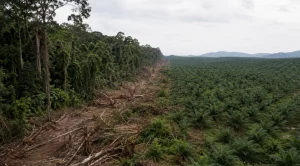
- Avoid unsustainable palm oil, which often drives the draining of peatlands and clearing of tropical wetlands.
- Choose sustainable seafood—many fish are born or raised in wetlands, and overfishing or habitat loss threatens their survival.
- Opt for organic or low-impact produce to reduce pesticide and fertilizer runoff that harms wetland ecosystems.
Look for certifications like RSPO (sustainable palm oil) or MSC (sustainable seafood) when shopping.
Reduce Your Water and Chemical Footprint
Everything that goes down your drain can end up in a wetland.
- Fix leaks and install water-saving devices to reduce pressure on natural water systems.
- Limit pesticide and fertilizer use, even on small lawns or gardens.
- Properly dispose of paints, oils, and household chemicals—never down a storm drain.
Rural bonus tip: Buffer strips of native plants between farmland and waterways help filter runoff and protect downstream wetlands.
Use Your Voice: Spread Awareness and Speak Up
Wetlands need advocates—and anyone can be one.
- Share articles, documentaries, or personal photos of local wetland visits on social media.
- Encourage schools to include wetland ecosystems in science or geography lessons.
- Support stronger environmental policies, and vote for leaders who prioritize climate resilience and clean water.
Even a conversation at the dinner table can change how someone sees the marsh down the road—or a mangrove half a world away.
Explore and Appreciate
Understanding leads to caring. And caring leads to action.
- Visit a nearby wetland, wildlife refuge, or estuary if possible.
- Take kids or friends—watch for birds, frogs, or seasonal plant changes.
- Use apps like iNaturalist to record sightings and contribute to citizen science.
The more we connect with wetlands, the more we’ll protect them—not as forgotten swamps, but as places of wonder and value.
No Wetland Nearby? No Problem
Even if the closest wetland is miles away, your choices still matter. Wetlands connect to rivers, which connect to cities, which connect to coasts. Clean water, flood safety, biodiversity, and climate health—all benefit from wetland protection.
So wherever you are, you’re part of this story.
Wetlands don’t need saving from afar. They need support from where you are.
Small steps—smarter choices, shared stories, a little more awareness—can help turn the tide. Wetlands are fighting for us. It’s time we fight for them, too.
Conclusion
Wetlands are more than just wild places—they’re lifelines. They clean our water, shield our homes from floods, store carbon, and cradle thousands of species, including many that share our backyards. They’ve quietly supported life for centuries, asking for little in return.
Now, they need us.
The good news is, there’s already movement. Across continents and communities, people are protecting and restoring these vital ecosystems. Scientists, farmers, elders, students, and neighbors are all stepping up. But there’s room—and real need—for more voices, more action, more care.
You don’t have to live near a wetland to make a difference. You just have to recognize that their survival is tied to ours.
Let’s protect the wetlands that protect us. The next drop of clean water, the next shield from a storm, the next breath of fresh air—it could depend on what we do today.