

Wildfire Smoke Is Getting Worse: What Experts Now Warn
Wildfire Smoke Is Getting Worse: What Experts Now Warn About the Growing Health Risks
Wildfire smoke is becoming a growing concern across many parts of the world. Each year, longer fire seasons and hotter conditions push more smoke into the air people breathe every day. As a result, communities far from the flames now face hazy skies and unhealthy air. Experts say the rise in wildfire smoke is no longer a rare event. Instead, it is turning into a regular part of modern wildfire seasons.
At the same time, scientists are warning that the problem may get worse before it improves. Large fires now burn hotter and last longer. Winds can carry smoke hundreds or even thousands of miles. This means cities that once felt safe from wildfire impacts are now seeing sudden spikes in air pollution.
Health concerns are also growing. Fine particles in smoke can travel deep into the lungs and bloodstream. Doctors link this pollution to breathing problems, heart strain, and other serious conditions. Children, older adults, and people with existing health issues often face the highest risk. Even short exposure during heavy smoke days can affect how people feel and function.
Looking ahead, researchers say better planning and awareness will be essential. Early warnings, cleaner indoor air, and stronger climate action may help reduce future harm. For now, experts are urging communities to understand the risks and prepare for a future where smoky skies may become more common.
Wildfire Smoke Is Spreading Further and Lasting Longer
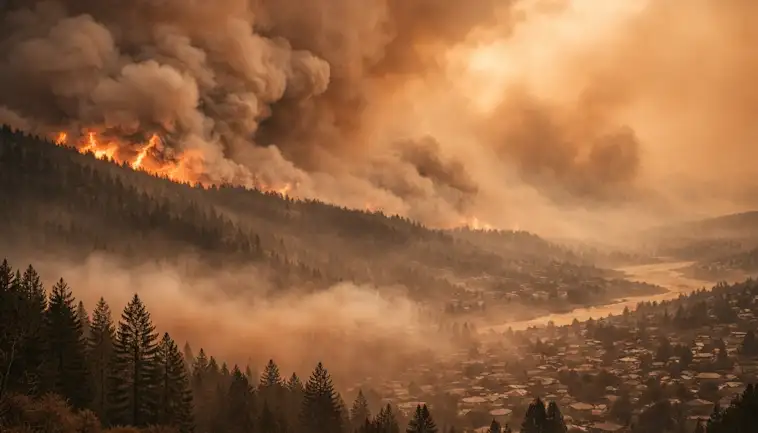
Wildfire smoke is no longer just a local problem. It is traveling hundreds, even thousands, of miles. And it is also sticking around for days or weeks at a time.
If you have noticed hazy skies in places that rarely see fires, you are not imagining it. This is becoming more common. And it is changing how we think about air quality.
In the past, wildfire smoke mostly affected nearby towns. Today, shifting weather patterns and rising temperatures are helping smoke travel much farther. Larger fires burn hotter. They release more particles into the air. Winds then carry that pollution across states and even across countries.
As a result, communities far from the flames are feeling the impact. Schools close. Outdoor events are canceled. Hospitals see more patients with breathing problems. Even people who are otherwise healthy may notice headaches, sore throats, or fatigue.
Why Smoke Is Lingering in the Air
Smoke is lasting longer because fires are lasting longer. Warmer springs and drier summers create the perfect conditions for large, stubborn blazes. Once they start, they are harder to contain.
At the same time, certain weather patterns can trap smoke close to the ground. This creates thick, stagnant air that does not clear quickly. In some cities, air quality alerts now last for days instead of hours.
The fine particles in wildfire smoke, known as PM2.5, are especially concerning. These particles are tiny enough to enter your lungs and even your bloodstream. Over time, repeated exposure can increase the risk of heart and lung disease.
Looking ahead, experts expect wildfire seasons to grow longer in many regions. That means smoke could become a regular part of summer in areas that once considered it rare.
So what can you do? Start by checking daily air quality reports during peak fire months. Keep windows closed when smoke levels are high. Use air purifiers if you can. And plan outdoor activities for times when the air is cleaner.
Wildfire smoke is not just a distant issue anymore. It is part of a changing climate reality. The good news is that awareness is growing. Communities are adapting. And with better information, you can make smart choices to protect your health now and in the years ahead.
Why Experts Say the Health Risks Are Growing
Wildfire smoke is not just a short-term nuisance. Experts now warn that the health risks are rising. And they are affecting more people each year.
The main reason is simple. We are breathing in more smoke, more often. Fires are larger. Seasons are longer. And smoke is traveling farther than ever before.
That means repeated exposure. Even if each event feels temporary, the long-term impact can add up.
Fine particles in wildfire smoke can move deep into the lungs. From there, they can enter the bloodstream. Over time, this increases the risk of asthma attacks, heart problems, and other serious conditions. Children, older adults, and people with existing health issues face the highest risk. However, healthy adults are not immune.
Doctors are also seeing new patterns. Emergency room visits spike during smoke waves. Prescriptions for inhalers increase. In some regions, smoke days now rival traffic pollution as a top air quality threat.
The chart below shows how average annual smoke exposure days have climbed over time. This steady rise helps explain why health concerns are growing.
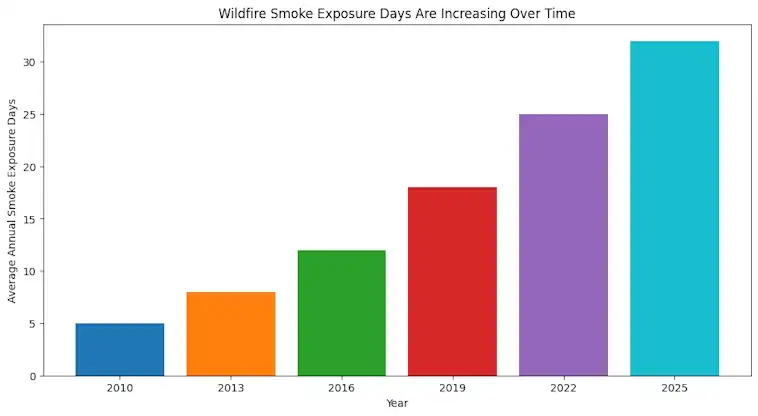
Looking ahead, experts expect this trend to continue unless fire prevention and climate strategies improve. That means personal protection matters more than ever.
Check local air quality reports. Limit outdoor exercise during heavy smoke. Use indoor air filters when possible. Small steps can reduce your exposure.
It’s clear wildfire smoke is becoming a regular health risk, not a rare event. Staying informed now will help protect you and your family in the years to come.
Wildfire Smoke and the Hidden Air Pollution Threat
Wildfire smoke is easy to see. The sky turns gray, and the air smells sharp. Your eyes may even burn.
But what you cannot see may matter even more.
Wildfire smoke carries a mix of tiny particles and toxic gases. Some of these pollutants are the same ones found in traffic exhaust and industrial smog. The difference is scale. During a major fire, pollution levels can spike fast and stay high for days.
This is why experts call it a hidden air pollution threat. Even when the flames are far away, the smoke can drift into cities and suburbs. It can slip indoors through cracks, vents, and open windows. As a result, you may be breathing polluted air without realizing it.
The smallest particles, known as PM2.5, are especially harmful. They are small enough to move deep into your lungs. Over time, repeated exposure can strain your heart and damage your respiratory system.
Here is what makes wildfire smoke different from everyday air pollution:
- It can travel hundreds or even thousands of miles
- Pollution levels can rise very quickly
- Exposure often lasts longer than a typical smog event
- It affects both rural and urban areas
- Can combine with heat waves, increasing health risks
Because of these factors, wildfire smoke is now reshaping how experts think about air quality. In some regions, it has become the main source of seasonal pollution.
To protect yourself, it helps to track real-time air conditions. The World Health Organization offers clear guidance on air pollution risks and prevention steps.
Looking ahead, this issue may grow as wildfire seasons expand. That means awareness is key. The more you understand the risks, the better you can respond.
Wildfire smoke is not just about what you see in the sky. It is about what you breathe each day. And that makes it a public health issue we can no longer ignore.
Who Faces the Highest Risk From Poor Air Quality
Poor air quality does not affect everyone the same way. Some groups face much higher health risks. And as wildfire smoke and pollution increase, that gap is growing.
Children are especially vulnerable. Their lungs are still developing. They also breathe faster than adults. This means they take in more polluted air for their body size.
Older adults face higher risks too. Many already have heart or lung conditions. Dirty air can worsen those problems quickly.
People with asthma or heart disease are among the most affected. Even short exposure can trigger attacks, chest pain, or serious complications.
Outdoor workers also face added danger. They often cannot avoid long hours outside during smoke events or high pollution days.
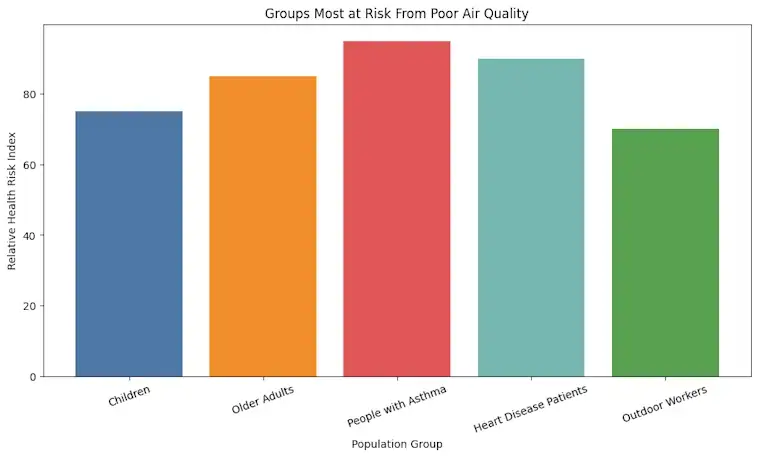
If you or someone in your family falls into one of these groups, take extra care. Check daily air quality reports. Limit outdoor time when pollution is high. Use indoor air filters when possible.
As air quality challenges grow, knowing your risk level is the first step toward staying safe.
What Experts Say Communities Should Do Next
Wildfire seasons are getting longer. Smoke is spreading farther. And more towns are feeling the impact.
So what should communities do next?
Experts say the focus must shift from reaction to preparation. It is no longer enough to respond once the smoke arrives. Cities and neighborhoods need clear plans in place before fire season begins.
That starts with better air quality monitoring. Real-time data helps local leaders make fast decisions. Schools can adjust schedules. Outdoor events can be moved or postponed. Public health alerts can go out earlier.
Stronger building standards also matter. Improved ventilation systems in schools, offices, and public buildings can reduce indoor smoke exposure. Clean air shelters can give residents a safe place to go during heavy smoke days.
Preparing for Wildfire Smoke Before It Arrives
Preparation works best when it is simple and practical. Experts often recommend:
- Clear communication plans for smoke alerts
- Public access to clean air centers
- Distribution programs for high-quality masks
- Tree management and fire-smart landscaping
- Community education on air quality safety
At the same time, long-term solutions are critical. Forest management, smarter land use planning, and climate resilience strategies all play a role in reducing future risk.
Looking ahead, experts agree on one point. Wildfire smoke is not a temporary issue. It is a growing public health challenge. Communities that plan now will be better protected later.
The good news is that small, steady improvements add up. With smart policies and informed residents, towns and cities can adapt. And together, they can build safer, cleaner air for the future.
Conclusion:The Growing Reality of Wildfire Smoke
Wildfire smoke is no longer a rare event. It is becoming a regular part of life in many regions. Each year, fires burn longer. Smoke travels farther. And air quality suffers in places that once felt safe.
Experts now warn that wildfire smoke will likely remain a serious public health risk. Warmer temperatures and drier landscapes are creating the perfect conditions for bigger fires. As a result, more communities are exposed to harmful air.
The impact goes beyond hazy skies. Wildfire smoke affects lungs, hearts, schools, workplaces, and local economies. It touches daily life in ways many people never expected.
Yet there is reason for hope. Awareness is growing. Communities are improving emergency plans. Technology is helping track air quality in real time. And families are learning how to protect themselves during high smoke days.
The key is preparation. Check air quality reports. Limit outdoor time when pollution is high. Improve indoor air when possible. Small actions can make a real difference.
Wildfire smoke may be getting worse. But informed choices and smart planning can reduce the risks. The more we understand the challenge, the better we can protect our health and our future.