

Why Wildfires Are Spreading Faster Each Year
What Is Fueling the Rise in Fast-Spreading Wildfires?
Wildfires are becoming more intense, more destructive, and far harder to control. Across forests, grasslands, and even suburban areas, wildfires are spreading faster each year as rising temperatures, longer droughts, and changing weather patterns create ideal conditions for fire. What once seemed like a seasonal threat is now turning into a year-round crisis affecting millions of people around the world.
Scientists say climate change is playing a major role. Hotter air dries out vegetation more quickly, while strong winds help flames travel across large areas in a matter of hours. At the same time, expanding cities and housing developments near forests are increasing the number of people living in high-risk zones. As a result, wildfires are causing greater economic damage, destroying wildlife habitats, and putting pressure on emergency services like never before.
Understanding why wildfires are accelerating is becoming increasingly important. From human activity to extreme weather events, several factors are combining to fuel larger and more dangerous fires.
What You’ll Discover
Why Wildfires Are Burning Longer and Spreading Faster
The Climate Shifts Fueling More Extreme Fire Seasons
How Wildfires Are Changing Forests and Communities
Drought, Heat, and Wind: The Perfect Fire Conditions
What Can Be Done to Slow the Rise in Mega Fires
Conclusion: The Growing Threat of Wildfires
Why Wildfires Are Burning Longer and Spreading Faster
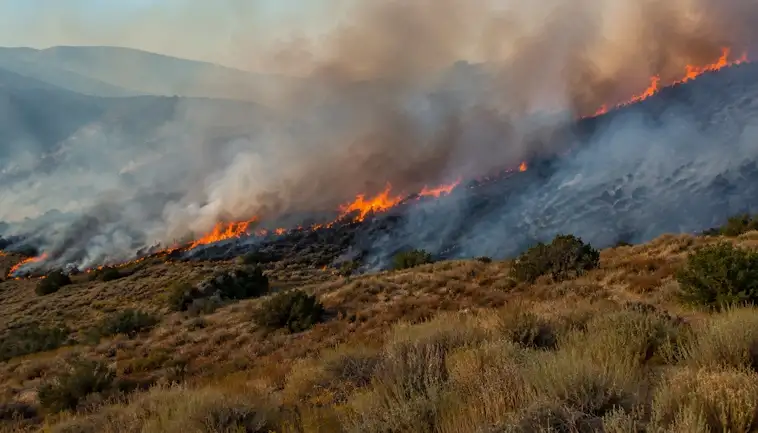
Wildfires are no longer rare seasonal events. Instead, they are becoming larger, hotter, and far more destructive. Across many parts of the world, fire seasons now last longer than they did just a few decades ago. At the same time, wildfires are spreading faster and reaching places that once seemed safe.
So, what is driving this change?
The answer comes down to a mix of rising temperatures, dry landscapes, and changing weather patterns. As the climate warms, forests and grasslands lose moisture more quickly. Because of this, vegetation becomes dry fuel that can ignite with little warning. Even a small spark can quickly grow into a fast-moving wildfire.
In addition, stronger winds and longer droughts are making fires harder to control. Once a wildfire starts, it can spread across huge areas in just hours. This puts homes, wildlife, and entire communities at risk.
Hotter Temperatures Are Drying Out Forests
One of the biggest reasons wildfires are becoming more intense is heat. Average global temperatures continue to rise, and that extra heat dries out trees, plants, and soil. As a result, forests become far more flammable.
In many regions, snow is also melting earlier in the year. This leaves forests dry for longer periods during spring and summer. Combined with lower rainfall, the land becomes the perfect environment for fires to grow rapidly.
Scientists have also found that heatwaves are becoming more common. During extreme heat, fires burn hotter and become more difficult for firefighters to contain. In some cases, wildfires can even create their own weather systems, including strong winds and lightning.
Why Small Fires Are Turning Into Mega Fires
Not long ago, many wildfires stayed relatively small. Today, however, so-called “mega fires” are becoming more common. These are massive wildfires that burn across thousands of acres and can continue for weeks or even months.
There are several reasons for this shift. First, decades of fire suppression have allowed dead trees and dry vegetation to build up in forests. Second, expanding cities and towns mean more people now live close to wildfire-prone areas. Finally, climate change is increasing the number of hot, dry, and windy days each year.
Together, these factors create ideal conditions for extreme wildfires. Once a fire grows large enough, controlling it becomes incredibly difficult. That is why experts warn that wildfire risk could continue rising in the years ahead unless action is taken to reduce emissions and improve land management.
The Climate Shifts Fueling More Extreme Fire Seasons
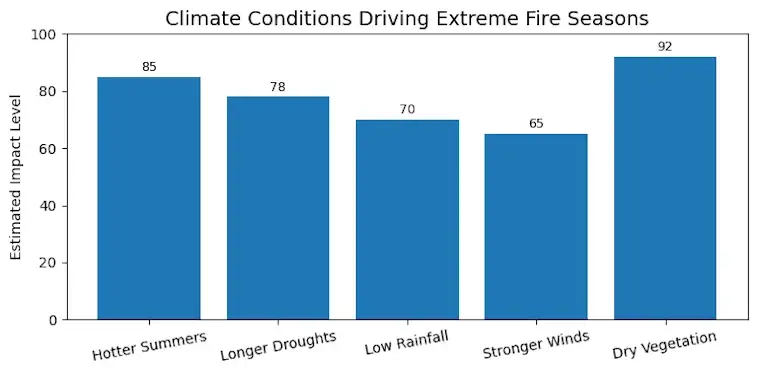
Wildfire seasons are becoming longer, hotter, and far more destructive. Across many parts of the world, forests and grasslands now stay dry for longer periods. At the same time, heatwaves are arriving earlier and lasting well into autumn. Together, these changes are creating ideal conditions for larger and faster-moving fires.
Climate change is playing a major role in this shift. Rising global temperatures pull moisture from soil, trees, and plants. As a result, landscapes that once resisted fire can quickly turn into fuel. Even a small spark can spread rapidly when strong winds and dry vegetation combine.
In recent years, communities in places like Canada, Australia, and parts of the United States have experienced record-breaking fire seasons. Scientists also warn that these extreme events could become more common in the decades ahead if warming trends continue.
Why Hotter Temperatures Matter More Than Ever
Higher temperatures do much more than make summers uncomfortable. They directly affect how quickly forests dry out. For example, snowpacks melt earlier in spring, which leaves less moisture available during peak summer months. In addition, prolonged droughts weaken trees and vegetation, making them easier to ignite.
Warmer nights are also becoming more common. This matters because cooler nighttime temperatures once helped slow fire activity. Now, fires often continue burning through the night, giving emergency crews less time to contain them.
Dry Vegetation Creates a Dangerous Chain Reaction
When grasses, shrubs, and trees lose moisture, they become highly flammable. Then, once a fire begins, dry vegetation helps flames spread faster across large areas. Strong winds can carry embers for miles, which increases the risk of new fires starting far from the original blaze.
Because of this, many regions are seeing “mega fires” that burn hotter, move faster, and last longer than in previous decades. These fires can destroy ecosystems, damage air quality, and force thousands of people to evacuate with little warning.
How Wildfires Are Changing Forests and Communities
Wildfires are becoming more common across many parts of the world. In recent years, longer dry seasons, rising temperatures, and strong winds have created the perfect conditions for larger and more dangerous fires. As a result, forests are changing faster than ever before. At the same time, nearby communities are also facing serious challenges.
For many people, wildfires are no longer rare events seen only on the news. Instead, they are becoming part of everyday life. Families are dealing with smoke-filled skies, damaged homes, and sudden evacuations. Meanwhile, forests that once felt stable are struggling to recover after repeated fires.
However, wildfires do more than destroy trees. They also reshape wildlife habitats, affect local economies, and change how people think about land management. In some regions, entire communities are now redesigning neighborhoods and emergency plans to prepare for future fire seasons.
How Forest Ecosystems Are Being Reshaped
Forests naturally experience fires from time to time. In fact, some ecosystems depend on fire to stay healthy. Yet today’s wildfires are often hotter, larger, and more destructive than in the past. Because of this, many forests cannot recover as easily.
Some tree species struggle to regrow after intense fires. In addition, wildlife can lose food sources and shelter for many years. Over time, this can completely alter the balance of an ecosystem.
The Long-Term Effects on Local Communities
Communities near wildfire zones are also experiencing long-lasting changes. Beyond the immediate danger, people often face emotional stress, financial losses, and health concerns caused by smoke pollution.
Here are some of the biggest ways wildfires are affecting communities:
- Air quality problems that can last for weeks or months
- Rising insurance costs for homeowners in high-risk areas
- Damage to roads, power lines, and water systems
- Loss of tourism and local business income
- Increased pressure on firefighters and emergency services
- Greater demand for climate adaptation and forest management plans
Even so, many communities are finding new ways to adapt. Some towns are creating fire-resistant building rules, while others are investing in early warning systems and forest restoration projects. These efforts may help reduce future risks and improve long-term resilience.
As climate patterns continue to shift, experts believe wildfire seasons could become even more intense. Therefore, understanding how wildfires affect both forests and communities is becoming increasingly important for the future.
Drought, Heat, and Wind: The Perfect Fire Conditions
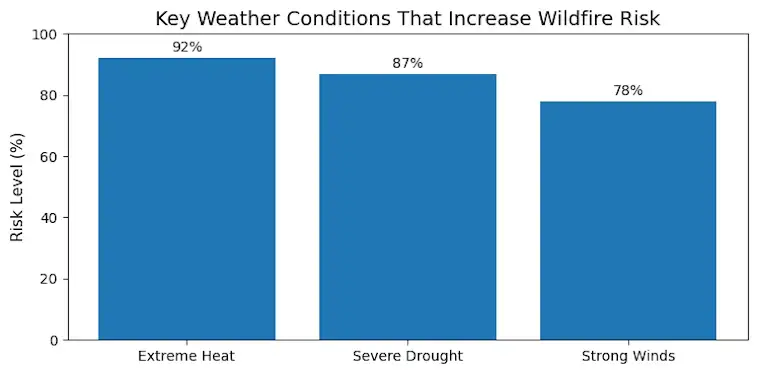
Wildfires do not happen by chance. In many cases, they grow fast because the weather creates the perfect conditions for flames to spread. When drought, extreme heat, and strong winds come together, even a small spark can turn into a major disaster.
Over the last few years, longer dry seasons and rising temperatures have made wildfires more common across many parts of the world. Forests, grasslands, and even suburban areas are now more vulnerable than ever. As a result, understanding these conditions is becoming increasingly important for communities, homeowners, and emergency services alike.
Why Dry Landscapes Become Dangerous Faster
Drought is often the first warning sign. When rain stays away for weeks or months, plants, trees, and grass lose moisture. Eventually, vegetation becomes dry fuel waiting to ignite. Even healthy forests can quickly become high-risk zones during extended dry periods.
At the same time, intense heat speeds up the drying process. Hot weather pulls moisture from the ground and vegetation much faster than normal. Because of this, landscapes that would usually resist fire can suddenly burn with incredible speed.
Strong winds then make the situation far worse. Wind pushes flames into new areas, carries burning embers across long distances, and makes fires harder to control. In some cases, embers can ignite homes or forests miles away from the main fire line.
The Three Conditions That Drive Rapid Fire Spread
When these three weather conditions combine, wildfire behavior becomes far more unpredictable:
- Drought creates dry fuel.
- Heat lowers moisture levels even further.
- Wind spreads flames rapidly.
Together, they create what firefighters often describe as “perfect fire weather.” Unfortunately, climate trends suggest these dangerous combinations are becoming more frequent in many regions.
This growing risk is why experts continue to focus on fire prevention, land management, and early warning systems. While wildfires cannot always be prevented, understanding the conditions behind them can help communities prepare and respond more effectively.
What Can Be Done to Slow the Rise in Mega Fires
Mega fires are becoming more common across the world. From parts of Canada to Australia and the western regions of United States, fire seasons are now lasting longer and burning hotter. As temperatures rise and forests become drier, these extreme fires are turning into a growing global threat.
However, there is still hope. While wildfires cannot be stopped completely, experts believe there are many ways to slow the rise in mega fires and reduce the damage they cause. The key is taking action early and combining smarter land management with stronger climate policies. At the same time, communities also need better tools and preparation to live safely in fire-prone areas.
Restore Forests and Reduce Fuel Build-Up
One of the biggest problems today is the amount of dry vegetation covering many forests. Dead trees, dry grass, and thick undergrowth act like fuel during hot weather. As a result, fires spread faster and become harder to control.
Because of this, many experts support controlled burns and forest thinning. Controlled burns are smaller, carefully planned fires that remove extra fuel before wildfire season begins. Although the idea may sound risky, these burns can actually prevent much larger disasters later on.
In addition, forests need long-term care. Removing dead trees, restoring natural ecosystems, and planting more fire-resistant species can all help create healthier landscapes. Over time, these steps can slow the spread of extreme fires and protect wildlife habitats as well.
Communities Must Adapt to a Hotter Future
At the same time, people living in fire-risk areas must adapt to changing conditions. Many homes are still being built in regions where forests and dry land meet residential communities. Unfortunately, this increases the danger when fires break out.
Simple changes can make a major difference. Fire-resistant building materials, wider evacuation routes, and defensible space around homes can help save lives. Early warning systems and better emergency planning are also becoming more important every year.
Most importantly, tackling climate change remains a critical part of the solution. Rising global temperatures create hotter and drier conditions that allow fires to grow rapidly. Therefore, reducing greenhouse gas emissions is closely linked to slowing the rise of mega fires in the future.
While the challenge is serious, progress is possible. With smarter planning, stronger environmental policies, and community action, countries can reduce the risk and better prepare for the fire seasons ahead.
Conclusion: The Growing Threat of Wildfires
Wildfires are no longer rare events that happen once in a season. They are becoming larger, faster, and more destructive each year. Rising temperatures, longer droughts, and changing weather patterns are creating the perfect conditions for wildfires to spread quickly across forests, grasslands, and even communities.
At the same time, human activity continues to play a major role. Expanding cities, land use changes, and accidental ignitions are increasing the risk in many regions around the world. As a result, wildfires are affecting more people, wildlife, and ecosystems than ever before.
However, there is still hope. Better forest management, stronger climate action, and improved early warning systems can help reduce the impact of wildfires in the future. Communities can also prepare by creating fire-resistant spaces, supporting sustainable land practices, and staying informed during high-risk seasons.
Understanding why wildfires are spreading faster is the first step toward finding real solutions. As the climate continues to change, addressing the causes of wildfires will become even more important for protecting lives, homes, and the environment for future generations.