

Why Rising Seas Threaten More Than Just Beaches
Why Rising Seas Threaten More Than Just Beaches
Rising seas are often pictured as waves creeping closer to sandy beaches, but the reality runs far deeper. As oceans swell, entire communities, food systems, and even local economies face risks that extend far beyond the shoreline. Scientists warn that the pace of change is quickening, and the effects are already being felt worldwide. From saltwater intruding into farmland to increased flooding in major cities, the challenges are growing. Yet within these challenges also lies an opportunity to rethink how we live with water and protect what matters most for future generations.
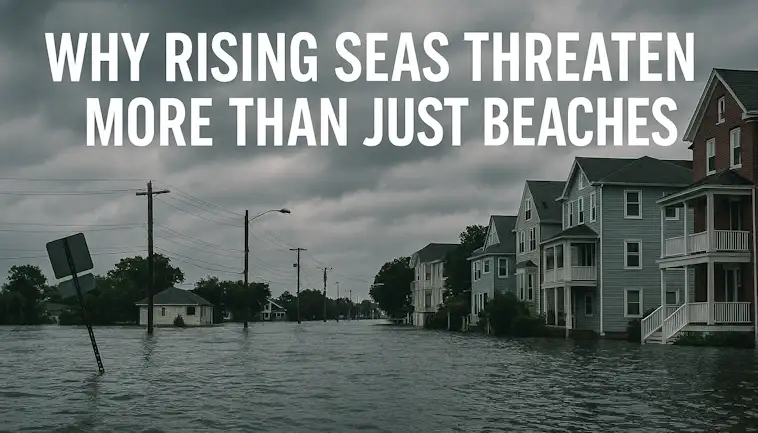
How Rising Seas Are Reshaping Coastal Communities
Coastal towns and cities have always lived in balance with the ocean. But today, that balance is shifting. Rising seas are no longer a distant warning. They’re a daily reality for millions of people.
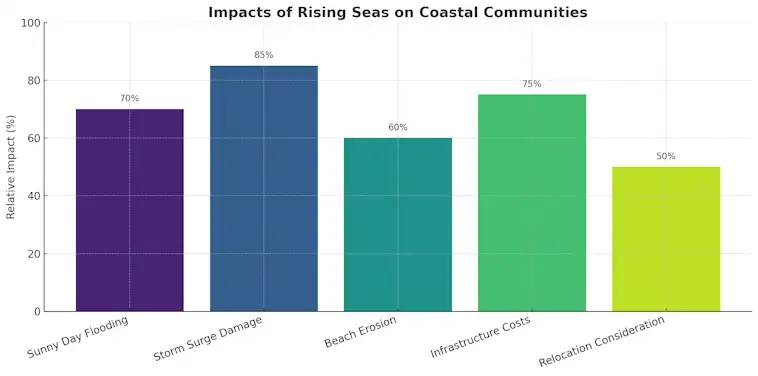
Flooding is more frequent, even on sunny days. Storm surges reach further inland. Beaches that once felt permanent are now shrinking year by year. For families living near the water, this means tough choices about the future.
Everyday Life on the Edge
Think about what happens when the tide creeps higher than expected. Roads close. Homes need costly repairs. Local businesses, especially those tied to tourism and fishing, struggle to keep going. What once felt like rare emergencies are becoming routine.
Communities are responding in different ways. Some are building sea walls and raising roads. Others are considering relocation altogether. Each choice carries a price, whether financial, emotional, or both.
Looking ahead, the challenge isn’t just about protecting property. It’s about protecting culture, traditions, and the deep sense of identity that coastal living provides. The sea has always been a source of life and connection. Now, it’s forcing people to rethink how and where they live.
The Hidden Economic Costs of Rising Seas
When we talk about rising seas, the first images that come to mind are flooded streets and disappearing beaches. But behind those scenes, there’s another story. It’s the economic weight that coastal communities quietly carry every year.
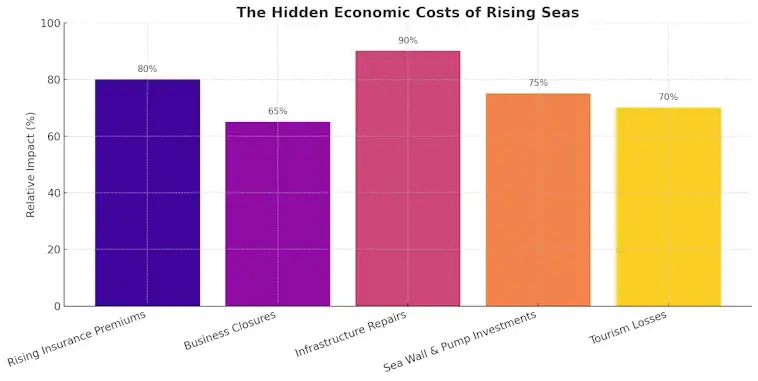
Insurance premiums are climbing fast. Homeowners in flood zones are paying more than ever, and some can no longer afford coverage at all. Businesses are also feeling the pressure. A single flood can shut down a shop for weeks, wiping out profits and jobs.
The Price Tag No One Talks About
It’s not just property owners who pay. Cities face rising costs for repairing roads, bridges, and water systems damaged by repeated flooding. Local governments must also invest in new defenses like sea walls, pumps, and elevated infrastructure. These are expensive projects that often stretch tight budgets.
And then there’s tourism. Beaches and waterfronts bring in millions each year, but as shorelines shrink, so does visitor spending. This ripple effect reaches restaurants, hotels, and small businesses that depend on seasonal traffic.
The hidden truth is this: the cost of doing nothing will only grow. Every year of delay means bigger bills for repairs, recovery, and relocation. By acting now—investing in smarter planning and climate resilience—we can avoid some of the steepest expenses and protect both communities and livelihoods.
Rising Seas and Their Impact on Everyday Life
For many coastal communities, the impact of rising seas isn’t just a future concern—it’s happening right now. It shows up in small but disruptive ways that affect daily routines and local economies.
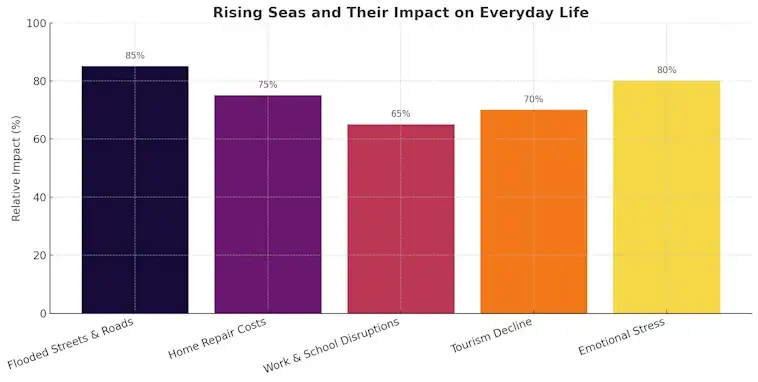
Flooded streets can delay school buses and emergency services. Families find themselves repairing water damage more often, stretching household budgets. Even something as simple as getting to work can become unpredictable when high tides creep onto main roads.
When Normal Becomes Uncertain
The truth is, everyday life becomes harder when the ocean moves in closer. Grocery stores may close after a flood. Fishermen lose work when docks are damaged. Tourism, a major source of income for many towns, slows down when beaches erode or boardwalks shut.
These challenges add stress, not just financially but emotionally. People wonder if their homes are safe, if their children will inherit the same community spirit, or if relocation is the only option left.
Still, there’s resilience. Communities are adapting—by raising homes, improving drainage systems, and planning for climate-ready infrastructure. While the sea brings challenges, it also inspires innovation and stronger bonds among neighbors.
Rising Seas: What Science Tells Us About the Future
Scientists have been tracking sea levels for decades, and the data is clear—oceans are rising faster than before. The main drivers are melting glaciers, shrinking ice sheets, and the fact that warmer water expands. Together, these forces are reshaping coastlines around the globe.
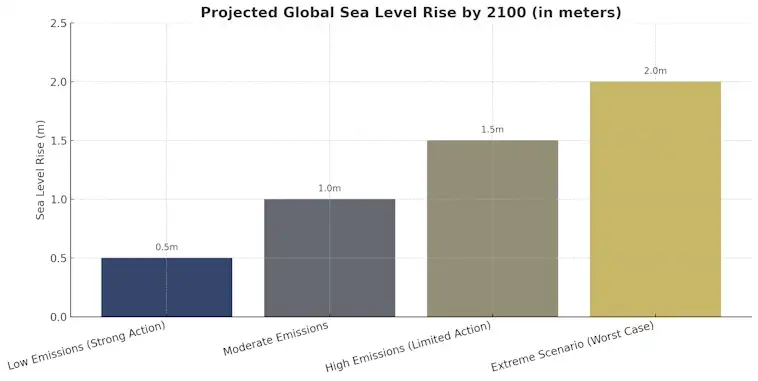
Experts warn that sea levels could rise by several feet within this century. That might sound far off, but the changes are already visible. Flood maps are being redrawn. Coastal property values are shifting. And entire ecosystems, like wetlands and mangroves, are at risk.
Why the Next Decade Matters Most
The choices made in the next ten years will shape how severe the impacts become. If greenhouse gas emissions remain high, seas will rise faster, and adaptation will be harder. On the other hand, bold climate action could slow the pace, giving communities more time to prepare.
It’s also worth noting that rising seas don’t affect all places equally. Low-lying islands, delta regions, and major coastal cities are among the most vulnerable. For them, planning ahead isn’t optional—it’s urgent.
The science doesn’t just sound the alarm; it also points to solutions. Smarter urban design, restored wetlands, and investments in clean energy can all make a difference. The future isn’t written yet, but the direction we choose today will decide how livable tomorrow’s coastlines will be.
Solutions and Adaptations for a Changing World
Rising seas bring challenges, but they also spark innovation. Around the world, communities are finding creative ways to adapt and protect their futures. These solutions range from simple, local efforts to ambitious global projects.
Building Smarter, Living Smarter
One key approach is climate-ready infrastructure. Cities are raising roads, building stronger sea walls, and upgrading drainage systems to handle more water. Homes in flood-prone areas are being elevated, giving families extra security when tides run high.
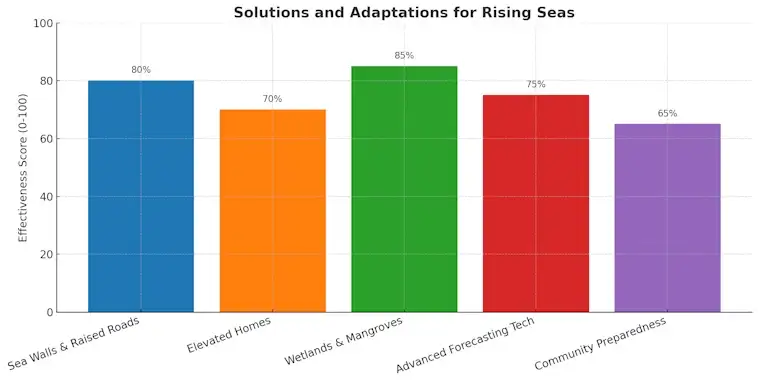
Nature also plays a role. Restoring wetlands, dunes, and mangroves creates natural barriers that absorb storm surges while supporting wildlife. These green solutions are often cheaper and more sustainable than concrete alone.
Technology is stepping in too. From advanced flood forecasting to floating neighborhoods, new ideas are moving from research to reality. These innovations show that adaptation doesn’t just mean surviving—it can mean thriving in new ways.
Most importantly, adaptation is not only about governments or big projects. Communities and individuals are part of the solution. From local planning meetings to neighborhood flood-preparedness groups, small actions add up to big resilience.
The path forward is clear: we can’t stop the seas from rising, but we can shape how we respond. By combining science, nature, and human creativity, we can build a future where coastal life continues—stronger, safer, and smarter.
Navigating a Future with Rising Seas
Rising seas are no longer a distant possibility—they are reshaping our world right now. From flooded streets to hidden economic costs, the impacts reach into nearly every part of coastal life. But this challenge also comes with opportunity. Communities, scientists, and innovators are already developing solutions that blend technology, nature, and resilience.
The future of our coastlines depends on the choices we make today. By investing in smarter infrastructure, protecting natural barriers, and planning with foresight, we can reduce risks and build stronger, safer communities.
The seas may be rising, but so can our determination. With the right action, we can protect livelihoods, preserve culture, and adapt to a changing world—one step at a time.