

Why Net Zero Promises Could Cost Consumers More Tomorrow
Are Net Zero Promises Creating a More Expensive Future for Consumers?
Net zero targets are shaping energy policy, transport, housing, and manufacturing across the world. While many governments and businesses present these plans as essential for a cleaner future, growing concerns remain about the long-term financial impact on households. For consumers already dealing with rising living costs, net zero policies could lead to higher energy bills, expensive upgrades, and increased taxes in the years ahead.
Supporters argue that these measures will create a more sustainable economy over time. However, critics warn that the transition may move too quickly and place too much pressure on ordinary families. From electric vehicle mandates to home heating changes, the cost of meeting climate goals could become one of the biggest economic challenges consumers face over the next decade.
What You’ll Discover
Net Zero Targets and the Rising Cost to Households
How Green Policies Could Push Bills Higher
Net Zero Promises and the Hidden Price Consumers May Pay
Why Energy Costs Could Climb Faster Than Expected
The Long-Term Financial Risks Behind Climate Commitments
Conclusion: The Real Cost of Net Zero May Be Closer Than You Think
Net Zero Targets and the Rising Cost to Households
Across the world, governments are pushing ahead with net zero targets. The goal is simple in theory. Cut carbon emissions, move away from fossil fuels, and build a cleaner future. However, for many households, the reality feels far more complicated.
Energy bills have already climbed sharply in recent years. At the same time, families are being encouraged to replace petrol cars, upgrade boilers, improve insulation, and invest in greener technology. While these changes may help the environment over time, they often come with high upfront costs that many people simply cannot afford.
As a result, concerns are growing about the financial pressure linked to the transition. Supporters argue that delaying climate action will cost even more in the future. Yet critics believe ordinary households are carrying too much of the burden today. This debate is becoming increasingly important as inflation, housing costs, and food prices continue to stretch family budgets.
Why Energy Transition Costs Are Hitting Families Hard
For many homeowners, the move toward net zero can feel overwhelming. Heat pumps, electric vehicles, solar panels, and home insulation upgrades are often presented as essential steps. However, even with government grants, the total cost can still run into thousands of pounds.
In addition, energy markets remain unstable. Traditional energy sources are becoming more expensive due to global supply pressures and carbon pricing policies. Meanwhile, renewable infrastructure still requires major investment before lower long-term costs can fully appear.
This creates a difficult situation for middle and lower-income households. Many people support cleaner energy in principle. Yet they also worry about how they will pay for these changes while managing everyday living expenses.
The Risk of a Growing Public Backlash
Public support for climate policies often weakens when people feel financially squeezed. This is especially true when policies are seen as unfair or disconnected from daily life. Rising fuel costs, higher electricity bills, and expensive green upgrades can quickly create frustration.
Because of this, governments face a balancing act. They must continue reducing emissions while also protecting living standards. If policymakers fail to manage this carefully, public trust could decline, slowing progress toward long-term environmental goals.
Looking ahead, affordability may become the key issue that shapes the future of net zero policies. Cleaner energy remains a major priority. However, many households now want practical solutions that protect both the planet and their finances.
How Green Policies Could Push Bills Higher
Green policies are designed to cut emissions and speed up the move toward cleaner energy. In many ways, that shift is already changing how people travel, heat their homes, and use electricity. However, there is another side to the story that households are starting to notice more clearly — rising costs.
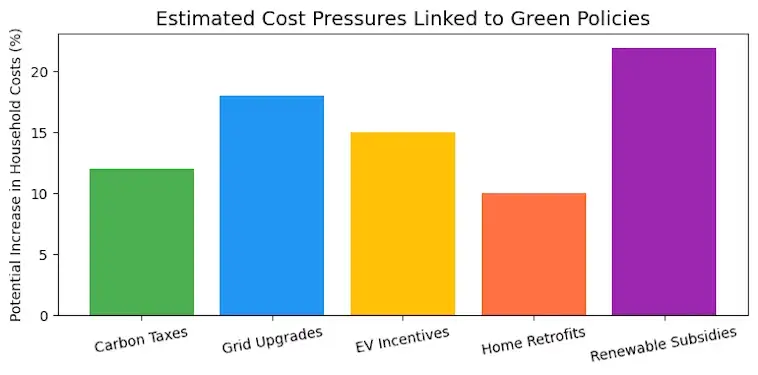
While long-term climate goals often focus on savings and sustainability, the short-term impact can feel very different. New environmental rules, higher carbon taxes, and large investments in energy infrastructure can all add pressure to everyday bills. As a result, many families are now asking whether the transition to a greener economy could make life more expensive before it becomes cheaper.
Why Energy Upgrades Often Raise Costs First
One major reason bills can rise is the huge investment needed to modernize energy systems. Governments and energy companies are spending billions on renewable power projects, upgraded electricity grids, and cleaner transport networks. Although these changes may reduce emissions over time, the upfront costs are often passed on to consumers.
At the same time, stricter environmental regulations can increase production costs for businesses. In turn, those companies may raise prices to protect profits. This can affect everything from electricity bills to groceries and public transport.
Carbon Taxes and Consumer Spending
Carbon pricing is another important factor. These taxes are designed to discourage pollution by making fossil fuels more expensive. Supporters argue that this pushes industries toward cleaner alternatives. Yet critics say it can hit lower and middle-income households hardest, especially during periods of high inflation.
For example, higher fuel costs can increase delivery expenses for retailers. Consequently, shoppers may end up paying more for everyday goods. Heating costs can also rise during colder months, particularly in regions that still depend heavily on gas.
Still, supporters of green policies believe these costs may only be temporary. Over time, cheaper renewable energy, better technology, and improved efficiency could help lower household expenses. The challenge for governments is balancing climate goals with affordability so consumers are not left carrying too much of the burden too quickly.
Net Zero Promises and the Hidden Price Consumers May Pay
Across the world, governments and major companies are racing toward net zero targets. On the surface, the goal sounds positive. Cleaner energy, lower emissions, and a healthier planet are hard ideas to argue against. However, many consumers are now starting to ask a more difficult question. Who will actually pay for this transition?
In many cases, the answer may be everyday households. While businesses promote ambitious climate plans, the costs often find their way into energy bills, transport prices, food costs, and consumer goods. As a result, many families could end up paying more long before they see the promised long-term benefits.
At the same time, companies are under growing pressure from investors, regulators, and environmental groups. Therefore, businesses are spending billions on new technology, carbon reporting systems, and supply chain changes. Although these investments may help reduce emissions, they can also increase operating costs. Unsurprisingly, many firms pass at least part of these costs directly to customers.
The Growing Cost of Green Compliance
For consumers, the financial impact can appear in several ways. Some costs are obvious, while others are hidden inside everyday spending.
Where Consumers May Feel the Pressure Most
- Higher household energy bills during the shift away from fossil fuels
- Increased prices for electric vehicles and green technology
- More expensive flights as airlines face carbon reduction rules
- Rising food prices linked to sustainable farming requirements
- Extra taxes or environmental levies added to products and services
- Insurance premiums increasing due to climate-related risks and regulations
In addition, smaller businesses may struggle the most. Unlike large corporations, they often lack the financial resources needed to adapt quickly. Consequently, some may raise prices, cut jobs, or reduce services simply to remain competitive.
Still, supporters of net zero policies argue that the transition could create new industries and lower costs over time. Renewable energy may eventually become cheaper and more stable than traditional energy sources. Furthermore, innovation could open the door to cleaner transport, smarter homes, and more efficient supply chains.
The challenge, however, lies in balancing environmental goals with economic reality. Consumers are increasingly willing to support sustainable policies, but many also want transparency about the true financial impact. Without clear communication and fair planning, public support could weaken as living costs continue to rise.
Ultimately, the debate around net zero is no longer just about climate targets. It is also about affordability, fairness, and who carries the burden during one of the biggest economic transitions in modern history.
Why Energy Costs Could Climb Faster Than Expected
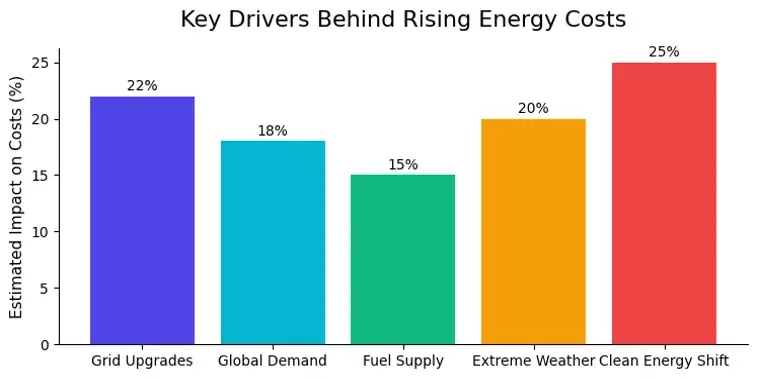
Energy prices have always moved up and down. However, many experts now believe costs could rise faster in the years ahead. That shift is being driven by a mix of global demand, aging infrastructure, and the push toward cleaner energy sources.
At the same time, households and businesses are using more electricity than ever before. Electric vehicles, data centers, and smart home technology are all increasing pressure on power grids. As demand grows, suppliers may struggle to keep pace. As a result, higher bills could become more common.
Another important factor is the cost of upgrading energy systems. Across many countries, power grids are decades old and need major investment. These upgrades are expensive, and utility companies often pass part of those costs on to consumers.
Rising Demand Is Changing the Energy Market
Demand for electricity is climbing quickly. In fact, the growth is happening faster than many forecasts predicted just a few years ago. More people are working from home, businesses rely heavily on cloud computing, and electric transport is expanding at scale.
Meanwhile, extreme weather events are adding more pressure. Heatwaves increase air conditioning use, while cold winters raise heating demand. When supply becomes tight during these periods, prices can jump sharply.
The Clean Energy Transition Could Create Short-Term Pressure
The shift toward renewable energy is necessary for long-term sustainability. However, the transition itself may create short-term pricing challenges. Building wind farms, solar projects, and battery storage systems requires huge upfront investment.
In addition, some traditional energy sources are being phased out before renewable capacity is fully ready to replace them. This imbalance can create supply gaps, especially during periods of high demand.
Over time, cleaner energy could help stabilize costs. Yet in the near future, consumers may continue to face rising prices as governments and companies modernize energy systems around the world.
The Long-Term Financial Risks Behind Climate Commitments
Climate commitments are now a major part of corporate strategy. Across the world, companies are promising to cut emissions, invest in clean energy, and move toward net-zero goals. On the surface, this shift looks positive. It helps businesses improve their public image while also responding to growing pressure from investors, governments, and customers.
However, there is another side to the story. Many of these climate promises come with long-term financial risks that are often overlooked. While sustainability plans can create new opportunities, they can also increase costs, reduce profit margins, and place pressure on future growth.
As a result, businesses now face a difficult balancing act. They must invest in greener operations while still protecting shareholder value. For some companies, that challenge could become far more expensive than expected.
Rising Costs Could Reshape Business Models
Transitioning to a low-carbon economy is not cheap. In fact, many firms are already spending billions on new infrastructure, cleaner technologies, and supply chain upgrades. Although these investments may support long-term sustainability goals, they can also create short-term financial strain.
For example, energy-intensive industries such as manufacturing, aviation, and shipping face particularly high transition costs. Many businesses must replace existing equipment long before the end of its normal lifespan. Consequently, this can lead to stranded assets and significant write-downs.
At the same time, stricter environmental regulations continue to increase compliance costs. Carbon taxes, emissions reporting rules, and sustainability disclosures all require additional spending. Even large corporations with strong balance sheets may struggle to absorb these rising expenses over time.
Investors Are Watching Climate Risks More Closely
Investors are no longer focused only on profits and growth. Today, many also examine how exposed a company is to climate-related financial risks. This includes everything from regulatory changes to supply chain disruption and physical climate damage.
Because of this, companies that fail to adapt could face lower valuations and reduced investor confidence. On the other hand, businesses that overcommit financially to climate goals may also create concern if returns remain uncertain.
There is also growing pressure from financial institutions. Banks and investment funds increasingly expect companies to provide detailed climate transition plans. If businesses cannot demonstrate realistic strategies, access to funding could become more difficult and expensive.
Ultimately, climate commitments are not just environmental decisions anymore. They are financial decisions too. And over the next decade, the companies that manage these risks carefully may be the ones best positioned to survive and grow.
Conclusion: The Real Cost of Net Zero May Be Closer Than You Think
Net zero goals are often presented as a necessary step toward a cleaner and more sustainable future. However, consumers are increasingly asking who will ultimately pay the price. While governments and large corporations continue to promote ambitious climate targets, many households are already feeling the financial pressure through higher energy bills, rising transport costs, and more expensive everyday goods.
That does not mean the idea of net zero is wrong. In fact, investing in cleaner technology and more efficient infrastructure could bring long-term benefits. Yet the transition needs to be realistic, affordable, and carefully managed. Without the right balance, the push toward net zero could place a heavier burden on ordinary consumers while offering limited short-term relief.
Looking ahead, transparency will matter more than ever. Consumers want clear answers about costs, timelines, and the real impact of climate policies. Businesses and policymakers who ignore these concerns risk losing public trust. On the other hand, those who focus on innovation, affordability, and practical solutions could help make net zero both achievable and sustainable for future generations.
In the end, the debate is no longer about whether net zero matters. It is about how the transition happens, who carries the cost, and whether consumers will be protected along the way.