
Why Migration Patterns Are Changing in a Warming World
Why Migration Patterns Are Changing in a Warming World
Across the planet, migration patterns are shifting in ways that scientists have never seen before. Birds are flying north weeks earlier, whales are traveling farther to find food, and insects are appearing in places once too cold for them to survive. These changes aren’t random—they’re signals from nature, reacting to a warming world that’s rewriting centuries of instinct and rhythm.
As temperatures rise and seasons blur, animals are being forced to adapt on the move. Some are chasing cooler habitats, while others are struggling to keep up with food sources that no longer follow predictable cycles. These shifts are reshaping ecosystems, altering predator-prey relationships, and even influencing how humans interact with wildlife.
Understanding what drives these changes is key to predicting the future of biodiversity. The more we learn about how and why species are moving, the clearer it becomes that migration isn’t just about distance—it’s about survival in a rapidly changing climate.
How Migration Patterns Reveal Nature’s Response to a Warming World
Have you ever noticed how birds seem to arrive earlier in spring or how certain species show up in places they didn’t before? That’s not your imagination — it’s nature adapting right before our eyes. Migration patterns, once as predictable as the seasons, are now shifting in surprising ways. And these changes tell a powerful story about how animals are responding to a warming world.
For centuries, migration patterns have been one of nature’s most fascinating survival strategies. Birds, Whales, Butterflies, and even fish follow invisible routes guided by instinct, daylight, and temperature. But as the planet heats up, these natural cues are changing. Many species are leaving earlier, staying longer, or skipping their journeys entirely. Others are moving to cooler regions in search of food, safety, and balance.
A Race Against the Seasons
Take Arctic terns, for example. These tiny birds travel from pole to pole each year — one of the longest migrations on Earth. But as ocean temperatures rise, the fish they rely on are moving too. This forces the terns to fly farther or change course, sometimes with devastating effects. Similarly, Monarch Butterflies are arriving before milkweed plants — their only food source — are ready, creating a dangerous mismatch.
What’s happening isn’t just about timing. It’s about survival. When migration patterns shift, entire ecosystems are affected. Predators lose their prey. Plants miss their pollinators. And local communities that depend on these rhythms — from fishing villages to farming regions — feel the impact too.
Scientists are tracking these changes through satellite data, migration tags, and even citizen reports. Each movement tells part of a larger global story — one that connects climate, behavior, and resilience.
If there’s a hopeful note, it’s that nature is remarkably adaptive. But adaptation takes time — and time is running short. Understanding migration isn’t just about studying animals. It’s about learning how life, in all its forms, is trying to keep pace with a rapidly changing world.
The Hidden Triggers Behind Animals’ Shifting Journeys
Every year, millions of animals take off on incredible journeys. Birds fly across oceans. Whales travel thousands of miles. Even tiny insects move with purpose. But what happens when those familiar routes begin to change? Today, scientists are noticing something new—animals are shifting their migration patterns in unexpected ways.
So, what’s behind this quiet reshuffling of nature’s map? It turns out, several hidden triggers are at play. Rising temperatures are pushing some species to seek cooler habitats. Changes in rainfall and food availability are making traditional paths less reliable. And as cities expand, light and noise pollution can confuse migrating animals, throwing their natural timing off balance.

For instance, many bird species are now arriving at their breeding grounds earlier in the year. Meanwhile, marine animals are swimming into new waters as ocean temperatures rise. These changes might seem small, but over time they can reshape entire ecosystems.
Understanding these shifts isn’t just about studying wildlife. It’s also about seeing how deeply climate change connects us all. When animals move differently, it signals that the planet itself is changing beneath our feet—and it challenges us to adapt, too.
Why Migration Patterns Are No Longer Predictable
Have you noticed how birds or butterflies seem to appear at odd times lately? It’s not your imagination. Around the world, scientists are finding that animal migration patterns are becoming increasingly unpredictable. The once-reliable rhythms of nature—when geese fly south, whales move through certain waters, or caribou cross the tundra—are shifting in surprising ways.
So, what’s causing all this confusion? The short answer: the environment animals depend on is changing faster than they can adapt.
Today’s world looks and feels very different from even a few decades ago. Rising temperatures, unpredictable seasons, and human expansion are rewriting the natural calendar. Many animals now migrate earlier, later, or not at all. This unpredictability doesn’t just affect wildlife—it ripples through entire ecosystems and even local economies that depend on predictable animal patterns.
Here’s what’s driving the change:
- Climate change is altering cues. Animals rely on temperature, daylight, and food signals to know when to move. When those signals shift, their timing falls apart.
- Habitats are disappearing. Expanding cities, farms, and roads break up the routes animals have followed for centuries.
- Food sources are out of sync. When flowers bloom too early or insects hatch too soon, migrating species may arrive to find their meals gone.
- Extreme weather is disrupting journeys. Storms, droughts, and heatwaves can throw off migration routes or wipe out resting spots along the way.
- Pollution and light interference confuse navigation. Artificial lights, noise, and chemicals in the air make it harder for animals to follow natural signals like the stars or magnetic fields.
What’s happening isn’t just about animals moving differently—it’s a sign of deeper environmental stress. When migration goes off track, breeding success drops, food chains weaken, and biodiversity declines.
Still, there’s hope. Conservation groups and researchers are using satellite tracking, AI, and habitat restoration to help animals find safer, more reliable routes. As we learn more, we can begin to restore some of the balance that migration once represented—a world in sync with itself.
From Birds to Whales: How Species Are Adapting to Climate Change
Climate change isn’t just reshaping our weather. It’s rewriting the daily lives of animals around the world. From birds adjusting their migration routes to whales changing their feeding grounds, species are finding creative ways to survive in a fast-changing planet.
Take the Arctic Fox, for example. As ice retreats, it’s traveling farther to hunt and facing competition from the red fox. Meanwhile, Monarch Butterflies are shifting their migration timing to dodge extreme weather. Even Humpback Whales are diving deeper and following new ocean currents to find food.
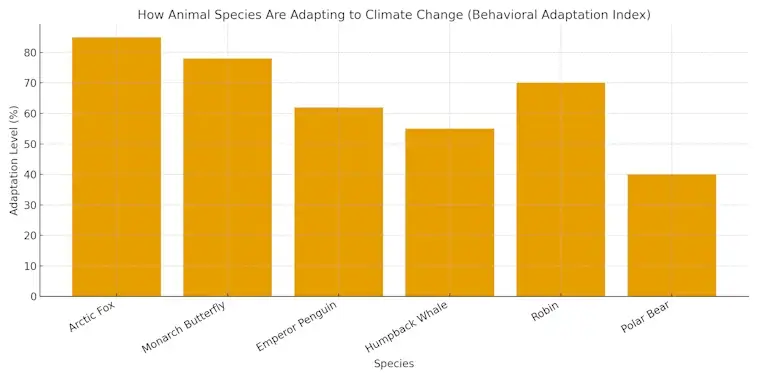
These changes show resilience, but they also reveal stress. When Robins arrive earlier in spring, their food sources might not be ready yet. Penguins face melting breeding grounds. And Polar Bears, losing sea ice, are spending more time on land—sometimes too close to people.
Animals are adapting, but adaptation has limits. The real question is whether these shifts can keep pace with the speed of climate change.
What Changing Routes Mean for Ecosystems and People Alike
As the planet warms, animals are on the move. Birds, fish, insects, and even large mammals are changing their routes, arriving earlier, leaving later, or skipping traditional paths entirely. These shifts in migration might sound small, but they have big ripple effects — not only for ecosystems, but also for people who depend on them.
When species move to new areas, they don’t travel alone. They bring competition, predators, and sometimes disease. A bird that once fed in the wetlands of one region may now stop hundreds of miles away, changing local food chains. Fishermen notice different catches. Farmers see new insects in their fields. Communities that have relied on predictable seasons start to face uncertainty.
Understanding Shifts in Migration Patterns
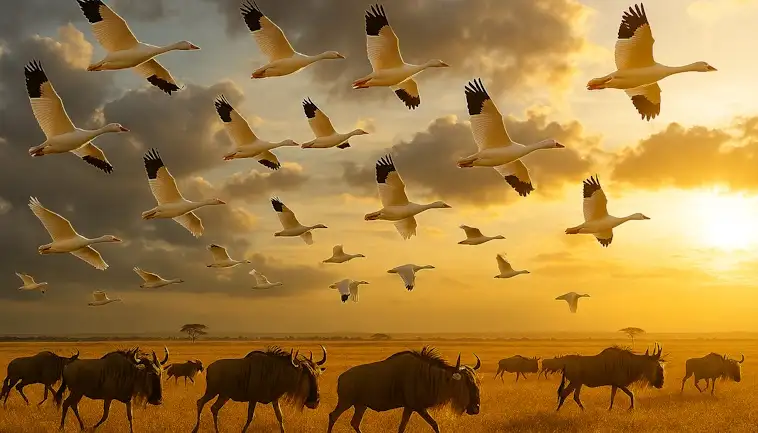
The phrase “migration patterns” often brings to mind a line of geese crossing the sky or herds of wildebeest thundering across the plains. But today, these patterns are breaking apart. Climate change, habitat loss, and pollution are forcing animals to adapt faster than ever before.
Some species follow cooler temperatures north, while others head for higher ground. Others fail to move at all and struggle to survive. Scientists are tracking these shifts with GPS tags and satellite imagery, but nature isn’t waiting for us to catch up.
These changes also affect people. Coastal communities might see fewer fish, while inland areas could face overgrazing or new invasive species. Tourism, agriculture, and even local traditions are being reshaped by animal movement.
As migration routes evolve, it’s a reminder that ecosystems are deeply connected. What happens to one species eventually reaches us all. The challenge now is learning to live alongside these changes — protecting wildlife while preparing our own communities for a shifting natural world.
The Future of Migration: What a Warming World Demands from Us
As our planet warms, wildlife is rewriting the rules of migration. From birds arriving earlier to whales traveling farther, these shifts are silent signals of a world in flux. Each disrupted pattern is a reminder that climate change isn’t a distant threat—it’s happening now, reshaping ecosystems we depend on.
The good news is, we’re not powerless. By supporting conservation efforts, reducing our carbon footprint, and protecting vital habitats, we can help wildlife adapt and survive. Small actions—like choosing sustainable products or backing organizations that preserve migration corridors—add up.
If you care about the natural balance that keeps our planet thriving, now is the time to act. Let’s make sure the story of migration in a warming world is one of resilience, not loss.