

Why Green Corridors Could Transform Cities and Our Lives
Green Corridors: A Smarter Path to Healthier, Cooler and More Connected Cities
Cities are changing fast, and green corridors are starting to shape that shift. These connected stretches of trees, parks and pathways can soften hardscapes, ease daily stress and open up routes that feel calmer and safer. As more areas face heat, noise and congestion, the idea of weaving nature directly into the urban grid is gaining real momentum.
More planners are now looking ahead and asking how these natural networks could support healthier routines, cleaner air and smoother travel. The potential is huge. With the right design and long-term thinking, these leafy routes could help neighbourhoods feel more alive, more resilient and far better prepared for the future.
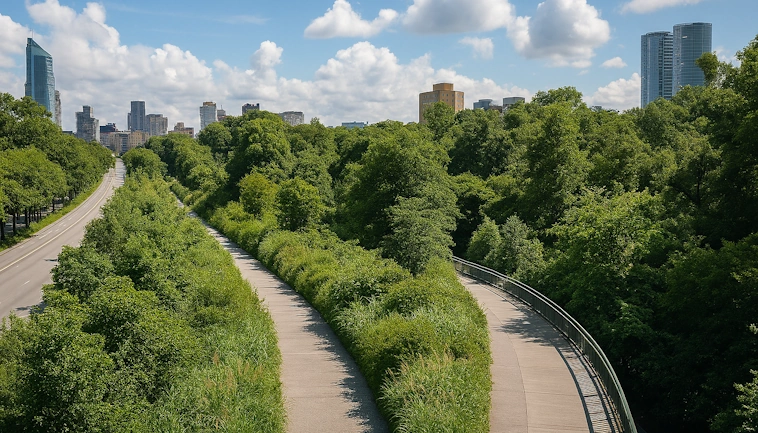
How Green Corridors Create Healthier, More Walkable Neighbourhoods
Green corridors are changing the way many cities breathe, move, and grow. They link parks, tree-lined streets, and small pockets of nature into one connected network. And because they weave through everyday spaces, they shape how people feel as they walk, cycle, or simply step outside.
When these natural routes appear, the whole neighbourhood shifts. Air feels cleaner. Streets feel calmer. People slow down a little. It’s the kind of change you notice without trying.
As cities become denser, these leafy pathways offer a clear way forward. They help reduce stress and noise. They also make it easier—and more appealing—to choose walking over driving. And that simple shift can have a huge impact on health, community, and climate.
A Small Change That Creates Big Ripple Effects
One of the most powerful things about green corridors is their subtlety. You don’t have to plan a long walk to enjoy them. You experience them on your way to the store, the bus stop, or a friend’s house. With more shade and softer scenery, short walks no longer feel like chores. Instead, they become small breaks in your day.
These corridors also boost social connection. People tend to linger in pleasant spaces. They chat. They rest. They feel part of something. Over time, the neighbourhood becomes more active and welcoming.
And here’s the exciting part: green corridors often spark further improvements. Once communities see the benefits, they push for even safer crossings, wider sidewalks, and more plant-rich spaces. One change leads to another.
In the long run, these natural pathways do more than support healthy living. They build urban resilience. They help cities adapt to heat, pollution, and rapid growth. And because they’re simple to enjoy, they encourage daily habits that benefit everyone.
If cities want cleaner air, stronger communities, and more walkable neighbourhoods, green corridors are one of the easiest and most refreshing ways to get there.
The Unexpected Economic Boost Behind Greener Urban Design
Cities are changing fast. As more people move into urban areas, leaders are searching for smart ways to build healthier and more resilient communities. What often surprises people, though, is that greener design doesn’t just make cities prettier or more pleasant. It can actually give local economies a noticeable lift.
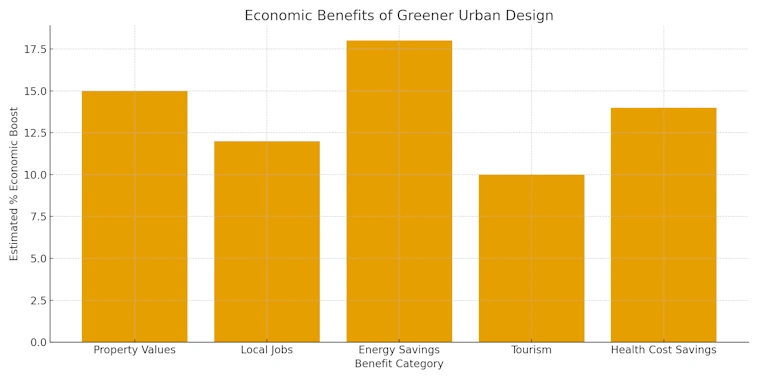
When neighborhoods add more trees, wider sidewalks, and energy-efficient buildings, the financial returns start to stack up. Property values tend to rise. Local businesses see more foot traffic. Even tourism picks up because visitors enjoy exploring greener spaces. And as energy use drops, cities save money. So the shift toward greener design isn’t only about the environment. It’s also about creating long-term wealth.
Because this push is still growing, the economic upside is likely to expand in the years ahead. As cities invest in green infrastructure, they often uncover new revenue streams and new jobs. And that means greener design could become one of the most reliable economic strategies of the decade.
Below is a chart that highlights several of the biggest economic benefits tied to greener urban development.
Why Green Corridors Could Reshape City Life in the Next Decade
Cities are changing fast, and many of us can feel it. Streets are getting busier. Summers are getting hotter. And the pressure on public spaces keeps rising. Yet there’s a simple idea gaining momentum that could transform how we live, move, and breathe in urban areas. It’s the rise of green corridors.
These linked networks of trees, parks, and planted pathways are showing up in city plans around the world. And as we look to the next decade, they may become one of the most impactful tools we have for creating healthier, calmer, and more resilient neighbourhoods.
Let’s explore why green corridors matter so much—and why they’re becoming a central part of future-focused urban design.
Green corridors can help reshape city life by:
- Cooling overheated streets through natural shade
- Making it easier to walk or cycle between key destinations
- Improving air quality by filtering harmful particles
- Supporting wildlife and pollinators in crowded cities
- Reducing noise from traffic and construction
- Offering daily access to nature without leaving town
- Boosting local property values and business appeal
- Encouraging social connection through shared public spaces
As cities plan for the next decade, green corridors offer a rare win-win. They support public health. They strengthen neighbourhood identity. And they help us adapt to a changing climate.
Most importantly, they make city life feel more human. When you step into a leafy path on a busy day, you instantly sense the difference. That feeling—of breathing easier, moving slower, and sharing a space that belongs to everyone—might be the real reason green corridors are set to define the future of urban living.
From Heat Islands to Cool Havens: The Climate Power of Urban Greenways
Cities heat up fast. You notice it on those bright summer days when the air feels heavy and the sidewalks seem to radiate warmth. But there’s a powerful, forward-looking solution taking root in many urban areas. It’s the rise of urban greenways—those long, leafy corridors that weave through neighborhoods.
These green paths do more than look good. They cool entire districts. Trees and plants block harsh sunlight. They release moisture that naturally lowers temperatures. Hard surfaces like asphalt and concrete heat up less when shaded. As a result, the surrounding air can feel noticeably cooler.
Greenways also change how people move through a city. They invite walking and cycling. They reduce traffic stress. And over time, they help clean the air. When cities add more of these green corridors, they begin to transform hot, dense neighborhoods into comfortable, climate-friendly havens.
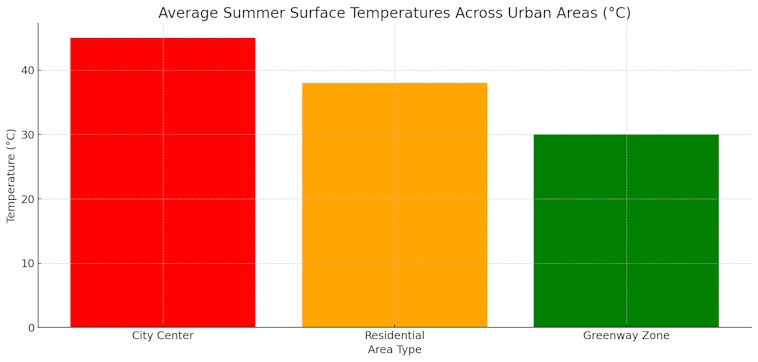
You can see this shift in the chart below. It shows how average summer surface temperatures often differ across city zones. Notice how greenway areas are consistently cooler. It’s a simple visual reminder of just how much power a stretch of trees can hold.
What It Takes to Build Connected, Nature-First Streetscapes
Creating streets that feel alive, welcoming, and resilient takes more than planting a few trees. It starts with a clear shift in how we design our cities. Today, people want places that support walking, cycling, and community life. They also want cleaner air, cooler neighborhoods, and more access to nature. When all of these needs come together, we get a streetscape that feels connected in every sense of the word.
A nature-first approach supports this shift. It blends green networks, human-focused design, and long-term planning. And as more cities look ahead, this approach is becoming a core part of climate-ready development. It’s not just a trend. It’s a practical path to healthier, more sustainable places.
Why Green Corridors Matter for Future-Ready Streets
Green corridors help stitch neighborhoods together. They create continuous routes for people, wildlife, and even airflow. Because of that, they improve mobility while easing urban heat. They also encourage walking by offering shade and a more pleasant experience.
Yet building them takes coordination. It means choosing the right plants, designing safe pathways, and making space for nature in areas long dominated by cars. It also means working with communities who understand their streets better than anyone. When all of these pieces align, green corridors become powerful tools for local wellbeing.
If you want to explore how cities are using similar ideas at scale, this overview from the Biophilic Cities Network offers useful case studies.
By taking steady, thoughtful steps, any city can move toward connected, nature-first streets that improve daily life while preparing for the future.
Why Green Corridors Matter More Than Ever
As cities grow and heatwaves, traffic, and pollution rise, green corridors offer a way forward. They connect neighborhoods, cool overheated streets, and create pockets of nature where people can breathe easier. They also give wildlife safe passage and help restore balance in places where concrete usually wins.
When communities invest in green corridors, they aren’t just planting trees. They’re shaping healthier, calmer, and more resilient cities. And as more planners embrace this approach, we’ll likely see these living pathways become a standard feature of urban design.
If we want cities that support our well-being rather than drain it, green corridors point the way. They show how nature and urban life can work together—and how small shifts in planning can spark big change.