
What Really Causes Coastal Erosion?
The Real Causes of Coastal Erosion—and Why It’s Getting Worse
Coastal erosion isn’t just a problem for faraway beaches. It’s happening quietly all around us — reshaping coastlines, swallowing land, and threatening homes, habitats, and livelihoods. Every year, stronger storms and rising seas chip away a little more of what we once thought was permanent.
While it’s easy to blame the ocean, the truth runs deeper. Natural forces like wind, tides, and currents all play a part, but human activity often makes things worse. Seawalls, construction, and sand mining can speed up erosion instead of stopping it. Add in climate change and melting ice sheets, and coastlines are under pressure like never before.
Understanding what really drives erosion is the first step toward protecting our shores. With smarter planning, restored ecosystems, and more respect for nature’s balance, we can start turning the tide.
The Natural Forces Behind Coastal Erosion
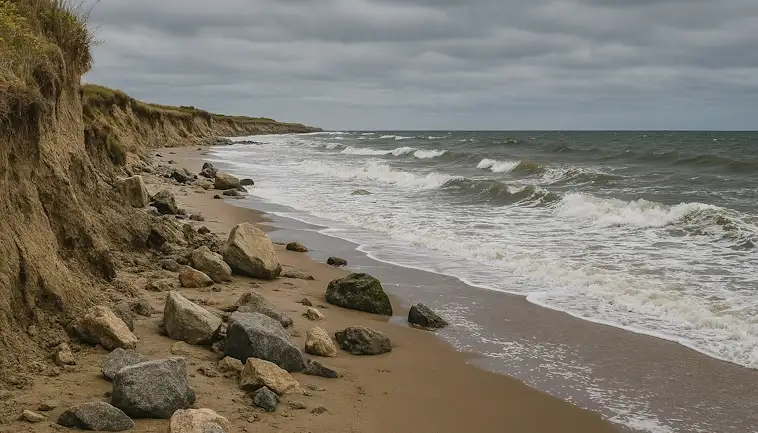
If you’ve ever walked along a beach and noticed how the shoreline looks slightly different each year, you’ve witnessed coastal erosion in action. It’s nature’s quiet sculptor—always reshaping, always moving. Wind, waves, and tides work together in a slow but powerful dance that changes the face of our coasts over time.
This process isn’t sudden or dramatic, at least not most of the time. Instead, it happens bit by bit. Grains of sand shift, cliffs crumble, and beaches retreat. And even though we often think of erosion as damage, it’s actually a natural part of how our planet evolves.
The Constant Tug-of-War Between Land and Sea
Waves are the real workhorses here. Each crash and retreat pulls a little more material away from the land. Strong storms speed things up, stripping beaches in days that took decades to form. Then there’s the wind—it moves sand across dunes, reshaping the coastline even on calm days.
Tides play their part too. As the water level rises and falls, it exposes and submerges parts of the shore. Over years, this cycle can carve cliffs, form coves, and shift barrier islands. Together, these forces keep our coastlines in a state of constant change.
Understanding these natural dynamics helps us prepare for what’s coming. With rising sea levels and stronger storms, the effects of coastal erosion are expected to accelerate. Protecting our shores starts with learning how nature itself shapes them.
To explore how communities are responding to erosion and climate change, you can read more at NOAA’s Coastal Management Office.
Human Activities That Accelerate Shoreline Loss
When we think about disappearing shorelines, it’s easy to blame nature—storms, rising seas, or shifting tides. But the truth is, human activity often plays a much bigger role. From building coastal resorts to dredging rivers, our actions can quietly speed up the erosion that reshapes coastlines around the world.
Every new construction project along the coast changes how waves hit the shore. Dredging removes sand that naturally protects beaches. Even deforestation inland can increase sediment runoff, which chokes coastal ecosystems. Together, these activities weaken natural defenses and make our shorelines crumble faster than ever.
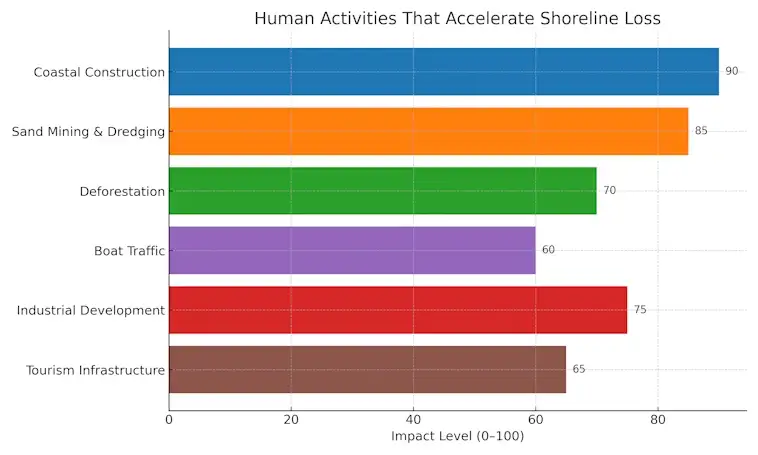
If we continue on this path, the damage won’t just affect beaches. It will threaten homes, tourism, and the livelihoods of millions who depend on healthy coastal zones.
It’s time to rethink how we interact with our coasts — because every pier, dredger, and hotel built on the sand leaves a lasting mark.
Climate Change and Rising Seas: The Modern Threat
Coastal erosion isn’t just a distant environmental issue anymore — it’s happening right now, and faster than ever. For decades, waves and wind slowly shaped our coastlines. But today, global warming is turning that natural process into a crisis. Rising seas, stronger storms, and melting ice are teaming up to strip away beaches, flood homes, and threaten entire communities.
Think about it — coastlines that took centuries to form are disappearing in just a few decades. Warmer oceans expand and push water higher onto the shore. At the same time, melting glaciers add even more water to the mix. The result? Erosion is speeding up in ways scientists have never seen before.
Here’s why coastal erosion has become such an urgent problem:
- Rising sea levels are swallowing shorelines and forcing people to move inland.
- Stronger storms and hurricanes now hit with more energy, tearing apart dunes and sea walls.
- Loss of natural buffers like mangroves and wetlands leaves coastlines exposed.
- Human activity, from construction to sand mining, weakens natural defenses even more.
- Economic damage is climbing fast, with billions lost each year to property destruction and tourism decline.
Communities around the world are already fighting back — building barriers, restoring wetlands, and rethinking how close we live to the water. But it’s a race against time. As long as global temperatures keep rising, the sea will keep coming.
The challenge now is not just to protect our coastlines, but to plan for a future where erosion doesn’t mean loss — it means adaptation. We need to build smarter, live sustainably, and value the fragile edges of our planet.
For an in-depth look at how sea level rise is reshaping coastlines worldwide, visit NASA’s Climate Change: Vital Signs of the Planet.
How Coastal Ecosystems Help Defend Our Shores
When we think of coastal protection, we often imagine sea walls or concrete barriers. But nature has its own powerful defense system that’s been working quietly for centuries. Coastal ecosystems like dunes, mangroves, and coral reefs act as natural shields, softening the impact of waves, storms, and even rising sea levels.
Sand dunes are our first line of defense. They may look fragile, but these wind-built mounds are strong barriers against coastal erosion. Dunes absorb wave energy, protecting the land and properties behind them. Healthy vegetation helps keep them stable, anchoring the sand in place.
Mangroves are another unsung hero. These tangled-root trees grow in salty coastal waters, slowing waves and trapping sediments. During storms, they reduce flooding and protect coastal communities. In fact, studies show mangroves can reduce wave energy by up to 66% over short distances.
And then there are coral reefs, nature’s underwater breakwaters. Reefs reduce wave strength before it reaches the shore, protecting coastlines from erosion and storm surge. They also support marine life, which helps sustain fishing and tourism industries.
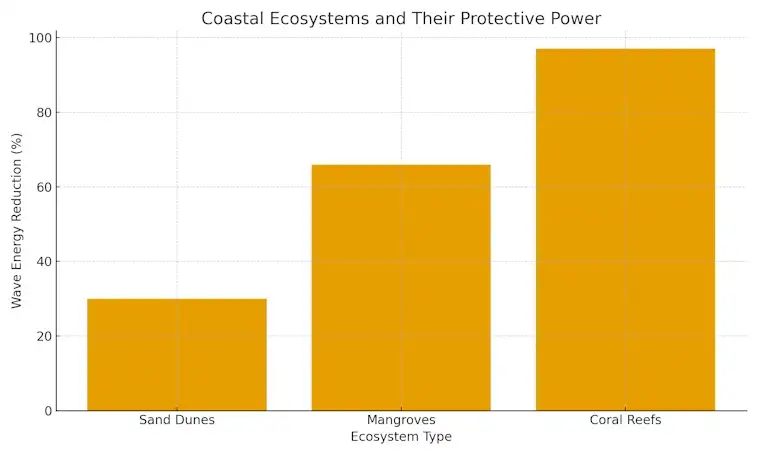
Together, dunes, mangroves, and reefs form a natural network that protects millions of people living along the world’s coasts. Unlike man-made barriers, these ecosystems also restore themselves, providing long-term resilience against climate change.
Can We Stop Erosion? Smart Solutions for the Future
Coastal erosion isn’t just a distant worry anymore—it’s happening right now, right along our beaches, dunes, and riverbanks. Rising sea levels, stronger storms, and human development are reshaping coastlines faster than nature can recover. But here’s the good news: we’re not helpless. Across the world, people are finding smart, sustainable ways to protect vulnerable coastlines while letting nature do some of the work too.
Coastal Erosion: Building with Nature, Not Against It
One of the most forward-thinking shifts in recent years is the move away from heavy concrete seawalls and toward nature-based solutions. Instead of trying to fight the ocean, many coastal communities are working with it. Living shorelines—made from native plants, oyster reefs, and sand dunes—help absorb wave energy and prevent erosion naturally. They don’t just hold the line; they also create habitats for fish, birds, and other wildlife.
In the Netherlands, engineers and ecologists teamed up to create “The Sand Motor”, a massive man-made sandbar that allows wind and waves to naturally distribute sand along the coast. It’s a brilliant example of how innovation and ecology can meet halfway.
But technology plays a key role too. AI-driven mapping tools now help scientists predict erosion hot spots before disaster strikes. And new eco-friendly materials are making coastal barriers stronger and more adaptable.
Protecting our coastlines will take more than walls and wishful thinking—it’ll take creativity, cooperation, and the courage to rethink how we live with water. The tides may be rising, but so is our ability to adapt.
Turning the Tide: Protecting Our Shores Starts With Us
Coastal erosion isn’t just a natural process — it’s a wake-up call. While wind, waves, and rising sea levels shape our coastlines, human activity often speeds up the damage. From reckless construction to the loss of vital wetlands, our choices are reshaping the very land that protects us.
But here’s the good news: it’s not too late to act. By supporting sustainable coastal management, restoring dunes and mangroves, and rethinking how we build near the water, we can help nature do what it does best — protect and renew itself.
If you live near the coast, get involved in local conservation efforts or learn more about how your community is responding to rising seas. Every action, no matter how small, helps slow the tide of destruction.