
Wetland Restoration Is Nature’s Hidden Superpower
Wetland Restoration Is Nature’s Hidden Superpower
Wetland Restoration is one of the most effective ways to fight climate change and protect biodiversity. These vital ecosystems act as natural sponges, soaking up floodwaters, storing carbon, and filtering pollution before it reaches rivers and oceans. They also provide critical habitats for countless species, from migratory birds to freshwater fish. Restoring wetlands doesn’t just bring back wildlife—it also strengthens communities by reducing storm damage and improving water quality. When given the chance to recover, wetlands prove that nature has its own powerful solutions to the challenges we face.

Wetland Restoration: Why It’s More Important Than Ever
Wetlands are often called nature’s kidneys. They filter water, store carbon, and provide a safe home for countless species. Yet, for decades, we drained and destroyed them to make way for farms, cities, and roads. Now, the impact is catching up with us.
Today, wetland restoration is more than an environmental project—it’s a survival strategy. Rising seas, stronger storms, and worsening droughts are all reminders that we need natural defenses. Wetlands act like sponges, soaking up floodwaters and slowing erosion. Without them, our communities are far more exposed.
A Hidden Climate Solution
What many people don’t realize is that wetlands also lock away massive amounts of carbon. Restoring even small areas can help fight climate change. Plus, healthy wetlands bring back birds, fish, and plants that have quietly vanished from our landscapes.
Think of wetlands as life support systems. When they thrive, we thrive. Restoring them means cleaner water, richer soil, more wildlife, and safer towns. The best part? These benefits last for generations.
The time to restore wetlands isn’t tomorrow. It’s today. By protecting and rebuilding these ecosystems, we’re investing in a healthier, safer future for everyone.
The Secret Role Wetlands Play in Protecting Communities
When most people think about wetlands, they picture swamps or marshes that seem untouched and quiet. But these natural landscapes are working harder for us than we realize. Wetlands are nature’s hidden shield, quietly protecting our homes, health, and even our future.
They act like giant sponges during heavy rains, soaking up excess water and reducing flooding. They filter out pollution, keeping drinking water cleaner and safer. They also store carbon, helping slow down climate change. On top of that, wetlands provide food, habitat for wildlife, and even outdoor spaces that boost tourism and recreation.
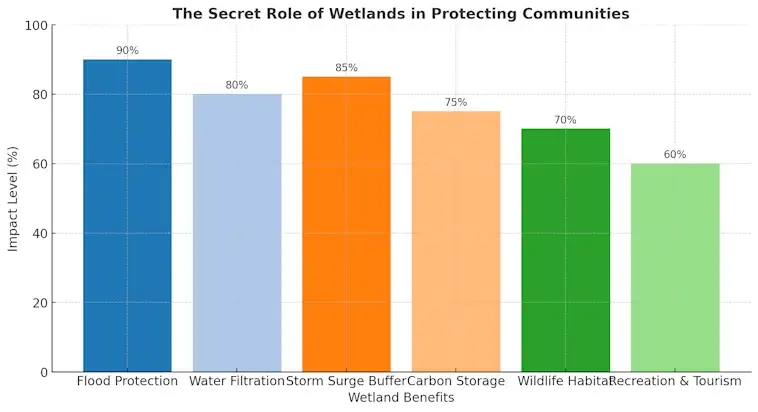
In other words, wetlands are not just pretty places. They are life-saving ecosystems that protect communities in ways we often overlook. Investing in their protection isn’t just good for the environment—it’s good for us all.
How Wetland Restoration Helps Fight Climate Change
When you think about climate change solutions, you probably picture solar panels or electric cars. But there’s another quiet hero in this fight—wetlands. These natural landscapes don’t always get the attention they deserve, yet they play a powerful role in protecting our planet.
Wetlands act like Earth’s kidneys, cleaning water, storing carbon, and buffering us from extreme weather. By restoring them, we unlock nature’s own toolkit for slowing global warming and building resilience.
Here’s how wetland restoration makes a difference:
- Captures carbon naturally — Wetlands store massive amounts of carbon in their soils, keeping it out of the atmosphere.
- Reduces flooding risks — They soak up stormwater like a sponge, protecting communities from extreme rainfall and rising seas.
- Supports biodiversity — Wetlands provide a home for countless plants, birds, and fish, which keeps ecosystems strong and balanced.
- Improves water quality — They filter out pollutants before they reach rivers, lakes, and oceans.
- Strengthens climate resilience — Healthy wetlands help us adapt to hotter summers, stronger storms, and shifting rainfall patterns.
Restoring wetlands isn’t just about saving nature. It’s about creating a safer, healthier, and more sustainable future for people too. Each acre we bring back to life is an investment in our climate resilience.
Biodiversity Boost: Why Wildlife Thrives in Restored Wetlands
When wetlands are restored, nature responds in remarkable ways. These ecosystems act like nurseries for life, providing food, shelter, and safe breeding grounds for countless species. Once thought of as wasted land, wetlands are now recognized as biodiversity hotspots.
Think about it: birds return in greater numbers, amphibians find the perfect habitat, and fish thrive in cleaner waters. Even plants and insects flourish, creating a ripple effect that strengthens the entire ecosystem. Restored wetlands don’t just bounce back; they often come back stronger, hosting more life than before.
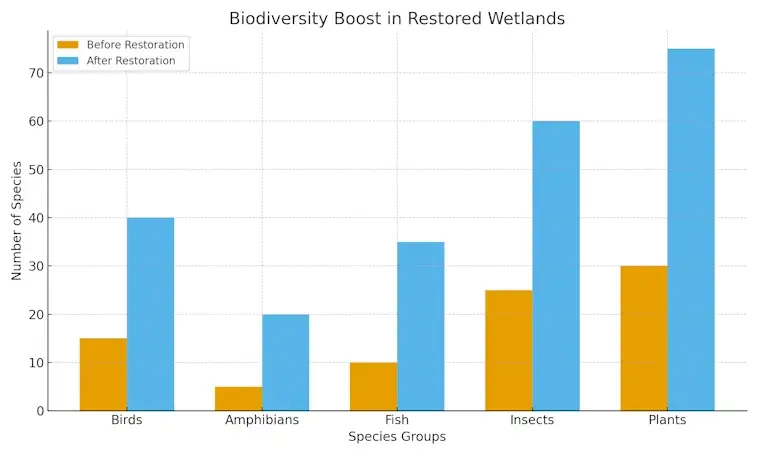
What’s exciting is how quickly wildlife responds. Within just a few years, species counts can double—or even triple. This is a powerful reminder that when we give nature space, it rewards us with balance, resilience, and beauty.
Looking Ahead: The Future of Wetland Conservation and Protection
Wetlands are some of the most valuable ecosystems on our planet. They filter water, store carbon, and protect us from floods. Yet, many are shrinking faster than we can save them. Looking ahead, the future of wetland conservation and protection will depend on the choices we make today.
The good news is that awareness is growing. Communities, governments, and everyday people are beginning to understand that wetlands are not wasted land. They are living, breathing systems that support both nature and human life. Protecting them means protecting ourselves.
Why Wetland Restoration Matters
One of the most promising steps forward is wetland restoration. This process doesn’t just repair damaged areas. It brings back natural balance, improves biodiversity, and creates a stronger shield against climate change. Imagine degraded marshes turning green again, full of birds, fish, and native plants. That’s the kind of future we can build with consistent effort.
Technology will also play a bigger role. Drones, satellite mapping, and AI are helping scientists track wetland health in real time. At the same time, local communities are leading grassroots projects, proving that small actions can add up to big change.
The future of wetland conservation is not fixed—it’s open. With smart policies, stronger education, and collective action, we can turn the tide. Saving wetlands isn’t only about preserving nature. It’s about creating a safer, healthier world for generations to come.
Restoring Wetlands, Restoring Our Future
Wetland restoration isn’t just an environmental project—it’s a smart investment in our planet’s health and our own well-being. These overlooked ecosystems clean our water, buffer us from floods, capture carbon, and create thriving habitats for countless species. By protecting and restoring wetlands, we’re not only giving nature a chance to heal but also building a safer and more resilient future for ourselves.
The next step is simple: stay informed, support local restoration efforts, and share the importance of wetlands with others. Every voice and every action counts. Together, we can unlock the hidden superpower of wetlands and make sure their benefits last for generations.
Explore restoration projects near you, get involved with community initiatives, or help spread awareness online. Change begins with awareness—and it grows with action.