

How Weather Shifts Impact Farming and Food Supply
How Weather Shifts Are Changing Farming and Food
For centuries, farming relied on one crucial element: predictability. Farmers could count on steady rainfall, consistent seasons, and reliable frost dates to plan their crops and raise their livestock. But today, weather patterns are changing. Droughts are hitting regions that once had plenty of water. Storms are growing stronger. And temperatures are swinging to extremes.
These shifts are not just inconveniences for farmers. They’re reshaping global food production, driving up prices, and raising tough questions about how we’ll feed a growing population.
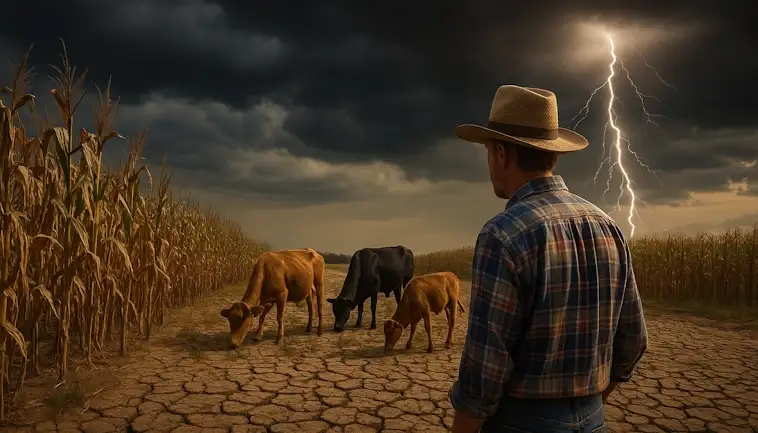
The New Weather Patterns Farmers Face
Around the globe, farmers are seeing patterns that feel less like seasonal fluctuations and more like a new normal.
- More frequent droughts: In 2022, parts of Europe faced their worst drought in 500 years, slashing corn and soybean yields by over 20%. In the U.S., California—responsible for a third of the nation’s vegetables and two-thirds of its fruits and nuts—faced a multi-year drought that cost farmers billions.
- Unpredictable rainfall and floods: East Africa, after years of drought, experienced heavy flooding in 2024, which destroyed crops, drowned livestock, and displaced thousands.
- Changing growing seasons: In Canada, warmer temperatures have extended the growing season by weeks in some areas, but unexpected frosts have destroyed early plantings.
- Stronger storms: Hurricane Ian (2022) wiped out citrus groves across Florida, causing orange juice prices to soar by over 40%.
These disruptions are not isolated. They’re happening more frequently and on a larger scale, making farming riskier and less predictable.
How Weather Shifts Affect Crops
Crops—our primary food source—are incredibly vulnerable to extreme weather. Even minor temperature or rainfall changes can have major impacts.
1. Lower Yields for Staples
Wheat, corn, and rice—the backbone of global diets—are especially at risk. The United Nations Food and Agriculture Organization (FAO) estimates that global wheat yields could drop by up to 6% for every 1°C of warming. During the 2023 European heatwave, wheat production in France and Spain fell sharply, driving up bread and pasta prices across the continent.
2. Sudden Crop Failures
In 2022, extreme flooding in Pakistan submerged a third of the country, destroying millions of acres of farmland. This disaster didn’t just hurt Pakistan; it disrupted rice and cotton exports, raising prices worldwide.
3. Pests and Plant Diseases on the Move
Warmer temperatures allow pests like locusts and fungi to thrive in areas where they were once controlled by cold winters. The 2020 East African locust invasion, worsened by unusual weather, devastated crops and caused a food crisis for over 20 million people.
4. Rising Costs for Farmers (and Consumers)
To survive, farmers are turning to drought-resistant seeds, precision irrigation, and greenhouses. These solutions help stabilize production, but they’re expensive, meaning food prices rise to cover costs.
The Ripple Effect on Livestock and Dairy
Animals feel the impact of weather shifts just as much as plants.
- Heat Stress: Dairy cows produce up to 25% less milk during heatwaves, according to the University of Florida. Poultry farms also report higher death rates during extended heat events.
- Feed Shortages: When crops fail, feed becomes scarce and costly. In 2023, Argentine cattle ranchers culled herds due to drought-driven feed shortages, pushing beef prices up by over 50% domestically.
- Higher Consumer Prices: These added costs—less milk, pricier feed, and lost livestock—lead to rising prices for staples like meat, cheese, and eggs.
How Food Supply Chains Feel the Impact
What starts in a field or barn quickly spreads to supermarket shelves.
1. Higher Grocery Prices
Food prices have been rising globally for years. The World Bank reports that extreme weather events now account for nearly 30% of global food price volatility. A single drought in a key producing region can ripple through global grain, meat, and dairy markets.
2. Export Restrictions and Shortages
In 2022, India—one of the world’s largest wheat exporters—banned exports after a heatwave destroyed much of its crop. This drove global wheat prices up by nearly 60% in a matter of weeks.
3. Small Farms vs. Industrial Giants
Large-scale farms with access to technology and capital can weather disruptions better, but smaller farms—especially in developing countries—often face bankruptcy. This imbalance threatens to further concentrate food production in the hands of a few big players.
How Farmers Are Adapting (and How We Can Help)
Despite these challenges, the agricultural world isn’t standing still. Farmers, researchers, and innovators are finding new ways to keep food production steady.
- Regenerative Agriculture: Practices like cover cropping, no-till farming, and rotating crops help soil retain water and nutrients, making farms more resilient to drought.
- Smart Irrigation and Precision Tech: Farmers in Israel, facing chronic water shortages, have adopted drip irrigation and AI-powered moisture sensors, cutting water use by up to 50%.
- Vertical Farming and Controlled Environments: Companies like AeroFarms are growing greens indoors using 95% less water, unaffected by drought or frost.
- Advanced Weather Forecasting: AI-driven tools now help predict weather shifts weeks in advance, letting farmers prepare for storms, droughts, or pests.
Consumers can also make a difference. Supporting local farms, reducing food waste, and buying from companies using sustainable practices all help create a more resilient food system.
Looking Ahead: The Future of Farming and Food Security
The future will bring more uncertainty. By 2050, the United Nations projects the global population will exceed 9.7 billion, requiring 50% more food production than today. At the same time, extreme weather events are expected to become more frequent and intense.
But there’s hope. Scientists are developing drought- and flood-tolerant crops, renewable-powered greenhouses, and even lab-grown meat to reduce pressure on traditional farms. Governments and businesses are also investing in climate-resilient infrastructure and sustainable farming programs.
The challenge is significant, but innovation and action can keep food supplies stable—even as the planet changes.
Conclusion
Weather shifts are no longer just a challenge for farmers. They’re a global issue affecting what we eat, how much we pay, and whether food systems can keep up with demand. Droughts, floods, and heatwaves are driving crop failures, livestock losses, and food price spikes worldwide.
The good news is that solutions exist. From smarter farming practices to cutting-edge technology, we can adapt. But it requires collective action—from governments, businesses, and consumers—to ensure that food remains accessible and affordable for all.