
Water Conservation and the Hidden Cost of Waste
Why Water Conservation Matters More Than Ever as Waste Drains Our Resources
Water conservation sits at the center of daily life, economic stability, and environmental health. Fresh water feels abundant when it flows from the tap, yet much of it is wasted long before it reaches homes and businesses. This quiet loss carries real costs, from higher utility bills to stressed rivers and shrinking reservoirs. As demand rises and climate patterns shift, the gap between supply and need continues to grow.
At the same time, waste often hides in plain sight. Leaking pipes, inefficient appliances, and outdated infrastructure drain millions of gallons each day. In agriculture and industry, small inefficiencies add up fast. As a result, communities pay more, ecosystems suffer, and future access becomes less certain. These impacts rarely make headlines, but they shape long-term water security in powerful ways.
Looking ahead, smarter choices offer a clear path forward. New technologies, better planning, and simple behavior changes can reduce waste without lowering quality of life. Water conservation is not about doing less. Instead, it is about using resources wisely, protecting shared systems, and building resilience for the years ahead. When waste is reduced, the benefits ripple outward, reaching households, local economies, and the natural world alike.
Water Conservation: Why Saving Water Matters More Than Ever
Water conservation is no longer a “nice to have.” It is a must. Around the world, clean water is becoming harder to find. Rivers are shrinking. Reservoirs are under pressure. And climate change is making rainfall less predictable.
At the same time, demand keeps rising. More people, cities, and food production. All of this relies on water. That is why water conservation matters more than ever before.
Most of us do not think about water until it is gone. We turn on the tap and expect it to flow. Yet behind that simple action is a complex system that is under stress. Saving water helps protect that system. It also protects our future.
Water conservation is about using water wisely. It means wasting less, and valuing every drop. And importantly, it means small actions adding up to big change.
When we conserve water, we help the environment. Wetlands stay healthy. Wildlife survives. Ecosystems remain balanced. At the same time, we reduce energy use. Treating and pumping water takes power. Less water used means less energy burned.
A Small Change Can Make a Big Splash
Here is the good news. You do not need to overhaul your life to make a difference. Shorter showers help. Fixing leaks helps even more. Choosing water-efficient appliances can save thousands of litres each year.
Water conservation also saves money. Lower water bills are an immediate benefit. Over time, communities save on infrastructure costs. That means fewer expensive upgrades and repairs.
Looking ahead, water conservation will become even more important. Drier seasons are expected in many regions. Extreme weather will strain supplies. Planning now gives us resilience later.
In short, water conservation is about responsibility and opportunity. It is about protecting a shared resource, and making smart choices today for a safer tomorrow. And it starts with awareness. Once we see the value of water, saving it becomes second nature.
The True Cost of Wasted Water You Never See on Your Bill
When you get your water bill, it feels simple. You see a number. You pay it. Then you move on.
But there is a hidden story behind that bill.
Every day, water is wasted before it ever reaches your tap. Pipes leak underground. Old systems fail quietly. Sprinklers run too long. Appliances use more water than they should. You never see these losses itemized, yet you still help pay for them.
So where does the cost show up?
It shows up in higher utility rates over time, shows up in taxes used to fix aging systems, and shows up in energy bills, since pumping and treating water takes power. And in the long run, it also shows up in water shortages that affect everyone.
In short, wasted water is not free. It just hides in places we are not looking.
The chart below highlights common sources of water waste and the estimated hidden costs they create each year. It helps explain why saving water is not just about the environment but also about protecting your wallet.
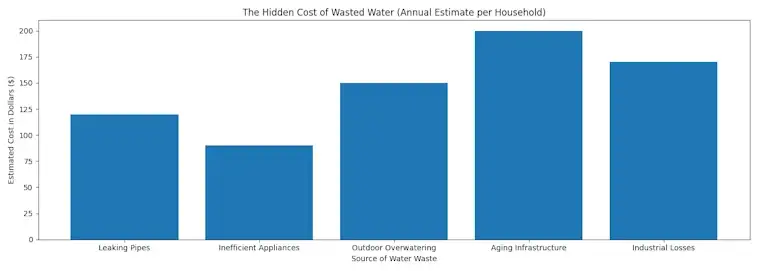
Reducing waste starts small. Fixing leaks. Choosing efficient appliances. Watering smarter. These simple steps add up. And over time, they can lower costs we all share, even the ones that never appear on the bill.
Water Conservation at Home and How Small Choices Add Up
Water conservation often sounds like a big global challenge. But in reality, it starts at home. Every drop you save today helps protect tomorrow’s supply. The good news is this. You do not need to change your entire lifestyle to make a real difference.
Small, daily choices add up faster than most people expect. When millions of households act together, the impact is powerful. Even better, many water-saving habits also reduce energy use and lower utility bills. That means water conservation benefits both the planet and your wallet.
At home, water is often wasted without notice. Leaky fixtures, long showers, and inefficient appliances quietly drain valuable resources. However, once you become aware, simple fixes feel easy and rewarding.
Here are practical ways to improve water conservation at home without sacrificing comfort.
- Fix leaks as soon as they appear. A dripping tap can waste thousands of liters each year.
- Turn off the tap while brushing your teeth or shaving. This one habit saves water every day.
- Run dishwashers and washing machines only with full loads. This reduces water use per cycle.
- Install low-flow showerheads and faucets. They use less water while keeping good pressure.
- Choose water-efficient appliances when upgrading. Look for high efficiency ratings.
- Water gardens early in the morning or late in the evening. This reduces evaporation.
- Collect rainwater for outdoor plants where allowed. It is free and effective.
Over time, these small actions become second nature. You may not notice the change day to day. Yet the long-term results are real and measurable. Less water wasted means more resilience during droughts and heatwaves.
Looking ahead, water conservation will only grow in importance. Climate patterns are shifting. Water demand is rising. Homes that adapt now will be better prepared for the future.
In the end, water conservation is not about doing everything perfectly. It is about doing something consistently. One small choice today leads to another tomorrow. And together, those choices truly add up.
How Water Waste Impacts Communities, Ecosystems, and Food Supply
Water waste may feel distant. However, its effects are close to home. Every drop lost creates a ripple that touches people, nature, and the food we depend on.
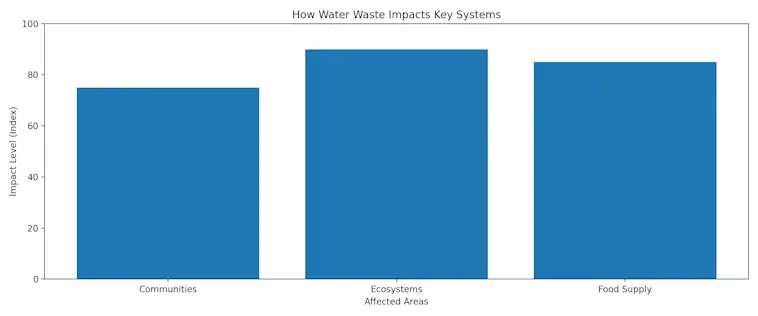
First, let’s talk about communities. When water is wasted, local supplies shrink. As a result, costs often rise. Families may face higher bills. In some areas, shortages become more common. This can strain public services and widen social gaps. Over time, trust in local systems can erode.
Next, consider ecosystems. Rivers, lakes, and wetlands need steady water levels to survive. When too much water is wasted upstream, habitats dry out. Fish populations decline. Plants disappear. This loss of balance can take years to repair. In many cases, it never fully recovers.
Then there is food supply. Agriculture uses more freshwater than any other sector. When water is wasted, less is available for crops. Yields drop. Food prices rise. Farmers face harder choices, and consumers feel the impact at the store. Looking ahead, this risk grows as climates become less predictable.
The good news is that awareness leads to action. By reducing water waste today, communities can build resilience. Ecosystems can recover. Food systems can remain stable. Small changes, made at scale, matter more than we think.
Looking Ahead: Smarter Water Use for a More Resilient Future
Water is becoming harder to predict. Droughts last longer. Heavy rain arrives all at once. Because of this, how we use water today matters more than ever. The good news is that smarter water use is no longer a distant idea. It is already taking shape in homes, cities, and businesses around the world.
Looking ahead, water efficiency will be about working with nature, not against it. Simple changes can make a real difference. Think low-flow fixtures, rainwater harvesting, and drought-tolerant landscaping. These steps save water without sacrificing comfort. At the same time, digital tools are helping utilities detect leaks faster and manage supply in real time. As a result, less water is wasted before it even reaches the tap.
Why Water Conservation Matters More Than Ever
Water conservation is also becoming a shared responsibility. Communities are learning that small actions add up. Shorter showers. Smarter irrigation schedules. Reusing water where it is safe to do so. Together, these habits reduce strain on rivers and groundwater. They also help protect water supplies during heatwaves and dry seasons, which are becoming more common.
At a larger scale, cities are planning for resilience. They are redesigning systems to store water when it is plentiful and conserve it when it is scarce. This forward-thinking approach supports both people and ecosystems. According to the World Resources Institute, many regions already face high water stress, and demand is expected to rise in the coming decades. Their research offers a clear picture of where action is most urgent.
In the end, smarter water use is about confidence in the future. It means knowing that clean water will still be there for families, farms, and cities. By acting now, we can build systems that bend, not break, under pressure. That is how resilience starts—one informed choice at a time.
The Future of Water Conservation Starts With What We Do Today
In the end, water conservation is not just about saving water. It is about understanding the real cost of wasting it. Every drop we lose carries hidden impacts, from higher energy use to stressed ecosystems and rising bills. These costs often stay out of sight, but they affect all of us, every day.
The good news is that change is within reach. Small choices matter. Fixing leaks, using water-efficient appliances, and being mindful outdoors can add up faster than most people expect. At the same time, cities, businesses, and policymakers have a chance to rethink how water is managed for the long term. When conservation becomes the norm, everyone benefits.
Looking ahead, water conservation will only grow in importance as populations rise and climate pressures increase. By acting now, we can protect a resource that supports our health, our food, and our future. More importantly, we can reduce waste before its hidden costs become impossible to ignore. The path forward is clear. Use water wisely today, and we help secure a more resilient tomorrow.