
Vanishing Wonders: Why Rare Species Matter More Than Ever
Some species slip quietly through the world, barely noticed. They’re rare—not because they’re unimportant, but because they’re hanging on by a thread. These creatures, plants, and organisms often live in places we rarely go, in numbers that are frighteningly small. Yet their survival matters more than many people realize.
Rare species tell us a lot about the health of ecosystems. They act as early warning signals, showing us where things might be going wrong. Protecting them can also help protect countless other forms of life.
Here’s why they deserve more attention:
- They often have unique roles in their ecosystems—like pollinating specific plants or keeping certain pests in check.
- Their rarity makes them vulnerable to sudden changes like deforestation, climate shifts, or pollution.
- Losing them can cause ripple effects, sometimes collapsing entire food chains.
- They carry hidden potential—for medicine, agriculture, or simply understanding how life adapts in extreme conditions.
- Conservation efforts for rare species can lead to protecting wider habitats, helping more common species at the same time.
Even the smallest population can play a big role. And often, once they’re gone, there’s no bringing them back.
Vanishing Wonders: Why Rare Species Matter More Than Ever
Why Rare Species Matter More Than You Think
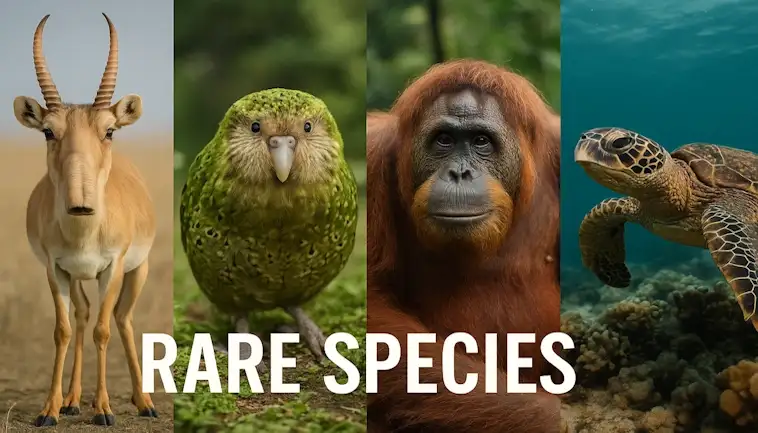
When most people think about rare animals, they imagine exotic birds in far-off jungles or strange deep-sea creatures that seem more like myths than reality. Rare species are often seen as beautiful curiosities, fascinating but not essential. But here’s the truth: rare species matter far more than many realize. In fact, they often hold ecosystems together in ways we’re only beginning to fully understand.
Why Rare Species Are More Than Just Beautiful
Rare species frequently play unique roles in their environments. Unlike common species that may be easily replaced if lost, rare species often perform very specific tasks that no other species can do.
Here’s how:
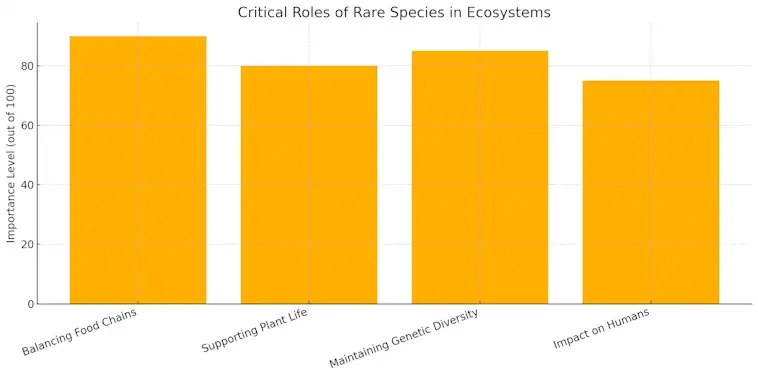
- Balancing Food Chains: Some rare predators control the populations of smaller animals. Without them, prey species can explode in numbers, leading to overgrazing, deforestation, and collapsed ecosystems.
- Supporting Plant Life: Certain rare pollinators, like specialized bees or bats, ensure that specific plants reproduce. These plants, in turn, support entire networks of other creatures.
- Maintaining Genetic Diversity: Rare species often carry unique genes that make ecosystems more resilient to diseases, climate changes, and other threats. They are like hidden insurance policies for nature’s survival.
Real-World Examples: What Happens When Rare Species Disappear
- Sea Otters in the Pacific Northwest: Once hunted nearly to extinction for their fur, sea otters play a critical role in maintaining kelp forest ecosystems. They eat sea urchins, which would otherwise devour entire kelp forests. Without otters, kelp forests die off, leaving fish and other marine life without shelter and food. Communities that rely on fishing also suffer.
- The Decline of Rare Amphibians: Frogs and salamanders, many of them rare, help control insect populations. Their loss has led to insect outbreaks in some areas, damaging crops and spreading diseases like malaria and West Nile virus.
- The Disappearance of the Mauritius Dodo: Though the dodo is famous for going extinct, fewer people realize its loss led to the near-extinction of the Tambalacoque tree, which relied on the bird to help its seeds germinate. When the dodo vanished, so did the tree’s ability to naturally reproduce, affecting an entire slice of the island’s ecosystem.
Why This Matters for the Future
As climate change, habitat destruction, and human expansion continue, rare species are often the first to be pushed out. Losing them isn’t just sad—it’s dangerous. Every rare species that disappears is like pulling a thread from a tapestry. Pull out enough, and the whole thing unravels.
But there’s hope. Conservation efforts that focus on protecting rare species can have huge ripple effects. Saving a rare bee might also save a whole field of flowers, dozens of bird species, and even crops that humans rely on. Protecting a rare predator could mean healthier forests and rivers.
Moving Forward: A New Way to Think About Rarity
Instead of seeing rare species as luxury items in nature’s museum, we should see them as vital parts of life’s machinery. Every rare creature or plant carries out work that keeps the world healthy, balanced, and beautiful.
And here’s the exciting part: by understanding and protecting rare species today, we’re not just saving nature. We’re investing in a more stable, richer, and more resilient future for ourselves too.
Rare Species You’ve Probably Never Heard Of
When people think of wildlife, lions, pandas, or elephants usually come to mind. But some of the most fascinating creatures on Earth are ones that most people have never even heard of. They live in hidden forests, remote mountains, and secret corners of the world, quietly carrying the magic of evolution in their genes.
Today, let’s step off the beaten path and meet some of nature’s best-kept secrets. These rare animals aren’t just oddities — they’re living proof of how strange, beautiful, and surprising life can be.
Meet the “Asian Unicorn” – The Saola
- Where it lives: The Annamite Mountains on the Laos-Vietnam border
- Why it’s amazing: The saola is so elusive that scientists have only ever spotted it a handful of times since its discovery in 1992.
- Quirky fact: Despite being called the “Asian Unicorn,” the saola actually has two sharp, parallel horns. It’s so secretive that locals call it the “polite animal” because it quietly slips away from humans without making a sound.
The saola’s ghost-like existence reminds us that even in the modern world, true mysteries still exist.
The Eternal Youth of the Axolotl
- Where it lives: A few lakes and canals near Mexico City
- Why it’s amazing: Axolotls never grow up — literally. Unlike other amphibians, they stay in their juvenile form their whole lives, complete with cute feathery gills and wide smiles.
- Quirky fact: They can regrow entire limbs, parts of their heart, and even parts of their brain! Scientists study axolotls hoping to one day unlock new ways to heal human injuries.
Sadly, wild axolotls are critically endangered, but they remain popular in labs and even as pets around the world.
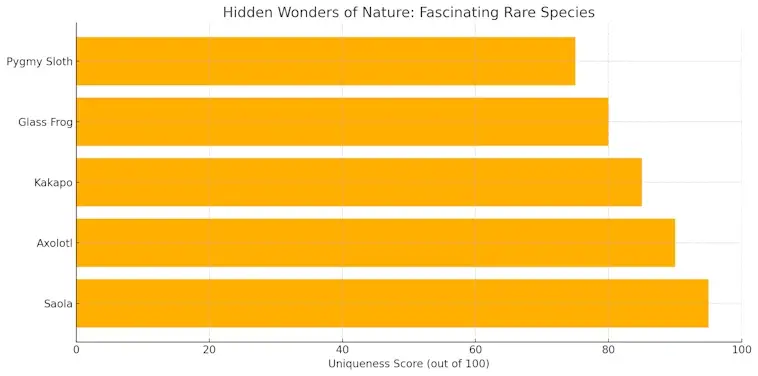
The Kakapo: The World’s Heaviest Parrot
- Where it lives: New Zealand
- Why it’s amazing: The kakapo is a flightless, nocturnal parrot that smells like sweet flowers and moss — perfect for blending into the forest.
- Quirky fact: These parrots are so trusting that early European settlers could easily pick them up. This friendliness sadly made them easy targets, pushing them to the brink of extinction.
Today, every living kakapo is tracked and cared for by conservationists. With fewer than 300 individuals, each one has a name and a profile — like VIPs of the bird world.
Why Discovering These Animals Matters
Learning about rare and hidden species isn’t just a fun curiosity. It sparks something deeper — a sense of wonder and responsibility. These animals are reminders that our planet is still full of surprises, and it’s up to us to protect them before they vanish into history.
There are hundreds of hidden creatures out there — from glass frogs that are nearly invisible to the pygmy sloth that lives on one tiny island. As scientists explore deeper forests and oceans, new species are still being discovered every year. Some might be as strange and magical as the saola or as charmingly awkward as the kakapo.
In a world that’s becoming increasingly mapped and measured, these rare animals offer something priceless: a chance to still be explorers, to still be amazed, and to remember that nature always has a few more secrets up its sleeve.
What’s Driving Them to the Brink?
Rare species often feel like nature’s hidden treasures — beautiful, mysterious, and precious. But their rarity isn’t just a lucky accident of evolution. It’s often a warning sign. Many rare species are hanging on by a thread, facing threats that grow more dangerous by the year.
Understanding these threats doesn’t just help us protect these creatures. It also helps us see how connected our lives are to distant forests, rivers, and mountains. The choices we make — even the small ones — ripple across the planet.
Major Threats Rare Species Face
Habitat Loss
- What’s happening: Every day, forests are cleared, wetlands drained, and oceans polluted to make room for farms, cities, and industries.
- Impact: When a habitat disappears, so do the rare species that depended on its unique conditions — like the Saola, which can only live in the misty forests of Southeast Asia.
- Real-world example: In Madagascar, deforestation for farming is wiping out rainforest homes for countless rare animals, including the tiny, wide-eyed mouse lemur.
Climate Change
- What’s happening: Rising temperatures, shifting rainfall patterns, and stronger storms are reshaping ecosystems faster than many species can adapt.
- Impact: Species with small ranges or very specific needs — like the axolotl, which relies on cool, clean water — are especially vulnerable.
- Real-world example: The polar bear is often seen as the face of climate change, but thousands of less famous animals, from rare alpine butterflies to tropical frogs, are also at risk.
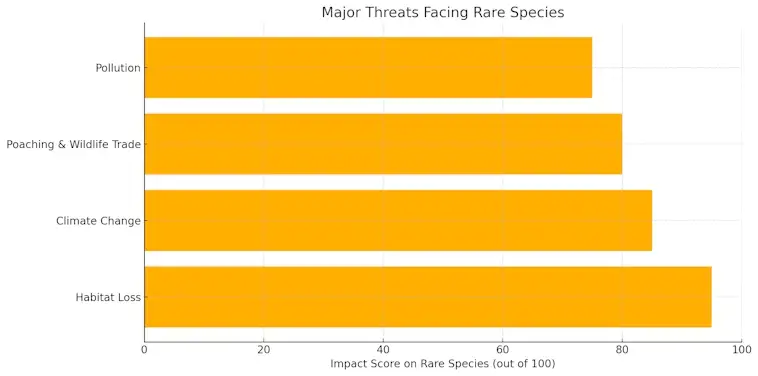
Poaching and Illegal Wildlife Trade
- What’s happening: Rare animals are often targeted by poachers for their horns, feathers, or even as exotic pets.
- Impact: Some species, like the critically endangered pangolin, are now the most heavily trafficked mammals in the world.
- Real-world example: The illegal pet trade is one reason the Kakapo, New Zealand’s flightless parrot, became so rare — people once captured them as oddities.
Pollution
- What’s happening: Chemicals from agriculture, plastic waste, and industrial runoff poison water, soil, and air.
- Impact: Rare aquatic species, like river dolphins and certain amphibians, are especially sensitive to pollution and often die off first.
- Real-world example: Microplastics have been found in the stomachs of deep-sea creatures that live thousands of meters below the surface — no part of the planet is untouched.
How Our Choices Matter
It’s easy to think that saving rare species is a job for scientists or governments. But individual choices create powerful ripple effects:
- Eating choices: Choosing sustainably sourced food helps prevent deforestation and ocean collapse.
- Buying choices: Avoiding products made from endangered species (like ivory or exotic pets) helps cut off demand at the root.
- Waste choices: Reducing plastic use and properly recycling keeps harmful waste out of faraway rivers and oceans.
- Supporting conservation: Even small donations or spreading awareness can help organizations that protect habitats and fight illegal wildlife trade.
A Race Against Time — But Not Without Hope
The good news? Nature is incredibly resilient when given the chance. Forests regrow. Animals rebound. Entire ecosystems can recover.
But we have to act now. Protecting rare species isn’t just about saving beautiful, unfamiliar animals. It’s about preserving the deep, unseen connections that keep our world healthy — including the air we breathe, the water we drink, and the climate we depend on.
Every small action, every smart choice, every voice raised for conservation makes a difference. Together, we can make sure future generations live in a world where rare species aren’t just stories in history books, but living wonders we can still discover.
How Conservation is Turning the Tide
It’s easy to feel overwhelmed by news about endangered animals and shrinking habitats. But here’s something we don’t hear enough: recovery is possible. Around the world, species once on the brink of extinction are making inspiring comebacks — thanks to the hard work of scientists, communities, and everyday people who refused to give up.
These success stories show that when we take action, even in small ways, we can turn things around. They’re proof that hope isn’t just a feeling — it’s something we can build, one project, one policy, one species at a time.
How We’re Helping Species Bounce Back
Captive Breeding and Reintroductions
- What it is: When animals’ numbers are dangerously low, scientists breed them in safe environments like zoos or sanctuaries. Once stable, they reintroduce these animals back into the wild.
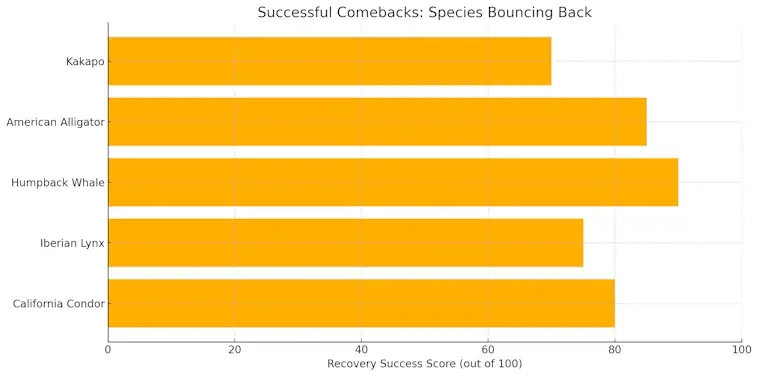
- Success story: The California condor. By the 1980s, only 27 of these massive birds were left. Today, thanks to captive breeding and release programs, there are over 500 condors, many soaring free over the American Southwest.
- Why it matters: It shows that even species with just a few individuals left can bounce back with the right support.
Habitat Restoration
- What it is: Rebuilding forests, wetlands, and other habitats so that rare species have a place to live and thrive again.
- Success story: The Iberian lynx. Once the rarest cat in the world, its population plummeted due to habitat loss and a crash in rabbit numbers (its main food source). Thanks to major efforts to restore its Mediterranean forests and boost rabbit populations, the lynx is now rebounding.
- Why it matters: Saving a species often means saving an entire ecosystem, which benefits countless other plants and animals — including humans.
International Cooperation
- What it is: Countries working together to protect migratory animals, stop illegal trade, and fund conservation efforts.
- Success story: The humpback whale. Devastated by decades of hunting, humpbacks were protected by international agreements banning commercial whaling. Today, their numbers have grown dramatically, with some populations increasing by more than 90%.
- Why it matters: Some problems are simply too big for one country to solve alone. When the world works together, massive recoveries are possible.
Why Your Support Matters
It’s tempting to think these successes are all about scientists or big organizations. But real change often starts with public pressure, small donations, volunteer efforts, and even simple awareness. Here’s how individuals help:
- Raising awareness: Talking about endangered species keeps them in the public eye — and on political agendas.
- Supporting ethical tourism and eco-friendly products: Money spent wisely can protect habitats instead of harming them.
- Backing conservation groups: Every dollar given to local conservation projects funds real work, from planting trees to protecting nesting sites.
Even sharing these stories spreads hope and encourages more people to get involved.
The challenges facing rare species are real. But so is the progress. Every successful comeback reminds us that extinction isn’t inevitable. With enough will, creativity, and cooperation, we can keep turning today’s endangered animals into tomorrow’s success stories.
And the best part? The next big comeback could happen because of choices and actions we make today.
How You Can Help, Even From Your Couch
When we hear about endangered species, it’s easy to feel powerless. After all, most of us aren’t scientists trekking through rainforests or lawmakers writing conservation policies. But here’s the truth: you don’t have to be an expert to make a real difference.
Everyday choices matter. In fact, the collective actions of regular people have already helped turn the tide for many species. And right now, there are simple steps anyone can take to support rare animals and the habitats they depend on.
Easy Ways to Help Protect Rare Species
Support Trusted Conservation Organizations
- Why it matters: Groups working on the ground — like the World Wildlife Fund, Rainforest Trust, or local wildlife centers — depend on public donations to run rescue programs, protect land, and fund scientific research.
- How to help: Even a small monthly donation can provide steady support. If money is tight, consider volunteering or promoting their work online.
Reduce Plastic Use
- Why it matters: Plastic pollution chokes rivers, oceans, and forests — harming rare aquatic animals like river dolphins and sea turtles.
- How to help: Carry a reusable water bottle, avoid single-use bags and straws, and recycle properly. Every piece of plastic avoided is one less threat in nature.
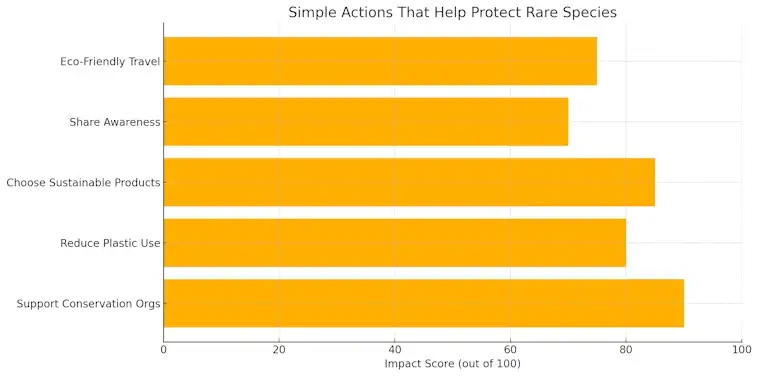
Choose Sustainable Food and Products
- Why it matters: Deforestation, overfishing, and harmful farming practices are major drivers of species loss.
- How to help: Look for certified sustainable labels like MSC (Marine Stewardship Council) for seafood or Rainforest Alliance for coffee and chocolate. Choosing local and seasonal foods also reduces environmental impact.
Share Stories and Spread Awareness
- Why it matters: Awareness drives change. The more people know about rare species and the challenges they face, the more support there is for solutions.
- How to help: Share articles, videos, or social media posts about rare species you find inspiring. Start conversations. Use your voice to build a ripple effect of care and action.
Make Wildlife-Friendly Choices When Traveling
- Why it matters: Tourism can either help or harm rare species depending on how it’s done.
- How to help: Choose eco-certified tours, avoid buying souvenirs made from wildlife parts, and respect nature reserves’ rules.
Every Action Adds Up
Change doesn’t always come from grand gestures. More often, it’s thousands of small, everyday actions that build into something powerful. Each reusable bag, each dollar donated, each person educated — it all counts.
Rare species aren’t just fighting for survival. They’re fighting for the incredible diversity and balance that keeps our planet alive and beautiful. And we have the chance, right now, to stand with them.
Because even small hands can make a big difference — especially when they’re part of something larger.
Conclusion
Rare species are not just distant curiosities or beautiful photographs. They are vital threads in the fabric of life on Earth — threads that keep ecosystems strong, resilient, and full of wonder.
Their survival is tied to our own. When we protect rare animals and plants, we protect clean air, fresh water, healthy soils, and rich biodiversity that supports all life, including ours.
The future of these remarkable creatures doesn’t rest only in the hands of scientists or conservationists. It belongs to anyone willing to care, to act, and to believe that even small efforts can ripple outward in powerful ways.
The world is still full of rare and remarkable life. And with the right choices, it’s a world we can help keep alive — not just for today, but for generations to come.
The time to act with hope and heart is now. Because every rare species saved is a promise kept to the living planet we all share.