

Why Forest Loss Is Rising and How It Impacts Us All
Why Forest Loss Is Rising and How It Impacts Us All
Forests are vanishing at an alarming rate. Across the globe, vast stretches of trees are being cleared for farming, development, and industry. This rapid forest loss is reshaping ecosystems, threatening wildlife, and fueling climate change.
What’s happening isn’t just a local issue—it affects every one of us. From the air we breathe to the food we grow, forests play a vital role in keeping our planet healthy. Understanding what’s behind this growing crisis is the first step toward finding real solutions.

What Is Driving Forest Loss Around the World?
Forests are disappearing at an alarming pace. Each year, millions of acres vanish due to a mix of human activity and natural pressures. Understanding what drives this loss is key to protecting these vital ecosystems.
Agriculture Is a Leading Cause
Expanding farmland is one of the biggest threats to forests. As the global population grows, so does the demand for food, livestock, and cash crops like palm oil and soy. To meet these needs, vast areas of forest are cleared for plantations and grazing. This process not only destroys trees but also disrupts wildlife habitats and accelerates climate change by releasing stored carbon.

Logging and Infrastructure Push Forests Back
Another major driver is logging, both legal and illegal. Timber for construction, paper, and fuel remains in high demand. In many regions, roads and infrastructure projects open remote areas to development, which often sparks even more deforestation. Once access is created, mining, settlements, and additional agriculture often follow.
Beyond human-driven causes, climate change is compounding the problem. Rising temperatures and shifting weather patterns fuel wildfires and pest outbreaks, which weaken forests. When these events strike areas already under pressure from development, the damage is even greater.
If forest loss continues at the current rate, the consequences will ripple far beyond local communities. Global biodiversity, water cycles, and even the air we breathe are at risk. By understanding the forces behind deforestation, we can start finding solutions—before it’s too late.
How Forest Loss Impacts Climate and Communities
When forests disappear, the effects go far beyond the trees themselves. The impacts stretch from local villages to the global climate system. Understanding these connections helps us see why protecting forests matters for everyone.
Forests Help Regulate the Planet’s Climate
Forests act like giant carbon sponges. They absorb carbon dioxide from the air, slowing down global warming. When trees are cut or burned, that stored carbon is released, adding to the greenhouse gases driving climate change. Losing large areas of forest speeds up warming, which can trigger more extreme weather, rising seas, and droughts.
Forests also help balance rainfall patterns. Without them, some regions face floods while others suffer long dry spells. This creates a cycle where communities struggle to farm, and ecosystems struggle to recover.

Communities Lose More Than Trees
For millions of people, forests are more than nature—they are home, food source, and income. Indigenous communities, in particular, rely on forests for hunting, farming, and medicine. When forests are cleared, these groups often lose their way of life.
Deforestation also increases the risk of disasters. Without tree cover, soil erodes faster, rivers flood more easily, and local water supplies dry up. These impacts can force families to migrate, disrupt economies, and spark conflicts over land and resources.
Protecting forests isn’t just about saving nature—it’s about safeguarding our future. By understanding the role forests play in climate stability and human well-being, we can make smarter choices about how land is used and preserved.
The Link Between Forest Loss and Biodiversity Decline
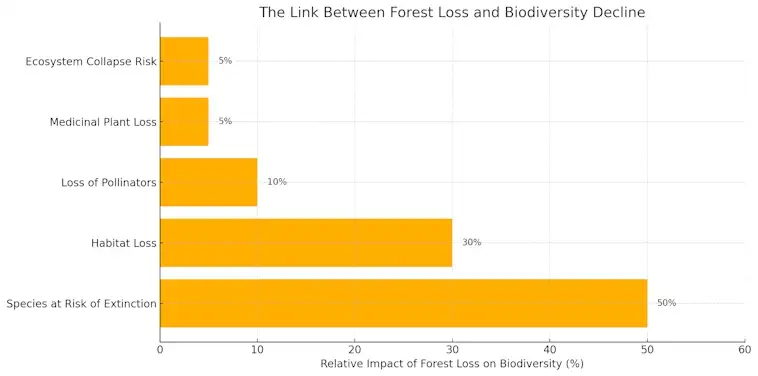
Forests are home to most of the planet’s land-based species. When these ecosystems vanish, countless plants and animals disappear with them. The loss of biodiversity isn’t just a tragedy for wildlife—it disrupts entire ecosystems, food chains, and even human survival.
Forests as Safe Havens for Wildlife
Tropical and temperate forests provide shelter, food, and breeding grounds for everything from insects to apex predators. When trees are cleared for farming, logging, or development, these creatures lose their homes. Many species cannot adapt quickly enough, which drives them closer to extinction.
This disruption doesn’t stop at individual species. Losing pollinators, seed spreaders, and predators weakens entire ecosystems. Without them, forests struggle to regenerate, which accelerates their decline.
Why Biodiversity Matters for People Too
Biodiversity keeps natural systems in balance. Healthy forests purify water, control pests, and support crops by maintaining soil fertility. When species vanish, these services weaken, making life harder for the communities that rely on forests for survival.
Medicinal plants, many found only in forests, are also at risk. As biodiversity declines, we lose potential cures for diseases and tools for modern medicine. The economic and cultural value of this natural wealth is immeasurable.
Protecting forests isn’t just about saving wildlife. It’s about preserving the web of life that supports all living things, including us. By understanding how closely tied biodiversity is to forests, we can make choices that help both thrive for generations to come.
Can We Slow Forest Loss Through Sustainable Solutions?
Slowing forest loss is possible, but it requires global cooperation and local action. By focusing on sustainable practices, we can protect forests while meeting the world’s growing needs for food, energy, and resources.
Smarter Land Use and Farming Practices
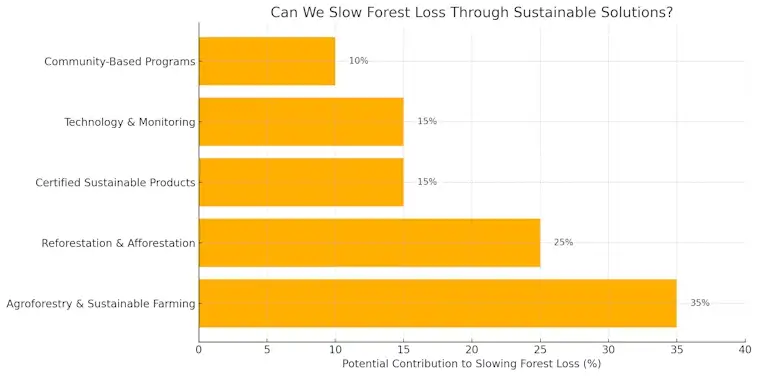
Agriculture is the leading driver of deforestation, but smarter techniques can reduce its impact. Agroforestry—planting trees alongside crops—keeps soil healthy, improves yields, and provides shade for plants and livestock. Switching to more efficient farming methods, like precision agriculture, also means we can grow more food without clearing more land.
Certification programs, such as those for sustainable timber and palm oil, encourage companies to use land responsibly. When consumers choose certified products, it creates market pressure for better practices.
Restoring Forests and Supporting Local Communities
Reforestation and afforestation—planting new trees in cleared or degraded areas—help capture carbon and rebuild ecosystems. But restoration only works when local communities benefit. Projects that provide jobs, education, and sustainable income from forest-friendly industries can motivate people to protect trees instead of cutting them.
Technology is also part of the solution. Satellite monitoring and AI tools allow governments and organizations to track deforestation in real time, stopping illegal logging before it spreads.
The path forward is challenging, but not impossible. By combining better land management, restoration efforts, and community-driven solutions, we can slow forest loss and create a healthier planet for future generations.
What You Can Do to Help Reduce Forest Loss
Protecting forests might feel like a global challenge, but individuals can make a big difference. By changing how we shop, live, and advocate, we can all help slow deforestation and protect nature for future generations.
Make Sustainable Choices Every Day
The products we buy often drive deforestation. Choosing items with certifications like FSC (for wood and paper) or RSPO (for palm oil) ensures they come from sustainable sources. Reducing meat and dairy in your diet also helps, since livestock farming is one of the biggest causes of forest loss.
Even small steps, like using recycled products, avoiding single-use paper, and supporting brands with eco-friendly policies, add up. When millions of people make these choices, demand for destructive practices drops.

Support Conservation and Speak Up
You can also protect forests by supporting organizations that restore ecosystems and fight illegal logging. Donations, volunteering, or simply sharing their work online spreads awareness and fuels change.
Another way to help is by advocating for stronger policies. Contacting local representatives, signing petitions, and voting for leaders who prioritize the environment can lead to stricter protections for forests worldwide.
When individuals take action, it sends a powerful message. Protecting forests isn’t just a job for governments and businesses—it’s something we can all contribute to, starting today.
Why Protecting Forests Matters Now More Than Ever
Forest loss is accelerating, and its effects reach far beyond the trees. It fuels climate change, disrupts communities, and threatens countless species that help keep our planet in balance. The choices made today—by governments, businesses, and individuals—will determine whether forests can survive for future generations.
Every action counts. Supporting sustainable products, reducing waste, protecting wildlife, and demanding stronger environmental protections all make a difference. Forests are not just natural resources; they are life-support systems that clean our air, regulate our climate, and sustain millions of people and species.
If we act now, it’s possible to slow the damage and restore what has been lost. By working together, we can protect these vital ecosystems and secure a healthier, more resilient planet for everyone.