

Vanishing Shores: The Urgent Fight Against Beach Erosion
Beaches are more than just sunny spots for a vacation; they’re vital to our environment and economy. But they’re disappearing at an alarming rate due to erosion. This isn’t just about losing a place to sunbathe; it’s about protecting homes, wildlife, and businesses. From rising sea levels to increased storm activity, many factors contribute to this urgent issue. We’re taking a look at the causes, the impacts, and what we can do to fight back against the erosion eating away at our beautiful shores. Join us as we examine both the problems and the innovative solutions being crafted around the world.
Vanishing Shores: The Urgent Fight Against Beach Erosion
What You’ll Discover
Beach Erosion: Causes and Consequences
Historical Data: Erosion Through the Decades
Global Hotspots: Where Erosion Hits Hardest
The Role of Climate Change in Accelerating Erosion
Fighting Erosion with Innovation
Local Efforts in Shoreline Management
Shaping the Future of Coastal Conservation
Simple Steps to Make a Difference
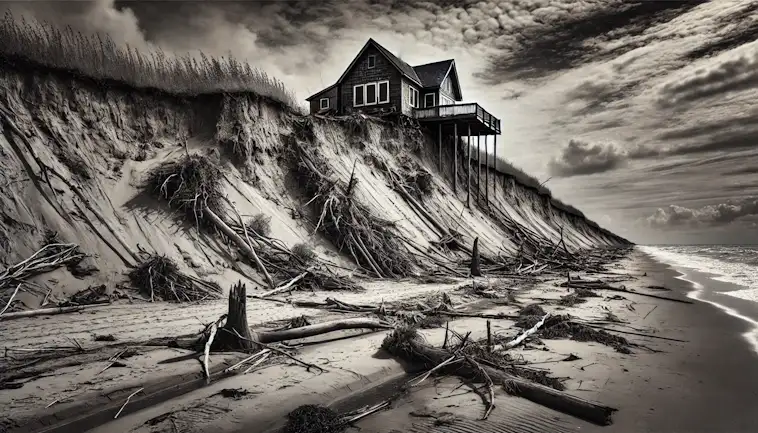
Beach Erosion: Causes and Consequences
Beach erosion is a pressing environmental issue influenced by both natural and human-induced factors. Naturally, beaches change shape and size through the constant action of waves, winds, and tides. However, when we add human actions to the mix, the rate of erosion can increase dramatically.
First, let’s talk about the natural factors. Rising sea levels are a major contributor to beach erosion. As the climate warms, glaciers melt and expand the ocean’s volume, causing sea levels to rise. This higher water level gives waves more power to eat away at the coastline. Another natural factor is storm surges. These are temporary, extreme rises in sea level caused by severe storms pushing water towards the shore. This can violently strip sand and vegetation from beaches.
Now, onto human-induced factors. Coastal development is a big one. When we build homes, resorts, and other structures close to the shore, we often alter or remove the natural barriers that protect beaches, such as dunes and vegetation. These barriers are crucial as they help hold the sand in place and absorb wave energy. Additionally, human activities like dredging and river damming can disrupt the natural flow of sediment that beaches need to replenish themselves.
The impacts of beach erosion are significant, both environmentally and economically. From an environmental perspective, as beaches wear away, the habitats for various species also vanish. This can lead to a decrease in biodiversity. Turtles, for instance, rely on sandy beaches for nesting. Losing these beaches makes it harder for them to reproduce successfully.
Economically, the consequences are just as severe. Many coastal communities depend heavily on tourism. Beaches attract tourists, and if there are fewer beaches, fewer tourists might visit. This can lead to a drop in tourism revenue, which many local economies rely on. Additionally, property values can decrease as the protective and recreational benefits of having a beach nearby diminish.
Historical Data: Erosion Through the Decades
Historically, beaches have always shifted and changed due to natural processes like waves and weather. However, data and observations over the past few decades show a significant acceleration in erosion, linked closely with human activities and climate change.
Let’s break it down with some data. Studies indicate that over the last century, sea levels have risen by about 8-9 inches globally, but the increase isn’t uniform; some areas have seen much higher rises. This rise in sea levels means that during storms, waves hit further inland, eroding beaches more severely than they would have a century ago.
Historical comparisons are quite telling. For example, aerial photographs and satellite images from the mid-20th century compared to now reveal that many beaches have significantly narrowed, with some losing hundreds of feet of sand. In places like Florida and other parts of the US East Coast, erosion has been so severe that some areas have lost over 50% of their beach width over the last 50 years.
The factors making this worse include increased development along coastlines, where natural barriers like dunes and mangroves have been removed for construction. Such development not only removes the natural defence against erosion but also increases runoff and pollution, further weakening the beaches.
Another exacerbating factor is the increased frequency and intensity of storms due to climate change. These storms are not just a temporary threat; they cause long-term damage to coastal areas, stripping away large amounts of sand that can take years to replace naturally—if at all.
This situation highlights the urgency and scale of the beach erosion problem. It’s a major problem because beaches are critical for biodiversity, coastal protection, and local economies. The trends show that without significant efforts to mitigate these factors, the situation could worsen, leading to more dramatic changes in our coastal landscapes and the benefits they provide.
Global Hotspots: Where Erosion Hits Hardest
In the United States, particularly in Florida, beach erosion is a significant concern. Florida’s coastline is famous for its beautiful beaches, attracting millions of tourists annually. However, areas like Miami Beach have undergone extensive and costly beach replenishment projects to combat the erosion caused by rising sea levels and increased storm activity. These projects involve importing sand to replace what has been lost, an expensive and temporary solution.
Moving over to Europe, the situation isn’t much different. Italy’s coastline, especially around Venice, is also struggling. The combination of sinking land and rising water levels threatens this historic area. Efforts to protect Venice have led to the construction of mobile barriers to control the flow of seawater, a testament to the engineering efforts needed to combat natural and human-induced changes.
In Asia, small island developing states are particularly vulnerable. The Maldives, for example, faces existential threats from beach erosion. As a low-lying island nation, even small changes in sea level can have drastic impacts on their landmass. The Maldives has invested in seawalls and imported sand, but these are costly measures for a developing economy and offer only temporary relief.
Africa also shows the harsh realities of erosion in countries like Nigeria. Coastal areas in Lagos are severely affected, impacting densely populated communities. Erosion here is exacerbated by both natural forces and human activities such as sand mining and unregulated urban development. The economic and human costs are substantial, leading to lost homes and livelihoods.
These examples illustrate that beach erosion is a complex challenge that requires global attention. Whether in wealthy or economically struggling regions, the impacts are severe, underscoring the need for sustainable coastal management practices worldwide.
The Role of Climate Change in Accelerating Erosion
Beach erosion is becoming a more pressing issue, and climate change is a big part of why it’s happening more frequently and intensely.
First off, as global temperatures rise, so do global sea levels. This happens for a couple of reasons. One major factor is the melting of ice caps and glaciers. When ice on land melts, it adds water to the oceans. Just like when you pour more water into a bathtub, the level rises. Another reason is thermal expansion. This means that as the water warms up, it expands a bit. Both these effects cause higher sea levels.
Now, higher sea levels mean that during high tides and storms, more water reaches further inland. This can wash away the sand and soil that make up the beach. Over time, this leads to beach erosion, where beaches become narrower or disappear altogether.
Then there’s the issue of storms. Climate change is linked to more intense and frequent storms. These storms bring stronger winds and bigger waves. When these hit the coast, they have the power to pull large amounts of sand back into the ocean. This not only erodes the beach but also alters the shape of the coastline.
Changing weather patterns also mean that the ways beaches used to recover naturally are being disrupted. Beaches often rely on sediments from rivers or other sources to naturally replenish the sand that storms and waves carry away. However, with changing climate conditions, these sediment supplies can be cut off or reduced.
All these factors together mean that beaches around the world are at risk. As climate change accelerates, managing and protecting these vital natural resources becomes more challenging. This highlights the importance of addressing climate change to protect our coastlines and the communities that depend on them.
Fighting Erosion with Innovation
When it comes to combating beach erosion, engineers have come up with several clever methods. These include building seawalls, installing groynes, and carrying out beach nourishment projects. Each solution has its strengths and weaknesses, affecting both how well they protect the beach and their impact on the environment.
Seawalls are structures built parallel to the coast to defend against waves and prevent the shoreline from eroding. While seawalls are effective at protecting the areas directly behind them, they can actually increase erosion on nearby beaches. This happens because the energy from the waves, instead of being absorbed by the beach, gets deflected by the wall. As a result, the waves might erode other parts of the coastline even more aggressively.
Groynes are another popular method. These are barriers built at right angles to the shore to trap sand moving along the coast due to currents and waves. Groynes can be very effective at building up beaches on one side, but they can cause erosion on the other side by interrupting the natural flow of sand. This means they can be great for one section of a beach while unintentionally harming another.
Beach nourishment is the process of adding sand to eroding beaches to restore them. This method is popular because it directly addresses the problem by replenishing the beach with new material. It’s also less disruptive to the natural dynamics of the shoreline compared to seawalls and groynes. However, the new sand can sometimes be different in composition from the native beach sand, which might affect local wildlife. Additionally, beach nourishment is not a permanent solution; it needs to be repeated as the added sand will eventually be washed away.
Each of these engineering methods offers a way to fight beach erosion, but they all come with trade-offs. It’s important to consider not just how effective they are at protecting the coast, but also how they impact the surrounding environment and coastal ecosystems.
Local Efforts in Shoreline Management
Many communities around the world are taking action to preserve their beloved beaches through creative and dedicated initiatives. These efforts not only help reduce beach erosion but also promote sustainable tourism, enhance local engagement, and improve environmental health.
A fantastic example of community-led success is in Hawaii, where local groups organise regular beach cleanups. These cleanups not only remove trash that can harm marine life and contribute to beach degradation, but they also raise awareness about environmental preservation. By involving local residents and tourists, these events foster a sense of community responsibility and pride in maintaining natural beauty.
In terms of sustainable tourism, the small Caribbean Island of Bonaire is a standout. Bonaire has strict regulations to protect its coastal areas and marine life, which are crucial for the island’s dive tourism industry. These include limiting the number of visitors to sensitive areas and enforcing strict anti-anchor laws to prevent damage to coral reefs, which play a critical role in natural sand accumulation and beach stability.
Local governments are also stepping up. For example, in Florida, some coastal cities have implemented ordinances that restrict construction near beachfronts. By controlling development, these laws help maintain natural dune systems and vegetation, which are vital for reducing erosion and providing natural habitats.
Another innovative approach comes from the town of Vero Beach, Florida, where the local government has partnered with environmental groups to plant sea oats along the beaches. Sea oats are not just picturesque; their root systems help hold sand in place, making the beaches more resilient to the effects of waves and storm surges.
These examples show that when communities and local governments come together, they can create effective solutions to protect their beaches. These efforts not only help to curb erosion but also ensure that beaches remain vibrant and accessible for future generations to enjoy.
Shaping the Future of Coastal Conservation
When it comes to protecting our coasts, legislation plays a crucial role. There are several existing policies aimed at preserving beaches, but there’s always room for improvement. Stronger regulations can make a big difference in effectively managing beach erosion and safeguarding coastal areas.
Currently, many countries have laws that regulate construction near coastlines, limit harmful activities, and manage pollution. For example, in the United States, the Coastal Zone Management Act helps to balance economic development and environmental preservation along coastlines. However, as beach erosion intensifies due to climate change and human activity, these regulations need to be strengthened.
One area where policy could be improved is in integrating climate change predictions into coastal planning. This means not just reacting to current erosion issues but planning ahead for future scenarios. By anticipating higher sea levels and more intense storms, governments can implement building restrictions and create buffer zones that allow for natural coastal processes to occur without human interference.
Another important step is enhancing international cooperation. Beach erosion is a global issue, and countries can learn a lot from each other. For example, international agreements can facilitate the sharing of research, funding, and best practices in coastal management. This can be particularly beneficial for developing countries, which might lack the resources to implement effective erosion control measures on their own.
We also need policies that support natural solutions like restoring mangroves and coral reefs. These ecosystems not only protect shorelines but also provide habitats for wildlife and natural attractions for tourists. Encouraging the restoration and protection of these natural barriers through international funding and local projects could significantly reduce erosion.
Advocating for these policy improvements involves raising awareness about the importance of coastal areas and the threats they face. By strengthening regulations and fostering international cooperation, we can better protect our beaches for future generations.
Simple Steps to Make a Difference
Fighting beach erosion might seem like a big job, but there are plenty of simple actions you can take to help. Every effort counts, whether you’re supporting local conservation projects, reducing your carbon footprint, or just spreading the word about the importance of protecting our coasts.
One great way to make a difference is by getting involved in local conservation efforts. Many communities have groups that organise beach cleanups or dune restoration projects. Participating in these activities not only helps keep the beaches clean and healthy but also strengthens community bonds and raises environmental awareness.
Reducing your carbon footprint is another powerful way to combat beach erosion indirectly. Since climate change contributes significantly to rising sea levels and more severe storms, every step to reduce greenhouse gas emissions helps. Simple actions like using public transportation, recycling, and cutting down on energy use in your home can collectively make a big impact.
Another effective action is to be a responsible tourist. When visiting beaches, always follow local guidelines—stay off dunes, stick to designated paths, and take all your trash with you. These practices help preserve the natural structure and health of the beach.
Lastly, spreading awareness is crucial. Talk about beach erosion in your community and online. The more people know about the causes and effects of beach erosion, the more they’re likely to care and get involved. Sharing articles, joining discussions, and even talking to friends and family about the importance of protecting coastal areas can spark interest and action.
Every little bit helps when it comes to protecting our beaches. By taking these practical steps, you can contribute to the fight against beach erosion and help ensure that these beautiful and vital environments are preserved for future generations.
Conclusion
As our shores continue to vanish, the urgency to fight against beach erosion becomes ever more pressing. This isn’t just about losing patches of sand; it’s about protecting ecosystems, preserving tourism economies, and safeguarding homes and businesses. By understanding the natural and human-induced causes of erosion, we can better tackle the issue with informed and effective strategies.
From supporting local conservation projects to reducing our own carbon footprints, each of us has the power to make a difference. By making small changes in our daily lives and staying aware of our impact on the environment, we can contribute to larger global efforts. It’s also essential that we push for stronger regulations and international cooperation to manage and protect our coastlines more effectively.
Let’s keep our beaches, communities, and wildlife thriving. By standing together in this fight, we ensure that the beautiful, dynamic coastlines we love today will be here for generations to come, full of life and natural beauty.