

Unparalleled Soy Expansion Is More Scary Than You Think
Unparalleled Soy Expansion Is More Scary Than You Think
Unparalleled soy expansion is reshaping landscapes and economies at a speed few anticipated. While soy is a staple ingredient in animal feed, processed foods, and even biofuels, the scale of its growth carries heavy consequences. Forests are being cleared at record rates, carbon emissions are climbing, and communities that depend on fragile ecosystems are facing new pressures.
At first glance, soy may seem harmless—just another crop feeding a growing world. But behind its rise is a chain of impacts that reach far beyond farmland. From accelerating climate change to threatening biodiversity, the ripple effects are more alarming than most realize.
Understanding these hidden costs is key to seeing why soy expansion has become one of the most urgent environmental challenges of our time.
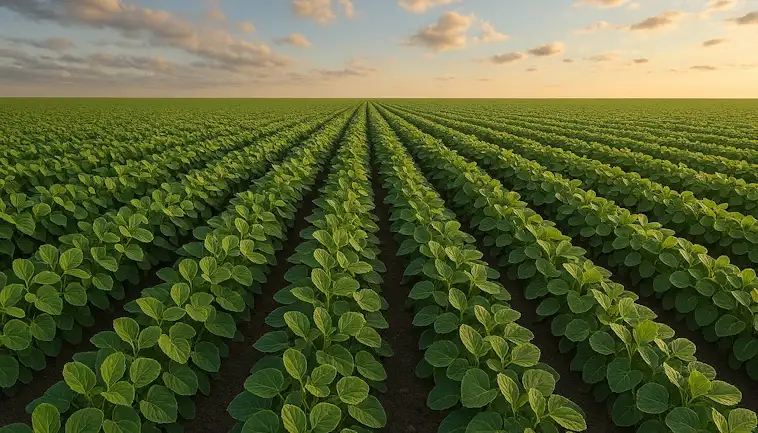
Soy Expansion and Its Hidden Impact on Global Forests
Soy is everywhere. From the food we eat to the feed that fattens livestock, this single crop powers much of the modern food system. But behind its success story lies a quieter truth—soy farming is reshaping forests across the globe, often in ways we don’t see.
Over the past few decades, soy production has exploded. Countries like Brazil and Argentina have become global leaders, supplying soybeans to markets around the world. On the surface, it looks like a win for agriculture. Yet the cost is staggering: vast areas of tropical and subtropical forests are cleared to make way for soy fields. These forests are not just beautiful landscapes. They are home to countless species and act as powerful carbon sinks that help stabilize our climate.
Why Forest Loss Matters More Than We Think
When forests fall, the impact ripples far beyond the local land. Deforestation linked to soy expansion releases massive amounts of carbon dioxide into the atmosphere. It disrupts rainfall patterns, reduces biodiversity, and threatens the survival of communities who depend on the land. What makes this especially challenging is that much of the soy is not even eaten directly by people. Instead, it is used as animal feed for poultry, pigs, and cattle that end up on dinner plates around the world.
This hidden link between soy and forest destruction is often overlooked in conversations about sustainable food. The choices we make in supermarkets—whether it’s chicken, beef, or dairy—are tied to the fields where soy grows thousands of miles away. That means the true footprint of soy stretches far beyond the farm.
If we want to protect forests, it’s not only about reducing tree loss. It’s about rethinking the global demand for soy and creating stronger policies that protect ecosystems. By looking closely at where soy comes from, and how it is produced, we can start building a food system that nourishes both people and the planet.
The Human Cost Behind Cheap Soy Production
When you see soy-based foods on store shelves, they often look like a healthier, affordable choice. But behind those low prices, there’s a hidden human cost that rarely makes it to the spotlight. Soy production, especially in countries like Brazil and Argentina, has grown into a massive industry. And while it feeds global demand, it often does so at the expense of workers and local communities.
Many workers face unsafe conditions, low wages, and even exploitation. In some regions, entire communities are displaced as farmland expands to meet global demand. Families lose their homes, and small farmers can’t compete with large industrial operations. On top of that, exposure to toxic pesticides used on large soy plantations has been linked to health problems in nearby villages.
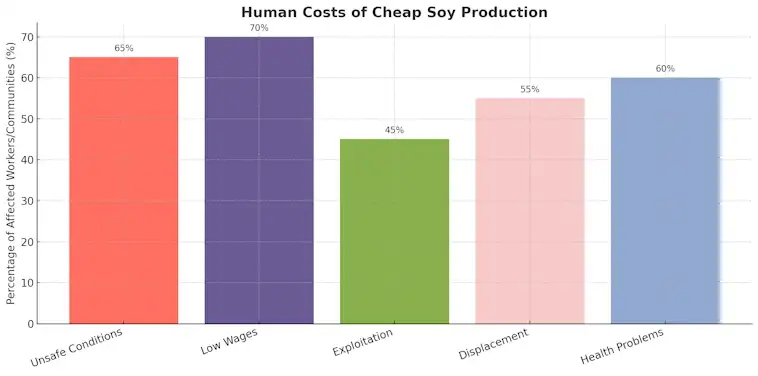
So, while cheap soy products might seem like a win at the checkout counter, the real price is paid by those who grow and harvest it. It’s worth asking: how much should human wellbeing be traded for affordability?
Soy Expansion: Why It Fuels Climate Risks Worldwide
When you think about soy, you might picture tofu, soy milk, or even animal feed. But there’s a much bigger story behind it. Soy has become one of the world’s most traded crops, and its rapid expansion is shaping our climate future in ways many people don’t realize.
The demand for soy keeps growing, especially as it’s used in livestock feed for meat production. To meet this demand, huge areas of land are being cleared—especially in South America. This expansion is driving deforestation, threatening biodiversity, and adding massive amounts of carbon to the atmosphere. In short, soy is more than just a crop—it’s a global climate issue.
Here’s why soy expansion fuels climate risks:
- Deforestation: Forests in Brazil, Argentina, and Paraguay are being cleared to make way for soy fields, releasing carbon that was stored in trees.
- Biodiversity loss: Clearing forests destroys habitats, putting countless species at risk of extinction.
- Water stress: Soy farming demands large amounts of water, often straining rivers and aquifers.
- Soil degradation: Monocropping soy weakens soil health, making land less resilient to climate shocks.
- Global trade pressure: International markets push for more soy production, creating a cycle of demand that fuels further expansion.
The impact doesn’t stop at the farm level. Every bag of animal feed or carton of soy milk carries a hidden footprint that links back to fragile ecosystems and rising emissions. By understanding this connection, we can make more informed choices and support solutions that protect both people and the planet.
Biodiversity Loss That’s Hard to Reverse
Soy expansion is one of the biggest drivers of deforestation in South America. Forests and savannas that took thousands of years to evolve are being cleared in just a few decades.
The Amazon, the Cerrado, and the Gran Chaco are biodiversity hotspots. They are home to jaguars, giant armadillos, and countless bird species. Yet, millions of hectares of their habitat have been lost to soy fields. Once these forests are gone, the unique mix of plants and animals can’t simply be replaced. The loss is permanent.
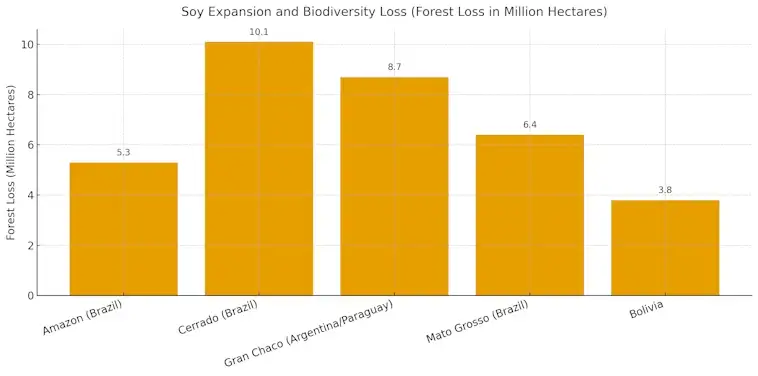
What makes this issue urgent is the scale. Each year, more land is converted to soy, leaving behind fragmented ecosystems that struggle to survive. The consequences ripple outward—less biodiversity, weaker ecosystems, and higher carbon emissions. Protecting what’s left is not just about trees. It’s about safeguarding the web of life that sustains us all.
What the Future Holds if Soy Demand Keeps Rising
Soy is everywhere. From the food we eat to the feed that keeps livestock growing, global demand for soy is showing no signs of slowing down. But what does that mean for the future? If the trend continues, the impact will stretch far beyond supermarket shelves.
On one hand, soy offers huge economic benefits. Farmers in South America, the U.S., and even parts of Asia rely on it as a major cash crop. More demand often means more jobs, more exports, and a stronger agricultural economy. Yet, on the other hand, the cost to the environment could be steep. Expanding soy fields can drive deforestation, push out wildlife, and increase carbon emissions.
The Global Push for Soy Expansion
The real challenge is finding balance. If soy keeps expanding unchecked, we may see fragile ecosystems turned into farmland at an alarming pace. This puts pressure on forests like the Amazon, which play a critical role in regulating the planet’s climate. Scientists warn that without careful management, soy expansion could trigger long-term environmental damage that’s hard to reverse.
Still, there’s room for optimism. With better land-use policies, sustainable farming techniques, and more plant-based innovation, it’s possible to meet growing demand without destroying natural habitats. The key will be whether governments, companies, and consumers are willing to support solutions that prioritize both food security and the planet’s health.
Soy Expansion Matters More Than Ever
Soy’s unprecedented expansion is reshaping global agriculture, trade, and even the way we think about food security. From powering plant-based proteins to fueling biodiesel, soy is no longer just a crop—it’s a cornerstone of a sustainable future. Yet, this rapid growth also brings challenges, from deforestation risks to shifting market demands.
The key question now is not whether soy will continue to expand, but how we can guide that expansion responsibly. Consumers, policymakers, and businesses all have a role to play in shaping a soy industry that meets demand without sacrificing our planet’s health.
If you want to stay ahead of the trends shaping the future of soy—and what they mean for food, climate, and trade—keep exploring our latest insights.