

Innovations in Renewable Resources for a Sustainable Tomorrow
Innovations in Renewable Resources for a Sustainable Tomorrow
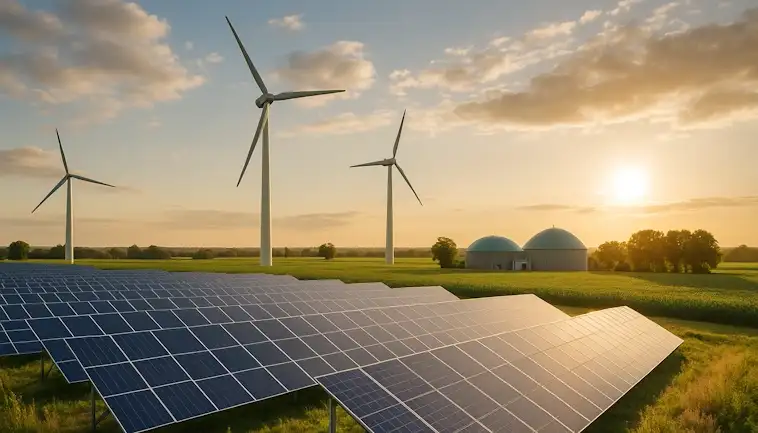
New ideas are reshaping how we power our lives. From homes running on sunlight to cities fueled by wind, the shift toward renewable resources is gaining real momentum. With the world looking for cleaner, smarter ways to meet energy needs, innovation is leading the charge.
Every year, fresh breakthroughs make sustainability more practical and more affordable. These advances aren’t just for the distant future—they’re happening now and transforming industries, communities, and everyday routines.
Progress is happening fast. Staying ahead means understanding not just what’s working now, but what’s coming next. Let’s look at the ideas shaping a cleaner, more resilient tomorrow.
How AI Is Powering the Next Wave of Clean Energy
Clean energy is no longer a futuristic ideal—it’s our present and our path forward. With climate concerns mounting and energy demands on the rise, the push toward renewable sources like solar has never been more urgent. But scaling clean energy isn’t just about installing more solar panels. It’s about making them smarter, faster, and far more efficient.
That’s where artificial intelligence (AI) steps in. From predicting sunlight patterns to managing energy flows in real time, AI is proving to be the secret weapon in supercharging solar power. Let’s explore how this powerful tech is helping solar energy live up to its full potential.
Smarter Solar with AI: A Bright Idea
AI is changing the game for solar energy in ways that go far beyond hardware upgrades. Here’s how:
1. Accurate Solar Forecasting
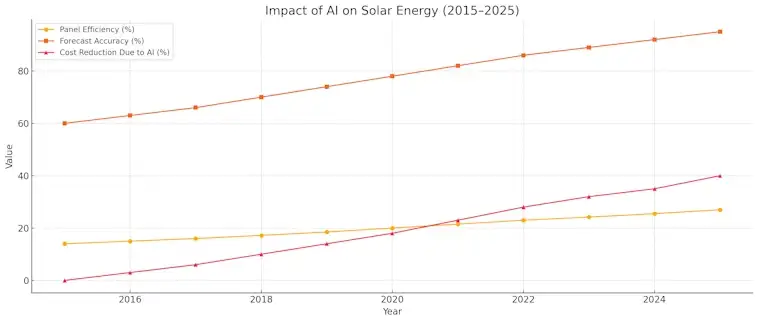
- AI can predict how much sunlight solar panels will receive, not just day-to-day but hour-by-hour.
- By analyzing weather data, satellite imagery, and historical trends, AI models make forecasts more precise.
- Better forecasting means grid operators can plan energy loads more effectively and reduce waste.
2. Maximizing Panel Efficiency
- AI algorithms continuously monitor solar panel performance.
- They detect issues like dust buildup, shading, or component failure—sometimes before they even cause a dip in output.
- Maintenance becomes proactive, not reactive, keeping energy flowing smoothly.
3. Optimizing Energy Storage and Use
- Solar energy doesn’t always sync with peak demand. That’s where batteries come in—but they need smart management.
- AI systems determine the best times to store power or release it back to the grid based on usage patterns and real-time demand.
- This minimizes energy loss and cuts down on costs.
4. Scaling Smart Grids
- Solar energy is often decentralized—think homes, offices, and even cars.
- AI helps coordinate all these micro-sources into a single, efficient smart grid.
- It balances supply and demand, reduces outages, and even supports energy trading between users.
Looking Ahead: AI as the Brain of the Solar Boom
The future of solar energy is bright—and intelligent. As AI tools become more advanced and accessible, they’re expected to integrate even more deeply into solar technology:
- Self-healing solar systems that detect and repair faults autonomously.
- AI-driven design tools that optimize panel placement for maximum efficiency.
- Global solar networks managed by AI, ensuring no ray of sunlight goes to waste.
In the race to a cleaner, greener planet, AI isn’t just helping us keep up. It’s helping us lead.
Wind Power Gets an Upgrade: New Turbines, Bigger Impact
When people picture renewable energy, solar panels often come to mind first. But wind power has quietly grown into one of the world’s most reliable and scalable clean energy sources. In fact, wind now supplies over 10% of global electricity—and that number is climbing fast.
What’s fueling this surge? It’s not just the wind itself. It’s innovation. Thanks to major breakthroughs in turbine technology, wind energy is becoming more powerful, more efficient, and more accessible than ever before. Let’s dive into the latest upgrades that are giving wind power a serious boost.
Bigger, Smarter, Stronger: What’s New in Wind Turbines
1. Supersized Turbines Are Reaching New Heights
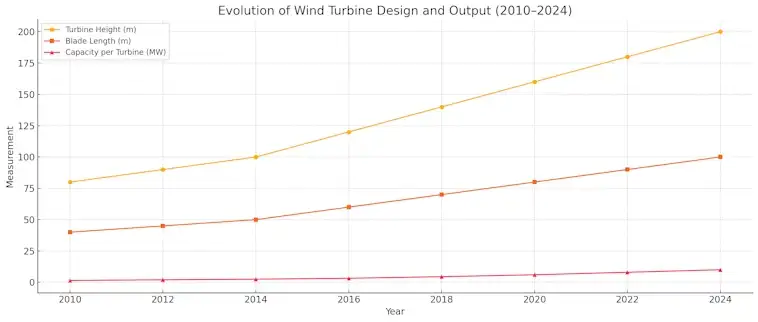
- Modern wind turbines are getting taller, with some exceeding 850 feet—taller than the Eiffel Tower.
- Taller turbines reach stronger, steadier winds, which means more consistent energy production.
- Larger blades, now stretching over 350 feet, sweep a wider area, capturing more kinetic energy.
2. Floating Wind Farms Unlock New Locations
- Traditional turbines are fixed to the seabed, limiting where they can be placed.
- Floating turbines, anchored with cables, can operate in deep waters far from shore where winds are stronger.
- Countries like Norway, Japan, and the U.S. are pioneering large-scale floating wind projects.
3. AI and IoT Are Turbocharging Turbine Performance
- Sensors embedded in blades and towers track performance in real time.
- AI algorithms adjust blade angles and rotation speed based on wind conditions, boosting output.
- Predictive maintenance tools prevent breakdowns, reduce downtime, and lower repair costs.
4. Modular Designs Make Construction Faster and Cheaper
- New turbine models are designed with modular components, which are easier to transport and assemble.
- This speeds up deployment and makes wind farms more affordable in remote or developing areas.
Global Energy Impact: Why These Breakthroughs Matter
These innovations are doing more than just making turbines better—they’re reshaping global energy supply in powerful ways:
- Lower Costs: The price of wind-generated electricity has dropped dramatically, in some cases rivaling fossil fuels.
- Energy Security: Countries can reduce dependence on imported oil and gas by tapping into local wind resources.
- Job Creation: The wind energy sector is creating high-skill, future-proof jobs around the world.
- Decarbonization: More efficient turbines accelerate the shift away from coal and gas, cutting emissions faster.
Looking Forward: The Wind Isn’t Slowing Down
The next generation of wind technology is already on the horizon:
- Autonomous drones for turbine inspections.
- Hybrid systems combining wind with solar and storage.
- Community-powered microgrids that put wind energy into local hands.
As these technologies evolve, wind power isn’t just catching up to traditional energy—it’s pulling ahead. And with a global push for net-zero emissions, this quiet giant is ready to roar.
Green Hydrogen: Fuel of the Future or Just a Fad?
Green hydrogen is having a moment. From headlines to energy conferences, it’s being hailed as the silver bullet for everything from decarbonizing heavy industry to powering zero-emission planes. But amid all the excitement, one big question keeps popping up: is green hydrogen really the future of energy—or just another overhyped trend?
Let’s break down what green hydrogen actually is, what it can do, and whether it lives up to the buzz.
What Is Green Hydrogen?
Green hydrogen is hydrogen gas produced by splitting water (H₂O) into hydrogen and oxygen using electricity generated from renewable sources like wind or solar. Unlike “grey” or “blue” hydrogen, which come from fossil fuels and emit CO₂, green hydrogen is clean from start to finish.
Why It Matters: The Case for Green Hydrogen
1. It Stores Clean Energy for the Long Haul
- Solar and wind are great—but they’re intermittent.
- Green hydrogen acts like a battery, storing surplus renewable energy and releasing it when the sun isn’t shining or the wind isn’t blowing.
- This makes it a game-changer for stabilizing future clean energy grids.
2. It Decarbonizes Hard-to-Electrify Sectors
- Not all industries can plug into the grid. Think steelmaking, shipping, or aviation.
- Hydrogen can power high-temperature industrial processes and fuel long-haul transport—where batteries fall short.
- It’s one of the few viable options for deep decarbonization in these sectors.
3. It Offers Energy Security and Flexibility
- Countries with lots of sunshine or wind but limited fossil fuels (like Australia or Chile) can become exporters of green hydrogen.
- It diversifies global energy supply chains and reduces reliance on oil and gas.
But What’s Holding It Back?
Despite its promise, green hydrogen has a few hurdles to clear:
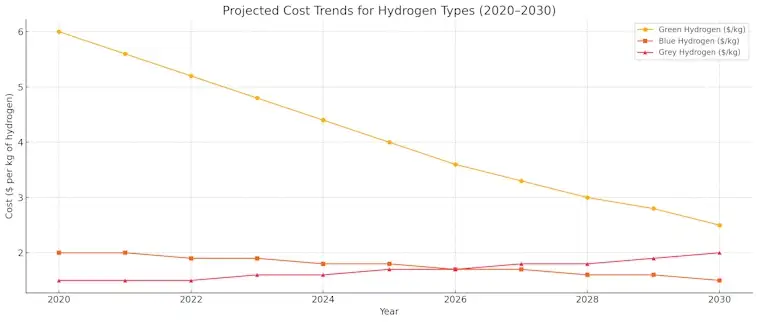
- High Production Costs: Electrolyzers and renewable power are expensive. Right now, green hydrogen costs several times more than grey hydrogen.
- Infrastructure Gaps: Transporting and storing hydrogen requires new pipelines, fueling stations, and safety systems.
- Energy Loss: The conversion process—from electricity to hydrogen and back again—is inefficient, with significant energy loss along the way.
Looking Ahead: Future Fuel or Passing Phase?
So, is green hydrogen the real deal?
The short answer: it depends on how fast the technology matures and costs come down. If current investments and innovation trends continue, green hydrogen could play a critical role in the energy mix by 2035—especially in sectors where electrification hits a wall.
The Bottom Line
- Green hydrogen isn’t a silver bullet—but it could be a cornerstone.
- It’s most likely to succeed not alone, but as part of a larger clean energy system alongside renewables, storage, and electrification.
In other words, green hydrogen might not be the future for everything—but for the right applications, it’s looking less like a fad and more like a key building block for a low-carbon world.
Bioenergy Breakthroughs: Turning Waste Into Power
We’re drowning in waste—from farms, factories, and even our own kitchens. But what if that waste could power homes, fuel trucks, and heat buildings? That’s the promise of bioenergy—a form of renewable energy made by converting organic material into usable power.
And thanks to some exciting breakthroughs in technology, bioenergy is having a quiet revolution. It’s no longer just about burning wood or composting food scraps. Today, scientists and engineers are transforming everything from corn stalks to sewage sludge into clean, efficient fuel. Let’s take a closer look at how this waste-to-energy transformation is shaping a greener, more circular future.
The Power of Waste: How Bioenergy Works
Bioenergy taps into the carbon already stored in organic materials. Instead of letting that carbon escape into the atmosphere through decay or incineration, we capture it and convert it into something useful.
Here’s how the latest technologies are making it happen:
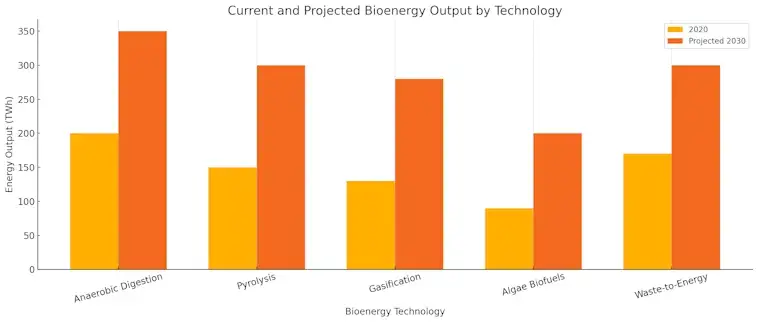
1. Advanced Anaerobic Digesters
- These high-tech tanks use microbes to break down organic waste—like manure, food scraps, or wastewater—without oxygen.
- The result? Biogas, a methane-rich fuel that can power generators or be fed into the natural gas grid.
- Newer digesters are smaller, more efficient, and better at removing contaminants, making them viable for farms and small towns.
2. Pyrolysis and Gasification
- Instead of burning waste, these methods superheat it in a low-oxygen environment, turning it into synthetic gas (syngas) or bio-oil.
- Syngas can generate electricity or be converted into hydrogen or liquid fuels.
- These processes are ideal for agricultural residues, like corn husks or rice straw, that would otherwise be burned in fields.
3. Algae-Based Biofuels
- Algae grows fast, absorbs CO₂, and can be harvested to make biodiesel and jet fuel.
- New biotech innovations are making algae cultivation more efficient and less water-intensive.
- Major airlines and shipping companies are now testing algae fuels to reduce carbon emissions.
Why This Matters: The Circular Energy Advantage
Bioenergy is about more than just clean fuel. It’s part of a circular economy—one that reuses, recycles, and reduces waste. Here’s what makes bioenergy stand out:
- Dual Benefit: It solves two problems at once—waste management and renewable energy.
- Local Production: Waste is everywhere, which means energy can be produced locally, even in rural or remote areas.
- Carbon Neutral (or Better): If managed sustainably, bioenergy can be carbon neutral—or even carbon negative—by capturing emissions that would otherwise escape.
The Road Ahead: Scaling Smart and Sustainably
The future of bioenergy depends on smart policies, sustainable sourcing, and continued innovation. Here’s what we might see next:
- Smaller, mobile bioenergy units for remote communities or disaster zones.
- Integrated systems that combine bioenergy with solar or wind to create hybrid clean power hubs.
- Bioenergy carbon capture (BECCS) technologies that store carbon underground, making energy generation actively remove CO₂ from the atmosphere.
Final Thought: Waste Isn’t Waste Anymore
In the new energy economy, waste is becoming a valuable resource. With the right tech and the right mindset, today’s trash could be tomorrow’s power. Bioenergy may not grab headlines like solar or hydrogen—but in the race to net zero, it’s a crucial piece of the puzzle.
The Circular Economy and Renewable Innovation
We live in a world where the “take, make, waste” model no longer works. Linear economies—where raw materials are extracted, turned into products, and eventually discarded—are hitting the planet’s limits. Resources are becoming scarcer. Landfills are overflowing. And carbon emissions keep climbing.
But there’s a smarter way forward: the circular economy. It’s a system designed to eliminate waste, regenerate natural systems, and keep materials in use for as long as possible. And what’s truly exciting? This mindset is now fueling some of the most important innovations in renewable energy, materials science, and sustainable design.
Let’s explore how the circular economy is reshaping the future of energy—and much more.
Circular Thinking: The Innovation Engine
The circular economy isn’t just about recycling. It’s about reimagining how we design, use, and repurpose everything. Here’s how that idea is transforming innovation across the renewable landscape:
1. Solar Panels Built for Reuse
- Traditional solar panels are tough to recycle, often ending up in landfills after 25–30 years.
- New panel designs use modular components and fewer toxic materials, making them easier to repair, upgrade, or fully recycle.
- Companies are now exploring second-life solar panels—reused in lower-demand applications like rural homes or portable systems.
2. Wind Turbine Blade Recycling
- Wind turbine blades are massive and difficult to dispose of.
- Innovators are developing thermoplastic composites and biodegradable resins that allow blades to be broken down and reused in new products, from bridges to furniture.
- Old blades are also being repurposed as construction materials or noise barriers along highways.
3. Battery Life Extension and Recycling
- Batteries power everything from electric cars to solar storage systems, but they degrade over time.
- The circular approach focuses on designing batteries for disassembly and creating systems for battery reuse and remanufacturing.
- Advanced sorting and chemical recycling techniques are allowing rare metals like lithium and cobalt to be recovered and reused at scale.
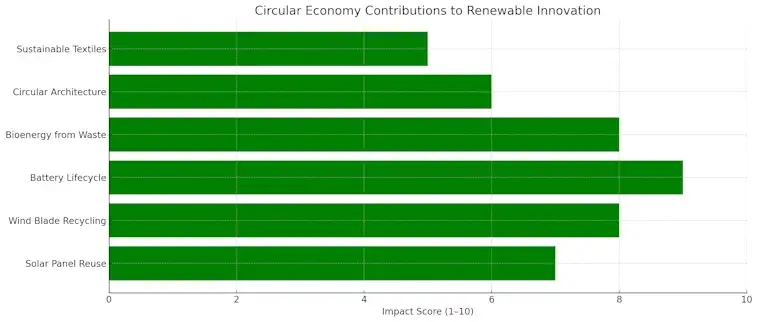
4. Bioenergy From Industrial and Agricultural Waste
- Instead of discarding byproducts, industries are turning them into energy.
- Food waste, manure, and forestry residues are being converted into biogas, heat, and electricity through anaerobic digestion and pyrolysis.
- This closes the loop by creating energy and reducing landfill emissions.
Beyond Energy: A Whole-System Shift
Circular principles are also influencing how we build cities, manufacture goods, and even grow our food. For example:
- Circular design in architecture means using modular, recyclable building materials.
- Fashion brands are investing in closed-loop textile recycling and plant-based fabrics.
- Agritech startups are using circular models to regenerate soil and cut fertilizer use.
Looking Ahead: Innovation With Regeneration at Its Core
The circular economy isn’t just a sustainability buzzword—it’s becoming a core strategy for innovation. As climate challenges grow and global demand for resources increases, circular models offer a path that’s resilient, regenerative, and remarkably creative.
Here’s what to expect:
- Product-as-a-service models, where ownership gives way to leasing, encouraging maintenance and reuse.
- Digital twins and AI to track material lifecycles and optimize recycling.
- Circular supply chains built to minimize waste and maximize impact.
The circular economy isn’t about doing less harm—it’s about doing more good. By designing renewable systems that mimic nature’s own cycles, we’re not just powering the future. We’re restoring it.
This is innovation with a conscience. And it’s exactly what the world needs now.
Conclusion
The path to a sustainable tomorrow is being shaped by breakthroughs happening today. From smarter solar and next-gen wind turbines to green hydrogen and circular energy systems, innovation is redefining how we power our lives without harming the planet.
What’s clear is this: the future of energy isn’t just renewable—it’s intelligent, adaptable, and deeply connected to the world around us. As costs fall, technologies mature, and infrastructure evolves, renewable resources are moving from alternative to essential.
Every step forward brings new opportunities—for cleaner air, stronger economies, and a healthier planet. The choices made now will determine the quality of life for generations to come. With innovation leading the way, a resilient and sustainable energy future is not just possible—it’s within reach.
Let’s keep moving toward it, together.