

Glaciers Are Vanishing Faster Than We Ever Imagined
Glaciers Are Vanishing Faster Than We Ever Imagined
Glaciers are disappearing at a pace that’s leaving scientists alarmed and communities concerned. Once thought to be slow-moving giants, they are now retreating faster than at any point in recorded history. This rapid melt is not just a far-off problem—it is already reshaping coastlines, disrupting water supplies, and threatening ecosystems that have relied on ice for thousands of years. From rising seas to unpredictable weather, the loss of these frozen reservoirs is a clear signal that the planet’s climate is shifting more quickly than expected. The question now is how much ice will vanish before we act.
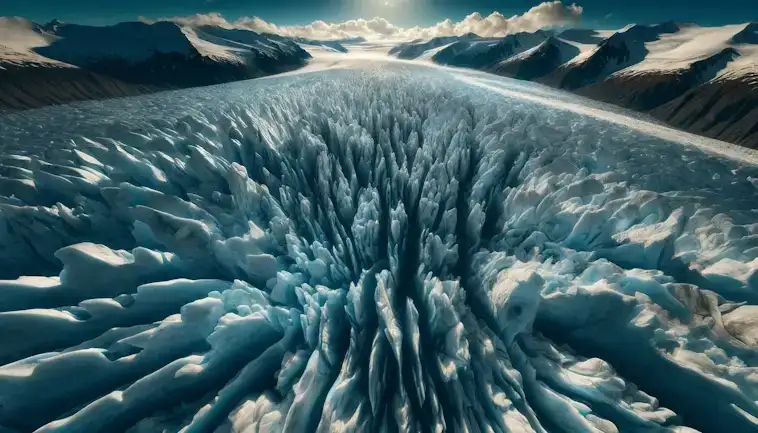
Why Glaciers Are Melting at Record Speed
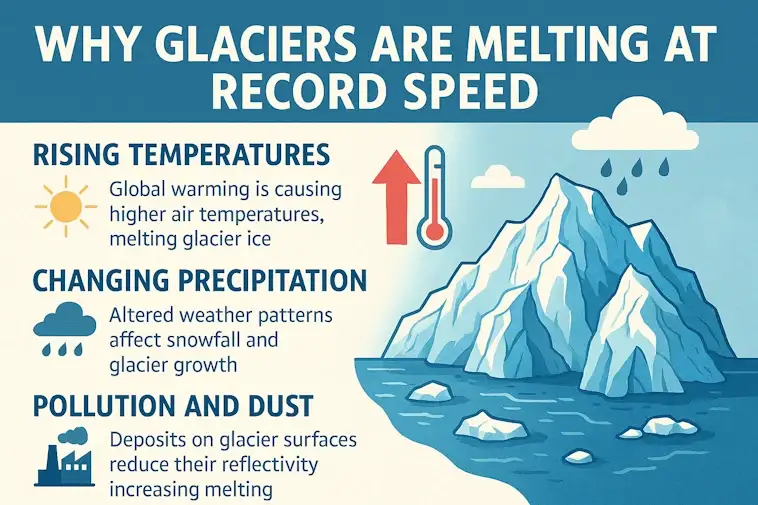
Glaciers are shrinking faster than ever. Scientists have been tracking their decline for decades, but the pace has now gone into overdrive. In the last few years, many glaciers have lost more ice than in the entire previous century.
The main reason? Rising global temperatures. Even small increases in average temperature can tip the balance. Warmer air melts ice from above, while warmer oceans eat away at glaciers from below. This double hit speeds up the loss dramatically.
The Domino Effect of Ice Loss
When ice melts, it exposes darker surfaces like rock or water. These absorb more sunlight than bright, reflective ice. This creates a feedback loop—more melting leads to more heat absorption, which leads to even faster melting. It’s like turning up the planet’s thermostat.
Pollution also plays a role. Tiny particles from burning fossil fuels land on ice, making it darker and less reflective. This “dirty snow” effect adds even more heat to the system.
The consequences reach far beyond the mountains and poles. Melting glaciers raise sea levels, disrupt water supplies, and change weather patterns. It’s a chain reaction that touches every part of the planet.
If glaciers are the world’s frozen savings account, we’re spending them faster than we can replace them. And once they’re gone, they won’t come back in our lifetime.
The Hidden Impact of Shrinking Ice on Global Seas
When we think about melting ice, most of us picture polar bears stranded on shrinking icebergs. But the real story runs deeper—and it affects everyone, no matter where you live.
Sea ice acts like a giant mirror, reflecting sunlight back into space. As it disappears, more heat is absorbed by the ocean. This speeds up warming and throws delicate climate systems off balance. It’s a feedback loop, and it’s getting stronger each year.
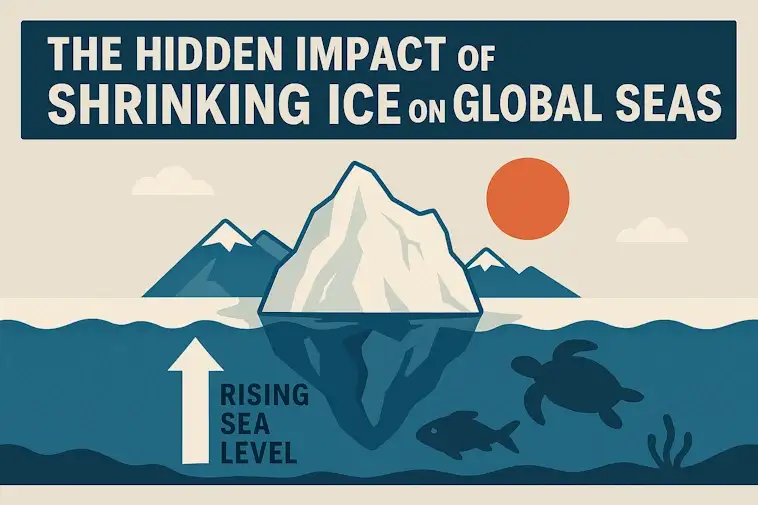
Why Warmer Oceans Mean Rising Seas
The loss of ice is a double hit. First, melting land ice—like glaciers in Greenland—adds more water to the ocean. Second, warmer water expands, pushing sea levels even higher. This combination is already threatening low-lying islands, coastal cities, and millions of people who depend on stable shorelines.
But the effects aren’t limited to flooding. Changing ocean currents can disrupt weather patterns, leading to more extreme storms in some areas and harsher droughts in others. And once these shifts take hold, they’re incredibly difficult to reverse.
Here’s the hard truth: the melting isn’t slowing down. Satellite data shows that Arctic summer sea ice has shrunk by about 13% per decade since 1979. Every year we delay action, the oceans rise a little higher—and the risks grow sharper.
Still, there’s room for hope. Reducing greenhouse gas emissions, protecting polar ecosystems, and investing in coastal resilience can slow the trend. The sooner we act, the better our chances of keeping the world’s ice in place—and the seas in check.
How Glacier Loss is Changing Weather Patterns
Glaciers aren’t just frozen rivers of ice. They’re a vital part of our planet’s climate system. When they shrink, the effects ripple far beyond the mountains and polar regions.
As glaciers melt, they release huge amounts of freshwater into the oceans. This changes the balance of salt and temperature in seawater, which in turn disrupts ocean currents. These currents act like conveyor belts, moving heat around the globe. When they slow down or shift, weather patterns can swing wildly.
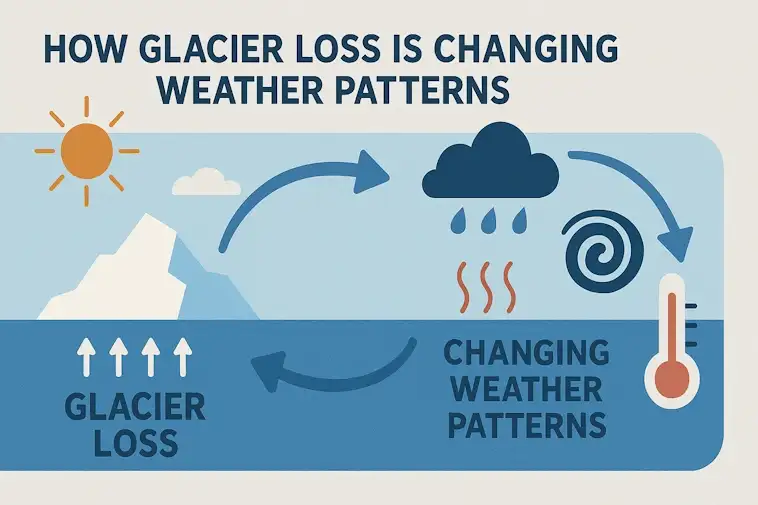
The Surprising Link Between Ice and Rain
It might seem strange, but melting glaciers can influence how much rain falls in your backyard. A shift in ocean circulation can bring heavier storms to some regions while drying out others. Farmers may face unpredictable growing seasons, and communities might deal with more frequent floods or droughts.
The loss of glaciers also affects the jet stream—the high-altitude wind current that guides weather systems. When the jet stream weakens or stalls, storms can linger longer, causing extreme rainfall or prolonged heatwaves.
This isn’t a distant problem. Scientists have already linked glacier loss to changes in monsoon patterns in Asia and shifts in storm intensity in the North Atlantic. Every bit of ice lost is like pulling a thread from a sweater—the more threads we lose, the faster the whole system unravels.
Acting now to cut emissions and protect remaining glaciers can help steady the climate. It’s not just about saving the ice—it’s about keeping the world’s weather from spinning out of control.
Communities Already Facing the Consequences
Climate change isn’t a far-off warning. For many communities, it’s already here. From small coastal towns to farming villages in the mountains, people are living with the effects every single day.
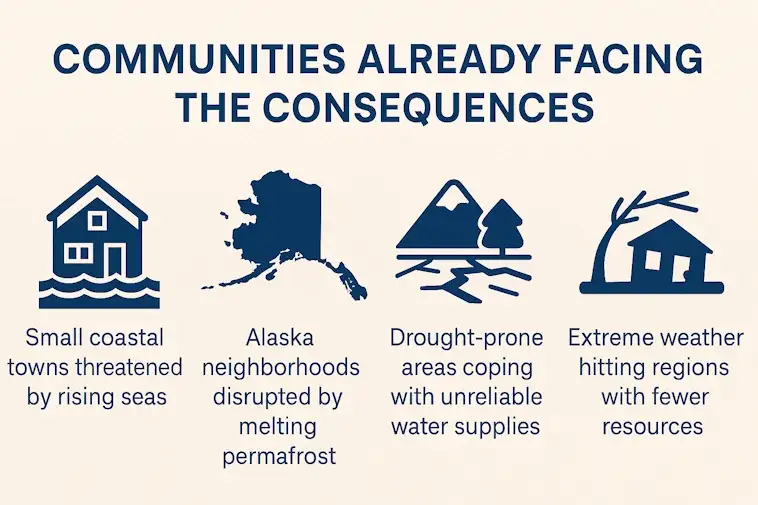
Rising seas are swallowing shorelines in places like the Pacific Islands and parts of Southeast Asia. Families are watching their homes vanish, sometimes in a single storm season. In Alaska, melting permafrost is destabilizing the ground beneath entire neighborhoods, forcing costly relocations.
When Daily Life Becomes a Battle
In drought-prone regions of Africa and South America, shrinking glaciers and unpredictable rain are making water supplies less reliable. Farmers can’t plan their crops the way they used to. Communities face food shortages and higher prices.
Extreme weather also hits harder in places with fewer resources. A hurricane in a wealthy city might cause damage, but recovery is faster. In poorer regions, it can take years—or longer—for life to return to normal, if it ever does.
These are not isolated stories. They are early warnings of what could spread to more places if climate change continues unchecked. The reality is simple: the sooner we cut emissions and adapt, the more communities we can protect from losing everything.
What We Can Still Do to Slow the Melt
The ice is melting fast, but the story isn’t over yet. We still have time to slow it down—and every action we take now matters.
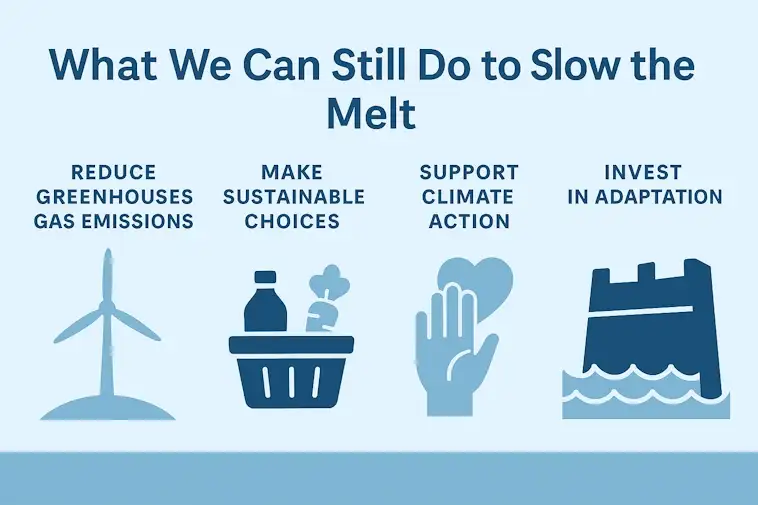
Cutting greenhouse gas emissions is the biggest step. That means switching to cleaner energy, improving public transport, and protecting forests that absorb carbon. These changes may sound big, but they’re already happening in cities and communities around the world.
Small Choices, Big Impact
You don’t have to be a scientist or a policymaker to help. Choosing renewable energy for your home, eating less meat, and reducing waste all make a difference. Supporting companies and leaders committed to climate action sends a powerful signal, too.
We can also invest in climate adaptation. This means building sea walls where needed, restoring wetlands to act as natural flood barriers, and creating early warning systems for extreme weather. These steps won’t stop the melt, but they can protect communities while we work on the bigger fixes.
The truth is simple: slowing the melt isn’t about one giant solution. It’s about millions of people making better choices, backed by strong policies and bold action. If we start today, the future of our ice—and our planet—can still look a lot brighter.
Why Acting Now Matters More Than Ever
Glaciers are not just ice—they are lifelines. They store our freshwater, regulate global temperatures, and shape the climate patterns we all depend on. But the latest data makes it clear: they are melting far faster than scientists predicted even a decade ago. This isn’t a distant problem for future generations—it’s unfolding in real time.
Every fraction of a degree matters. Every step we take toward cutting emissions, protecting ecosystems, and shifting to cleaner energy sources can slow this rapid loss. If we act now, we can still protect vital ice reserves and the communities that rely on them. The clock is ticking, but it’s not too late to turn awareness into action.