
Rising Temperatures Are Reshaping Our Planet
Rising Temperatures Are Reshaping Our Planet
Rising temperatures are already changing the world around us—faster than many expected. From melting glaciers to stronger storms and shifting seasons, the signs are impossible to ignore. What once seemed like distant warnings are now part of daily life, reshaping ecosystems, economies, and the way communities adapt to survive.
As global heat records continue to fall year after year, scientists are tracking major shifts in everything from ocean currents to growing seasons. Wildlife is migrating to cooler areas, and crops are struggling in places they once thrived. Cities, too, are feeling the heat, with more frequent heatwaves straining infrastructure and health systems.
Understanding how rising temperatures affect the planet isn’t just about science—it’s about what comes next for all of us.

How Rising Temperatures Are Accelerating Climate Disasters
Rising temperatures aren’t just about hotter summers—they’re triggering a chain reaction of climate disasters around the globe. As the planet warms, extreme weather events are becoming more frequent, more intense, and more destructive.
Let’s break that down. Warmer air holds more moisture, which means heavier rainfall and more powerful storms. Think flash floods, stronger hurricanes, and intense downpours that overwhelm cities in hours. At the same time, rising temperatures dry out soil and vegetation, turning forests into fuel for wildfires. This dangerous mix of heat and dryness has already pushed wildfire seasons longer and more severe, from California to Australia.
Glaciers and ice sheets are also melting at alarming rates. This adds to sea level rise, which in turn increases the risk of coastal flooding—especially during storm surges. Low-lying communities are seeing the effects firsthand, with roads, homes, and entire neighborhoods at risk.

Heatwaves, too, are becoming longer and deadlier. Cities are particularly vulnerable, as concrete and asphalt trap heat, creating “urban heat islands.” These can raise local temperatures by several degrees, making daily life—and even survival—harder for vulnerable populations.
In short, rising temperatures are supercharging natural hazards and turning them into full-blown disasters. It’s no longer a distant threat—it’s happening now, and the impacts are growing.
Understanding this link is key to preparing for what’s ahead. As global temperatures continue to rise, adapting our infrastructure, improving emergency planning, and reducing emissions will be critical steps in protecting our future.
Disappearing Habitats: Wildlife on the Move
As our planet heats up, the natural world is shifting in ways we can’t ignore. Disappearing habitats are forcing wildlife to move—often fast and far. Rising temperatures, changing rainfall patterns, and extreme weather are altering the landscapes animals once called home.
Forests are drying out. Coral reefs are bleaching. Wetlands are shrinking. These aren’t just isolated losses—they’re signals of a broader crisis. When habitats vanish, species are pushed into survival mode. Many are migrating to cooler regions, higher elevations, or deeper waters. Others aren’t so lucky.
In North America, moose are moving northward as warmer winters bring more ticks and disease. In the oceans, fish are heading to colder waters, impacting both ecosystems and fishing communities. Even insects and birds are shifting their migration routes—disrupting food chains and pollination cycles.
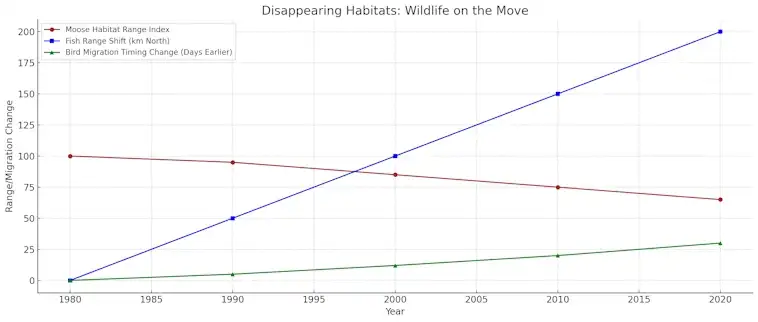
This mass movement of wildlife has a ripple effect. It can lead to overcrowding in new areas, competition for resources, and even conflict between species. Entire ecosystems are being reshuffled in real time. And the faster the climate changes, the harder it becomes for nature to keep up.
Disappearing habitats aren’t just a wildlife issue—they’re a warning sign for all of us. When animals lose their homes, it means the environments we depend on—forests, oceans, rivers—are under stress too.
If we want to protect biodiversity and stabilize our climate, preserving and restoring habitats needs to be a top priority. By safeguarding nature, we’re also protecting our own future.
Rising Temperatures and the Future of Global Agriculture
Rising temperatures are changing the way we grow food—and fast. From wheat fields to rice paddies, farmers around the world are feeling the heat, both literally and economically. As the climate shifts, so does everything from planting seasons to crop yields.
Hotter days mean more evaporation, which dries out soil and stresses crops. In many regions, this is making droughts more frequent and severe. On the other end of the spectrum, warmer air can also fuel heavier rainstorms, which lead to flooding, erosion, and crop damage. These extremes are becoming more common—and they’re hitting farmers hard.
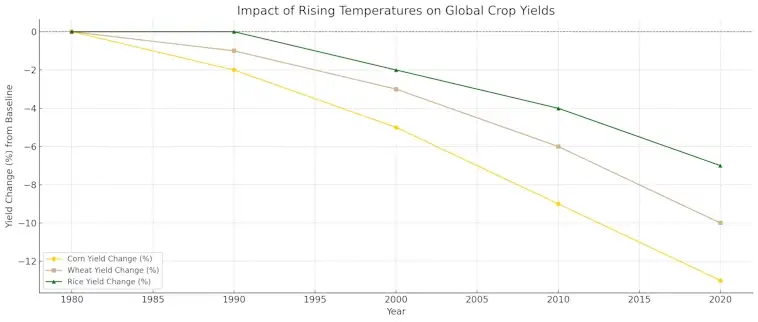
Some staple crops like corn, wheat, and soy are especially vulnerable to high heat. Even a few degrees above normal during the growing season can sharply reduce yields. In tropical areas, rice production is already being affected by heat stress and shifting rainfall patterns.
But it’s not just about plants. Rising temperatures also impact livestock. Heatwaves can reduce milk production, slow animal growth, and increase the spread of diseases.
That said, this isn’t all doom and gloom. Agriculture is adapting. New technologies, drought-resistant crops, smarter irrigation, and data-driven farming methods offer hope. Some regions may even benefit from longer growing seasons or new crops that thrive in warmer climates.
Still, the challenges are real and growing. If we want to secure the future of food, we need to act now. Investing in sustainable farming, protecting water resources, and supporting farmers in vulnerable areas will be key to feeding a warming world.
The future of global agriculture depends on how we respond today—to rising temperatures, shifting seasons, and the growing need for resilience.
How Global Warming Is Changing Where—and How—We Live
Global warming isn’t just about rising temperatures. It’s reshaping the very places we call home. As heatwaves grow stronger, seas rise, and storms become more destructive, people around the world are being forced to rethink where—and how—they live.
Coastal cities face some of the biggest risks. With sea levels creeping higher each year, neighborhoods once considered safe are now seeing regular flooding. In places like Miami, Jakarta, and Dhaka, rising waters are threatening homes, infrastructure, and even drinking water supplies.
But it’s not just coastlines at risk. Inland regions are also feeling the pressure. Extreme heat is making some cities almost unlivable during summer months. In response, more people are moving to cooler, higher elevations or regions with milder climates. This shift is already changing housing markets, job opportunities, and local economies.
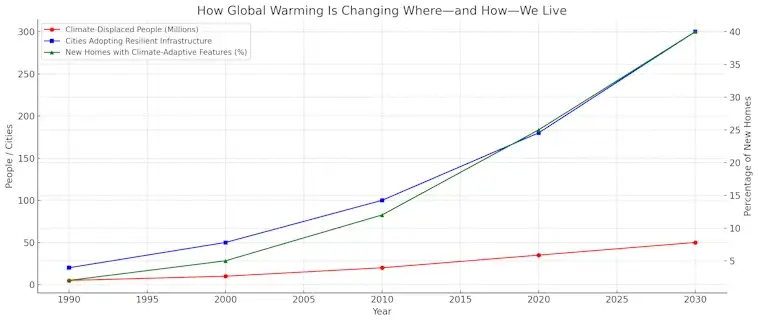
Rural areas aren’t spared either. Drought, wildfires, and shifting weather patterns are pushing communities to adapt or relocate. In some cases, families are leaving farmland that no longer supports crops. In others, they’re facing disaster-driven displacement after floods or firestorms.
Global warming is also changing how we build. Architects and city planners are designing homes with better insulation, heat-resistant materials, and smarter cooling systems. Cities are investing in green infrastructure, like tree-lined streets and reflective rooftops, to combat the urban heat island effect.
These changes bring both challenges and opportunities. While some communities are struggling to adapt, others are finding new ways to thrive—through innovation, resilience, and sustainable design.
Global warming is not a future problem—it’s a present reality, and it’s reshaping the human map. Preparing for a changing world means rethinking everything from zoning laws to disaster planning to how we build homes that can withstand what’s coming next.
What Rising Temperatures Mean for the Next Generation
Rising temperatures aren’t just shaping our present—they’re defining the future our children will inherit. The next generation is growing up in a world where the effects of climate change are no longer distant or abstract. They’re real, visible, and accelerating.
From more frequent heatwaves to stronger storms, the climate challenges facing young people today are unlike anything previous generations have experienced. What used to be “once in a century” disasters are now happening every few years. And for kids born today, these extremes could become the norm.
Health is one of the biggest concerns. Rising temperatures increase the risk of heat-related illnesses, asthma, and the spread of diseases like dengue and malaria. Air quality is declining in many cities, especially during wildfire seasons, which are growing longer and more intense.
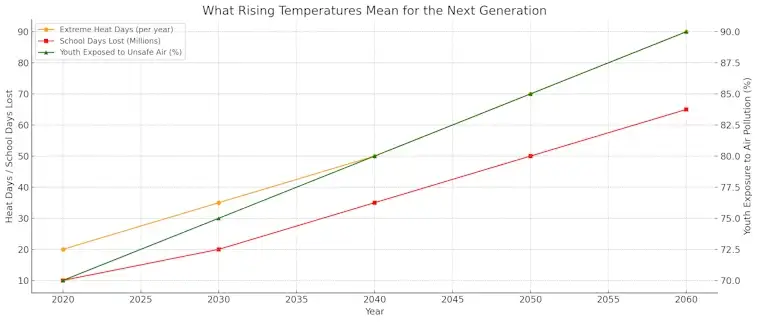
Education is being disrupted too. Around the world, extreme weather is closing schools more often—whether due to floods, heatwaves, or disaster damage. And in developing countries, climate stress can force families to pull children out of school to help at home or relocate altogether.
But it’s not all bad news. Young people are also leading the call for action. They’re organizing climate strikes, pushing for policy changes, and inspiring innovation. From clean energy startups to community-based conservation, Gen Z is showing what’s possible when passion meets purpose.
Still, the path forward depends on what we do now. Reducing emissions, investing in sustainable infrastructure, and preparing communities for a warmer world will shape the lives—and opportunities—of the next generation.
The question isn’t just what kind of planet we’re leaving behind. It’s whether we’ll empower today’s youth with the tools, resources, and support to build a future they deserve.
The Bottom Line
Rising temperatures are leaving a clear mark on every corner of our planet. From more intense storms and wildfires to shifting wildlife patterns and changes in how we grow food, the effects are far-reaching—and growing harder to ignore.
But while the challenges are serious, they also come with a call to action. Science, innovation, and community resilience are already helping us adapt in powerful ways. The choices made today will determine the kind of world future generations inherit.
By understanding what’s at stake and acting with urgency, there’s still time to protect what matters most—our homes, our health, and the natural systems that support life.
The planet is changing. The question now is: how will we respond?