

Tiny Trouble: The Big Problem with Microbeads in Beauty Products
They’re smaller than a grain of sand but cause massive problems once they hit the environment. Microbeads — those tiny plastic particles found in some face scrubs, toothpastes, and body washes — might feel like a gentle exfoliant, but they leave a rough mark on the planet.
Used widely in beauty and personal care products, these microplastics are designed to wash straight down the drain. The trouble is, they don’t disappear. Instead, they slip through water treatment systems and head straight into rivers, lakes, and oceans. From there, they become part of the food chain.
Here’s why that matters:
- They don’t break down – Microbeads are made of plastic, which means they stick around for hundreds of years.
- They attract toxins – These tiny beads can absorb harmful chemicals, becoming even more dangerous once eaten by marine life.
- They end up in our food – Fish and other sea animals mistake them for food. That means they may land on our plates.
- They add to plastic pollution – While they’re tiny, their numbers are huge. Billions enter the water every day.
What started as a marketing trend for smoother skin is now a global concern for clean water, healthy oceans, and human well-being. The good news? Some countries are banning them. Many brands are switching to natural alternatives. But there’s still more work to do.
Tiny Trouble: The Big Problem with Microbeads in Beauty Products

What Are Microbeads, and Why Are They in Your Face Wash?
You’ve probably used them without even knowing it. They’re tiny, colorful, and make your face wash feel a little gritty or your toothpaste sparkle just a bit more. But despite their small size, microbeads are causing big problems. These little plastic particles have found their way into many of our everyday products—and into our environment.
Let’s break down what microbeads are, why companies use them, and why they’re becoming a major concern.
So, What Are Microbeads?
Microbeads are small, solid plastic particles. They’re usually made from polyethylene or similar types of plastic. What makes them different from other plastic waste is their size. Most microbeads are less than 1 millimeter wide—about the size of a grain of sand or even smaller.
Because they’re so tiny, they can easily slip through water filtration systems. That’s how they end up in rivers, lakes, and oceans.
Where Are Microbeads Found?
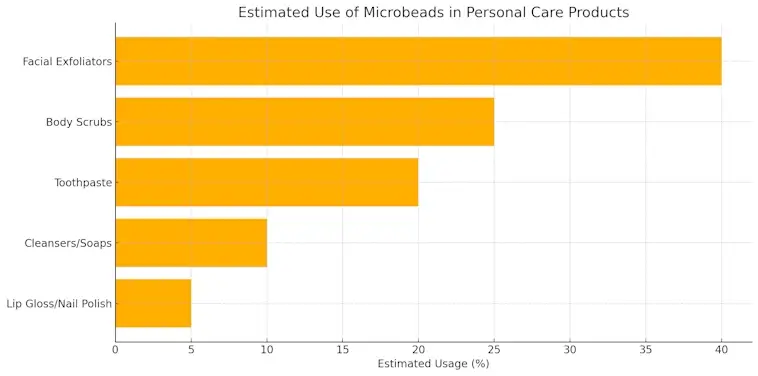
Microbeads are used in a wide range of beauty and personal care products. You’ll often find them in items that promise to exfoliate or scrub:
- Facial exfoliators – Microbeads help remove dead skin cells.
- Body scrubs – They give that gritty texture for a deeper clean.
- Toothpaste – Some brands use them to polish teeth and add color or shine.
- Cleansers and soaps – Microbeads are used for texture and sometimes as a visual “boost.”
- Lip gloss and nail polish – In rare cases, tiny plastic beads are used for shimmer or smoothness.
Although many brands have started to move away from using microbeads, they still exist in some products, especially in regions without strict regulations.
Why Do Companies Use Microbeads?
The short answer? Texture and exfoliation.
Here’s why manufacturers like them:
- They’re smooth and uniform, which makes them gentle on skin—at least compared to rougher natural materials.
- They don’t dissolve like salt or sugar, so they stay effective longer during use.
- They’re cheap to produce and easy to add to creams, gels, and pastes.
- They add visual appeal, giving products a sleek or sparkly look.
In other words, microbeads help make products feel fancy or more effective—without adding much to the cost.
While microbeads might seem harmless, their impact is anything but. Because they’re so small and don’t break down easily, they build up in the environment. That’s led to growing public concern and increased regulation in many countries.
Today, many companies are switching to natural alternatives like ground walnut shells, salt, sugar, or even coffee grounds. These ingredients offer the same exfoliating benefits—without the lasting environmental cost.
So next time you’re shopping for skincare or toothpaste, check the label. If you see words like “polyethylene” or “polypropylene,” that might be a sign to put it back on the shelf.
Down the Drain and Into the World: Where Microbeads Go
We use them. We rinse them off. And just like that, microbeads disappear down the drain. Out of sight, out of mind, right?
Not quite.
These tiny plastic particles may leave your bathroom quickly, but their journey is far from over. In fact, where they end up—and what they do once they get there—is part of a much bigger environmental story.
The Path of a Microbead: From Bathroom to Body of Water
Here’s what typically happens after microbeads wash down your sink or shower:
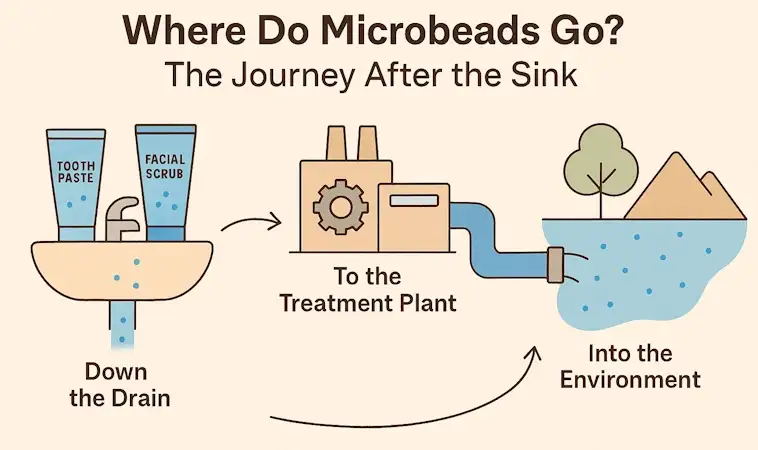
Down the Drain
Microbeads are washed off with water when you use face scrubs, toothpaste, or exfoliating products. That water goes straight into your home’s plumbing system.
To the Treatment Plant
Most wastewater travels to a treatment plant. These facilities are designed to remove larger solids, organic waste, and harmful bacteria. But here’s the problem:
Microbeads are usually smaller than 1 millimeter.
Because they’re so small, many of them slip through the filters used in treatment systems.
Into the Environment
The filtered water—now “clean”—is released back into nature. This can mean lakes, rivers, or directly into the ocean. Since microbeads aren’t biodegradable and can float or stay suspended in water, they spread quickly and easily.
Some microbeads also settle into sewage sludge (the solid waste left behind at treatment plants). This sludge is sometimes used as fertilizer on farmland. From there, rain can wash the microbeads into streams and soil—and back into waterways.
Why This Matters
Microbeads don’t just vanish. Once in the environment, they pose a serious threat:
- Aquatic animals can mistake them for food, which can cause internal damage or starvation.
- Toxic chemicals stick to plastic, meaning microbeads can carry pollutants into the food chain.
- Over time, they accumulate in ecosystems and even show up in seafood, salt, and drinking water.
A Hidden Trail with Real Consequences
So while your facial scrub might promise smooth skin, the leftover microbeads don’t just disappear. They go on to pollute the environment in ways we’re still learning about. And once they’re out there, it’s nearly impossible to get them back.
If you want to help, choosing products labeled “microbead-free” is a great first step. Every small decision makes a difference—especially when it comes to something this small.
The Impact: Tiny Beads, Huge Consequences
At first glance, microbeads seem harmless. They’re too small to see clearly, often washed away in seconds, and used in products designed to make us feel clean and refreshed. But their impact reaches far beyond the bathroom sink.
Once they escape into the environment, microbeads become a silent threat—one that’s difficult to clean up, easy to ignore, and potentially harmful to both wildlife and humans.
Let’s take a look at what happens after microbeads enter our waterways, and why their presence is causing growing concern across the globe.
A Danger to Aquatic Life
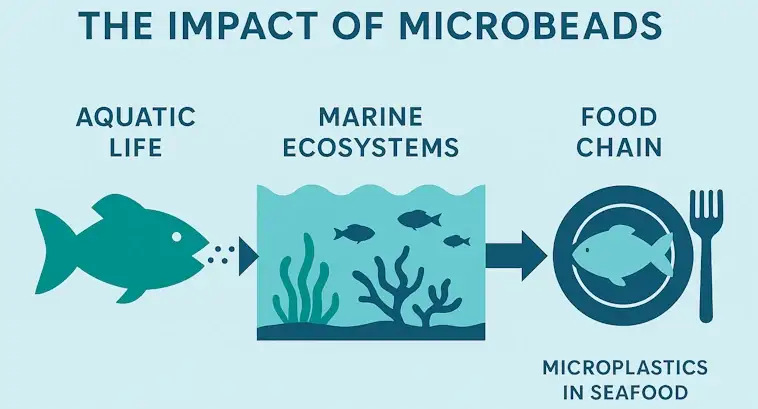
One of the biggest problems with microbeads is that they’re the perfect size to be mistaken for food. Tiny fish, plankton, shellfish, and even larger marine animals end up eating them—often without realizing it.
- Ingested microbeads can block digestive systems, causing starvation or malnutrition.
- The plastics themselves may contain or absorb toxic chemicals like pesticides or industrial pollutants.
- These toxins build up in the bodies of marine animals, affecting growth, reproduction, and behavior.
It’s not just individual animals that suffer—entire food chains can be disrupted when plastic pollution becomes widespread.
Microbeads in the Food Chain
When small fish eat microbeads, and bigger fish eat those fish, plastic and toxins move up the food chain. This process is called bioaccumulation, and it’s how microplastics could eventually reach humans.
Scientists have already found microplastics in:
- Shellfish like mussels and oysters
- Table salt
- Bottled water
- And, yes—human stool samples
While eating a tiny bit of plastic here and there might not seem dangerous, the truth is we don’t fully understand the long-term health effects yet. Some researchers worry about:
- Inflammation and irritation in the digestive system
- Hormone disruption due to chemical additives
- Potential links to diseases over time
It’s a new area of science, but the early signs point to caution.
A Lasting Environmental Footprint
Microbeads are made from materials like polyethylene, which don’t break down easily. That means once they’re in nature, they stick around for hundreds of years. They float in the ocean, settle into lakebeds, and scatter across beaches and farmland.
And because they’re nearly impossible to remove once they’re loose, the only real solution is prevention.
What Can We Do?
The good news is: awareness is growing. Many countries have banned microbeads in personal care products. Some companies have replaced them with natural exfoliants like:
- Salt
- Sugar
- Oats
- Ground nut shells
As consumers, we can help by reading labels, choosing microbead-free products, and supporting stronger regulations.
A Small Change That Matters
Microbeads may be tiny, but their impact is anything but small. From ocean life to dinner plates to human health, their reach is wide—and growing. Taking action now, while science continues to catch up, is one of the simplest steps we can take to protect the planet and ourselves.
Are They Still Legal? The Global Crackdown on Microbeads
Microbeads may be small, but they’ve sparked big changes in legislation around the world. As awareness of their environmental impact has grown, so has the push to regulate or ban them.
But while some countries have taken strong action, others lag behind—or leave room for loopholes. Let’s explore how different governments and the beauty industry are responding to the microbead problem.
The U.S. Microbead-Free Waters Act of 2015
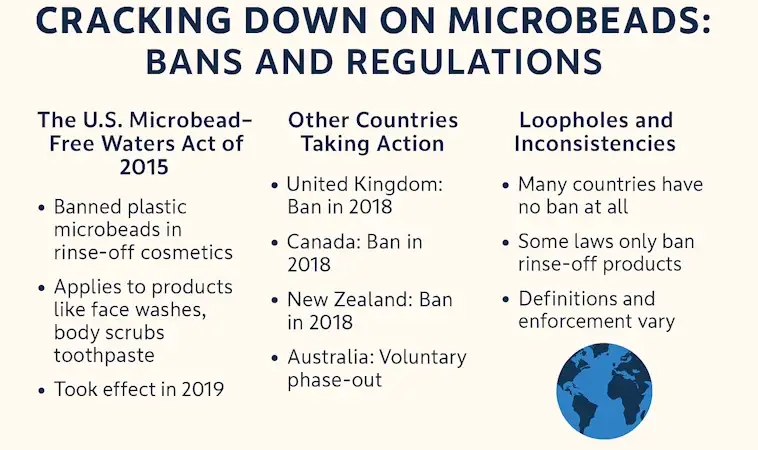
In the United States, the Microbead-Free Waters Act of 2015 marked a turning point. This federal law:
- Bans the manufacture and sale of rinse-off cosmetics containing plastic microbeads.
- Applies to products like face washes, body scrubs, and toothpaste.
- Took effect in stages, with full enforcement by 2019.
But there’s a catch:
It only covers rinse-off products. Leave-on items like makeup, lip gloss, or sunscreen aren’t included. Nor does the law cover industrial cleaning products or some over-the-counter medications.
Other Countries Taking Action
Different nations have passed their own versions of microbead bans—some stricter than others:
- United Kingdom: Banned microbeads in rinse-off cosmetics and personal care products in 2018, and the law includes both manufacture and sale.
- Canada: Also banned microbeads in toiletries in 2018, defining them as plastics under 5mm.
- Australia: Took a voluntary approach at first, with strong industry support. Most major brands removed microbeads by 2020, but there’s no national legislation—yet.
- New Zealand: Banned the sale and manufacture of rinse-off products containing microbeads in 2018.
- European Union: Has taken a broader stance. In 2022, the European Chemicals Agency proposed restrictions on all intentionally added microplastics, not just microbeads in beauty products. This includes glitter, pellets, and more.
- Developing countries: Regulations are often less consistent or nonexistent, and imported products may still contain microbeads.
Loopholes and Inconsistencies
Even in places with bans, there are still gaps:
- Definitions vary: Some laws only apply to “plastic microbeads,” leaving room for newer synthetic materials to slip through.
- Leave-on vs. rinse-off: Many laws focus only on rinse-off products, ignoring items like sunscreens or foundations.
- Unregulated imports: Products sold online or imported from less-regulated countries can still contain microbeads.
These inconsistencies make enforcement challenging and allow microbeads to stay in circulation—especially in regions without strong consumer protection laws.
How the Beauty Industry Has Responded
The industry has seen a major shift over the past decade:
- Many major brands (like Unilever, L’Oréal, and Johnson & Johnson) have phased out microbeads globally—even beyond what laws require.
- Brands are switching to natural exfoliants like:
- Crushed walnut shells
- Salt or sugar
- Bamboo powder
- Coffee grounds
- Some startups and eco-conscious brands now highlight microbead-free formulas as a selling point.
That said, greenwashing remains a concern. Some brands claim their products are “eco-friendly” without offering clear definitions or proof. Labels like “biodegradable” or “natural” aren’t always backed by regulation.
The Road Ahead
Regulations are catching up—but not fast enough. Scientists and environmental groups continue to push for stricter definitions, global standards, and broader bans that include all forms of microplastics.
For now, it’s up to consumers to stay informed. Reading labels, supporting transparent brands, and pushing for stronger laws can make a difference—because plastic pollution doesn’t stop at borders.
What You Can Do: Smarter Shopping, Cleaner Planet
Microbeads are sneaky. They hide in everyday products, often labeled with confusing ingredients that don’t sound like plastic. But once they’re out in the environment, they stick around for a very long time.
The good news? Avoiding microbeads doesn’t have to be complicated. With a little know-how and a few small changes to your shopping habits, you can cut down on plastic waste and support better choices—for your health and the planet.
Read the Ingredients
Most microbeads are made from synthetic plastics. Look out for these common ingredients on product labels:
- Polyethylene (PE)
- Polypropylene (PP)
- Polymethyl methacrylate (PMMA)
- Nylon
- Polyurethane (PU)
If any of these show up in your exfoliators, face washes, or toothpaste, there’s a good chance microbeads are involved. When in doubt, choose products that clearly say “microbead-free” or “100% natural exfoliants.”
Choose Eco-Friendly Alternatives
There are plenty of natural ingredients that exfoliate just as well (and feel even better):
- Sugar or salt scrubs – dissolve naturally in water
- Oatmeal – gentle and soothing for sensitive skin
- Ground coffee – effective and eco-friendly
- Crushed walnut shells or apricot kernels – great for body scrubs
- Rice powder or bamboo powder – popular in Asian beauty products
Natural alternatives give you all the benefits—without the plastic footprint.
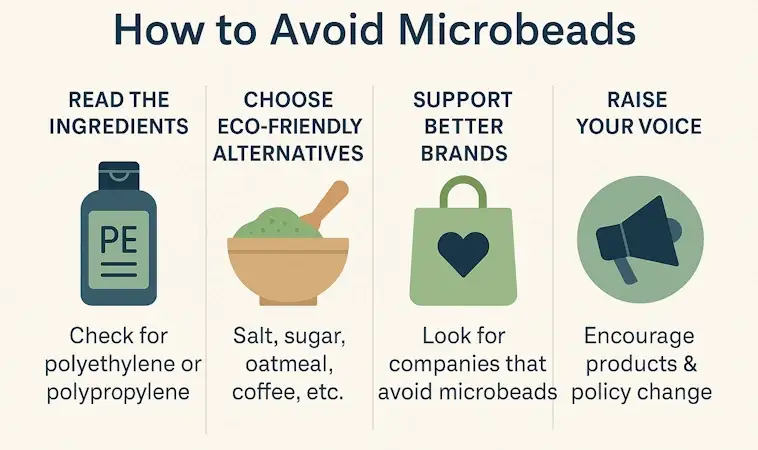
Support Better Brands
Some companies are stepping up. Here are a few known for avoiding microbeads and promoting sustainable skincare:
- Ethique – solid beauty bars with biodegradable ingredients
- Lush – handmade products using natural exfoliants
- The Body Shop – phased out microbeads and supports ethical sourcing
- Dr. Bronner’s – organic, fair trade, and plastic-free options
- Acure – affordable and microbead-free skincare
Even larger brands like Unilever and Johnson & Johnson have moved away from microbeads after public pressure.
Raise Your Voice
Want to do more than just shop smarter?
- Write to brands and ask about their microplastic policies.
- Support legislation by signing petitions or contacting local lawmakers.
- Share what you know on social media—many people still don’t realize what microbeads are.
- Support bans and efforts for clearer labeling laws.
When enough people speak up, companies and governments notice.
Remember: Small Habits Add Up
Every time you choose a microbead-free product, you’re making a difference. It might seem small, but collectively, these choices:
- Reduce the demand for plastic in personal care
- Protect marine life and ecosystems
- Encourage companies to reformulate more products
- Push the conversation toward long-term environmental change
Avoiding microbeads isn’t about perfection—it’s about progress. With just a bit more attention to what we buy and support, we can help phase out these tiny pollutants for good.
Conclusion
Microbeads might be small, but the damage they cause is anything but. What starts as a bit of plastic in your scrub or toothpaste can end up polluting oceans, harming wildlife, and even working its way back into your food.
The beauty industry is slowly changing—but it’s not moving fast enough on its own. That’s where everyday choices come in. By checking labels, choosing natural alternatives, and supporting better brands, each of us can push the demand toward cleaner, safer products.
Small steps matter. And when millions of people take them, real change happens.
It’s time to say goodbye to microbeads—for good.