

Timber Harvesting and the Planet: Can We Cut Trees Without Cutting Corners?
Timber harvesting plays a big role in shaping forests, economies, and communities. When done right, it supports wildlife, improves forest health, and provides the wood products people rely on every day. But it’s not without its challenges. Striking a balance between economic gain and environmental care is key.
There’s growing interest in how timber is harvested—not just where it happens, but how it affects the future of our forests. People want to know what sustainable forestry really means, and how modern methods compare to those of the past.
Here’s what’s important to understand:
- Selective harvesting vs. clear-cutting: Two common methods with very different outcomes.
- Impacts on ecosystems: How harvesting affects soil, water, and wildlife.
- Carbon and climate: The role forests play in capturing carbon, and what harvesting means for emissions.
- Technology in the field: From drones to satellite mapping, how innovation is changing the game.
- Certifications and regulations: What ensures that timber harvesting is done responsibly.
- Community and jobs: Why it matters to rural economies and livelihoods.
The decisions made in the forest today shape what grows tomorrow. Understanding how timber harvesting works is a step toward making those decisions count—for people and for the planet.
Timber Harvesting and the Planet: Can We Cut Trees Without Cutting Corners?

What Is Timber Harvesting, Really?
When people hear the words “timber harvesting,” many picture large forests being cut down and think it’s all bad news. But the full story is more complicated—and much more interesting. Timber harvesting is a key part of how we manage forests, support local and global economies, and create everyday products. Done responsibly, it can even help the environment.
Let’s take a closer look at what timber harvesting actually is, why it’s done, how timber is used, and the roles it plays in both our economy and our ecosystems.
What Do We Mean By Timber Harvesting?
Timber harvesting simply means cutting down trees to use the wood. It’s not just about chopping forests for quick profit. In many places, it’s a planned process that happens under strict guidelines.
Why it’s done
- To meet demand: We use wood for everything from homes to bookshelves to paper towels. That wood has to come from somewhere.
- To manage forests: Sometimes forests get overcrowded, which raises the risk of disease, pests, and wildfires. Removing certain trees helps the forest stay healthy.
- To support jobs and economies: Logging supports communities—especially rural ones—by creating jobs in forestry, transport, and manufacturing.
Responsible timber harvesting doesn’t mean clear-cutting entire forests. Many modern operations work in cycles, allowing trees to regrow and ecosystems to recover.
How Timber Is Used in Everyday Life
Timber is incredibly versatile. It’s not just for old log cabins or wooden spoons.
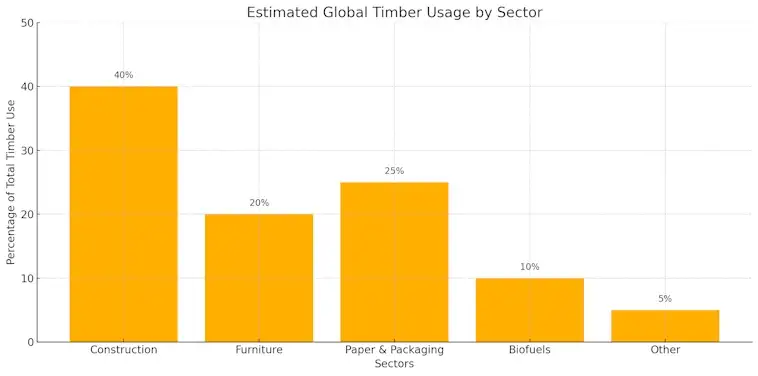
Construction
- Timber is one of the oldest and most widely used building materials.
- It’s strong, lightweight, and renewable.
- In homes, you’ll find it in frames, floors, roofs, and siding.
- Engineered wood products like plywood and cross-laminated timber (CLT) are replacing steel and concrete in some projects.
Furniture
- From mass-produced IKEA pieces to handcrafted tables, timber is the go-to material.
- Hardwoods like oak, maple, and cherry are prized for their durability and beauty.
Paper and Packaging
- Wood pulp is used to make paper for books, newspapers, and packaging.
- Advances in recycling and tree farming help reduce waste and pressure on wild forests.
Biofuels
- Leftover wood chips, sawdust, and even bark can be turned into energy.
- Timber biofuels power homes and factories and are an alternative to fossil fuels.
The Economic and Ecological Roles of Timber Harvesting
Timber plays a surprisingly big role in both economies and ecosystems.
Economic Importance
- Forestry is a billion-dollar industry worldwide.
- It creates jobs in remote areas, helping stabilize local economies.
- Timber exports can be a major income source for countries with large forests.
Ecological Role
- Thoughtful harvesting can actually support biodiversity.
- Removing sick or overcrowded trees can reduce the spread of disease.
- Harvesting encourages the growth of young, diverse trees, which support different wildlife.
- Timber lands often double as protected habitats and recreational areas.
Common Misconceptions About Timber Harvesting
Let’s clear up a few myths.
Timber harvesting always destroys forests.
Not true. Many harvested forests are regrown or managed in cycles. Some countries even plant more trees than they cut.
It’s better to stop using wood altogether.
Wood is renewable and can be more eco-friendly than plastic, metal, or concrete—especially when sourced sustainably.
All logging is illegal or harmful.
While illegal logging is a problem, many forestry operations follow strict environmental laws and certification programs like FSC (Forest Stewardship Council).
Looking Ahead: Timber in a Sustainable Future
The future of timber is tied to how we balance human needs with nature. With smarter forest management and growing interest in renewable materials, timber could become even more important.
- Architects are designing taller wooden buildings that are both strong and low-carbon.
- Paper and wood packaging may replace plastics in more products.
- Bioenergy from wood waste could reduce our reliance on oil and gas.
So, timber harvesting—when done right—isn’t just about cutting down trees. It’s about using a renewable resource in a way that respects the forest and supports the people who depend on it.
From Forest to Mill: How Timber Is Harvested Today
Timber doesn’t just appear at the lumberyard. It takes careful planning, powerful machines, and a lot of safety know-how to get trees from forest to mill. While the image of a lumberjack with an axe still pops up in cartoons, modern timber harvesting is much more advanced—and efficient.
Let’s break down how timber is harvested, the methods used, and the technology and logistics that make it all possible.
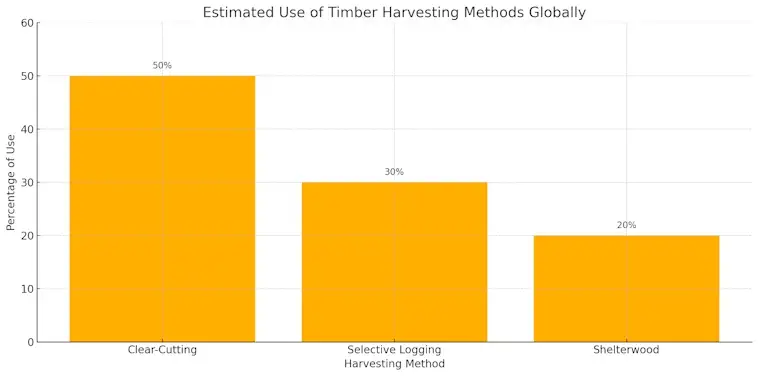
Modern Timber Harvesting Methods
There’s no one-size-fits-all approach to harvesting trees. The method used depends on the type of forest, the goals of the harvest, and environmental concerns.
Clear-Cutting
- What it is: Cutting down most or all of the trees in a specific area.
- When it’s used: Often in forests where trees of the same species and age are ready to harvest.
- Pros: Very efficient and cost-effective. Useful for regenerating species that need full sunlight.
- Cons: Can lead to soil erosion and habitat disruption if not managed carefully.
Selective Logging
- What it is: Only certain trees are removed—usually the mature or unhealthy ones.
- When it’s used: In mixed-age forests or protected ecosystems.
- Pros: Maintains more of the forest’s natural look and supports biodiversity.
- Cons: Slower and more expensive than clear-cutting.
Shelterwood Harvesting
- What it is: Trees are removed in stages over time, leaving older trees to provide shelter for new growth.
- When it’s used: To gradually renew forests while protecting young seedlings.
- Pros: Balances harvest with regeneration.
- Cons: Requires more planning and several visits to the same site.
The Machines That Do the Heavy Lifting
Modern forestry uses powerful machines to do the work faster, safer, and with less environmental damage than old-school logging.
Harvesters
- Fully mechanized machines that cut, de-limb, and section trees in one go.
- They’re guided by an operator inside a cab with computerized controls.
Skidders
- Drag cut logs from where they fall to a central area for processing or transport.
- They can handle tough terrain and reduce the need for building roads deep into the forest.
Forwarders
- Carry logs rather than dragging them, reducing ground impact and protecting the forest floor.
Technology Is Changing the Game
Logging has gone high-tech. Modern operations use smart tools to plan, track, and fine-tune every step.
Drones
- Fly overhead to map terrain, check tree health, and monitor harvest areas.
- Help plan efficient routes and reduce impact on the land.
GPS and GIS (Geographic Information Systems)
- Used to map the forest, track equipment, and mark boundaries.
- Helps crews avoid protected areas and work more precisely.
Real-Time Data
- Machines collect and send back data on tree size, harvest rates, and more.
- Improves planning and helps forest managers stay sustainable.
Safety in Timber Harvesting
Logging is one of the most dangerous jobs in the world, so safety is a top priority.
- Protective gear like helmets, chainsaw-resistant clothing, and high-visibility vests are standard.
- Training for equipment operators is extensive, often using simulators before hitting the field.
- Emergency plans and communication systems are in place on every site.
- Many crews now work in pairs or teams to watch out for each other.
Moving Timber: From Forest to Mill
Once trees are cut and processed on site, getting them to the mill is a logistical puzzle.
- Staging areas are set up near the harvest site for loading and sorting logs.
- Logging trucks transport timber over rough roads to highways or railways.
- Weigh stations and check-ins help track loads and manage legal limits on transport.
- In some regions, rafts or barges are still used to float logs downstream—just like in the old days.
A Modern Industry Rooted in Nature
Timber harvesting today is a mix of tradition, innovation, and care. The goal isn’t just to cut trees—it’s to do it in a way that keeps forests healthy, workers safe, and the planet balanced.
So the next time you see a wooden table, a newspaper, or even a wooden skyscraper, you’ll know it started with smart planning, powerful tools, and a lot of thoughtful work in the woods.
The Good, the Bad, and the Sustainable
Timber harvesting has a complicated reputation. On one hand, it provides materials we use every day—wood for homes, paper for books, fuel for energy. On the other hand, cutting down trees can harm the environment in serious ways. The key question is: can we harvest timber without destroying forests?
The good news is, yes—we can. But only if we’re careful, thoughtful, and committed to sustainable practices. Let’s explore both the risks and the solutions when it comes to timber and the environment.
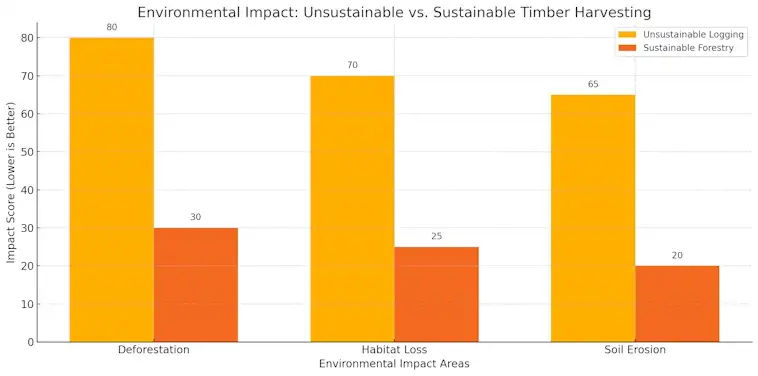
Environmental Risks of Timber Harvesting
When timber harvesting is poorly managed or done illegally, the results can be severe and long-lasting.
Deforestation
- Large-scale tree removal can wipe out entire ecosystems, especially in tropical rainforests.
- Deforestation contributes to climate change because fewer trees means less carbon being absorbed from the atmosphere.
- In many parts of the world, illegal logging is a major driver of forest loss.
Habitat Loss
- Forests are home to 80% of land-based animals, plants, and fungi.
- When trees are cleared, species lose their homes and food sources.
- Some animals can adapt, but many—especially those that rely on specific trees—face serious survival challenges.
Soil Erosion and Water Pollution
- Tree roots help anchor soil. When they’re removed, the soil can wash away in rainstorms.
- Erosion leads to sediment clogging rivers and streams, damaging aquatic habitats.
- Runoff from disturbed areas can also carry pollutants into water sources.
Sustainable Forestry: A Smarter Way to Harvest
Fortunately, not all timber harvesting is harmful. Across the globe, many forest managers and companies are working to do things differently.
Replanting and Natural Regeneration
- After trees are harvested, new ones are planted—or the forest is allowed to regrow naturally.
- This keeps the forest cycle going and helps maintain long-term health.
- In some managed forests, more trees are planted than cut each year.
Forest Certification (FSC, PEFC)
- Independent groups like the Forest Stewardship Council (FSC) and Programme for the Endorsement of Forest Certification (PEFC) set high standards for sustainable logging.
- Certified wood comes from forests where ecosystems, wildlife, and workers are protected.
- Look for these logos when buying wood products—they mean someone is watching out for the forest.
Long-Term Forest Management Plans
- These are blueprints for how forests will be used, restored, and protected over decades.
- They include rules about when, where, and how to harvest.
- Good plans involve local communities and focus on both short-term needs and long-term health.
Responsible Timber Harvesting: What It Looks Like
Sustainable forestry doesn’t just mean fewer chainsaws—it means smarter choices at every step.
- Selective logging reduces impact by only removing certain trees.
- Buffer zones are left near rivers and wildlife habitats.
- Low-impact machinery and better road design help protect soil and waterways.
- Monitoring programs track forest health over time.
In many cases, harvested forests can still support wildlife, recreation, and even tourism—all while providing timber.
A Balanced Approach to Forest Use
Timber harvesting is not automatically bad for the planet. What matters is how it’s done. When forests are managed with care, they can keep providing wood, cleaning the air, supporting wildlife, and storing carbon—all at the same time.
We all have a role to play, too. Choosing certified wood products, supporting companies that invest in reforestation, and advocating for strong forest laws can help shift the industry toward more sustainable practices.
So, while it’s true that timber harvesting can harm the environment, it doesn’t have to. With the right tools, the right mindset, and a long-term view, forests and people can thrive together.
Who’s Behind the Trees: People, Policy, and Profit
When we talk about timber harvesting, we often focus on the trees—how many are cut, what happens to the forest, or where the wood ends up. But the story of timber is also deeply human. It involves communities, workers, governments, landowners, and Indigenous peoples. Behind every harvested log is a network of people making decisions, taking risks, and shaping the future of forests.
Timber harvesting isn’t just an environmental issue or an economic one. It’s also about people, power, and policy.
Who Does the Work?
Timber harvesting is a hands-on, boots-on-the-ground job. It takes a whole team to get wood from forest to mill.
Loggers
- The people who physically cut and move the trees.
- Their work is demanding and often dangerous, requiring skill and specialized training.
- Logging jobs support families in rural and forested regions, many of which depend heavily on the timber economy.
Foresters
- Trained professionals who plan and oversee timber operations.
- They decide which trees should be cut, how to minimize environmental impact, and how to ensure the forest can regrow.
- Many work for public agencies, private companies, or consulting firms.
Landowners
- Some timber is harvested from public land, but a large share comes from private forests.
- These landowners may be individuals, families, or companies. They lease, sell, or manage their forests with help from foresters.
- In some cases, landowners harvest timber to fund property upkeep or retirement plans.
Who Regulates It?
Timber harvesting doesn’t happen in a vacuum. It’s shaped by rules and policies at every level.
Government Agencies
- In the U.S., agencies like the U.S. Forest Service and state forestry departments set rules for harvesting on public lands.
- They also monitor logging practices and issue permits.
- In other countries, national forest ministries or environmental departments do similar work.
International Standards
- Certification programs like FSC (Forest Stewardship Council) and PEFC (Programme for the Endorsement of Forest Certification) help ensure wood is harvested sustainably.
- These groups often work across borders to align logging practices with environmental and social goals.
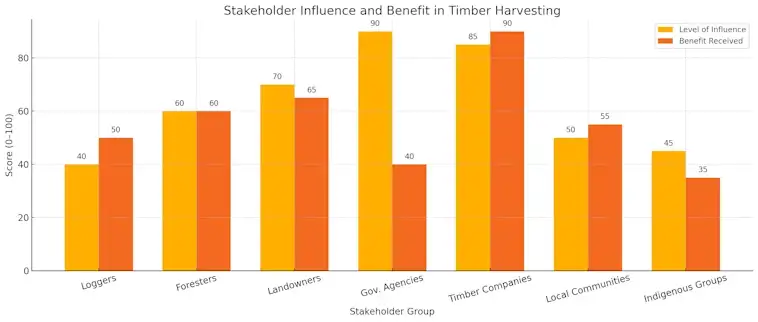
Who Profits—and Who Doesn’t?
Like many industries, timber harvesting creates wealth—but it’s not always shared equally.
Timber Companies
- Large companies own or lease huge areas of forest and manage the full supply chain—from planting to processing.
- They profit by selling raw logs, lumber, paper, and biofuel products.
Local Communities
- In timber towns, jobs in logging, trucking, and milling can be the backbone of the local economy.
- Some communities benefit from revenue-sharing when logging happens on nearby public lands.
- But others may suffer from poor air and water quality, or see forests cleared without long-term benefits.
Indigenous Land Rights and Forests
Timber harvesting often overlaps with Indigenous territories—sometimes with cooperation, sometimes in conflict.
- In many parts of the world, Indigenous communities have deep cultural and spiritual ties to forest lands.
- Some have legal rights to manage or protect those lands, but these rights are not always respected.
- Where Indigenous-led forestry is supported, it often results in more sustainable, community-focused practices.
- Recognizing land rights and including Indigenous voices in policy decisions is key to both social justice and forest health.
How Policy Shapes the Forest
From climate change goals to local zoning laws, policies decide where, when, and how timber can be harvested.
- Some governments incentivize replanting and sustainable practices through tax breaks or grants.
- Others limit logging in certain ecosystems to protect wildlife or water supplies.
- International agreements can restrict the trade of illegally harvested wood, pushing countries to adopt better standards.
Seeing the Bigger Picture
It’s easy to look at a stack of logs and think, “That’s just wood.” But behind that wood is a world of decisions, responsibilities, and consequences.
Timber harvesting is a human activity. It’s about the workers risking injury, the communities hoping for jobs, the foresters protecting wildlife, and the policymakers trying to keep it all in balance. Understanding the people behind the process adds depth to the debate—and reminds us that the future of forests is not just about trees, but about us too.
The Future Forest: Where Timber Harvesting Is Headed
Timber harvesting has come a long way from axes and horses. Today, it’s powered by satellites, data, and AI. And in the face of climate change, forests are no longer just sources of wood—they’re part of the solution. Timber isn’t just about what we take from forests anymore. It’s about how we take it, why we take it, and what it means for the planet’s future.
Let’s look at how innovation is reshaping forestry, and how timber harvesting could help—not harm—the climate.
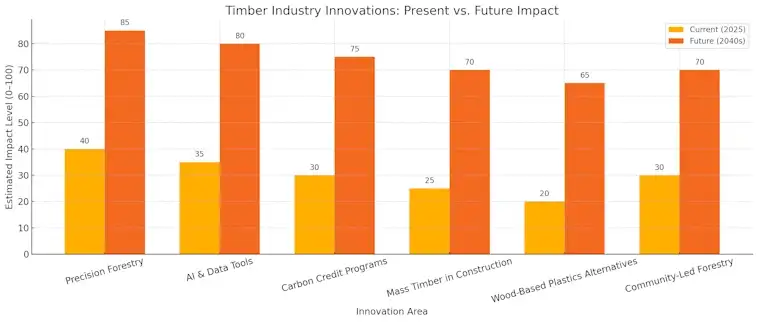
Innovations Changing Timber Harvesting
Forests are becoming smarter, thanks to new tools and technologies.
Precision Forestry
- Think of it as high-tech forest management.
- Combines satellite imagery, drones, sensors, and AI to monitor tree health, soil quality, and even wildlife movement.
- Helps foresters decide exactly which trees to cut and when—minimizing waste and maximizing forest health.
- Reduces damage to the forest floor and supports more accurate planning.
AI and Machine Learning
- AI tools analyze vast amounts of forest data to predict fire risks, disease outbreaks, and growth patterns.
- This tech helps landowners and companies make faster, smarter decisions.
- Machine learning can even suggest the best harvesting routes to avoid erosion and habitat disruption.
Carbon Credit Programs
- Forests capture carbon dioxide, helping slow climate change.
- When a forest is managed sustainably, landowners can earn carbon credits—a kind of financial reward for storing carbon.
- These credits can be sold to companies trying to offset their emissions.
- Timber harvesting plans that include replanting or selective logging can qualify, turning sustainability into income.
Rethinking Timber’s Role in a Changing World
These tools are exciting, but they raise big questions:
Can Timber Harvesting Help Fight Climate Change?
Surprisingly, yes—if it’s done right.
- Sustainable harvesting combined with reforestation can create a carbon sink that continues to absorb CO₂.
- Wood products like lumber store carbon long after they leave the forest—unlike fossil fuels, which release carbon when burned.
- Avoiding deforestation by managing forests for long-term use means fewer emissions and more resilience.
What Role Does Wood Play in Replacing Plastics and Concrete?
Wood is renewable, biodegradable, and often less carbon-intensive than materials like steel, concrete, or plastic.
- Mass timber (like CLT) is being used to build tall buildings that are strong, beautiful, and climate-friendly.
- Wood-based packaging is replacing single-use plastics in everything from cosmetics to groceries.
- Cellulose fiber from wood is even being used in sustainable clothing and tech products.
What Could Responsible Timber Harvesting Look Like in 10–20 Years?
The future of forestry could look radically different—and much smarter.
Smarter Forests
- Forests monitored in real time with drones, sensors, and satellite AI.
- Tree health tracked like patient records, with alerts for pests, droughts, or disease.
Circular Timber Economy
- Wood waste turned into energy, compost, or next-gen products.
- Products designed to be reused, disassembled, or recycled at end-of-life.
More Equity
- Indigenous communities and small landowners leading their own forest enterprises.
- More recognition of traditional ecological knowledge in forest planning.
Carbon-First Thinking
- Forests managed with climate goals in mind.
- Timber harvesting strategies designed to maximize carbon storage, not just profit.
A Greener Path Forward
Timber harvesting doesn’t have to be a symbol of environmental harm. With the right innovations and values, it could become a model for how humans can work with nature, not against it.
We have the tools. We have the knowledge. Now the challenge is using them wisely—so forests can continue to provide not just timber, but clean air, stable climates, and healthy habitats for generations to come.
Conclusion
Timber harvesting is more than just cutting down trees. It’s a complex balance of people, nature, industry, and innovation. When done carelessly, it can damage ecosystems and communities. But when done responsibly, it becomes a tool for sustainability—providing essential materials, supporting rural jobs, and even helping to fight climate change.
New technologies are changing how we manage forests. Smarter planning, better tools, and a growing commitment to long-term health are showing that forests can be both productive and protected. The choices we make now—what we build with, what we buy, and how we manage our resources—will shape the future of forests for generations to come.
It’s not about stopping timber harvesting. It’s about doing it right.