

Tidal Changes: How the Moon Moves Our Oceans—and What It Means for the Future
The ocean never rests. Every few hours, shorelines shift, currents pulse, and entire coastlines feel the subtle tug of a cosmic force. That force is the Moon.
For centuries, people have watched tides rise and fall, shaping daily life along coasts. But what many don’t realize is that these regular movements hold clues to something bigger—about our planet, its future, and even the rhythms of space itself.
Here’s why it matters:
- Tides are driven by gravity. The Moon’s pull on Earth causes ocean waters to bulge, creating high and low tides across the globe.
- Earth’s rotation and the Moon’s orbit interact. These movements don’t just affect tides—they slowly alter the length of our days and shift the Moon farther away.
- Rising sea levels are changing the story. As oceans expand due to climate change, high tides are reaching further inland, turning normal tidal events into regular flooding threats.
- Coastal communities are already feeling the effects. What used to be rare “king tides” are becoming more common, causing damage without storms or rainfall.
Understanding how lunar forces shape our oceans isn’t just about science. It’s about preparing for what’s next—especially as we watch our environment shift in ways we’re only beginning to understand.
Tidal Changes: How the Moon Moves Our Oceans—and What It Means for the Future
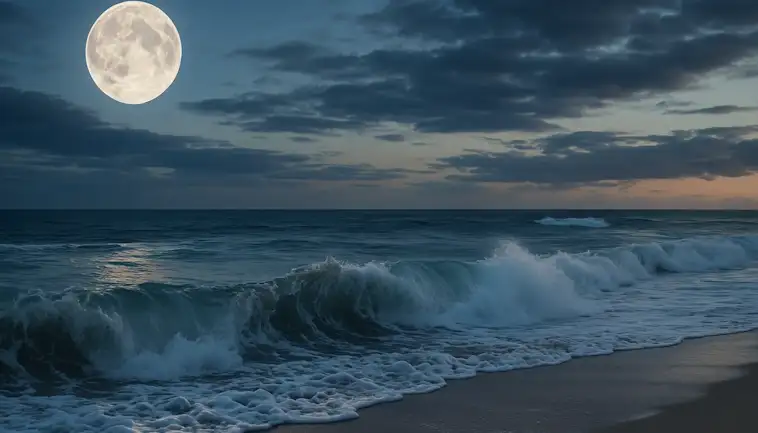
The Moon’s Gravitational Grip: Why Tides Happen
Every day, the ocean breathes in and out. Water creeps up shorelines and then pulls back again, like clockwork. These movements—called tides—aren’t just random. They’re the result of a powerful cosmic tug-of-war between Earth, the Moon, and the Sun.
Let’s dive into how it all works.
The Moon’s Gravitational Pull: The Main Force Behind Tides
The Moon is the key player in creating tides on Earth.
- The Moon’s gravity pulls on Earth, but because water moves more easily than rock, it responds most dramatically.
- As the Moon pulls on Earth’s oceans, it creates a bulge of water on the side of Earth that’s closest to the Moon.
- But here’s the twist: there’s also a second bulge on the opposite side of Earth. That happens because the Moon is pulling Earth slightly away from the water on the far side, creating a sort of “left-behind” effect.
- These two bulges are what we call high tides. And as Earth rotates, different areas move into and out of these bulges, causing the regular rise and fall of the sea.
So, in most places, you’ll see two high tides and two low tides every 24 hours and 50 minutes (a full tidal cycle).

The Sun’s Role: A Supporting but Powerful Player
The Sun is much farther away than the Moon, but it’s also much larger. Its gravity still plays a role in shaping tides—just not as strongly.
- When the Sun and Moon line up, their combined pull makes tides more extreme. These are called spring tides. Despite the name, they happen twice a month—not just in spring—during the new moon and full moon.
- When the Sun and Moon are at right angles, their gravitational pulls work against each other. This causes neap tides, which are gentler and have a smaller difference between high and low tide.
A Cosmic Rhythm That Shapes Life on Earth
This gravitational dance doesn’t just move water. It shapes ecosystems, influences weather patterns, and even guided early human timekeeping.
Looking forward, scientists continue to study tidal patterns as climate change and sea-level rise begin to shift how tides behave. Tidal energy is also being explored as a renewable power source—another way this ancient rhythm might help shape our future.
If you’re ever near the coast and notice the waves stretching farther onto the sand—or pulling far back from it—you’re witnessing the Moon and Sun at work. A gentle, steady reminder that even the vast oceans are connected to the stars.
Highs, Lows, and Lunar Cycles: How Tides Change Every Day
If you’ve ever walked along a beach and noticed the water creeping closer—or slipping farther away—you’ve witnessed one of nature’s most rhythmic dances. Tides are the slow breathing of the ocean, pulled by forces far above our heads. And they follow a pattern that’s as steady as it is beautiful.
Let’s take a closer look at how tides work, how they change throughout the day and month, and why the moon has such a powerful say in it all.
Tides in a Day: The Daily Rhythm
Every coastal area experiences tides, but most places don’t just get one high and one low tide each day—they get two of each. This cycle happens roughly every 24 hours and 50 minutes. That extra 50 minutes? It’s because the moon, which drives the tides, is also moving around Earth. So Earth has to “catch up” a little each day.
Here’s how it goes:
- High tide: Water swells up the shore, drawn by the moon’s gravitational pull.
- Low tide: The water recedes, sometimes revealing sandbars, tide pools, and seaweed-covered rocks.
- A few hours later, the pattern flips again.
Why two highs and two lows?
The moon pulls water toward it, creating a bulge. But there’s also a bulge on the opposite side of the Earth due to inertia (Earth spinning under the water). So as Earth rotates, coastal areas pass through both bulges each day, leading to two high and two low tides.
Tides in a Month: The Lunar Cycle’s Influence
Now here’s where things get even more interesting: the moon doesn’t just cause tides, it changes them throughout its month-long cycle. This gives us two major types of tides:
Spring Tides: Big and Bold
- These happen during the new moon and full moon.
- During these times, the sun, Earth, and moon are in a straight line.
- The sun and moon’s gravitational pulls combine, creating extra high high tides and extra low low tides.
- These tides have the greatest range between high and low—dramatic and powerful.
Picture a full moon lighting up the ocean. Beneath it, the sea swells and stretches more than usual.

Neap Tides: Gentle and Subtle
- These happen during the first and third (last) quarter moons.
- The moon and sun are at right angles to each other.
- Their gravitational forces partly cancel each other out.
- The result? Lower high tides and higher low tides—a much smaller difference.
Imagine the ocean breathing more softly, rising and falling with less drama.
Why It Matters: Tides Shape the Shore and Our Lives
Tides affect much more than beach walks and fishing schedules. They shape ecosystems. They help clean coastal waters by flushing them. And they’ve guided sailors for centuries.
Understanding tides can help you:
- Predict when to go tide-pooling or clamming.
- Avoid getting caught on a disappearing beach.
- Time a paddleboard session or a photo of a sea arch at just the right moment.
Looking Forward: Future Tides and Climate Change
As sea levels rise and coastlines change, scientists are watching tides more closely than ever. Some areas may see higher high tides more often, which could lead to more sunny day flooding—where streets flood without a storm, just because of a high tide.
In the future, we might also harness tidal forces more for clean energy. After all, they’re predictable and consistent, unlike wind or sun.
The tides are like the Earth’s quiet clock, ticking in sync with the moon. They rise and fall each day with a rhythm that’s been around for billions of years—and they still shape our world in quiet, powerful ways.
So next time you’re at the shore, take a look at the waterline. You might just catch the ocean breathing.
Tides and Life: The Ocean’s Invisible Clock
We tend to think of tides as background noise—waves sliding in and out, day after day. But tides do far more than shape the edges of beaches. They’re part of a hidden system that touches everything from the smallest tide pool creatures to global trade routes.
Tides set a rhythm not just for the ocean, but for life itself. Let’s explore how.
Tides and Marine Life: Nature’s Timetable
Tides create a moving world beneath the surface, and many sea creatures have evolved to live by the clock the moon sets.
Feeding Cycles
- Shorebirds and fish rely on low tide to feed on exposed shellfish or invertebrates.
- Filter feeders like mussels and barnacles open up when the tide brings in nutrient-rich water.
- Some predators time their hunts with the tides—like octopuses slipping into tide pools at nightfall.
Spawning and Migration
- Many marine animals, including horseshoe crabs and grunion (a small silver fish), use high tides during full or new moons to lay eggs safely above the normal waterline.
- Certain coral species release their eggs and sperm in sync with lunar-tide cycles, creating massive underwater spawning events.
- Migratory fish, like salmon, often wait for incoming tides to help them push upstream.
Tide Pools: Micro Worlds
- At low tide, shallow pools trap water on rocky shores. These become temporary homes for crabs, sea stars, anemones, and small fish.
- These ecosystems are delicate. The creatures living in them are adapted to sudden changes in temperature, salinity, and oxygen—all dictated by the tides.
Tides and Coastal Ecosystems: Movers and Shapers
Beyond individual creatures, tides play a vital role in keeping coastal environments healthy and balanced.
Salt Marshes and Mangroves
- Tidal flooding brings nutrients that nourish salt marsh grasses and mangrove roots.
- These ecosystems are nurseries for fish, protect shorelines from erosion, and capture carbon from the atmosphere.
Estuaries: Where Rivers Meet the Sea
- Tides mix freshwater and saltwater in estuaries, creating rich habitats for young fish and shellfish.
- This mixing also helps flush out pollutants and maintain water quality.

Beach Dynamics
- Tides constantly reshape beaches, moving sand, seaweed, and debris.
- They help bury and uncover eggs of turtles, birds, and insects, syncing coastal life with the moon’s pull.
Tides and Human Life: Living with the Flow
Since ancient times, humans have lived, worked, and traveled with the tides in mind.
Fishing and Foraging
- Traditional fishers planned trips around tide tables, launching when tides carried boats in and returning with the outgoing flow.
- In places like the Pacific Northwest, Indigenous communities used tidal fish traps—rock structures that filled at high tide and stranded fish as the water receded.
- Clamming and seaweed foraging still depend on low tide access.
Shipping and Navigation
- Harbors are often dredged to match tidal depths.
- Cargo ships and ferries rely on tides to navigate shallow ports safely.
- Many port cities grew up around natural inlets where tidal currents made docking and launching easier.
Shoreline Settlements
- People have long built homes and cities just above the high tide line.
- Tidal knowledge has guided the placement of everything from docks to drainage systems.
- In some places, tides are even harnessed to generate power through tidal turbines and barrages, offering clean, predictable energy.
Looking Ahead: Rising Seas and Shifting Tides
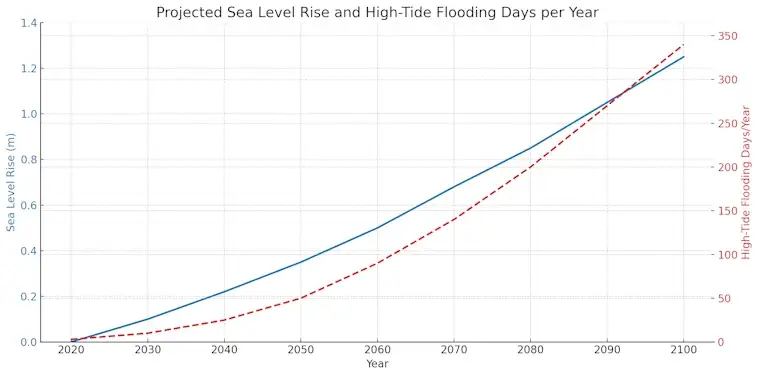
Climate change is pushing sea levels higher, and with them, the tides. This means:
- More coastal flooding, even on sunny days, especially during king tides (very high spring tides).
- Increased erosion in vulnerable areas.
- Threats to coastal ecosystems, like saltwater pushing farther into freshwater wetlands.
But it also means opportunity. Scientists and engineers are studying tides more closely than ever to build better coastal defenses, support marine conservation, and develop new forms of sustainable energy.
Tides are quiet, consistent, and ancient—but they’re far from simple. They ripple through everything: fish migrations, coral spawning, beach combing, and even the way we build our cities. The next time you see the water rising or falling, remember—there’s an entire world moving with it.
Climate Change Meets the Moon: Rising Seas, Shifting Tides
For most of history, tides have been reliable. High tide rolls in, low tide rolls out—like clockwork. And while the moon continues to pull on Earth with the same steady rhythm, the oceans themselves are changing beneath that pull.
As the planet warms, sea levels are rising, coastlines are shifting, and even small tidal changes can have big consequences. Let’s explore how climate change is altering the ocean’s relationship with the moon—and with us.
What’s Staying the Same: The Moon’s Pull
The moon is still the main engine behind Earth’s tides. Its gravitational pull, along with help from the sun, causes the ocean to bulge outward. As Earth rotates, different parts of the world move through these bulges, creating high and low tides.
- This gravitational force isn’t changing.
- The monthly tidal rhythm, including spring and neap tides, remains steady.
But here’s the twist: even if the force stays the same, the ocean’s response is now more complex.
What’s Changing: Sea Levels on the Rise
Climate change is adding more water to the ocean and making it warmer. Both effects have ripple consequences for tidal behavior.
Rising Sea Levels
- Melting glaciers and ice sheets are adding billions of tons of water to the ocean.
- Thermal expansion—water expanding as it warms—is also lifting sea levels.
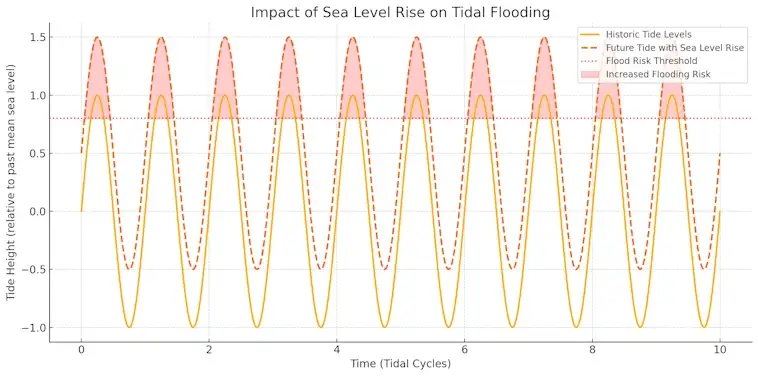
- As a result, baseline water levels are higher, so even normal tides now reach farther inland.
Amplified Flooding
- A tide that once harmlessly lapped a seawall might now spill onto roads or into basements.
- This is called “sunny day flooding”—floods that happen without storms, simply because the tide is higher than it used to be.
- During spring tides or king tides, when tides are naturally more extreme, flooding risks multiply.
Coastal Erosion
- Higher tides give waves more reach, eating away at beaches, dunes, and cliffs.
- Storm surges—which are often layered on top of tides—become more destructive when starting from a higher sea level.
Changing Coastlines: Tides in New Territory
As coastlines shift, so do tidal patterns—especially in shallow or enclosed areas like bays and estuaries.
- Topography matters: Where water flows in and out can change how tides behave.
- In some places, tides are becoming stronger, with higher highs and lower lows.
- In others, tidal ranges may shrink, especially where natural barriers like marshes or sandbars are lost.
These changes aren’t always predictable, and they can create problems for wildlife and people alike.
Tides and Human Infrastructure: Pressure on the Edge
Coastal cities are being forced to rethink how they live with the ocean.
- Drainage systems built for past sea levels now back up during high tide.
- Ports and harbors face more frequent disruptions.
- Historic tidal knowledge—the kind passed down through generations of fishers and sailors—may no longer match reality.
Cities like Miami, Jakarta, and Venice are already investing in sea walls, pumps, and floodgates. But for many places, especially low-income communities, the cost of adapting is high.
A Moving Target: Why Predicting the Future Is Tough
The moon’s influence remains constant—but Earth’s oceans are no longer steady partners. A few reasons why:
- Ice loss is uneven—Greenland, Antarctica, and mountain glaciers are melting at different rates.
- Ocean currents are shifting, which can raise or lower sea levels regionally.
- Storm patterns are becoming more intense and less predictable.
That means our old tide charts, once reliable for years, may need more frequent updates. Scientists are building models that combine tidal science with climate projections to better forecast future conditions.
Tides have always been predictable. But now, in a warming world, their impact is becoming harder to control. The moon may pull the same way it always has, but the sea it pulls on is deeper, warmer, and more volatile.
For coastal communities, that means staying informed, planning ahead, and—perhaps most of all—respecting the quiet power of the tide.
Tomorrow’s Tides: Adapting to a Lunar-Powered Future
For centuries, coastal communities have lived in sync with the tides. But now, the rhythm is shifting. Sea levels are rising, storms are growing stronger, and tidal flooding is becoming a more frequent—and more costly—problem.
The good news? We’re not just watching this happen. Around the world, cities, scientists, and everyday people are finding smarter ways to track, predict, and respond to changing tides. Let’s explore how.
Smarter Forecasting: Eyes on the Ocean
To respond effectively, we first need to understand what’s coming. That starts with better data and better models.
High-Tech Tide Gauges and Satellites
- Modern tide gauges measure not just water height, but also pressure, temperature, and salinity.
- Satellites like the Sentinel and Jason series monitor sea level changes across the globe, tracking trends that were once invisible.
- Combined, they give scientists a fuller, more precise picture of how tides are changing.
Real-Time Tide and Flood Alerts
- Agencies like NOAA (in the U.S.) and similar groups worldwide now provide real-time tidal data through public dashboards and mobile apps.
- Tidal prediction models blend satellite data, historical trends, and weather forecasts to give more accurate, localized predictions—sometimes down to the hour.
AI and Machine Learning
- Researchers are training algorithms to recognize patterns in ocean behavior that humans might miss.
- These tools can flag early signs of unusual tides or storm surges, helping cities prepare earlier and more accurately.
Smart Cities on the Coastline
Urban centers are already adapting to a world of higher tides—and many are getting creative.
Floating Architecture
- In the Netherlands, engineers have designed floating houses that rise and fall with the water.
- In Bangkok and parts of Southeast Asia, architects are building schools and community centers that stay above floodwaters, even during extreme tides.
Tidal-Responsive Infrastructure
- Cities like Venice and London use movable flood barriers—MOSE and the Thames Barrier, respectively—to block high tides during storm events.
- Coastal roads, storm drains, and transit systems are being redesigned with “living with water” in mind.
Green Defenses
Instead of just concrete, many places are turning to nature-based solutions:
- Restoring wetlands, which absorb tidal surges like sponges.
- Planting mangroves or building oyster reefs, which break wave energy before it reaches shore.
- Creating “blue belts”—buffer zones that shift with rising seas, protecting inland areas.
Community Innovation and Resilience
Adaptation isn’t just top-down. Local communities are playing a vital role in shaping responses to tidal change.
Citizen Science and Crowd-Sourced Data
- Coastal residents contribute to apps like MyCoast or iSeaChange, sharing photos of tidal flooding and beach erosion in real time.
- These grassroots observations help scientists fine-tune their models and can even catch trends the instruments miss.
Education and Preparedness
- Coastal schools and nonprofits run programs teaching tidal literacy—how tides work, how they’re changing, and how to stay safe.
- Emergency planners now incorporate tidal forecasts into evacuation routes and alert systems.
Looking Ahead: Innovation on the Horizon
As climate change continues to reshape our shores, expect to see:
- Advanced tidal prediction tools in everyday apps—like weather, maps, or even real estate platforms.
- AI-powered coastal planning, helping cities decide where to build, reinforce, or retreat.
- Tidal energy tech, using predictable ocean rhythms to generate clean power.
With the right mix of science, technology, and local knowledge, we can meet this moment. Tides may be rising, but so is our ability to adapt.
We can’t stop the moon from pulling, and we can’t hold back the sea forever. But we can get smarter, faster, and more prepared. By blending tradition with tech—and listening to both data and local voices—we have a real chance to keep pace with a changing ocean.
And that’s the kind of tide we can turn.
Conclusion
Tides have always been a quiet force, shaping our coastlines, guiding marine life, and influencing how people live by the sea. They move to the rhythm of the moon, steady and predictable. But as the climate shifts and sea levels rise, even this ancient cycle is starting to feel different.
What was once routine is now a growing concern for coastal cities, ecosystems, and communities. Higher tides reach farther. Storms strike harder. The familiar pull of the moon is now working on a very different ocean.
Still, this isn’t a story of helplessness. It’s a moment for smart decisions, new ideas, and deeper awareness. With better tools, better science, and stronger connections between people and the sea, we can respond to the changes and prepare for what’s next.
The tides are still coming in. The question now is how we move with them.