

The Vanishing Rainforests: Why This Crisis Affects Us All
The Rapid Loss of Rainforests Is Not Just an Environmental Issue — It’s a Global Warning We Can’t Ignore
Rainforests are disappearing at an alarming rate, and the impact reaches far beyond the regions where they grow. These vast ecosystems, often called the lungs of the Earth, help regulate climate, store carbon, and support an extraordinary range of life. As rainforests shrink, the balance they maintain begins to break down. This shift affects weather patterns, food systems, and air quality across the globe, making the crisis impossible to ignore.
At first glance, rainforest loss may seem like a distant issue. However, the consequences are already shaping daily life in subtle but serious ways. Rising temperatures, unpredictable rainfall, and the loss of natural resources are all linked to deforestation. In addition, many medicines and everyday products trace their origins back to these rich environments. When forests vanish, so do opportunities for future discoveries that could benefit millions.
Looking ahead, the stakes are even higher. If current trends continue, the damage could become irreversible within decades. Yet, there is still time to change course. Understanding why rainforests matter is the first step toward protecting them. By paying closer attention to this global challenge, it becomes clear that safeguarding these ecosystems is not just an environmental issue—it is essential for the health, stability, and future of everyone on the planet.
What You’ll Discover
Rainforests Are Disappearing Faster Than You Think
What Is Driving Large-Scale Forest Loss Today
Rainforests and Climate Change: A Global Impact
Why Biodiversity Loss Matters to Human Survival
How You Can Help Protect Forests for the Future
Conclusion: Why Protecting Rainforests Matters More Than Ever
Rainforests Are Disappearing Faster Than You Think
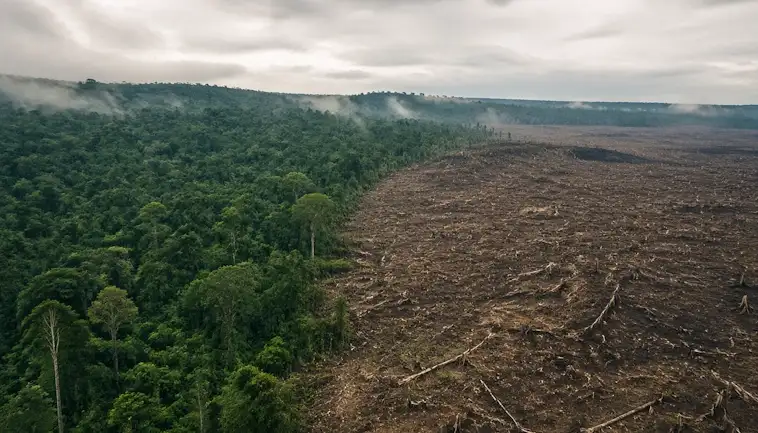
Rainforests are some of the most important places on Earth. They are full of life, color, and mystery. Yet, they are disappearing at a speed that often goes unnoticed. This loss is not just a distant problem. It affects all of us, no matter where we live.
To begin with, rainforests help regulate the planet’s climate. They absorb large amounts of carbon dioxide and release oxygen. In simple terms, they act like the Earth’s lungs. However, every time trees are cut down, that balance is disrupted. As a result, more carbon stays in the atmosphere, which adds to global warming.
Why Rainforest Loss Is Accelerating
So, what is causing this rapid decline? The main reason is human activity. Large areas are cleared for farming, cattle grazing, and logging. In many cases, forests are burned to make space quickly. This method is fast, but it causes lasting damage.
At the same time, demand for products like palm oil, soy, and beef continues to grow. This demand pushes companies to clear even more land. Consequently, rainforests shrink year after year. Even worse, illegal logging still happens in many regions, making the situation harder to control.
The Hidden Impact on Wildlife and People
The effects go far beyond trees. Rainforests are home to more than half of the world’s plant and animal species. When forests disappear, these species lose their habitats. Many cannot adapt fast enough. Sadly, this leads to extinction.
In addition, millions of people depend on rainforests for their daily lives. Indigenous communities rely on them for food, medicine, and shelter. When forests are destroyed, these communities often lose their homes and traditions.
Looking ahead, the future of rainforests depends on the choices we make today. Small actions can add up. For example, choosing sustainable products and supporting eco-friendly brands can make a difference. Governments and businesses also play a key role by enforcing stronger protections.
Rainforest loss is happening faster than many realize. However, there is still time to act. By staying informed and making mindful choices, we can help protect these vital ecosystems for future generations.
What Is Driving Large-Scale Forest Loss Today
So, what’s behind this large-scale forest loss? In simple terms, it comes down to a mix of human demand and environmental pressure. As populations grow, the need for food, energy, and space rises too. As a result, forests are often the first to go.
The Main Causes Behind Today’s Forest Loss
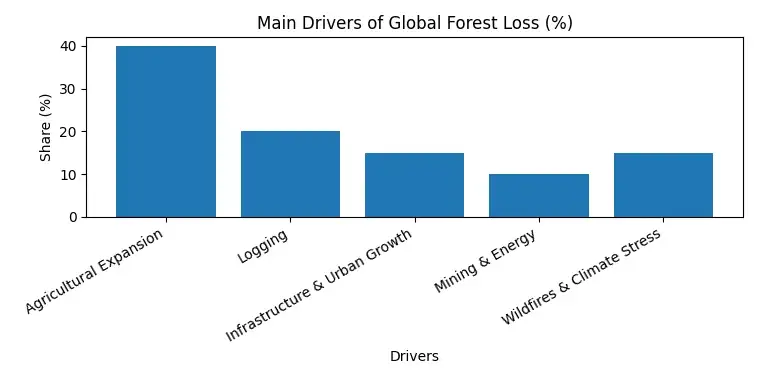
First of all, agriculture is the biggest driver. Farmers clear land to grow crops or raise livestock. This is especially true in tropical regions, where forests are rich but also vulnerable. Next, logging plays a major role. Trees are cut for timber, paper, and fuel. While some logging is managed, illegal practices still cause serious damage.
In addition, infrastructure is expanding. New roads, cities, and industrial sites cut through forests. This not only removes trees but also fragments ecosystems. Meanwhile, mining and energy projects also contribute. These activities require large areas of land, often in remote forest zones.
The Growing Role of Climate and Wildfires
However, human activity is only part of the story. Climate change is making things worse. Rising temperatures and longer dry seasons increase the risk of wildfires. These fires can destroy vast areas in a short time. At the same time, weakened forests struggle to recover.
Looking ahead, the challenge is clear. If current trends continue, forest loss will accelerate. Yet, there is still hope. Better land management, sustainable farming, and stronger policies can slow the damage. In other words, the future of forests depends on the choices we make today.
To help visualise this, the chart below shows the main drivers of global forest loss.
Rainforests and Climate Change: A Global Impact
Rainforests play a vital role in keeping our planet healthy. Yet, they are under growing pressure. From rising temperatures to deforestation, climate change is reshaping these rich ecosystems. As a result, the impact is not just local—it is global.
To begin with, rainforests act as the Earth’s natural climate regulators. They absorb large amounts of carbon dioxide, which helps slow down global warming. However, when forests are cut down or burned, that stored carbon is released back into the atmosphere. This creates a dangerous cycle. The more rainforests we lose, the faster climate change accelerates.
At the same time, rainforests influence weather patterns around the world. They help control rainfall and maintain balance in the climate system. Without them, droughts can become more common, and extreme weather events may increase. This means that even people living far away from rainforests can feel the effects.
Why Rainforests Matter More Than Ever
Right now, protecting rainforests is more important than ever. These ecosystems are home to over half of the world’s plant and animal species. In addition, they support millions of people who rely on them for food, shelter, and income.
Even more importantly, rainforests help stabilize the global climate. When they are healthy, they store carbon, regulate temperatures, and support biodiversity. But when they are damaged, the balance shifts quickly.
Key Impacts of Climate Change on Rainforests
- Rising temperatures can stress plant and animal life
- Changes in rainfall patterns may lead to droughts
- Increased risk of forest fires damages large areas
- Loss of biodiversity threatens unique species
- Disruption to local communities affects livelihoods
Because of these challenges, action is needed now. Governments, businesses, and individuals all have a role to play. For example, reducing deforestation and supporting sustainable products can make a real difference.
Looking ahead, the future of rainforests will shape the future of our planet. If we protect them, we protect ourselves. So, while the challenge is serious, there is still time to act.
Why Biodiversity Loss Matters to Human Survival
Biodiversity is not just about saving animals or protecting forests. In reality, it is about protecting our own future. Every species, no matter how small, plays a role in keeping ecosystems balanced. And those ecosystems support human life in ways we often overlook.
How Nature Directly Supports Our Lives
First, biodiversity keeps our food systems strong. Crops rely on pollinators like bees and butterflies. Without them, food production drops. As a result, prices rise and shortages become more likely.
Next, healthy ecosystems clean our water. Wetlands, forests, and soils act like natural filters. They remove pollution and keep water safe to drink. However, when biodiversity declines, this natural system breaks down.
In addition, many medicines come from plants and organisms found in nature. In fact, a large share of modern drugs has roots in biodiversity. So, losing species could mean losing future cures.
The Hidden Risk to Stability and Survival
Beyond the obvious, biodiversity also helps control the climate. Forests absorb carbon dioxide, while oceans regulate temperature. When these systems weaken, climate change speeds up.
At the same time, economies depend on nature. Farming, fishing, and tourism all rely on healthy ecosystems. Therefore, biodiversity loss is not just an environmental issue. It is an economic one too.
Overall, the message is clear. When biodiversity declines, human survival becomes more uncertain. Protecting nature is not optional. It is essential.
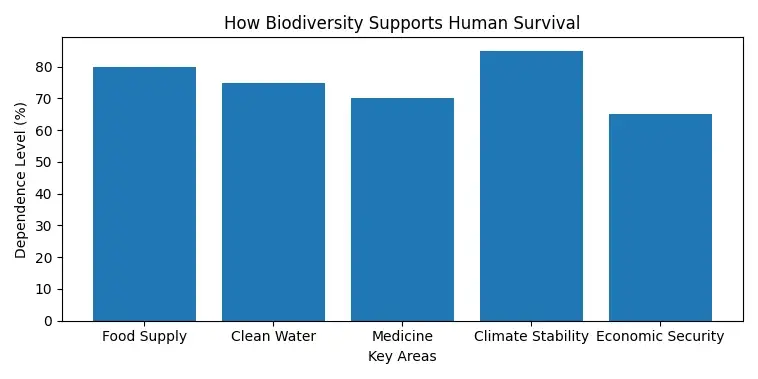
This chart highlights how much we depend on biodiversity across key areas of life.
How You Can Help Protect Forests for the Future
Rainforests are some of the most important ecosystems on Earth. They store carbon, support wildlife, and help regulate our climate. Yet, they are under constant threat from deforestation and human activity. The good news is that small, everyday choices can make a real difference. By taking simple steps, you can help protect rainforests for future generations.
To begin with, awareness is key. When you understand how your actions affect the environment, it becomes easier to make better choices. For example, many everyday products—like paper, palm oil, and even some foods—can be linked to rainforest destruction. So, choosing sustainable options is a powerful first step.
Make Smarter Everyday Choices
One of the easiest ways to help is by changing what you buy. Look for products with eco-friendly labels, such as FSC-certified paper or sustainably sourced palm oil. These labels show that forests were managed responsibly. In addition, try to reduce waste where you can. Reuse items, recycle properly, and avoid single-use plastics.
Another important step is to rethink your diet. For instance, reducing your intake of products linked to deforestation, like certain meats or processed foods, can lower demand for land clearing. Even small changes, when done consistently, can have a big impact over time.
Support Conservation Efforts
Beyond your daily habits, you can also support organizations that work to protect rainforests. Many groups focus on conservation, reforestation, and supporting local communities. Donating, volunteering, or even sharing their work online helps raise awareness and funding.
At the same time, consider using your voice. Contacting companies and policymakers to demand better environmental practices can drive change on a larger scale. When enough people speak up, businesses often listen.
Finally, stay informed. Rainforests face ongoing challenges, but new solutions are always emerging. By keeping up with the latest developments, you can continue to make informed choices and inspire others to do the same.
In the end, protecting rainforests is not just about big actions. It is about consistent, thoughtful decisions made every day. Together, these choices add up—and they can help secure a healthier planet for the future.
Conclusion: Why Protecting Rainforests Matters More Than Ever
Rainforests are not just distant green spaces. They are vital to life on Earth. From the air we breathe to the food we eat, rainforests play a key role in keeping our planet stable. Yet, they are disappearing at an alarming rate.
This crisis affects everyone. It impacts climate change, wildlife, and even global economies. As rainforests shrink, we lose more than trees. We lose balance, resilience, and future opportunities.
The good news is that change is still possible. Small actions can lead to real impact. Supporting sustainable products, raising awareness, and backing conservation efforts all help protect rainforests.
Looking ahead, the choices we make today will shape tomorrow. If we act now, rainforests can recover and continue to support life for generations. But if we delay, the damage may become permanent.
Rainforests matter. Not just for nature, but for all of us.