

The Urgent Heat Stress Alerts That Trap Us All
The Urgent Heat Stress Alerts That Trap Us All
Hot days are getting hotter, and our bodies are paying the price. Heat stress is no longer just a concern for outdoor workers or athletes—it’s a growing threat for everyone. When temperatures climb, your body works overtime to stay cool. But if it can’t keep up, the results can be dangerous, even life-threatening.
From dehydration and dizziness to more severe conditions like heat exhaustion and heatstroke, heat stress can strike faster than most people realize. And with climate change pushing record-breaking heatwaves across cities worldwide, the risk is climbing each summer.
Understanding what heat stress is, how it develops, and the warning signs to watch for could make all the difference. The good news? With the right knowledge and preventive steps, you can protect yourself and the people you care about.
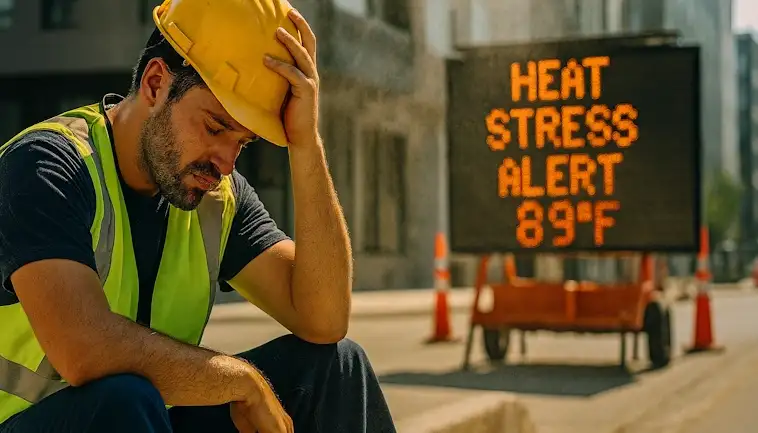
What Heat Stress Really Means for Your Body
When the temperature rises, your body works hard to keep you cool. You sweat more, your heart pumps faster, and your body shifts blood flow to the skin. This is your natural cooling system at work. But when the heat becomes too much, these systems start to strain. That’s when heat stress sets in.
Heat stress isn’t just feeling hot and uncomfortable. It’s a physical reaction that can affect your health in real ways. It may cause dehydration, dizziness, or fatigue. In more severe cases, it can lead to heat exhaustion or even heatstroke, which is a medical emergency.
Why Your Body Struggles in Extreme Heat
Think of it like this: your body is a machine with built-in safety features. Sweating cools you down, but if you lose too much fluid, your body runs low on fuel. Your muscles tire, your focus fades, and your risk of serious illness increases. The hotter and more humid the environment, the harder it is for sweat to evaporate, making cooling even tougher.
The good news is you can take steps to protect yourself. Stay hydrated, rest in shaded or cool areas, and avoid pushing your limits in extreme heat. By understanding how heat stress works, you can make smarter choices that keep your body safe.
Warning Signs You’re Pushing Past Safe Limits
It’s easy to convince yourself that powering through stress or lack of rest is just part of modern life. But our bodies are smarter than we give them credit for. They send out signals when we’re doing too much, too fast, for too long. Ignoring these warning signs doesn’t just affect your mood—it can harm your health in ways that are harder to reverse.
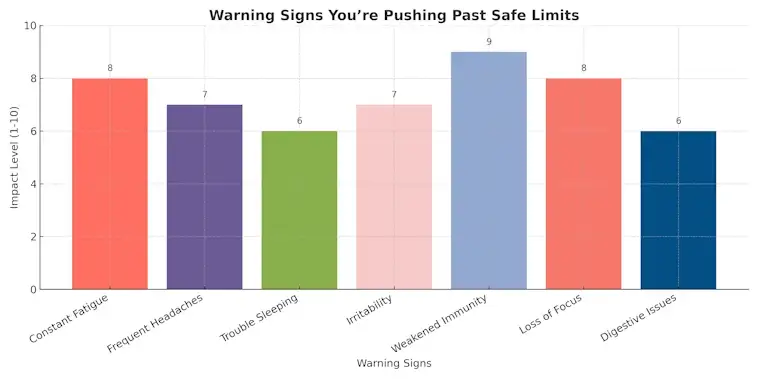
Think about it this way: your body has its own alarm system. If you’re feeling drained all the time, snapping at little things, or catching every cold that goes around, those alarms are going off. Paying attention now can save you from bigger problems later.
How Heat Stress Can Sneak Up on You in Everyday Life
Most people think of heat stress as something that only happens during a heatwave or when you’re working outdoors in the blazing sun. But the truth is, it can sneak into your daily routine in ways you may not expect. You don’t need to be running a marathon or working on a construction site to feel its effects. Even simple, everyday activities can push your body past its comfort zone without you realizing it.
Think about the times when you’re rushing around, carrying bags, or just sitting in a hot room without much airflow. Your body is working harder than you know. When that happens, heat stress can creep in quietly and leave you feeling drained—or worse, put your health at risk.
Here are some common but often overlooked situations where heat stress may catch you off guard:
- Doing household chores in a poorly ventilated kitchen or laundry room.
- Exercising indoors without fans or proper hydration.
- Driving long distances in a car without strong air conditioning.
- Spending time in crowded public transport during summer.
- Working in offices or warehouses where cooling systems are limited.
- Taking medications that affect how your body regulates temperature.
- Ignoring early warning signs like headaches, dizziness, or excessive sweating.
The key is awareness. By noticing how heat affects you in everyday settings, you can take simple steps—like drinking more water, wearing lighter clothing, or taking breaks in cooler spaces—to protect yourself before heat stress takes hold.
Simple Steps to Protect Yourself in Extreme Heat
When the temperature soars, it’s easy to feel drained and overwhelmed. But the good news is, a few simple steps can make a big difference in keeping you safe. Extreme heat doesn’t have to catch you off guard. By preparing ahead and making smart choices, you can stay cool and healthy even during the hottest days.
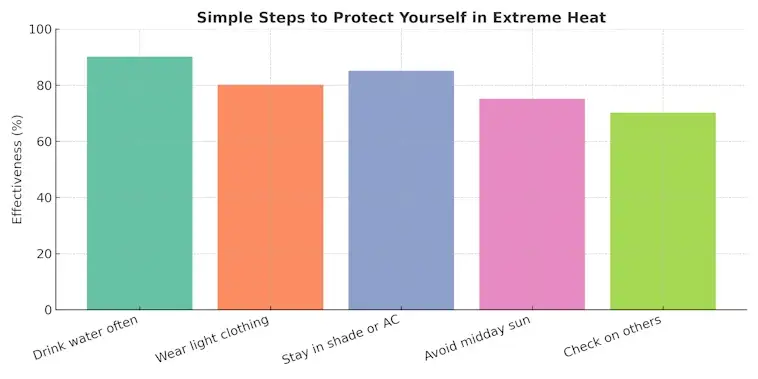
Think of it as building your personal shield against the sun. Small daily actions—like drinking water or avoiding the midday sun—help you protect your body and energy. These steps aren’t complicated, but they work.
Why Staying Alert to Heat Dangers Saves Lives
Every summer seems to feel hotter than the last. While most of us enjoy the sunshine, extreme heat can quickly turn dangerous if we’re not paying attention. The truth is, heat doesn’t just make us uncomfortable—it can overwhelm the body, and in some cases, it can be deadly. That’s why staying alert to heat dangers is more than smart. It’s a lifesaving habit.
When the temperature climbs, our bodies work harder to stay cool. Sweating helps, but it’s not always enough. Dehydration, exhaustion, and heat-related illness can sneak up faster than we realize. What makes it even trickier is that warning signs are often easy to ignore until it’s too late.
Heat Stress and Everyday Risks
Heat stress isn’t just a risk for people working outside. It can affect anyone—athletes, commuters, or even someone relaxing at home without proper ventilation. The danger grows in cities, where concrete and asphalt trap heat and keep it lingering long after sunset. If you’ve ever felt the “heat island effect,” you already know how draining that can be.
The good news? Simple steps make a big difference. Drinking water, resting in shaded or cool places, and recognizing the early symptoms of heat stress can prevent emergencies. Checking on friends, neighbors, and older family members also helps create a safety net when the heat is relentless.
By staying alert, you’re not just protecting yourself—you’re protecting your community too. Heatwaves may be silent threats, but awareness and quick action can save lives.
Staying Ahead of Heat Stress: Protect Yourself and Your Community
Heat stress isn’t just uncomfortable—it’s a growing health risk that can affect anyone. With rising temperatures and longer heatwaves, the stakes are higher than ever. The good news is that awareness and preparation make all the difference. By staying hydrated, recognizing early warning signs, and creating cooler spaces at home and in your community, you can reduce the dangers of extreme heat.
Don’t wait until the next heatwave to take action. Start today by sharing this article with friends and family, checking your local forecast, and making a simple heat safety plan. Together, we can stay safe, protect our loved ones, and build resilience against the rising heat.