

The Silent Crisis: Why Severe Droughts Hit Harder Now
The Silent Crisis: Why Severe Droughts Hit Harder Now
Severe droughts are no longer rare events. Across the globe, they are arriving more often, lasting longer, and leaving deeper scars. What once felt like a regional problem now threatens food supplies, weakens economies, and pushes communities to the edge. The reason droughts hit harder today lies in the perfect storm of climate change, population growth, and strained water systems. Without new ways to manage this growing crisis, the risks to health, stability, and survival will only grow stronger in the years ahead.
How Climate Change Intensifies Severe Droughts
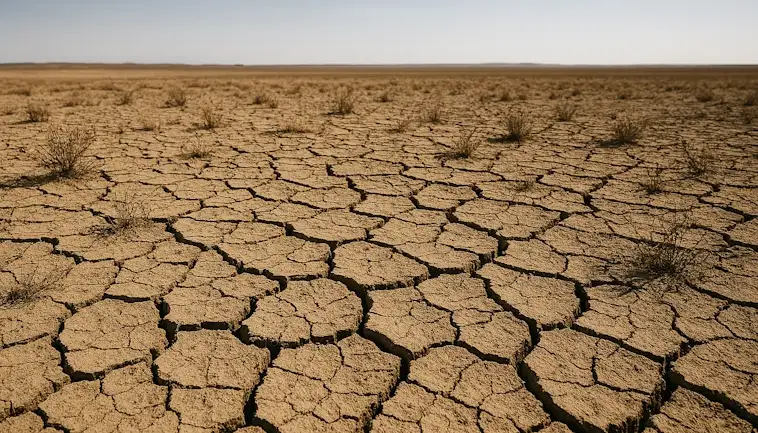
Droughts are nothing new. They’ve shaped human history, influenced migration, and even changed the course of civilizations. But today, something is different. Climate change is making droughts longer, hotter, and harder to recover from. What used to be rare is now becoming alarmingly common in many parts of the world.
When we talk about drought, it’s not just about a lack of rain. Rising global temperatures are speeding up evaporation from soil, rivers, and reservoirs. This means water disappears faster than it can be replaced. At the same time, shifting weather patterns are moving rain away from places that depend on it most. The result? Communities, farmers, and ecosystems are left struggling.
Why Hotter Air Matters
Here’s the tricky part: warmer air holds more moisture. That means when it does rain, storms can be more intense in some regions, while others stay dry for much longer. It’s a kind of climate imbalance. In simple terms, some areas flood, while others suffer extreme drought. This uneven pattern is a direct sign of a warming planet.
We’re already seeing the effects. Crops fail more often. Wildfires spread faster because dry landscapes ignite easily. Cities face water shortages, and rural areas watch wells run dry. These are no longer distant warnings—they’re happening right now.
Looking ahead, the challenge is clear. If global temperatures keep climbing, severe droughts will become an even bigger threat to food, water, and daily life. But the good news is, every step we take to slow climate change helps ease the risk. Cleaner energy, smarter water use, and protecting forests can make a real difference.
The Hidden Costs of Water Scarcity on Communities
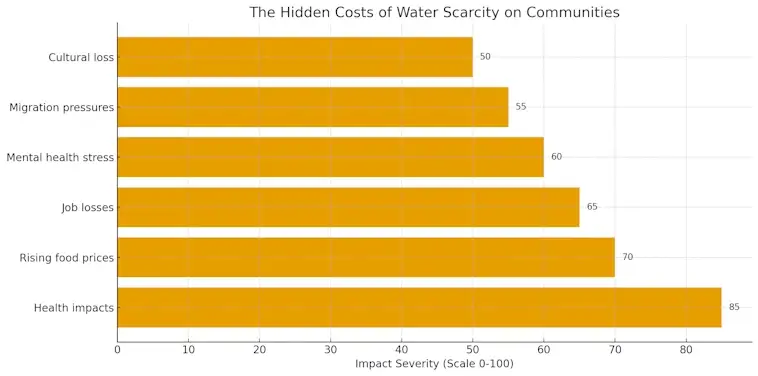
Water is life. Without it, families, farms, and entire towns struggle to survive. Yet in many parts of the world, water scarcity is no longer just a seasonal challenge—it’s becoming a daily reality. While the lack of water is obvious, what’s less visible are the hidden costs it creates for communities. These impacts often run deeper than we realize.
When water is scarce, the first hit is usually on health. Clean drinking water becomes harder to find, and people are forced to rely on unsafe sources. This leads to the spread of disease, especially in vulnerable areas. But the costs don’t stop there. Food prices climb when farms can’t irrigate crops. Jobs in agriculture and local businesses disappear, leaving families with fewer ways to earn a living.
The Emotional Toll of Drought
Beyond the physical challenges, water scarcity weighs heavily on people’s mental health. Imagine watching your crops wither or not knowing if your children will have enough safe water tomorrow. The stress, anxiety, and uncertainty can take a lasting emotional toll. Communities that once thrived on strong social bonds may find themselves divided as competition for limited water grows.
Over time, these hidden costs ripple outward. Children may leave school to help gather water. Migration increases as families move in search of safer conditions. Even cultural traditions tied to rivers, lakes, or farming begin to fade away. The loss is not only economic but also deeply personal.
Addressing water scarcity isn’t just about finding more water. It’s about protecting the health, stability, and dignity of communities. Every investment in sustainable water systems, conservation, and climate action is also an investment in people’s futures.
Today’s Severe Droughts Threaten Global Food Security
Food security is something many of us take for granted. Grocery stores are stocked, and meals are never far away. But behind the scenes, severe droughts are putting that security at risk. Around the world, farmers face shrinking harvests as fields dry out and livestock struggle to survive. The ripple effects are reaching dinner tables everywhere.
When drought strikes, crops like wheat, corn, and rice—the backbone of global diets—are often the first to suffer. Less water means smaller yields, lower quality, and higher costs. Farmers work harder for less, and the strain spreads through supply chains. What begins in one field can quickly impact food prices in cities thousands of miles away.
From Farms to Families
It’s not just about economics. For families in drought-hit regions, food insecurity becomes personal. Children may go without nutritious meals, and local markets lose reliable supplies. As scarcity grows, competition for what’s left can cause conflict and deepen inequality.
Globally, these patterns are a warning sign. Severe droughts are no longer isolated events—they’re part of a wider trend linked to climate change. Hotter temperatures and shifting rainfall are making agriculture more unpredictable. And when food systems falter, everyone feels the consequences.
The good news is solutions exist. Smarter irrigation, drought-resistant crops, and policies that support sustainable farming can help protect food security. On a larger scale, reducing greenhouse gas emissions can ease the long-term pressure on water and soil. Every step counts, because when we safeguard food, we safeguard the future.
Economic Ripple Effects: From Farms to Cities
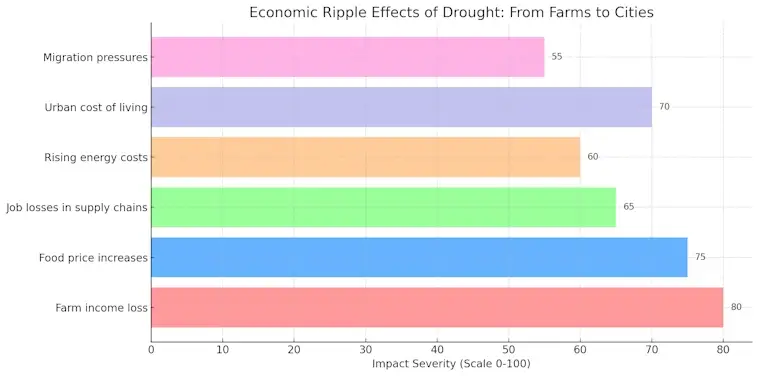
Drought doesn’t stop at the edge of a farmer’s field. Its impact ripples outward, touching businesses, cities, and households far beyond rural areas. When crops fail or livestock herds shrink, the consequences spread quickly through local economies and into global markets. What starts in one dry region often ends up on everyone’s plate—or wallet.
At the farm level, reduced harvests mean less income for growers. But the effect doesn’t stop there. Truck drivers, food processors, and local suppliers also lose business. As production slows, prices rise. Consumers in cities may notice higher grocery bills, while restaurants face tighter margins.
The Hidden Price in Everyday Life
Water scarcity and drought drive up the cost of essentials like bread, milk, and vegetables. For families living paycheck to paycheck, these small increases add up fast. Businesses, too, feel the strain as energy prices climb and supply chains weaken. In the end, entire economies can slow down, making recovery harder and more expensive.
The challenge is that these ripple effects are rarely temporary. Repeated droughts weaken financial stability and discourage investment in farming communities. Over time, migration increases as families leave rural areas in search of better opportunities. This adds pressure to cities already struggling with housing and infrastructure.
Addressing these challenges means thinking beyond agriculture alone. Building resilient water systems, supporting farmers with modern technology, and encouraging sustainable land use can soften the blow. When farms thrive, cities thrive too—and that connection is stronger than many people realize.
A Future Where Severe Droughts Are the New Normal
For generations, droughts were seen as rare and temporary. But today, the story is changing. Climate change is pushing us toward a future where severe droughts may no longer be the exception—they could become the rule. That shift carries consequences for food, water, and the way we live.
The science is clear. Rising global temperatures mean more evaporation and shifting rainfall patterns. Regions that once had steady water supplies are now facing longer dry spells. What used to be a “bad season” is turning into a new baseline, with farmers, cities, and ecosystems all struggling to adapt.
What It Means for Daily Life
Imagine turning on a tap and worrying about whether water will flow. Or going to the grocery store only to find basic foods far more expensive than before. These scenarios may sound extreme, but they’re becoming real in parts of the world already living with recurring drought. Communities are being forced to rethink farming methods, water storage, and even migration.
If severe droughts become the new normal, the economic and social strain will be enormous. Crops will fail more often, food systems will be unstable, and tensions over limited resources could rise. Yet, there’s still room for hope. By investing in clean energy, water-efficient farming, and stronger global climate action, we can reduce the worst impacts.
The choices we make today matter. Building resilience now means future generations won’t have to accept constant drought as simply “normal.” Instead, they’ll inherit a world better prepared for the challenges of a hotter, drier planet.
Facing Severe Droughts With Resilience
Severe droughts are no longer distant events we read about—they’re becoming part of our shared reality. From rising food prices to water shortages and economic stress, the impacts reach far beyond dry fields. But while the challenges are serious, the future is not set in stone.
By taking action now, we can limit the damage and build resilience. Smarter farming, better water management, and bold climate policies can protect both communities and ecosystems. Every step toward conservation and sustainability matters.
The truth is clear: severe droughts are a global challenge, but they are also a call to act. If we choose to respond with innovation and cooperation, we can safeguard food, water, and livelihoods for generations to come.