

The Science of Today’s Unpredictable Weather
Inside the Science of Unpredictable Weather: What’s Changing and Why
Forecasts used to feel reliable. You’d check the week ahead, plan a trip, and trust the sky to keep its promise. But now, unpredictable weather seems to rule the day. Sunshine turns to storms in hours, seasons blur, and long-standing climate patterns are shifting faster than most experts expected. What’s behind this growing uncertainty—and what does it reveal about the planet’s changing systems?
Scientists are uncovering complex interactions between rising temperatures, ocean currents, and atmospheric pressure that make weather harder to predict. Yet, new technologies and data models are helping us understand these patterns in real time. The more we learn, the clearer it becomes: the atmosphere isn’t just reacting—it’s adapting, and so must we.

What’s Driving the Chaos Behind Our Unpredictable Weather?
Have you noticed how the weather seems to have a mind of its own lately? One week it’s sunny and calm, the next we’re hit with storms, floods, or record heat. This unpredictable weather isn’t just bad luck—it’s a symptom of something much bigger happening to our planet.
Scientists agree that climate change is the main driver behind this growing chaos. As global temperatures rise, weather systems that once followed predictable patterns are now shifting in strange and often extreme ways. The result? Seasons that blur together, rain that falls harder and faster, and heatwaves that last longer than ever before.
The Ripple Effect of a Warming World
When we burn fossil fuels for energy, we release greenhouse gases that trap heat in the atmosphere. That extra heat doesn’t just make things warmer—it supercharges the entire climate system. Oceans heat up, jet streams weaken, and ice caps melt, all of which disrupt the balance that once kept weather patterns stable.
These disruptions ripple across the planet. Droughts become more intense, storms more destructive, and rainfall patterns more erratic. For communities, this means more uncertainty—farmers can’t rely on the usual planting seasons, and city planners struggle to prepare for sudden floods or heat emergencies.
But here’s the hopeful part: we’re not powerless. Shifting to renewable energy, protecting forests, and cutting carbon emissions can help stabilize the climate and reduce the extremes we’re seeing today.
If you’d like to explore how scientists are tracking and predicting these changes, check out the National Oceanic and Atmospheric Administration (NOAA) for reliable insights and updates.
How Climate Shifts Are Rewriting the Rules of the Atmosphere
The atmosphere isn’t what it used to be. The patterns that once defined our weather—steady jet streams, predictable seasons, and clear climate zones—are now shifting in surprising ways. It’s as if the Earth’s playbook for weather has been rewritten, and we’re all trying to keep up.
Over the last few decades, scientists have noticed major changes high above us. The jet stream, a powerful river of air that steers weather systems, is drifting north and becoming more erratic. This means storms are hitting new places and lingering longer than before. At the same time, the troposphere—the lowest layer of the atmosphere—is warming faster than ever. This extra heat fuels stronger storms and pushes the boundaries of what used to be “normal.”
What’s even more striking is how fast these changes are accelerating. The number of extreme weather events each year keeps climbing, and their intensity is rewriting how we think about climate stability. These shifts aren’t isolated; they ripple through everything from agriculture to air travel to public health.
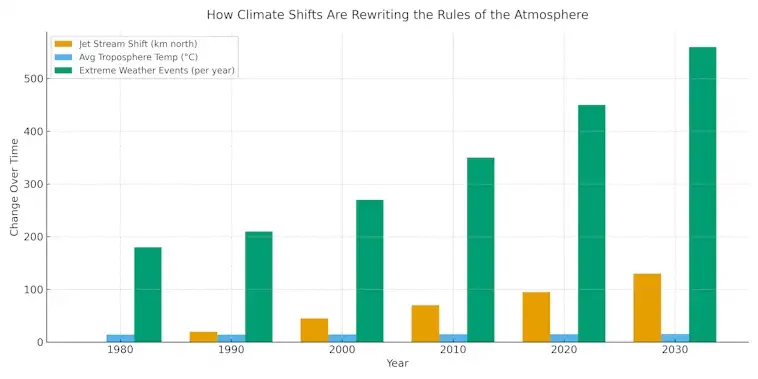
As we move forward, understanding these atmospheric changes isn’t just a matter of science—it’s about preparation. The sky above us tells a powerful story of transformation. The real question is: how quickly can we adapt to this new rhythm of the atmosphere?
Unpredictable Weather and the Technology Trying to Keep Up
Weather used to follow a pattern. Seasons had their rhythms. You could roughly guess when the rain would come or when the sun would show up again. But today, unpredictable weather is rewriting the rules.
From flash floods to heatwaves in the middle of winter, it feels like nature’s calendar has gone digital—and glitched. Scientists say these shifts are tied to a warming climate that’s pushing our systems to the edge. And as the weather grows more erratic, technology is working overtime to catch up.
The Race to Predict the Unpredictable
Meteorologists now rely on a mix of satellites, artificial intelligence, and high-speed data models to track storms and temperature swings in real time. The goal? To spot danger before it hits and to help communities prepare faster than ever.
Here’s how technology is fighting back against the chaos:
- AI-powered forecasting: Algorithms now analyze massive amounts of climate data to detect subtle changes that humans might miss.
- Hyperlocal weather apps: These tools use real-time sensors to give neighborhood-level predictions instead of vague city-wide forecasts.
- Drones and sensors: In remote or dangerous areas, drones collect vital air and temperature data to improve accuracy.
- Supercomputers: They run complex climate models that simulate possible weather outcomes weeks or even months ahead.
- Satellite innovation: Modern satellites deliver higher-resolution images that help track shifting cloud patterns, heatwaves, and rainfall.
Despite these advances, there’s still a long way to go. The Earth’s atmosphere is an incredibly complex system, and even the smartest algorithms struggle to keep up with its surprises.
Unpredictable weather doesn’t just make for dramatic headlines—it affects our food supply, infrastructure, and everyday life. The better we understand it, the more resilient we become.
For more on how AI is reshaping weather forecasting, you can check this resource: Yale Environment 360 article on AI weather forecasting.
From Storms to Sunshine: The Hidden Patterns Scientists Are Finding
Have you noticed how unpredictable the weather feels these days? One week it’s blazing hot, the next it’s pouring rain. Scientists say this isn’t random chaos—it’s part of a growing pattern that’s quietly reshaping our planet.
Across decades of data, researchers are finding that extreme weather events are becoming more common—and more connected. Heatwaves aren’t just hotter; they’re lasting longer. Storms are forming faster and carrying more rain. And even areas that once felt immune to wildfires or floods are now facing new risks.
But here’s what’s fascinating: these changes aren’t happening in isolation. Scientists have uncovered “climate fingerprints”—hidden patterns linking heat, moisture, and air pressure in ways we’ve never seen before. These links help explain why a drought in one region can trigger floods in another or how a warm ocean can set off storms thousands of miles away.
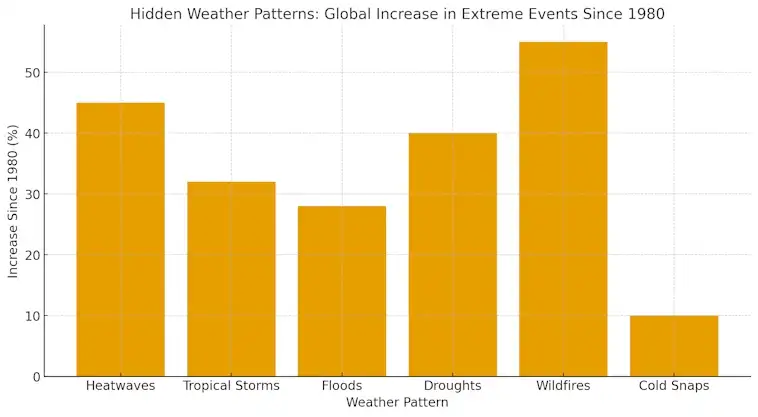
By decoding these patterns, researchers hope to predict extreme events with greater accuracy and give communities more time to prepare. It’s a hopeful reminder that while the climate is changing, knowledge gives us power to adapt and protect what matters most.
Why Understanding Weather Science Matters More Than Ever
Weather isn’t just small talk anymore — it’s shaping our daily lives, our safety, and even the economy. From sudden heatwaves to flash floods, the weather is getting harder to predict and more powerful in its effects. That’s why understanding the science behind it isn’t just for meteorologists — it’s something we all need to care about.
Think about how often you check the weather app before stepping outside. A quick glance might decide what you wear or whether you drive or take the train. But behind that simple forecast lies a complex world of data, satellites, and climate models working to help us stay ahead of nature’s curve.
Living with Unpredictable Weather
We’ve entered an era where “normal” weather is becoming rare. Seasons blur, storms intensify, and rainfall patterns shift without warning. Scientists call it a climate system in flux — and it’s changing faster than ever before. The more we understand how weather science works, the better we can prepare.
Learning the basics of meteorology helps us spot early warning signs, plan smarter, and respond faster when things go wrong. Whether it’s communities reinforcing flood defences or families creating emergency plans, awareness saves lives.
And it’s not just about survival — it’s about resilience. Understanding weather science helps cities adapt and businesses thrive in a changing climate. For example, accurate forecasting helps farmers protect crops, airlines avoid costly delays, and renewable energy producers optimize wind and solar power output.
If you want to explore how global weather systems are being monitored right now, the World Meteorological Organization offers excellent real-time insights and research updates.
The bottom line? The weather is no longer predictable background noise. It’s an active force shaping our future — and understanding it might be one of the smartest things we can do.
Understanding the Chaos — and Why It’s Time to Act
The weather isn’t just changing — it’s becoming more unpredictable. From sudden heatwaves to unseasonal storms, the science shows that our planet’s systems are shifting faster than ever. These changes aren’t random; they’re signals of a climate in flux, shaped by everything from ocean patterns to rising greenhouse gases.
But here’s the truth: unpredictability doesn’t mean helplessness. Scientists are uncovering new insights every day, helping us forecast extreme events and adapt smarter. The more we understand the forces behind today’s wild weather, the better we can prepare for tomorrow.
Now is the time to stay informed, support climate research, and make choices that reduce our impact — both locally and globally. Because when it comes to the planet’s future, every action counts.