
Global Warming Could Collapse Life as We Know It
Global Warming Could Collapse Life as We Know It
Global Warming is pushing Earth toward dangerous tipping points that could unravel the systems we depend on for survival. Rising temperatures are melting ice sheets, fueling extreme weather, and disrupting ecosystems at a pace scientists say is unprecedented. Food supplies, clean water, and the stability of entire regions are already at risk. If current trends continue, the balance that supports life could break down within decades. Understanding what’s at stake isn’t just about science—it’s about the future of every community and every generation to come.
Global Warming Threatens Our Planet’s Life Support Systems
Our planet runs on a delicate balance. Nature’s food chains, water cycles, and biodiversity are like an intricate web. Every strand connects to another. But global warming is pulling those strands apart.
Rising temperatures are changing the timing of seasons. Plants bloom earlier. Insects hatch at the wrong time. Migratory animals arrive to find their food sources already gone. When one link in the food chain falters, the entire system feels the strain.

When the Water Cycle Breaks Down
Heat speeds up evaporation. Rain falls in more intense bursts—or not at all. Some regions face crippling drought, while others are hit with destructive floods. Rivers run low, wetlands dry up, and fish populations collapse. Without a steady water cycle, ecosystems unravel.
Biodiversity—the variety of life on Earth—also takes a hit. Species that can’t adapt or move to cooler areas face extinction. Coral reefs bleach and die. Forests lose trees to pests that thrive in warmer climates. Each loss ripples outward, affecting countless other species, including us.
When these systems break down, it’s not just wildlife at risk. Our food supply, clean water, and even the air we breathe are tied to the health of these ecosystems. Protecting them means protecting ourselves.
The Hidden Tipping Points That Could Trigger Irreversible Change
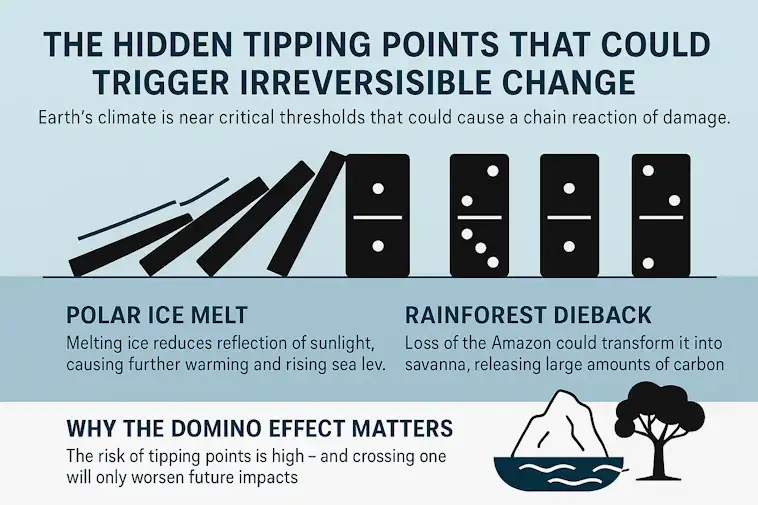
Earth’s climate isn’t a slow, steady system. It’s more like a stack of dominoes. Push one too far, and the rest can fall. Scientists call these “tipping points” — moments when change speeds up and becomes hard, if not impossible, to reverse.
One of the most worrying examples is polar ice melt. The ice sheets in Greenland and Antarctica act like giant mirrors, bouncing sunlight back into space. But as they melt, darker ocean water takes their place, absorbing heat and speeding up warming. This feedback loop can raise sea levels for centuries.
Then there’s the Amazon rainforest. It creates its own rain and locks away huge amounts of carbon. But as deforestation and rising temperatures stress the forest, it risks drying out. If too much is lost, the Amazon could shift from a lush carbon sponge into a dry savanna, releasing massive amounts of greenhouse gases.
Why the Domino Effect Matters
The danger is that these tipping points aren’t far-off science fiction. Many are closer than we thought, and crossing one can trigger others. Ice loss can change ocean currents. Ocean shifts can alter rainfall patterns. That can hurt forests and farmlands worldwide.
Once these thresholds are crossed, nature doesn’t have an easy reset button. Avoiding them means cutting emissions quickly, protecting critical ecosystems, and understanding that climate change is not just about gradual warming — it’s about avoiding sudden, runaway shifts.
How Global Warming Will Impact Human Survival
Global warming isn’t just about hotter summers. It’s a growing threat to our health, our safety, and even our food supply. From extreme heat waves to failing crops, the risks are real — and they’re rising fast.
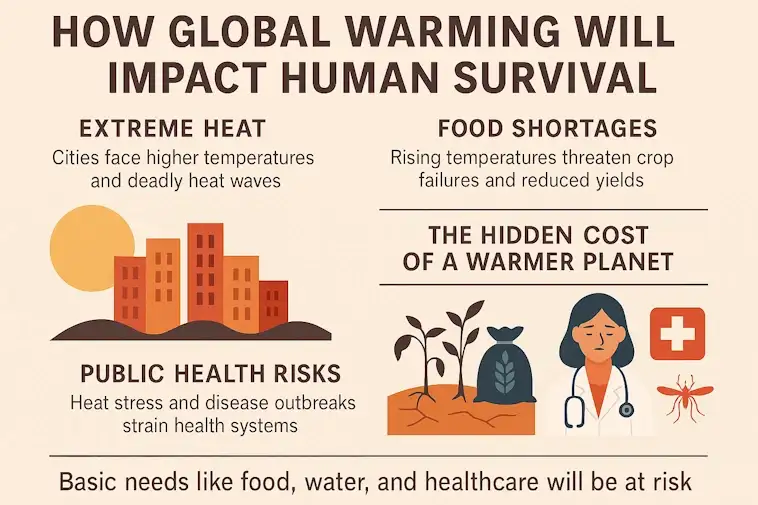
Cities are on the front line. Asphalt and concrete trap heat, creating urban “hot zones” where temperatures soar higher than surrounding areas. This makes heat waves deadlier, especially for older adults, children, and people with health conditions. Power grids strain under demand for air conditioning, and when the power fails, so do life-saving cooling systems.
The Hidden Cost of a Warmer Planet
Agriculture is feeling the heat, too. Crops depend on stable weather patterns, but rising temperatures bring droughts, floods, and unpredictable growing seasons. Wheat, rice, and corn — staples for billions — are at risk. When food supplies shrink, prices spike, and the poorest communities pay the highest price.
Public health systems will also be stretched thin. Higher temperatures speed up the spread of dangerous diseases. Mosquitoes carrying malaria or dengue can thrive in new regions. Water shortages can lead to hygiene crises, and hospitals may face more patients than they can handle during extreme events.
If global warming continues unchecked, the basic systems that keep us alive — food, water, shelter, healthcare — will be under constant threat. The challenge is huge, but it’s not too late to act. Reducing emissions and building climate-resilient infrastructure could mean the difference between survival and collapse.
Why Time Is Running Out to Act
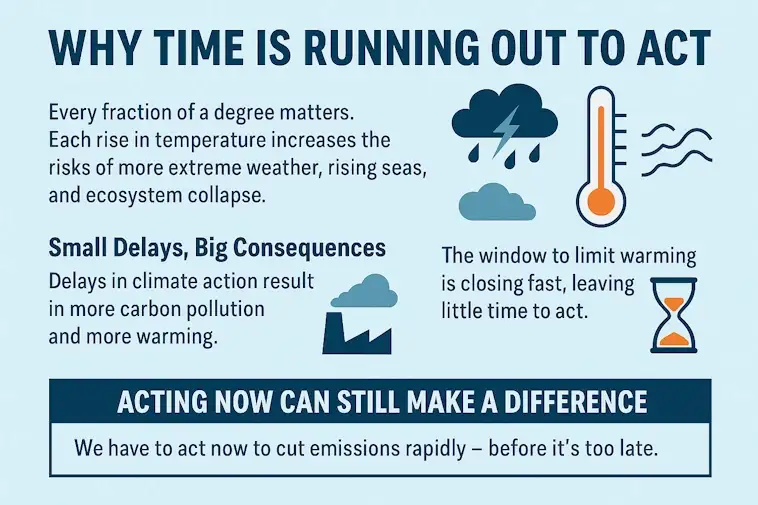
We often talk about climate change in big numbers — 1.5°C, 2°C, or even more. But here’s the truth: every fraction of a degree matters. Each tiny rise in global temperature increases the risk of extreme heat, stronger storms, rising seas, and collapsing ecosystems. That means a world at 1.6°C is noticeably worse than one at 1.5°C. And a world at 1.7°C? Even more dangerous.
Scientists are clear: the longer we wait, the harder and costlier it becomes to avoid the worst impacts. The window to keep warming below critical limits is closing fast. The choices we make in the next few years will shape the climate for generations.
Small Delays, Big Consequences
Every year of inaction locks in more carbon pollution and more warming. Ice sheets melt faster. Coral reefs bleach more often. Heatwaves grow deadlier. If we miss our targets now, we can’t simply “make up” for it later. Nature doesn’t run on political timelines — it responds to physics and chemistry.
The good news? Acting today is still within our power. Rapid cuts in greenhouse gas emissions can slow warming and give communities a chance to adapt. But that means starting now, not next year, and not after the next election.
We don’t get extra time. And the clock is ticking louder every day.
Solutions That Could Reverse the Climate Crisis
It’s easy to feel like the climate crisis is too far gone. The headlines can be overwhelming. But the truth is, it’s not too late. We still have a window to act—and the choices we make today could slow, or even reverse, the damage.
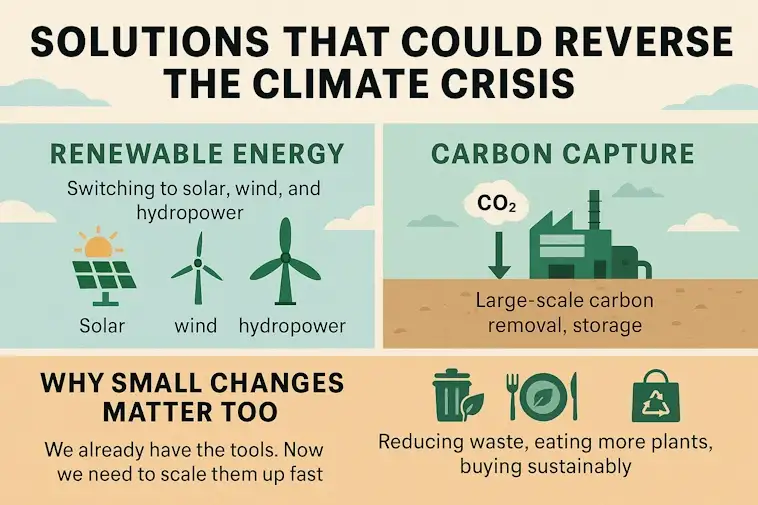
One of the most powerful tools we have is renewable energy. Solar, wind, and hydropower are cleaner, cheaper, and more accessible than ever before. Switching from fossil fuels to renewables cuts emissions fast, while also creating millions of new jobs.
We also need to focus on carbon capture. This isn’t just about planting trees—although reforestation remains vital. Large-scale carbon capture technology can pull CO₂ straight out of the air and store it safely underground. If deployed widely, it could help undo decades of pollution.
Why Small Changes Matter Too
While big solutions get the spotlight, everyday choices still matter. Reducing food waste, eating more plant-based meals, and choosing sustainable products all add up. These steps create momentum—and momentum drives policy changes and investment.
In short, we already have the tools. Now it’s about scaling them fast, working together, and refusing to give in to despair. The climate crisis isn’t a fixed future—it’s a challenge we can still solve.
The Time to Act on Global Warming Is Now
Global warming isn’t a distant threat — it’s happening now, and the stakes couldn’t be higher. The science is clear: if we continue down our current path, the systems that sustain life on Earth could collapse within our lifetimes. But there’s still hope. Every choice we make today, from the energy we use to the policies we support, can help slow the damage and protect the planet for future generations. This is not just about survival; it’s about creating a healthier, fairer, and more resilient world. The clock is ticking, but together, we can change the ending. The question is, will we act before it’s too late?