

The Ice Jam Challenge Reveals Hidden Winter River Risks
Ice Jam Challenge Shows Why Winter Rivers Can Be More Dangerous Than They Look
Winter rivers can look calm, even harmless. Yet an ice jam can flip that picture in minutes. When ice piles up and blocks the flow, water can back up fast. That sudden pressure can push water over banks, under roads, and into basements with little warning.
What makes this risk easy to miss is how quietly it builds. A few cold nights, a thaw, and rising flow can set the stage. Then a narrow bend, a bridge, or a shallow stretch becomes the trouble spot. The result can be flash flooding in places that seem far from any storm.
These events also carry hidden dangers beyond flooding. Ice can damage docks and banks, strain bridge supports, and leave piles of debris behind when it finally breaks free. For anyone living near a river, driving along one, or managing local infrastructure, the real threat is how quickly conditions can change.
The good news is that there are clear signals to watch for and practical steps that reduce harm. With better awareness, earlier alerts, and smarter planning, communities can stay safer as winters grow more unpredictable.
Ice Jam Basics: What It Is and Why It Forms
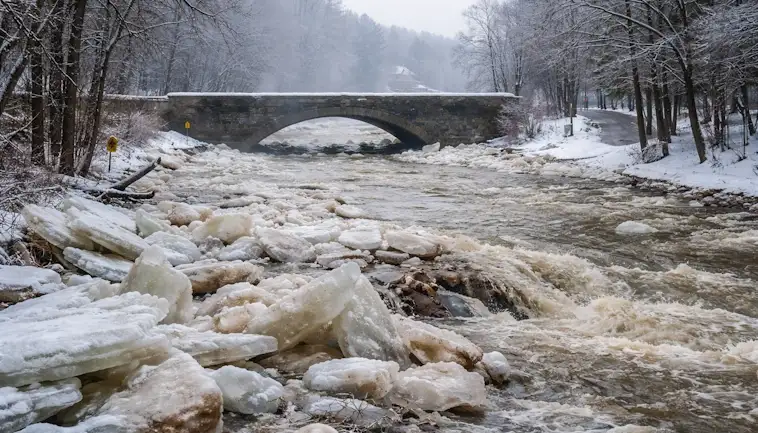
An ice jam happens when chunks of river ice pile up and block the natural flow of water. Think of it like a traffic jam, but on a river. When the ice stops moving, water backs up fast. That can lead to sudden flooding, even in places that rarely flood.
Ice jams are common in late winter and early spring. As temperatures rise, river ice begins to break apart. Large sheets float downstream. Then they hit a narrow bend, a bridge, or a shallow stretch. The ice stacks up. And the river can’t move freely. Then water levels rise quickly.
Why Ice Jams Can Form So Fast
Weather plays a big role. A quick warm spell melts snow and weakens river ice at the same time. Heavy rain makes it worse. More water pushes broken ice downstream. If the ice meets an obstacle, it can jam within hours.
River shape matters too. Sharp curves, islands, and man-made structures slow the flow. Even small changes in depth can trigger a jam. That’s why some towns see repeat problems year after year.
An ice jam is hard to predict. It can form and release suddenly. When it breaks, the rush of water and ice can cause damage downstream.
If you live near a river, it helps to know your local risk. You can check current river conditions and flood outlooks through the National Weather Service.
Understanding how an ice jam forms is the first step. It helps you stay alert. And it gives you more time to act if water levels begin to rise.
Early Warning Signs Your River Is Turning Risky
Rivers rarely flood without warning. In fact, they often send clear signals before things get serious. The key is knowing what to watch for.
If you live near a river, small changes can mean big trouble ahead. Water can rise fast. Ice can shift. And conditions can change in hours, not days. So let’s break down the most common red flags.
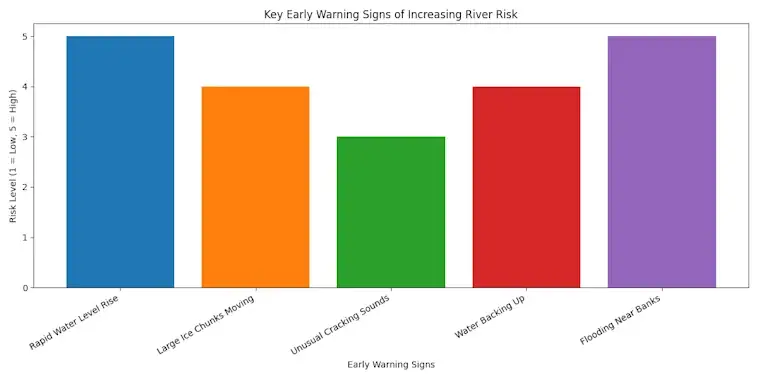
First, watch the water level. If it rises quickly over a short time, that’s a major warning sign. Next, look for large ice chunks moving downstream. That often means pressure is building upriver.
Also, listen closely. Loud cracking or grinding sounds can signal shifting ice. If water starts backing up or spilling over the banks, risk is increasing. At that point, action may be needed.
The chart below highlights the most common early warning signs and their relative risk level.
Staying alert makes a difference. When you spot these early signs, you gain time. And in a flood situation, time matters most.
Ice Jam Flood Risk: How Fast Water Levels Can Rise
An ice jam can turn a calm river into a flood threat in hours. That’s what makes it so dangerous. Water does not always rise slowly. In many cases, it surges fast and without much warning.
When ice blocks the flow of a river, water has nowhere to go. It backs up behind the jam. As pressure builds, water levels can climb several feet in a short time. Roads can flood. Basements can fill. Low-lying areas are often hit first.
Warm weather makes the risk worse. A sudden thaw melts snow and weakens river ice at the same time. Heavy rain adds even more water to the system. Together, these factors can speed up flooding linked to an ice jam.
Here are key factors that can cause water levels to rise quickly:
- Rapid snowmelt after a sharp temperature jump
- Heavy rainfall during late winter or early spring
- Narrow river bends or bridges that trap moving ice
- Sudden release of a jam upstream
- Frozen ground that prevents water from soaking in
In some cases, when an ice jam breaks, the surge moves downstream like a wave. That can create flash flooding in areas that seemed safe just minutes before.
If you live near a river, it helps to monitor local forecasts and river gauges. The National Weather Service flood safety page offers clear guidance on how to prepare and what to do if water begins to rise.
Flood risk from an ice jam is real. But when you understand how quickly conditions can change, you can act sooner. And that early action can protect your home and your family.
Cold-Weather Safety Tips for Walkers, Drivers, and Homeowners
Cold weather can turn everyday routines into real risks. A short walk can become slippery. And a simple drive can turn dangerous. Even your home can face hidden problems when temperatures drop fast.
The good news is this. A few smart habits can lower your risk right away.
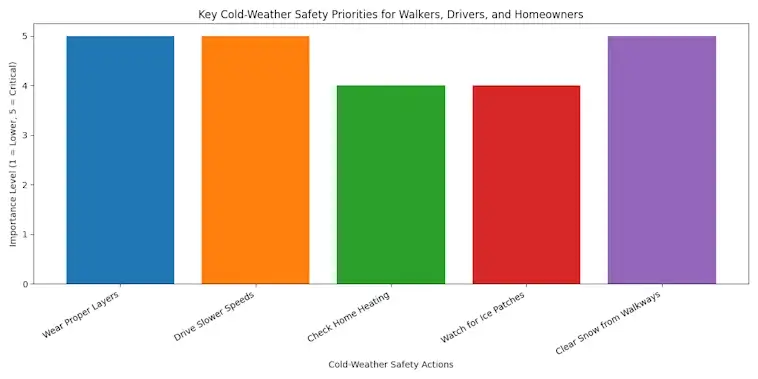
If you walk outside, dress in layers. This helps your body stay warm and dry. Choose boots with solid grip. Black ice is hard to see and easy to slip on.
And if you drive, slow down. Winter roads reduce traction. Leave more space between cars. Also, clear snow and ice from your windows before you leave. Good visibility matters more than ever.
At home, check your heating system early in the season. Make sure pipes are insulated. Frozen pipes can burst and cause costly damage. Clear snow from walkways and driveways quickly. Packed snow turns into thick ice fast.
The chart below highlights the most important safety priorities during cold weather.
Cold weather is part of winter life. But preparation changes everything. When you act early, you protect your health, your car, and your home. And that peace of mind is worth it.
Future-Proofing River Communities With Smarter Winter Planning
Winter is changing. Storms are stronger. Thaws happen faster. And river towns feel the impact first. That’s why smarter winter planning is no longer optional. It is essential.
River communities have always adapted. But today, planning must go further. It must combine better data, stronger infrastructure, and clear communication. When towns prepare early, they reduce damage and recover faster.
One major threat during winter is shifting river ice. A sudden blockage can raise water levels in hours. Without a plan, that risk grows quickly.
Preparing for Ice Jam Risks Before They Happen
An ice jam can form when broken river ice piles up at bends, bridges, or shallow areas. The result is rapid flooding upstream. In some cases, when the jam breaks, water surges downstream just as fast.
Smart communities now take a proactive approach. They monitor river levels in real time. Alos they map flood-prone zones. And they improve drainage systems. Some areas even use controlled ice breaking to reduce buildup before spring thaw.
Technology is also changing the game. Remote sensors, satellite data, and improved forecasting models help local leaders act sooner. Early alerts give residents more time to move vehicles, protect property, and stay safe.
Equally important is public awareness. When residents understand winter river risks, they respond faster. Simple steps, such as signing up for local alerts or reviewing evacuation routes, make a big difference.
For practical planning resources and community-level flood guidance, the FEMA Floodplain Management page offers reliable tools and strategies.
Looking ahead, the goal is resilience. Stronger riverbanks. Smarter zoning. Better communication. When communities plan for winter with the future in mind, they protect homes, businesses, and lives for years to come.
Final Thoughts: Why Every Ice Jam Is a Wake-Up Call
An ice jam is more than a winter event. It is a warning sign. It shows us how quickly a calm river can turn into a serious threat.
We’ve seen how an ice jam forms, why water levels can rise fast, and how communities can prepare. The pattern is clear. Winter river risks are often hidden until they are not. Then the impact can be sudden and costly.
But here’s the encouraging part. Awareness changes outcomes.
When you understand how an ice jam develops, you can spot early warning signs. When towns invest in smarter winter planning, they reduce long-term damage. And when homeowners stay informed, they gain time to act before flooding begins.
Looking ahead, winter weather is becoming less predictable. Freeze and thaw cycles may grow more intense. That makes preparation even more important. Stronger infrastructure, better forecasting, and community education will shape the future of river safety.
An ice jam may start with shifting ice. Yet it reveals something bigger. It reminds us that winter rivers demand respect, planning, and attention. The more we learn now, the safer our communities will be in the seasons to come.