

The Future of Species Survival in a Changing World
The Future of Species Survival in a Changing World
Species survival is becoming one of the defining challenges of our time. As temperatures rise, oceans shift, and forests shrink, countless animals and plants are being forced to adapt—or risk disappearing forever. Scientists warn that the pace of change is faster than many species can handle, yet there are also signs of resilience and adaptation in unexpected places. From shifting migration patterns to new survival strategies, nature is working hard to keep balance. The choices humans make today—about energy, land use, and conservation—will determine how well species survival continues in the decades ahead.
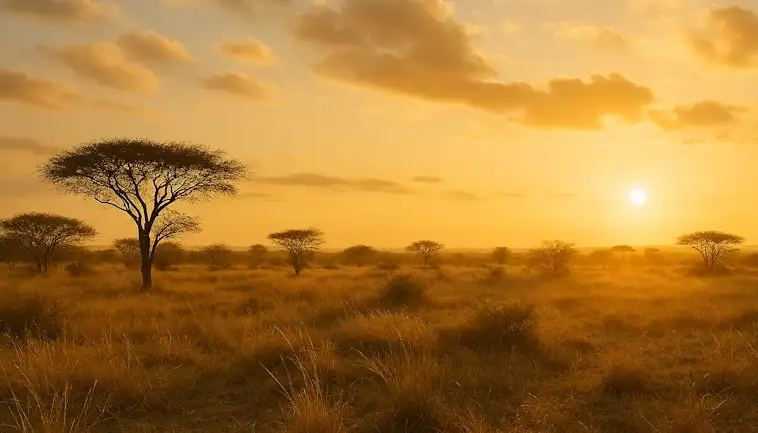
Why Species Survival Matters in a Rapidly Changing World
We live in a time of rapid change. From shifting weather patterns to shrinking forests, the natural world is under pressure like never before. Every species, no matter how small, plays a role in keeping ecosystems balanced. When even one disappears, the ripple effects can be bigger than we realize.
Think about pollinators like bees. They don’t just make honey. They help grow the food we eat. Without them, supermarket shelves would look very empty. The same goes for birds, fish, and even soil microbes. Each one supports life in ways we often take for granted.
A Web We Can’t Afford to Break
Nature is a web of connections. Remove one strand, and the whole structure weakens. That’s why species survival isn’t just about saving animals for their own sake. It’s about protecting our future too. Healthy ecosystems give us clean air, fresh water, and fertile soil. They also help buffer against climate extremes.
In a world that’s changing faster than ever, protecting species means protecting stability. And stability is what we all need to thrive—whether you live in a city apartment or on a farm.
How Climate Change is Reshaping Habitats and Wildlife
Climate change isn’t just about rising temperatures. It’s about shifting landscapes and changing homes for countless animals and plants. Forests, oceans, and grasslands are being reshaped, and with them, the creatures that depend on these places to survive.
As ice melts, polar bears lose their hunting grounds. As seas warm, coral reefs bleach and crumble, leaving fish without shelter. Even closer to home, birds are migrating earlier, and insects are moving into new regions. These changes remind us that wildlife is constantly adapting—but not always fast enough.
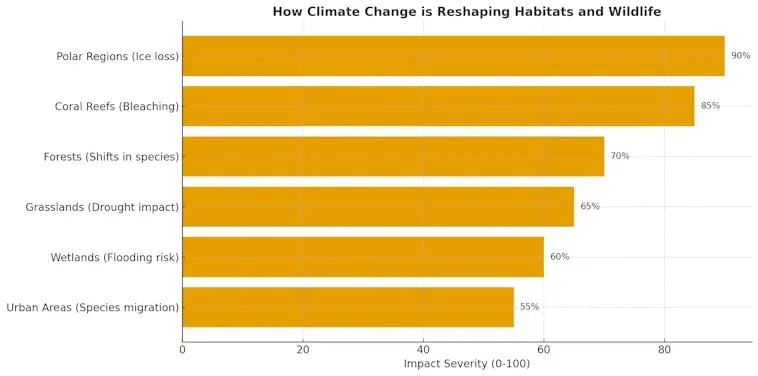
When Habitats Move, Species Must Follow
When the climate shifts, animals and plants face a choice: move, adapt, or disappear. Some species can travel to cooler places or higher ground. Others are locked into specific regions and struggle to cope. This reshuffling doesn’t just affect wildlife. It disrupts food chains, water cycles, and even the resources we humans depend on.
The survival of wildlife and the health of habitats are deeply connected to our own well-being. By understanding how climate change reshapes nature, we also see why protecting ecosystems is key to protecting ourselves.
The Role of Innovation in Species Survival and Adaptation
Species survival isn’t just about strength. It’s about adaptability. In today’s rapidly changing world, both nature and humans must find new ways to cope. Innovation—whether it’s in science, technology, or conservation—can play a powerful role in helping species survive.
Across the globe, researchers are coming up with creative solutions. Some are using drones to monitor endangered animals. Others are building artificial reefs to give marine life a second chance. Even genetic tools are being explored to bring back lost traits that could help species thrive in harsher climates.
Nature’s Own Innovators
It’s not only humans who innovate. Animals and plants do too. Birds shift migration routes. Fish seek cooler waters. Trees expand into new territories. These natural strategies show us that adaptation is ongoing. But sometimes, the speed of climate change outpaces what species can manage on their own. That’s where human innovation becomes essential.
When we combine nature’s resilience with human creativity, species survival becomes more than a possibility—it becomes a shared mission. Protecting biodiversity isn’t just about saving wildlife. It’s about safeguarding a living system that supports us all.
Human Responsibility: Protecting Biodiversity for the Future
Biodiversity is more than a collection of plants and animals. It’s the foundation of life on Earth. Every species plays a part in keeping ecosystems balanced, and when that balance is lost, so is our own stability. That’s why protecting biodiversity isn’t optional—it’s a responsibility we all share.
From the food we eat to the air we breathe, nature gives us essentials we often overlook. But with forests disappearing, oceans warming, and habitats shrinking, the choices we make today will shape the future of life on this planet. Small actions, like reducing waste, protecting green spaces, or supporting sustainable products, can add up to big change.
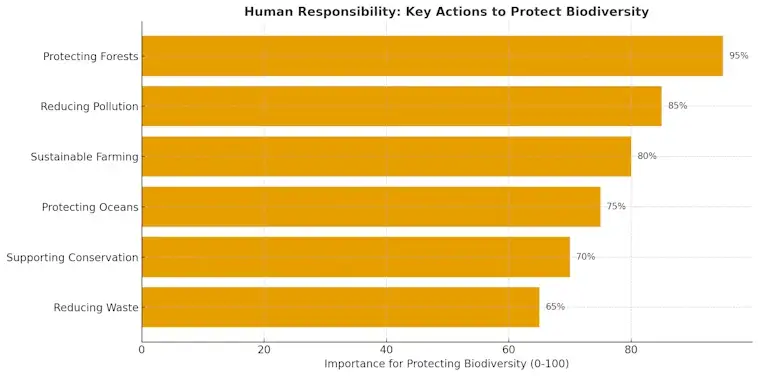
Species Survival and Our Shared Future
Species survival is tied directly to human choices. When we protect wildlife and ecosystems, we are also protecting our own future. It’s about more than conservation—it’s about creating a healthier, safer, and more resilient world for generations to come.
By stepping up now, we ensure that the incredible diversity of life continues to thrive alongside us. The future of biodiversity depends not only on nature’s resilience but also on our willingness to take action.
What We Can Learn from Nature’s Resilience
Nature has an incredible ability to bounce back. Forests regrow after wildfires, coral reefs can recover when conditions improve, and animals adapt to new challenges in surprising ways. These stories of resilience remind us that survival is not just about strength—it’s about flexibility and persistence.
Even in the face of climate change and human impact, ecosystems show us that recovery is possible if given the chance. Protecting habitats, reducing stress on wildlife, and giving nature space to heal are steps that can spark remarkable transformations.
Lessons from Nature’s Survival Strategies
From migrating birds to drought-tolerant plants, nature offers countless examples of adaptation. These strategies show us how to live more sustainably. By observing how species adjust, we can find inspiration for our own future—whether it’s designing smarter cities, rethinking how we use resources, or simply learning to live with less waste.
When we pay attention to nature’s resilience, we gain not only hope but also guidance. The natural world becomes a teacher, reminding us that recovery and growth are always possible.
Why Species Survival Shapes Our Future
Species survival is more than a matter of saving wildlife—it’s about safeguarding the systems that support us all. From clean air and fertile soil to stable climates and thriving oceans, every species plays a role in keeping our planet balanced. When one disappears, the ripple effects touch us too.
The good news is that we are not powerless. By protecting habitats, reducing our footprint, and supporting innovation, we can help nature do what it does best—adapt and recover. The choices we make today will decide whether future generations inherit a thriving, diverse world or one that struggles to sustain life.
Species survival is not only an act of conservation. It’s an investment in our shared future. And that makes it a responsibility worth embracing.