
The Cost of the Catch: Why Unsustainable Fishing Threatens Our Oceans and Our Future
Our oceans are in trouble, and it’s not just about disappearing fish. The way we catch seafood today is putting entire marine ecosystems at risk—and the consequences reach far beyond the water.
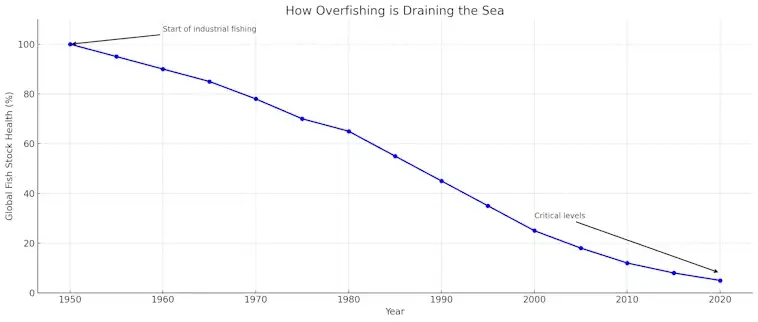
Across the world, industrial fishing fleets are hauling in more than the oceans can naturally replace. In some areas, fish populations have dropped by over 90%. Coral reefs are being damaged by heavy nets. Even species that aren’t being targeted—like turtles, dolphins, and seabirds—are getting caught and killed.
Here’s what’s really at stake:
- Food security: Over 3 billion people rely on seafood as a primary source of protein.
- Livelihoods: Millions of coastal communities depend on fishing for their income and survival.
- Ecosystem collapse: When top predators disappear, the balance of the ocean shifts. That affects everything—from algae to whales.
- Climate change: Healthy oceans absorb more carbon. Damaged ones don’t.
Overfishing isn’t just about emptying the seas. It’s about breaking a natural system that supports life on Earth. The good news? Change is possible. Solutions are already out there—smarter fishing methods, marine reserves, and better enforcement. But time matters. What we choose to do next could shape the future of our oceans for generations.
The Cost of the Catch: Why Unsustainable Fishing Threatens Our Oceans and Our Future
How Overfishing Is Draining the Sea
Fish was once considered an endless resource. Oceans were vast, fish were abundant, and human activity seemed like a drop in the water. But today, that myth has been firmly debunked. The way we fish—and how much we fish—is driving many species toward collapse. And it’s happening faster than nature can keep up.
This is a story about technology, appetite, and a fragile balance.
Industrial Fishing: Efficiency at a Cost
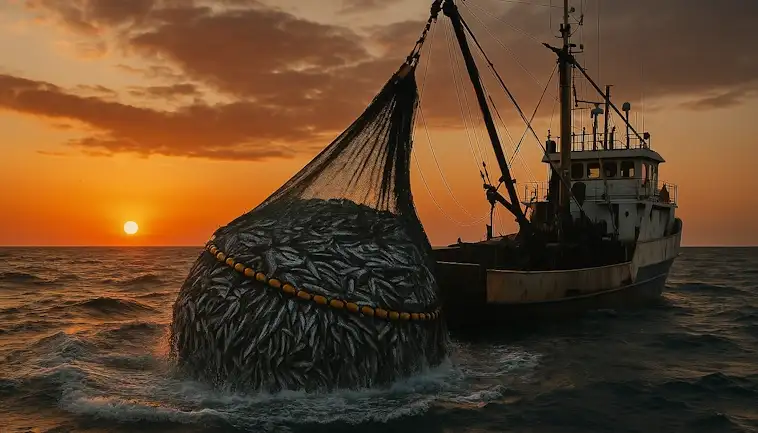
Modern fishing fleets are technological powerhouses. They can track schools of fish with sonar, use massive nets that stretch for miles, and stay at sea for months at a time. While this has made seafood more accessible around the world, it’s also accelerated depletion.
- Bottom trawling drags huge nets along the ocean floor, scooping up everything in their path—fish, coral, even ancient habitats.
- Purse seining circles fish like tuna into tight nets, often catching entire schools in one haul.
- These methods don’t just take fish. They take everything—and they don’t discriminate.
This industrial scale of efficiency leaves little room for fish populations to recover.
The Hidden Problem of Bycatch
When we fish for shrimp or tuna, we often end up catching turtles, dolphins, seabirds, and countless other species. This is called bycatch, and it’s one of the fishing industry’s dirtiest secrets.
- Up to 40% of global marine catch is unintentional.
- Most bycatch is dead or dying by the time it’s thrown back.
- Species like sharks and rays, which are slow to reproduce, are especially vulnerable.
This isn’t just wasteful—it unravels entire food webs.
The Trouble with Popular Fish: Tuna, Cod & Others at Risk
Some species are especially under pressure because they’re so popular. Demand for sushi, for example, has put tuna species—especially bluefin—on the brink.
- Atlantic cod, once the backbone of fisheries in the North Atlantic, collapsed in the 1990s due to overfishing. Stocks have yet to fully recover.
- Bluefin tuna, prized for sashimi, are caught faster than they can reproduce. Some populations have dropped by over 80%.
- Anchovies, sardines, and other forage fish are also targeted, which affects predators up the chain—like seabirds, seals, and whales.
The problem isn’t just that we’re eating too much. It’s that we’re eating unsustainably.
What’s Next? The Future of Our Oceans
There is hope—but it requires global cooperation and bold change.
- Smarter regulation: We need science-based catch limits and stronger enforcement.
- Better fishing gear: Innovations that reduce bycatch are already being tested.
- Aquaculture (fish farming): If done responsibly, it can ease pressure on wild stocks.
- Consumer awareness: Choosing certified sustainable seafood makes a real difference.
Right now, we’re at a crossroads. We can continue as we are—and watch wild fish stocks crash—or we can fish smarter, protect key species, and rebuild ocean ecosystems for future generations.
One thing’s clear: the ocean isn’t bottomless. But with care and creativity, it can be resilient.
What Unsustainable Fishing Does to Ocean Ecosystems
We often hear about overfishing as a problem for the oceans. But the damage goes far beyond dwindling fish stocks. When we remove too many fish—especially top predators or key species—it can unravel entire ecosystems. Think of it like pulling a thread on a sweater. Tug hard enough, and the whole thing can come apart.
Here’s how that happens.
The Ripple Effect of Removing Top Predators
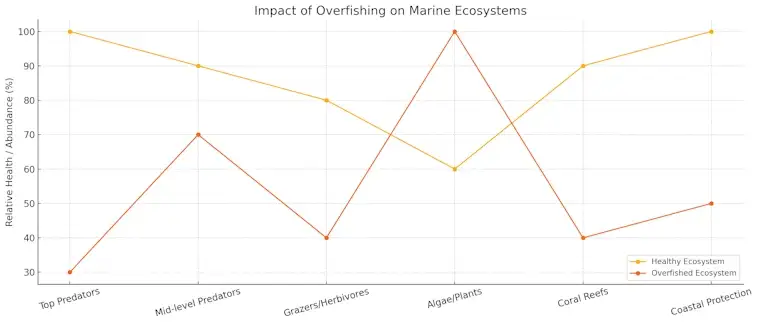
Large predators like sharks, tuna, and groupers keep ocean food chains in check. They eat smaller fish and help control species lower on the food web.
- When predators vanish, their prey can multiply out of control. For example, if big fish that eat sea urchins are removed, urchin numbers can explode. That sounds small, but urchins eat seaweed. If they overgraze, kelp forests or seagrass beds can collapse.
- Chain reaction: Without kelp or seagrass, animals that depend on them—like sea otters, turtles, and small fish—lose their homes. The whole system becomes weaker and more fragile.
Keystone Species Hold It All Together
Some species are like the “glue” of the ecosystem. They may not be flashy, but they keep everything balanced.
- Coral reefs depend on herbivorous fish that graze on algae. Without them, algae smothers coral and blocks sunlight.
- Overfishing these grazers lets algae take over. Coral reefs become ghost towns, unable to support the rich web of life they once did.
Coral Reefs and Coastlines in Crisis
Coral reefs aren’t just beautiful—they’re vital.
- They protect coastlines by absorbing wave energy. Without reefs, erosion increases. Storms hit harder. Coastal homes and livelihoods are at risk.
- Coral loss also means fewer fish, which affects tourism and food supplies for millions of people who rely on reef ecosystems.
When Local Problems Become Global
Overfishing isn’t just a local issue anymore.
- Species like tuna and cod migrate across oceans. If one country overfishes, it can hurt global fish stocks.
- Loss of biodiversity makes oceans less resilient to climate change. Healthy ecosystems bounce back better. But when they’re already stressed by overfishing, recovery becomes much harder.
Looking Ahead: What Can Be Done?
This isn’t just a story of loss—it’s also a call to action.
- Marine protected areas are showing promise. When certain zones are off-limits to fishing, ecosystems rebound—often faster than expected.
- Sustainable fishing practices, like catching fewer fish and avoiding key species, help keep food chains intact.
- Technology and science are helping too. Better monitoring, tracking, and global cooperation make smarter fishing possible.
Overfishing isn’t just about fish. It’s about the health of our oceans, the stability of our coasts, and the survival of countless species—including us. By understanding the deeper impacts, we can start to fix the damage and build a future where oceans thrive again.
The Human Cost of Depleted Oceans
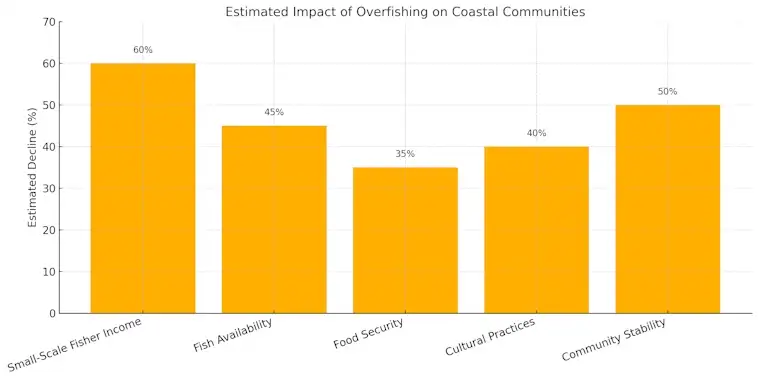
For millions of people, the sea is not just a source of food. It’s a way of life. In coastal communities across the globe—especially in developing countries—fishing supports economies, shapes culture, and fills dinner plates. But overfishing is putting all of that at risk.
As fish populations shrink, so does the stability of these communities. The impacts are deeply personal—and the consequences ripple through families, villages, and even entire nations.
The Backbone of Local Economies
In many coastal regions, small-scale fisheries are the main source of income.
- These are not massive industrial ships, but individual fishers and family-run operations.
- Over 90% of the world’s fishers are small-scale, and most live in developing countries.
- As fish stocks decline, their catches get smaller. Fewer fish mean fewer sales, less income, and less money circulating in the local economy.
When fish disappear, so do the jobs that depend on them—not just for fishers, but for people who process, sell, or transport seafood.
Food on the Line
Fish is a critical source of protein, especially in places where other options are scarce or expensive.
- Over 3 billion people rely on fish for at least 20% of their animal protein.
- In countries across Africa, Southeast Asia, and the Pacific, fish is not a luxury—it’s a daily staple.
As overfishing takes its toll:
- People may have to turn to less nutritious or more costly alternatives.
- Children and vulnerable groups face higher risks of malnutrition.
- Rising demand and shrinking supply drive up prices, putting pressure on already-strained households.
Cultural Identity at Risk
Fishing is more than a job. In many communities, it’s woven into stories, songs, rituals, and traditions.
- Seasonal fishing patterns shape festivals and ceremonies.
- Techniques are passed down through generations, linking people to their ancestors and land.
When fish disappear, so does that cultural connection. Young people may leave in search of other work, eroding traditions and fragmenting communities.
Rising Tensions and Unfair Competition
When resources become scarce, competition grows.
- Small-scale fishers often lose out to large industrial fleets, many of which are foreign-owned.
- These big operations use more powerful equipment and fish in areas meant to be off-limits.
- Some even operate illegally, taking advantage of weak enforcement.
This leads to:
- Social tensions between local fishers and outsiders.
- Conflicts within communities, as survival becomes a zero-sum game.
- A growing sense of frustration and injustice.
What Can Be Done?
The path forward depends on protecting both fish and the people who rely on them.
Empowering Local Communities
- Support community-based fisheries management, where locals help manage and monitor fish stocks.
- Provide better access to sustainable tools, training, and markets.
Fairer Fishing Rules
- Governments must crack down on illegal and unregulated fishing, especially by foreign fleets.
- Policies should prioritize small-scale fishers, not just industrial profits.
Strengthening Food Security
- Encourage diverse, resilient diets that reduce pressure on fish stocks.
- Improve access to refrigeration, processing, and storage so more fish can be used and wasted less.
The sea has long provided. But it’s not infinite. Overfishing doesn’t just empty nets—it empties stomachs, wallets, and traditions. By focusing on people as well as fish, we can help coastal communities not just survive, but thrive.
Can Science and Policy Turn the Tide?
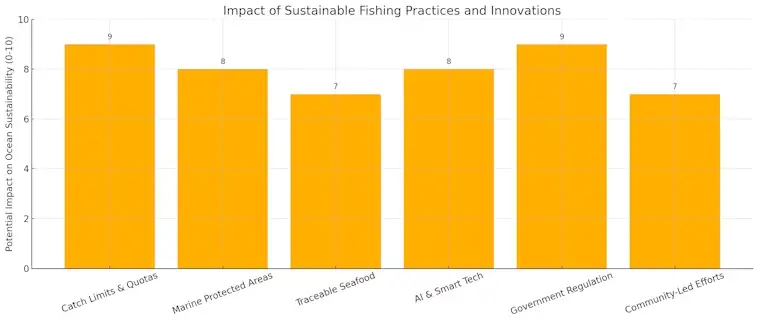
The oceans are in trouble—but they’re not beyond saving. Overfishing has pushed many fish populations to the brink, damaging ecosystems and threatening the livelihoods of millions. But the tide is beginning to turn. Around the world, sustainable fishing practices and new innovations are offering hope. From high-tech tools to local community efforts, the goal is simple: fish smarter, not harder.
Here’s a closer look at how it’s happening.
Smarter Limits: Catch Quotas and Size Restrictions
One of the most effective tools is also the simplest: set limits on what we take from the ocean.
- Catch quotas ensure that fish are harvested at rates they can recover from.
- Size restrictions protect juvenile fish so they can reproduce before being caught.
- Seasonal closures allow fish to spawn and rebuild populations undisturbed.
These rules may sound basic, but when enforced properly, they work. Iceland, New Zealand, and the U.S. have all seen fish stocks rebound through science-based catch limits.
Protected Zones: Giving Nature Space to Heal
Marine Protected Areas (MPAs) are like national parks in the ocean. They limit or ban fishing in key zones to let ecosystems recover.
- Biodiversity thrives in MPAs. Fish grow larger and more numerous, spilling over into nearby fishing zones.
- Coral reefs and breeding grounds regenerate when left undisturbed.
- MPAs can also serve as natural laboratories, helping scientists understand ocean health.
While only about 8% of the ocean is currently protected, global efforts aim to raise that to 30% by 2030.
Know Your Fish: Traceable and Transparent Seafood
Consumers are demanding more transparency—and the industry is responding.
- Traceable seafood systems let buyers know where and how their fish were caught.
- QR codes and blockchain tech are helping track seafood from ocean to plate.
- Certifications like MSC (Marine Stewardship Council) give shoppers a way to support sustainable fisheries.
This transparency helps fight illegal fishing and boosts trust in the food supply.
Innovation at Sea: AI, Drones, and Smart Nets
Technology is reshaping how we fish and how we protect the ocean.
- AI-powered monitoring systems can track fishing boats and identify illegal activity in real time.
- Drones and satellites scan protected areas, offering low-cost enforcement options.
- Smart fishing gear can reduce bycatch (unintended catches like turtles or dolphins) using sensors and selective designs.
- Data from sensors and models can predict fish movements, helping boats fish more efficiently and reduce pressure on overfished areas.
These tools are turning data into action—and making sustainability profitable.
The Role of Governments and Treaties
Governments play a huge role in shaping ocean policy.
- National regulations set catch limits, protect endangered species, and create MPAs.
- International treaties like the 2023 High Seas Treaty aim to protect biodiversity in waters beyond national borders.
- Enforcement agencies and coast guards are working with tech companies to monitor illegal fishing across vast ocean territories.
When countries work together, they can close loopholes and ensure fair, sustainable practices globally.
Power to the People: Citizen and Community Efforts
Sustainability isn’t just top-down. Communities and individuals are driving change too.
- Coastal communities are forming co-ops to manage local fisheries sustainably.
- Citizen science apps let people report illegal fishing, track plastic pollution, or log marine sightings.
- Consumer demand for sustainable products is pushing companies to adopt better practices.
- Educational campaigns are raising awareness, especially among young people, about the importance of healthy oceans.
Looking Ahead: From Crisis to Recovery
The challenges are real, but so are the solutions. Sustainable fishing isn’t just about saving fish—it’s about feeding the world, protecting ecosystems, and preserving cultures.
- With better tools, smarter rules, and global cooperation, oceans can recover.
- A future where fish are abundant, ecosystems are resilient, and communities thrive is not only possible—it’s already taking shape.
Would you like a visual summary or a chart to go with this? I could also turn it into a short newsletter or social post if that’s helpful.
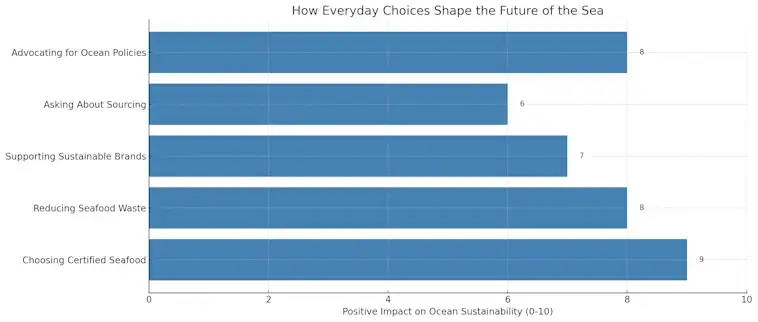
How Everyday Choices Shape the Future of the Sea
When we hear about overfishing or dying coral reefs, it can feel distant—like a problem for someone else, somewhere far away. But the health of our oceans is tied to so many parts of our daily lives: the food we eat, the climate we live in, even the jobs people depend on across the globe.
You don’t have to live near the coast to make a difference. The choices we make at the grocery store, the restaurants we visit, and even what we toss in the trash all matter. Here’s how this global crisis hits close to home—and how your everyday decisions can help turn things around.
What’s on Your Plate? It Matters More Than You Think
Fish is one of the most traded foods in the world. When you buy seafood, you’re connected to an entire supply chain that stretches from the ocean to your fork.
- Overfishing affects food security for millions who rely on fish as a staple protein.
- Unsustainable fishing practices can involve illegal operations, human rights abuses, and damage to ocean ecosystems.
- By choosing wisely, you support good practices—and help shift the market.
What You Can Do
- Look for certified seafood like MSC (Marine Stewardship Council) or ASC (Aquaculture Stewardship Council) labels. These certify the fish was caught or farmed responsibly.
- Ask questions at restaurants or markets: Where is this fish from? Is it sustainably sourced?
- Explore local, seasonal options when possible. Local seafood often has a smaller carbon footprint.
Waste Less, Save More
Food waste is a hidden part of the problem. When seafood ends up in the trash, all the effort (and harm) that went into catching it goes to waste.
- Roughly 35% of global fish and seafood is lost or wasted every year.
- That’s not just wasteful—it’s unsustainable in a world where fish stocks are collapsing.
What You Can Do
- Only buy what you need. Avoid stocking up on fresh fish unless you’re sure you’ll use it.
- Store seafood properly to keep it fresh longer.
- Use the whole fish. Recipes using bones or heads (like fish stock) are not just resourceful—they’re delicious.
Support Businesses That Protect the Ocean
Where we spend our money matters. Supporting brands and businesses that commit to ocean health can drive bigger change.
- Some supermarkets and restaurants are prioritizing sustainable seafood or cutting ties with suppliers involved in destructive practices.
- Eco-conscious companies are investing in regenerative ocean farming, reusable packaging, and more ethical supply chains.
What You Can Do
- Choose businesses that align with ocean-friendly values.
- Support ocean advocacy groups or local fishers using low-impact gear.
- Use your voice—write reviews, share info, and encourage others to ask where their seafood comes from.
Small Choices, Big Impact
It’s easy to feel powerless in the face of global problems. But your choices add up.
- Every certified fish you buy supports better fishing.
- Every bit of seafood you don’t waste reduces pressure on the ocean.
- Every dollar spent on sustainable businesses helps grow a more responsible economy.
The ocean gives us so much—food, jobs, protection from storms, even the oxygen we breathe. Taking care of it isn’t just the right thing to do—it’s in our own best interest.
Conclusion
So, what’s the catch? Turns out, it’s not just about fish. It’s about balance. It’s about the future of our oceans and the choices we make today. When fishing goes unchecked, it doesn’t just empty the sea—it unravels entire ecosystems, puts communities at risk, and chips away at the planet’s natural defenses.
But here’s the good news: we’re not helpless. The seafood you buy, the questions you ask at a restaurant, the brands you support—all of it counts. Every small shift adds up, especially when more and more of us get on board.
The ocean has an incredible ability to bounce back if we give it the chance. So let’s give it that chance. Let’s keep the oceans full of life—for us, for future generations, and for the health of the whole planet.
It all starts with knowing what’s on the line—and deciding that it’s worth saving.